
HID 910NWNTEKE05A7 vs HID 20NWS-01-000000: Specification Comparison
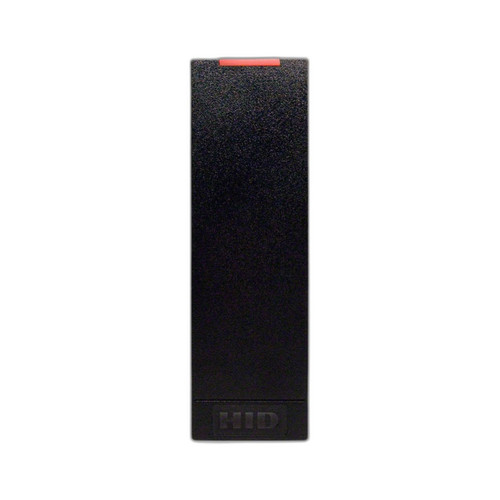
Both the HID 910NWNTEKE05A7 and the HID 20NWS-01-000000 Signo 20 are wired access control card readers in HID's portfolio, targeting physical access control installations. The 910NWNTEKE05A7 is a dual-technology iCLASS SE proximity reader bridging legacy LF and modern HF credentials via Wiegand output. The 20NWS-01-000000 is a 13.56 MHz contactless reader supporting OSDP and Wiegand with a broader credential set including mobile. Buyers evaluating a reader upgrade or greenfield deployment may cross-shop these for credential compatibility, protocol support, and panel integration.

In This Guide
- Which reader supports your existing and planned credential types and panel protocols?
- What are the environmental ratings and power requirements for each reader?
- Which reader better supports a phased migration from legacy to modern credentials?
- Which should you choose: the 910NWNTEKE05A7 or the 20NWS-01-000000?
- Side-by-Side Specs
- FAQ
Which reader supports your existing and planned credential types and panel protocols?
The 910NWNTEKE05A7 is a dual-technology reader combining HF iCLASS SE with LF offset proximity, reading iCLASS SE, SEOS, SIO, Standard, and the EVCS5164 Migration Profile. Its sole output protocol is Wiegand with a 100 µs pulse time, meaning it integrates directly into legacy panels without rewiring but offers no OSDP path.
The 20NWS-01-000000 reads 13.56 MHz contactless credentials only — DESFire, iCLASS, MIFARE, SEOS, and NFC — plus mobile credentials (including Apple ECP for iPhone and Apple Watch). It outputs both Wiegand 32-bit MSB and OSDP, giving installers a choice between legacy panel compatibility and a modern encrypted, supervised communications bus. The absence of LF proximity read capability means legacy 125 kHz prox cards are not supported.
What are the environmental ratings and power requirements for each reader?
The 20NWS-01-000000 carries an IK09 impact rating and an operating temperature range of -20°C to +60°C, indicating suitability for exposed or semi-exposed installations. It is powered via PoE+ (802.3at), eliminating a separate power supply run where an 802.3at-capable switch or injector is available. IP54 compliance is referenced in the raw spec data, though it appears in a field associated with a different product line and should be independently verified against the Signo 20 datasheet before specifying.
The 910NWNTEKE05A7 specifications provided do not include an IP or IK environmental rating, operating temperature range, or power input details. Installers evaluating outdoor or high-abuse locations must consult the HID datasheet at /content/product-datasheets/910NWNTEKE05A7.pdf before specifying this unit, as these parameters are absent from the data provided.
Which reader better supports a phased migration from legacy to modern credentials?
The 910NWNTEKE05A7 is explicitly designed for migration scenarios: the EVCS5164 Migration Profile allows a single reader to simultaneously validate legacy LF proximity cards and modern iCLASS SE or SEOS credentials. This makes it a low-disruption drop-in for sites running mixed card populations on existing Wiegand panels, with no controller replacement required.
The 20NWS-01-000000 supports a broad 13.56 MHz credential mix (DESFire, iCLASS, MIFARE, SEOS, NFC) and adds mobile credentials with Apple ECP, positioning it for sites ready to move to modern or mobile-first access. Its OSDP output supports encrypted, bi-directional panel communication for controllers that support the standard. However, it does not read legacy 125 kHz LF proximity cards, so sites still issuing those cards would need a parallel card replacement program before migrating to the Signo 20.
Which should you choose: the 910NWNTEKE05A7 or the 20NWS-01-000000?
Our take: The 910NWNTEKE05A7 is the stronger choice when a site must support legacy 125 kHz LF proximity cards alongside modern iCLASS SE or SEOS credentials on an existing Wiegand panel infrastructure. Its dual-technology HF+LF read capability and EVCS5164 migration profile address mixed-credential populations without panel replacement, and its native Wiegand 100 µs pulse output requires no controller changes. By contrast, the 20NWS-01-000000 is the appropriate selection for new installations or sites executing a full credential modernisation: it adds OSDP for supervised encrypted communication, supports mobile credentials including Apple ECP, and covers DESFire and MIFARE in addition to iCLASS and SEOS — but it drops legacy LF support entirely. The Signo 20 also specifies IK09 impact resistance, a -20°C to +60°C operating range, and PoE+ power, environmental parameters absent from the 910NWNTEKE05A7's provided specifications. Both carry a 2-year warranty.
Side-by-Side Comparison
Spec-for-spec, from manufacturer data.
| Specification | HID 910NWNTEKE05A7 | HID 20NWS-01-000000 |
|---|---|---|
| Product Type | Proximity Reader (iCLASS SE) | Access Control Reader (Signo 20) |
| HF Technology | iCLASS SE (13.56 MHz) | 13.56 MHz contactless (DESFire, iCLASS, MIFARE, SEOS, NFC) |
| LF / Proximity Technology | LF Offset (125 kHz proximity) | Not supported |
| Mobile Credentials | — | Yes (incl. Apple ECP) |
| Credential Profiles | iCLASS SE, SIO, SEOS, Standard, EVCS5164 Migration | DESFire, iCLASS, MIFARE, SEOS, NFC |
| Output Protocol | Wiegand (100 µs pulse) | OSDP; Wiegand 32-bit MSB |
| Migration Profile | EVCS5164 (simultaneous legacy + modern) | — |
| Power Input | — | PoE+ (802.3at) |
| Impact Rating | — | IK09 |
| Operating Temperature | — | -20°C to +60°C |
| Keypad | Not specified in provided specs | Not specified in provided specs |
| Color / Finish | Black or white with silver trim baseplate | White with silver trim |
| Connectivity | Wired | Wired |
| Warranty | 2-year | 2-year |
| UPC | — | 662950752134 |
Frequently Asked Questions
Which should you choose: the 910NWNTEKE05A7 or the 20NWS-01-000000?
The 910NWNTEKE05A7 is the stronger choice when a site must support legacy 125 kHz LF proximity cards alongside modern iCLASS SE or SEOS credentials on an existing Wiegand panel infrastructure. Its dual-technology HF+LF read capability and EVCS5164 migration profile address mixed-credential populations without panel replacement, and its native Wiegand 100 µs pulse output requires no controller changes. By contrast, the 20NWS-01-000000 is the appropriate selection for new installations or sites executing a full credential modernisation: it adds OSDP for supervised encrypted communication, supports mobile credentials including Apple ECP, and covers DESFire and MIFARE in addition to iCLASS and SEOS — but it drops legacy LF support entirely. The Signo 20 also specifies IK09 impact resistance, a -20°C to +60°C operating range, and PoE+ power, environmental parameters absent from the 910NWNTEKE05A7's provided specifications. Both carry a 2-year warranty.
Can the 910NWNTEKE05A7 or the 20NWS-01-000000 read my existing 125 kHz proximity cards?
Only the 910NWNTEKE05A7 can. It is a dual-technology reader combining HF iCLASS SE with LF offset proximity, so it reads legacy 125 kHz prox cards alongside modern iCLASS SE and SEOS credentials. The 20NWS-01-000000 operates exclusively at 13.56 MHz contactless and has no LF proximity read capability per the provided specifications.
Which reader works with a modern OSDP-capable access control panel?
The 20NWS-01-000000 supports OSDP in addition to Wiegand 32-bit MSB, making it compatible with both modern OSDP controllers and legacy Wiegand panels. The 910NWNTEKE05A7 outputs Wiegand only (100 µs pulse timing); OSDP is not listed in its provided specifications.
Is the 20NWS-01-000000 or the 910NWNTEKE05A7 better suited for outdoor or high-traffic installations?
Based on the provided specifications, the 20NWS-01-000000 has a documented IK09 impact rating and an operating temperature range of -20°C to +60°C, indicating suitability for demanding environments. It is also PoE+ powered (802.3at). The 910NWNTEKE05A7's specifications do not include an impact rating, IP rating, or operating temperature range, so its suitability for outdoor or high-abuse locations cannot be confirmed from the data provided.
More Access Control Reader Comparisons
- HID 20NWS-01-000000 vs HID 920NHRTEK0001T
- HID 20NWS-01-000000 vs HID 20NKS-01-002CBR
- HID 920NHRTEK0001T vs HID 20NKS-01-002CBR
- HID 40NKS-01-002CBR vs HID 20NWS-01-000000
- HID 40NKS-01-002CBR vs HID 920NHRTEK0001T
- HID 900NWPNEK00483 vs HID 20NWS-01-000000
Access Control Reader Buying Guides
Get a Second Opinion on Your Camera Choice
Share your site layout, coverage goals, and budget. Our team will validate the camera selection, flag anything we would change, and recommend products that match the use case.