
Epson C31CJ57012 vs Star Micronics TSP1043D: Specification Comparison
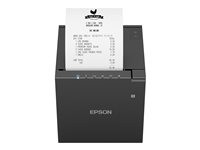
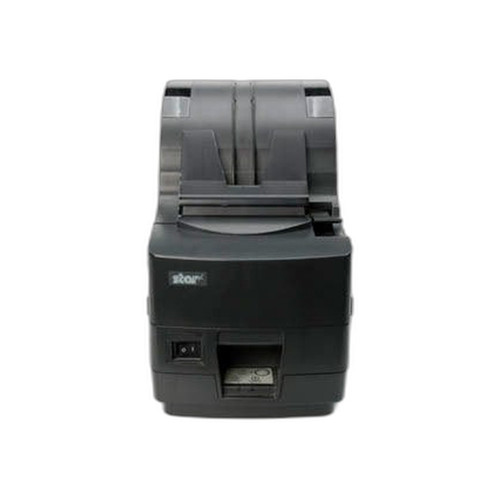
Both the Epson C31CJ57012 and the Star Micronics TSP1043D (SKU 39462010) are direct thermal receipt printers targeting point-of-sale environments — countertop units requiring no ink or ribbon, outputting thermal receipts from roll media. A buyer evaluating either would be selecting a high-throughput POS receipt peripheral for retail, hospitality, or food-service. This comparison examines print speed and resolution, connectivity and integration flexibility, and warranty and media handling across both units using only manufacturer-provided specifications.
In This Guide
- Which printer delivers faster output and sharper receipt print quality?
- Which printer offers broader connectivity and easier integration into mixed POS environments?
- How do the two printers compare on media handling, paper width, and support coverage?
- Which should you choose: the C31CJ57012 or the TSP1043D?
- Side-by-Side Specs
- FAQ
Which printer delivers faster output and sharper receipt print quality?
The Epson C31CJ57012 is rated at 500 mm/s (20 inches/second). Converting for comparison: 20 in/sec × 60 = 1,200 inches per minute. The Star Micronics TSP1043D is rated at 425.2 inches per minute, which equates to approximately 7.09 inches per second. On raw throughput, the Epson C31CJ57012 is meaningfully faster — approximately 2.8× the Star's per-minute rate — making it the stronger candidate for high-volume queue environments where receipt latency affects throughput.
On resolution, the advantage reverses. The TSP1043D prints at 203 dpi versus the C31CJ57012's 180 dpi. The 23 dpi difference (roughly 13% higher pixel density on the Star) produces sharper text and barcode rendering per millimeter, which matters for QR codes, loyalty barcodes, or small-font SKU data. Buyers prioritizing barcode scannability or fine-print legibility will favor the TSP1043D; those prioritizing raw speed will favor the Epson.
Which printer offers broader connectivity and easier integration into mixed POS environments?
The Epson C31CJ57012 specifies Serial, Ethernet, and USB interfaces. Serial support is significant for legacy POS systems still common in hospitality and older retail installs. Ethernet enables network-shared printing across multiple POS lanes without a dedicated host. The spec sheet also references an optional Wireless LAN interface (OT-WL06 accessory), Bluetooth Low Energy, and NFC tag support — though these appear in what reads as a table-of-contents reference rather than a confirmed factory-included feature list, so buyers should verify with the product datasheet before assuming wireless capability is bundled.
The Star Micronics TSP1043D lists its connectivity only as 'Wired' — no specific interface types (USB, Serial, Ethernet) are enumerated in the provided specifications. This limits the ability to confirm compatibility with a specific POS host or network topology without consulting Star's full datasheet. For buyers needing confirmed multi-interface or network-shared deployment, the Epson's explicitly documented Serial + Ethernet + USB suite is the more verifiable option based on available specs.
How do the two printers compare on media handling, paper width, and support coverage?
The Star Micronics TSP1043D specifies a 3.15-inch paper width and 3.15-inch print width, with roll format receipt media. The spec also notes two-color monochrome output and an auto-cutter — the auto-cutter is an operationally important feature for unattended or high-volume stations and is explicitly confirmed for the TSP1043D. The Epson C31CJ57012 specifies thermal receipt roll media but does not state a paper width or print width in the provided specifications, and auto-cutter inclusion is not confirmed in the supplied data.
On warranty, the TSP1043D carries a stated 2-year warranty versus the C31CJ57012's 1-year warranty. For a POS peripheral in continuous-use retail or hospitality, the additional year of coverage reduces total cost of ownership risk. Buyers operating high-duty-cycle deployments where printer failure directly impacts revenue should weight the TSP1043D's longer warranty as a meaningful differentiator absent extended-warranty purchase options for the Epson.
Which should you choose: the C31CJ57012 or the TSP1043D?
Our take: The C31CJ57012 is the stronger choice when raw receipt throughput and multi-interface connectivity are the primary requirements. It prints at 500 mm/s (equivalent to ~1,200 inches per minute) versus the TSP1043D's 425.2 inches per minute — a speed advantage of approximately 2.8×. It also explicitly documents Serial, Ethernet, and USB interfaces, making it verifiably compatible with legacy and networked POS environments where the TSP1043D's 'Wired' designation leaves interface type unconfirmed. Conversely, the TSP1043D edges ahead on resolution (203 dpi vs. 180 dpi), carries a 2-year warranty versus the Epson's 1-year, explicitly confirms an auto-cutter, and specifies print width (3.15 inches). For high-volume lanes where speed is paramount and existing infrastructure requires Serial or Ethernet, the Epson is the more capable unit. For deployments prioritizing sharper barcode output, longer warranty coverage, and confirmed auto-cut on a wired single-host connection, the TSP1043D is the more defensible selection.
Side-by-Side Comparison
Spec-for-spec, from manufacturer data.
| Specification | Epson C31CJ57012 | Star Micronics TSP1043D |
|---|---|---|
| Product Type (as listed) | Receipt Printer | Label Printer (receipt use) |
| Print Method | Direct Thermal | Direct Thermal |
| Print Speed | 500 mm/s (≈1,200 in/min) | 425.2 in/min |
| Print Resolution | 180 dpi | 203 dpi |
| Connectivity | Serial, Ethernet, USB | Wired (type unspecified) |
| Wireless Option | OT-WL06 accessory (BLE/NFC referenced) | — |
| Paper Width | — | 3.15 in |
| Print Width | — | 3.15 in |
| Media Type | Thermal receipt roll | Receipt roll (3" format) |
| Output Color | Monochrome (180 dpi) | Two-color monochrome |
| Auto-Cutter | — | Yes (confirmed) |
| Form Factor | Compact countertop/under-counter | Receipt printer |
| Warranty | 1 year | 2 years |
| Ribbon Required | No | No |
| SKU | C31CJ57012 | 39462010 |
Frequently Asked Questions
Which should you choose: the C31CJ57012 or the TSP1043D?
The C31CJ57012 is the stronger choice when raw receipt throughput and multi-interface connectivity are the primary requirements. It prints at 500 mm/s (equivalent to ~1,200 inches per minute) versus the TSP1043D's 425.2 inches per minute — a speed advantage of approximately 2.8×. It also explicitly documents Serial, Ethernet, and USB interfaces, making it verifiably compatible with legacy and networked POS environments where the TSP1043D's 'Wired' designation leaves interface type unconfirmed. Conversely, the TSP1043D edges ahead on resolution (203 dpi vs. 180 dpi), carries a 2-year warranty versus the Epson's 1-year, explicitly confirms an auto-cutter, and specifies print width (3.15 inches). For high-volume lanes where speed is paramount and existing infrastructure requires Serial or Ethernet, the Epson is the more capable unit. For deployments prioritizing sharper barcode output, longer warranty coverage, and confirmed auto-cut on a wired single-host connection, the TSP1043D is the more defensible selection.
Is the C31CJ57012 or TSP1043D faster for busy checkout lines?
Based on stated specifications, the Epson C31CJ57012 is substantially faster. It is rated at 500 mm/s (approximately 1,200 inches per minute), while the Star Micronics TSP1043D is rated at 425.2 inches per minute — making the Epson roughly 2.8 times faster by per-minute output. For high-volume POS lanes where queue throughput is critical, the C31CJ57012 has the clear speed advantage per the available specs.
Which printer produces sharper receipts and better barcode readability?
The Star Micronics TSP1043D prints at 203 dpi versus the Epson C31CJ57012's 180 dpi. The TSP1043D's higher resolution produces more dots per inch, which translates to sharper text and denser barcode rendering. For applications where QR codes, loyalty barcodes, or fine-print item data must be reliably scanned, the TSP1043D's 203 dpi output is the stronger specification.
Which printer is better for a networked or legacy POS environment with multiple interface types?
The Epson C31CJ57012 explicitly lists Serial, Ethernet, and USB connectivity, making it verifiably suitable for legacy systems (Serial), networked multi-lane deployments (Ethernet), and modern host connections (USB). The Star Micronics TSP1043D's provided specifications describe connectivity only as 'Wired' without specifying interface types. Buyers requiring confirmed multi-interface or network-shared printing should verify the TSP1043D's interface options directly with Star's datasheet before selecting it for those environments.
More Label Printer Comparisons
- Epson C31CK00A9991 vs Brother RJ4230B
- Epson C31CK00A9991 vs Star Micronics TSP1043D
- Epson C31CK00A9991 vs Epson C31CJ99A9981
- Epson C31CK00A9991 vs Epson C31CJ57012
- Epson C31CJ99A9981 vs Brother RJ4230B
- Epson C31CJ99A9981 vs Star Micronics TSP1043D
Label Printer Buying Guides
Get a Second Opinion on Your Camera Choice
Share your site layout, coverage goals, and budget. Our team will validate the camera selection, flag anything we would change, and recommend products that match the use case.