
CyberPower PR2000RTXL2UCN vs APC by Schneider Electric SMX2000LVNCUS: Specification Comparison
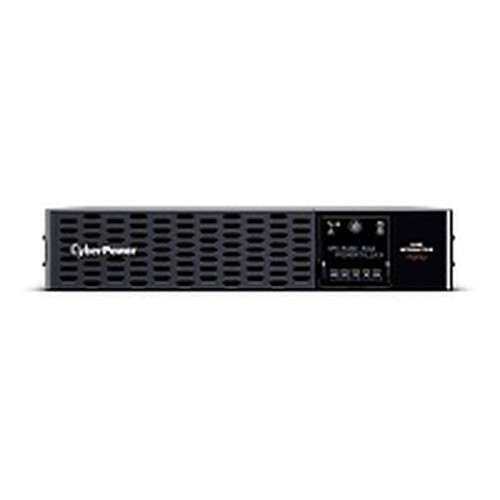
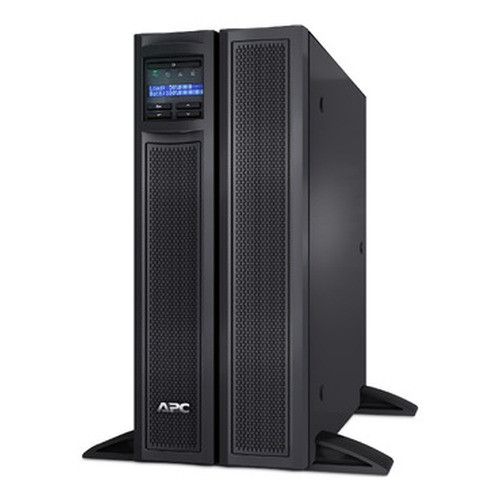
Both the CyberPower PR2000RTXL2UCN and the APC Smart-UPS X SMX2000LVNCUS are 2000VA-class line-interactive sine wave UPS units designed for rack or tower deployment in IT closets, server rooms, and edge infrastructure. This comparison evaluates their real power output, input operating range and protection quality, and management and monitoring capabilities—the three dimensions that most directly affect reliability, compatibility with connected loads, and day-to-day operational oversight for installers and IT buyers.
In This Guide
Which unit delivers more usable power to connected loads?
The CyberPower PR2000RTXL2UCN is rated at 2000 W / 2000 VA with a power factor of 1.0, meaning its watt and VA figures are identical and the full 2000 W is available to loads. The APC SMX2000LVNCUS is rated at 1800 W / 1920 VA, reflecting a power factor of approximately 0.9375—200 W less real power than the CyberPower unit.
For deployments running high-density servers, PoE switches, or NVRs with large drive arrays, that 200 W gap is meaningful. A buyer targeting 80–90% loading (the recommended ceiling for runtime margin) can safely sustain 1600–1800 W continuous on the CyberPower versus 1440–1620 W on the APC. Neither unit's battery runtime figures are provided in the supplied specifications.
The CyberPower also lists a maximum output current of 15 A at 120 V, consistent with its 2000 W / 120 V rating. The APC specification does not state a maximum output current in the provided data.
Which unit handles wider utility anomalies and provides stronger surge protection?
Both units accept 120 V nominal input, but their transfer windows differ. The CyberPower PR2000RTXL2UCN tolerates input voltage from 75 V to 149 V before switching to battery. The APC SMX2000LVNCUS has a wider low-end tolerance, accepting input as low as 70 V, and a higher ceiling of 153 V—a slightly broader window on both ends.
Surge energy ratings diverge sharply. The CyberPower is rated at 2430 J; the APC is rated at only 540 J—a 4.5× difference. In environments exposed to frequent utility transients, lightning-adjacent events, or power-strip cascades, the CyberPower's higher joule rating offers substantially greater absorptive capacity before protection devices are consumed.
The APC SMX2000LVNCUS specifies Automatic Voltage Regulation (AVR) explicitly and lists output voltage THD at ≤5%. The CyberPower lists EMI/RFI noise filtering and an input frequency range of 47–63 Hz (slightly wider than the APC's 50–60 Hz). AVR and THD are not stated in the CyberPower's provided specification set.
Which unit offers more capable remote management and monitoring?
The CyberPower PR2000RTXL2UCN includes a factory-installed RMCARD205 network management card, enabling cloud-based monitoring as reflected in the product name. This card provides remote visibility into UPS status, load, and battery health via network without requiring a separate accessory purchase. Specific management protocols (SNMP, HTTP) are not enumerated in the provided spec set.
The APC SMX2000LVNCUS specifies web-based management as included. The provided specifications do not confirm whether a network management card is factory-installed or whether additional hardware is required to enable remote access. The APC does specify two audible alarm modes (alarm when on battery; low battery alarm) and auto-restart capability. The CyberPower lists audible alarms but does not enumerate specific alarm modes in the provided data.
The APC specifies three outlet types: NEMA 5-15R, NEMA 5-20R, and NEMA L5-20R. The CyberPower spec lists a maximum output current of 15 A but does not enumerate outlet types in the provided specification. Outlet variety directly affects compatibility with mixed rack equipment.
Which should you choose: the PR2000RTXL2UCN or the SMX2000LVNCUS?
Our take: The PR2000RTXL2UCN is the stronger choice when raw power delivery and surge protection margin are the primary requirements. It delivers 200 W more real power (2000 W vs 1800 W) at a unity power factor, and its 2430 J surge rating is 4.5× higher than the SMX2000LVNCUS's 540 J—a significant difference in environments with poor utility quality. It also includes a factory-installed RMCARD205 cloud management card. The SMX2000LVNCUS counters with a marginally wider input voltage window (70–153 V vs 75–149 V), explicit AVR and ≤5% output THD specifications, stated auto-restart, enumerated outlet types (NEMA 5-15R / 5-20R / L5-20R), and specific audible alarm modes. Buyers deploying high-watt loads or protecting equipment in surge-prone environments should favor the CyberPower; buyers who require verified outlet compatibility with mixed NEMA receptacles or explicit AVR documentation for compliance purposes should evaluate the APC.
Side-by-Side Comparison
Spec-for-spec, from manufacturer data.
| Specification | CyberPower PR2000RTXL2UCN | APC by Schneider Electric SMX2000LVNCUS |
|---|---|---|
| UPS Topology | Line-Interactive | Line-Interactive |
| Output Power Capacity (VA) | 2000 VA | 1920 VA |
| Output Power (Watts) | 2000 W | 1800 W |
| Power Factor | 1.0 | — |
| Waveform | Sine | Sine |
| Input Voltage Range | 75–149 V | 70–153 V |
| Input Frequency Range | 47–63 Hz | 50–60 Hz |
| Output Voltage | 120 V max | 120 V max |
| Output Frequency | 50/60 Hz | 50/60 Hz |
| Surge Energy Rating | 2430 J | 540 J |
| Maximum Output Current | 15 A | — |
| Automatic Voltage Regulation (AVR) | — | Yes |
| Output Voltage THD | — | ≤5% |
| EMI/RFI Noise Filtering | Yes | — |
| Noise Level | 57.5 dB | 55 dB |
| Network Management | RMCARD205 (factory-installed, cloud) | Web-based management (card inclusion unconfirmed in spec) |
| Auto-Restart | — | Yes |
| Audible Alarms | Yes | Yes (on battery; low battery) |
| Outlet Types | — | NEMA 5-15R, NEMA 5-20R, NEMA L5-20R |
| Heat Dissipation | 130 BTU/h | — |
Frequently Asked Questions
Which should you choose: the PR2000RTXL2UCN or the SMX2000LVNCUS?
The PR2000RTXL2UCN is the stronger choice when raw power delivery and surge protection margin are the primary requirements. It delivers 200 W more real power (2000 W vs 1800 W) at a unity power factor, and its 2430 J surge rating is 4.5× higher than the SMX2000LVNCUS's 540 J—a significant difference in environments with poor utility quality. It also includes a factory-installed RMCARD205 cloud management card. The SMX2000LVNCUS counters with a marginally wider input voltage window (70–153 V vs 75–149 V), explicit AVR and ≤5% output THD specifications, stated auto-restart, enumerated outlet types (NEMA 5-15R / 5-20R / L5-20R), and specific audible alarm modes. Buyers deploying high-watt loads or protecting equipment in surge-prone environments should favor the CyberPower; buyers who require verified outlet compatibility with mixed NEMA receptacles or explicit AVR documentation for compliance purposes should evaluate the APC.
Is the PR2000RTXL2UCN or SMX2000LVNCUS better for powering high-density server or NVR loads?
Based on the provided specifications, the PR2000RTXL2UCN supports up to 2000 W of real power at a power factor of 1.0, compared to 1800 W for the SMX2000LVNCUS. For loads approaching or exceeding 1800 W, the CyberPower provides more headroom. Neither unit's runtime specifications are included in the provided data, so runtime comparisons cannot be made from these specs alone.
Which UPS offers better protection against surges and power transients?
The PR2000RTXL2UCN carries a surge energy rating of 2430 J versus 540 J for the SMX2000LVNCUS—a 4.5× difference. On this spec alone, the CyberPower absorbs substantially more transient energy before its protection components are depleted. The APC does specify a wider input voltage operating range (70–153 V vs 75–149 V), which may reduce how often the unit transfers to battery during sags or swells.
Do both units include remote network management out of the box?
The PR2000RTXL2UCN includes a factory-installed RMCARD205 network management card with cloud monitoring capability as part of its specification. The SMX2000LVNCUS specifies web-based management but the provided specifications do not confirm whether a network card is factory-installed or must be purchased separately. Buyers should verify with the APC product sheet whether the 'NCUS' suffix in the SKU indicates an included card before purchasing.
More UPS Comparisons
- APC by Schneider Electric SMX2000LV vs CyberPower PR2000RTXL2UC
- APC by Schneider Electric SMX2000LV vs CyberPower CP2000PFCRM2U
- APC by Schneider Electric SMX2000LV vs CyberPower PR2000RT2UCN
- APC by Schneider Electric SMX2000LV vs Middle Atlantic UPX-EXPANRUN-OL20
- APC by Schneider Electric SMX2000LV vs APC by Schneider Electric SMX2000LVNCUS
- APC by Schneider Electric SMX2000LV vs APC by Schneider Electric SMX2000RMLV2U
UPS Buying Guides
Get a Second Opinion on Your Camera Choice
Share your site layout, coverage goals, and budget. Our team will validate the camera selection, flag anything we would change, and recommend products that match the use case.