
CyberPower PR2000RTXL2UC vs APC by Schneider Electric SMX2000LVNCUS: Specification Comparison
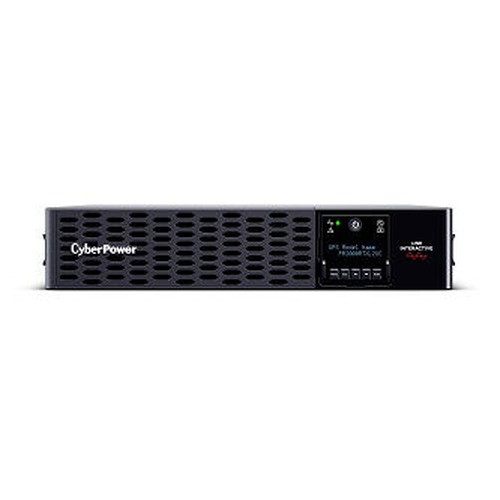
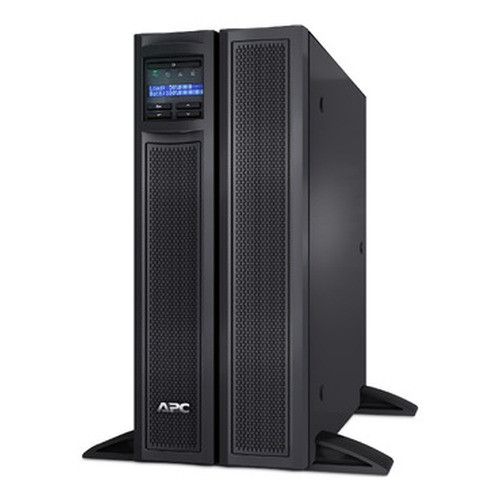
Both the CyberPower PR2000RTXL2UC and the APC SMX2000LVNCUS are 2000VA-class line-interactive, sine-wave rack/tower UPS units designed for IT equipment protection in data center and wiring-closet environments. Buyers comparing these two are evaluating runtime, outlet configuration, surge suppression, and remote management capability for rackmounted server, NVR, or networking loads. This comparison covers power capacity and runtime, connectivity and surge protection, and management and monitoring features.
In This Guide
- Which UPS delivers more usable power and runtime at load?
- How do the two units compare on outlet configuration, surge protection, and input flexibility?
- Which unit offers stronger remote monitoring and management integration?
- Which should you choose: the PR2000RTXL2UC or the SMX2000LVNCUS?
- Side-by-Side Specs
- FAQ
Which UPS delivers more usable power and runtime at load?
The CyberPower PR2000RTXL2UC is rated at 2000 VA / 2000 W, yielding a power factor of 1.0. At half load (1000 W) it provides 12.2 minutes of runtime; at full load (2000 W), 4.3 minutes. The APC SMX2000LVNCUS is rated at 1.92 kVA / 1800 W, giving a power factor of approximately 0.94. Runtime figures at half or full load are not provided in the supplied specifications for the APC unit.
The CyberPower unit therefore offers a 200 W higher output ceiling and a unity power factor, meaning it does not derate capacity for resistive or mixed loads. Buyers running loads that approach 2000 W should account for the APC's 1800 W hard ceiling. Runtime comparisons cannot be made on a like-for-like basis because APC runtime data was not included in the provided specifications.
How do the two units compare on outlet configuration, surge protection, and input flexibility?
The CyberPower PR2000RTXL2UC provides 8 battery-backed NEMA 5-20R outlets, a 20 A circuit breaker, and 2430 J of surge suppression. Its input accepts 75–149 VAC (adjustable 70–155 VAC) on a NEMA 5-20P plug with a 10 ft cord.
The APC SMX2000LVNCUS offers a mixed outlet bank: NEMA 5-15R, NEMA 5-20R, and NEMA L5-20R receptacles. The exact count per type is not specified in the provided data. Its surge energy rating is 540 J — significantly lower than the CyberPower's 2430 J. APC's input operating voltage spans 70–153 VAC, nearly identical to the CyberPower's range. The APC also lists Automatic Voltage Regulation (AVR) explicitly; the CyberPower's adjustable voltage range implies AVR functionality, but it is not labeled as such in its specification sheet.
The outlet-type variety on the APC (5-15R, 5-20R, L5-20R) offers flexibility to serve mixed legacy and locking-connector loads without adapters. The CyberPower's 2430 J surge rating is 4.5× higher than the APC's 540 J.
Which unit offers stronger remote monitoring and management integration?
The CyberPower PR2000RTXL2UC ships with USB, Serial, dry-contact relay, and EPO interfaces. SNMP/HTTP remote monitoring is available via an optional RMCARD205 card. Built-in cloud monitoring is included without additional hardware, and CyberPower's PowerPanel® Business software is bundled. The unit also supports Environmental Monitoring via the management platform.
The APC SMX2000LVNCUS lists web-based management as included. SNMP capability and the specific management software package are not detailed in the provided specifications. The APC does specify audible alarm modes (on-battery and low-battery) and auto-restart, but interface types (USB, serial, dry contact) and software bundle are not listed in the supplied spec data.
Based on available specifications, the CyberPower unit offers a more fully documented management stack: explicit SNMP card upgrade path, EPO, dry-contact relay, serial port, cloud monitoring, and a named software package. The APC's management depth cannot be fully assessed from the provided data alone.
Which should you choose: the PR2000RTXL2UC or the SMX2000LVNCUS?
Our take: The PR2000RTXL2UC is the stronger choice when maximum output wattage, high surge suppression, and a documented management stack are the primary criteria. It delivers 2000 W versus the APC's 1800 W ceiling — a 200 W advantage that matters for fully loaded servers or NVR arrays — and its 2430 J surge rating is 4.5× the APC's 540 J, offering meaningfully greater transient protection. CyberPower also ships built-in cloud monitoring and a named management software package, while the APC's management depth is not fully enumerated in its provided specs. The APC SMX2000LVNCUS may be preferable where mixed NEMA outlet types (5-15R, 5-20R, and L5-20R) are needed to serve legacy or locking-connector equipment without adapters, or where APC's ecosystem integration (e.g., existing SNMP infrastructure or service contracts) is a platform requirement. Buyers should obtain APC runtime curves independently before making a final selection.
Side-by-Side Comparison
Spec-for-spec, from manufacturer data.
| Specification | CyberPower PR2000RTXL2UC | APC by Schneider Electric SMX2000LVNCUS |
|---|---|---|
| VA Rating | 2000 VA | 1920 VA (1.92 kVA) |
| Watt Rating | 2000 W | 1800 W |
| Power Factor | 1.0 | 0.94 |
| Topology | Line Interactive | Line-Interactive |
| Waveform | Sine Wave | Sine |
| Input Voltage Range | 75–149 VAC (adj. 70–155 VAC) | 70–153 V |
| Input Plug | NEMA 5-20P | — |
| Outlet Types | 8× NEMA 5-20R | NEMA 5-15R, 5-20R, L5-20R (count not specified) |
| Surge Suppression | 2430 J | 540 J |
| Runtime at Half Load | 12.2 min | — |
| Runtime at Full Load | 4.3 min | — |
| Communication Interfaces | USB, Serial, Dry Contact, SNMP (opt.), EPO | Web-based management (details not specified) |
| Cloud / Remote Monitoring | Built-in cloud monitoring; opt. RMCARD205 for SNMP | — |
| Management Software | PowerPanel® Business | — |
| Audible Noise | 57.5 dBA | 55 dB |
| Form Factor / Rack Height | Rack/Tower, 2U | Rack/Tower (rack height not specified) |
| Warranty | 3-Year Limited | — |
| Connected Equipment Guarantee | $400,000 | — |
Frequently Asked Questions
Which should you choose: the PR2000RTXL2UC or the SMX2000LVNCUS?
The PR2000RTXL2UC is the stronger choice when maximum output wattage, high surge suppression, and a documented management stack are the primary criteria. It delivers 2000 W versus the APC's 1800 W ceiling — a 200 W advantage that matters for fully loaded servers or NVR arrays — and its 2430 J surge rating is 4.5× the APC's 540 J, offering meaningfully greater transient protection. CyberPower also ships built-in cloud monitoring and a named management software package, while the APC's management depth is not fully enumerated in its provided specs. The APC SMX2000LVNCUS may be preferable where mixed NEMA outlet types (5-15R, 5-20R, and L5-20R) are needed to serve legacy or locking-connector equipment without adapters, or where APC's ecosystem integration (e.g., existing SNMP infrastructure or service contracts) is a platform requirement. Buyers should obtain APC runtime curves independently before making a final selection.
Is the PR2000RTXL2UC or the SMX2000LVNCUS better for powering a high-density server or NVR stack?
The PR2000RTXL2UC supports up to 2000 W output (unity power factor), while the SMX2000LVNCUS is capped at 1800 W. For loads approaching or exceeding 1800 W, the CyberPower unit provides the higher headroom. Runtime figures at load are documented for the CyberPower (12.2 min at half load, 4.3 min at full load) but are absent from the APC's provided specifications.
Which UPS has better surge protection for sensitive electronics?
The PR2000RTXL2UC is rated at 2430 J of surge suppression. The SMX2000LVNCUS is rated at 540 J. Based on the provided specifications, the CyberPower unit offers substantially greater transient-energy absorption.
Can I centrally monitor either of these UPS units over the network without buying extra hardware?
The PR2000RTXL2UC includes built-in cloud monitoring and supports SNMP via an optional RMCARD205 card. The SMX2000LVNCUS lists web-based management as included, but the provided specifications do not detail whether SNMP is built-in or card-dependent, or what software is bundled. Buyers requiring confirmed out-of-box SNMP should verify the APC's management card configuration directly with the supplier.
More UPS Comparisons
- APC by Schneider Electric SMX2000LV vs CyberPower PR2000RTXL2UC
- APC by Schneider Electric SMX2000LV vs CyberPower CP2000PFCRM2U
- APC by Schneider Electric SMX2000LV vs CyberPower PR2000RT2UCN
- APC by Schneider Electric SMX2000LV vs Middle Atlantic UPX-EXPANRUN-OL20
- APC by Schneider Electric SMX2000LV vs APC by Schneider Electric SMX2000LVNCUS
- APC by Schneider Electric SMX2000LV vs APC by Schneider Electric SMX2000RMLV2U
UPS Buying Guides
Get a Second Opinion on Your Camera Choice
Share your site layout, coverage goals, and budget. Our team will validate the camera selection, flag anything we would change, and recommend products that match the use case.