
CyberPower PR2000RT2UCN vs APC by Schneider Electric SMX2000LVNCUS: Specification Comparison
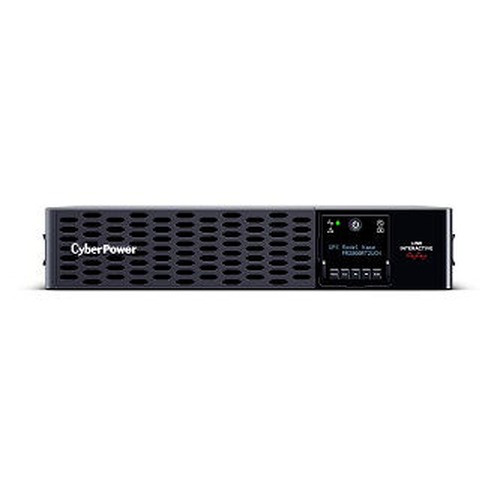
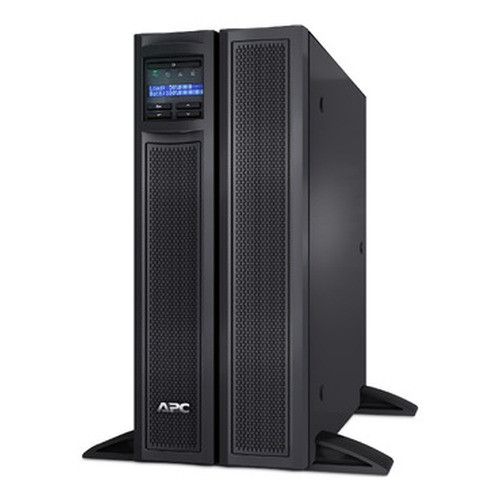
Both the CyberPower PR2000RT2UCN and the APC Smart-UPS X SMX2000LVNCUS are 2U rack/tower line-interactive UPS units targeting the 2000VA class for small-to-midsize IT infrastructure, network closets, and edge deployments on 120 V North American circuits. This comparison evaluates power capacity and runtime, surge protection and input voltage tolerance, and management ecosystem — the three axes that most directly drive purchasing decisions in this product category.
In This Guide
- Which UPS delivers more usable power and how long will it run your load?
- How well does each UPS protect against surges and line voltage fluctuations?
- Which unit offers broader remote management, software integration, and monitoring options?
- Which should you choose: the PR2000RT2UCN or the SMX2000LVNCUS?
- Side-by-Side Specs
- FAQ
Which UPS delivers more usable power and how long will it run your load?
The PR2000RT2UCN is rated at 2000 VA / 2000 W, yielding a unity power factor (1.0). The SMX2000LVNCUS is rated at 1.92 kVA / 1800 W, a power factor of approximately 0.94. For loads that draw close to 2000 W, the CyberPower unit is the only one of the two that is rated to supply that level without derating.
CyberPower specifies runtime explicitly: 13.5 minutes at half load (1000 W) and 4.5 minutes at full load (2000 W), backed by 4 sealed lead-acid batteries with a 3-hour recharge time. APC does not provide explicit runtime figures in the supplied specification set for the SMX2000LVNCUS, so a direct runtime comparison cannot be made from available data.
Both units output a sine wave, which is required for servers and network gear with active PFC power supplies. Neither unit introduces a stepped approximation that could trip PFC supplies.
How well does each UPS protect against surges and line voltage fluctuations?
Surge energy absorption is substantially different between the two models. The PR2000RT2UCN is rated at 2430 J of surge suppression. The SMX2000LVNCUS is rated at 540 J — less than one-quarter the joule rating of the CyberPower unit. For environments with frequent transient events or where connected equipment is high-value, this is a meaningful gap.
Input voltage operating range is nearly equivalent. The PR2000RT2UCN operates from 75–149 VAC (with an adjustable range of 70–155 VAC) before switching to battery. The SMX2000LVNCUS operates from 70–153 V. Both units therefore tolerate similar brown-down and swell conditions without unnecessary battery cycling.
The SMX2000LVNCUS explicitly lists Automatic Voltage Regulation (AVR) as a feature. The PR2000RT2UCN's line-interactive topology implies AVR capability via its adjustable voltage range, but the spec sheet does not use the term AVR directly. The SMX2000LVNCUS also specifies output voltage THD of 5%; the PR2000RT2UCN lists output voltage regulation of ±5% but does not specify THD in the supplied data.
The PR2000RT2UCN carries a 20 A input circuit breaker and a NEMA 5-20P plug. The SMX2000LVNCUS includes NEMA 5-15R, NEMA 5-20R, and NEMA L5-20R output receptacles, offering greater outlet-type flexibility; the PR2000RT2UCN provides 8 × NEMA 5-20R outlets only.
Which unit offers broader remote management, software integration, and monitoring options?
The PR2000RT2UCN provides USB, serial (DB9), SNMP (via optional RMCARD205 card), relay contacts, EPO (Emergency Power Off), and native cloud connectivity as communication interfaces. It ships with PowerPanel® Business management software and carries a $400,000 connected equipment guarantee. The RMCARD205 network card enables remote monitoring and management when installed.
The SMX2000LVNCUS lists web-based management as included ('Yes') and specifies audible alarm modes (on-battery alarm, low battery alarm) and auto-restart. It does not specify a companion software package, a connected equipment guarantee value, an EPO interface, or relay contacts in the supplied specification data.
For IT environments already standardized on APC/Schneider infrastructure and EcoStruxure, the SMX2000LVNCUS integrates into that ecosystem. For environments preferring an agnostic SNMP/cloud path with PowerPanel® Business, the PR2000RT2UCN's communication suite is broader as documented. Neither unit's full software ecosystem can be fully evaluated on supplied specs alone; buyers should verify NMS compatibility independently.
Which should you choose: the PR2000RT2UCN or the SMX2000LVNCUS?
Our take: The PR2000RT2UCN is the stronger choice when maximum rated wattage, higher surge protection, and a documented management software suite are the primary requirements. On power capacity, CyberPower's 2000 W rating outpaces the SMX2000LVNCUS's 1800 W by 200 W — a 11% gap that matters for fully loaded racks. On surge suppression, the PR2000RT2UCN's 2430 J rating is approximately 4.5× the SMX2000LVNCUS's 540 J, a significant protective advantage. CyberPower also documents explicit runtime figures (13.5 min / 4.5 min at half/full load) and a $400,000 connected equipment guarantee; APC provides neither in the available spec data. The SMX2000LVNCUS holds an advantage in outlet-type variety (5-15R, 5-20R, and L5-20R) and is the appropriate choice for organizations already invested in the APC/Schneider EcoStruxure management platform. Buyers standardized on APC infrastructure or requiring L5-20R receptacles should favor the SMX2000LVNCUS; all others will find the PR2000RT2UCN the more capable unit on published specifications.
Side-by-Side Comparison
Spec-for-spec, from manufacturer data.
| Specification | CyberPower PR2000RT2UCN | APC by Schneider Electric SMX2000LVNCUS |
|---|---|---|
| VA Rating | 2000 VA | 1920 VA |
| Watt Rating | 2000 W | 1800 W |
| Power Factor | 1.0 (calculated) | 0.94 (calculated) |
| Topology | Line Interactive | Line-Interactive |
| Waveform | Sine Wave | Sine Wave |
| Surge Suppression | 2430 J | 540 J |
| Input Voltage Range | 75–149 VAC (adj. 70–155 VAC) | 70–153 V |
| Nominal Input Voltage | 120 VAC | 120 V |
| Outlet Types | 8 × NEMA 5-20R | NEMA 5-15R, 5-20R, L5-20R |
| Total Outlets | 8 | — |
| Runtime at Half Load | 13.5 min (1000 W) | — |
| Runtime at Full Load | 4.5 min (2000 W) | — |
| Battery Recharge Time | 3 hours | — |
| Audible Noise | 52.5 dBA at 1 m | 55 dB |
| Communication Interfaces | USB, Serial, SNMP, Cloud, Relay, EPO | Web-based management |
| Connected Equipment Guarantee | $400,000 | — |
| Form Factor | Rack/Tower 2U | Rack/Tower 2U |
| Product Warranty | 3-Year Limited | — |
| Safety Certification | UL1778 / CSA C22.2 No 107.3 | — |
| Weight | 27.2 kg | — |
Frequently Asked Questions
Which should you choose: the PR2000RT2UCN or the SMX2000LVNCUS?
The PR2000RT2UCN is the stronger choice when maximum rated wattage, higher surge protection, and a documented management software suite are the primary requirements. On power capacity, CyberPower's 2000 W rating outpaces the SMX2000LVNCUS's 1800 W by 200 W — a 11% gap that matters for fully loaded racks. On surge suppression, the PR2000RT2UCN's 2430 J rating is approximately 4.5× the SMX2000LVNCUS's 540 J, a significant protective advantage. CyberPower also documents explicit runtime figures (13.5 min / 4.5 min at half/full load) and a $400,000 connected equipment guarantee; APC provides neither in the available spec data. The SMX2000LVNCUS holds an advantage in outlet-type variety (5-15R, 5-20R, and L5-20R) and is the appropriate choice for organizations already invested in the APC/Schneider EcoStruxure management platform. Buyers standardized on APC infrastructure or requiring L5-20R receptacles should favor the SMX2000LVNCUS; all others will find the PR2000RT2UCN the more capable unit on published specifications.
Does the PR2000RT2UCN or the SMX2000LVNCUS support more types of outlets?
The SMX2000LVNCUS supports three outlet types — NEMA 5-15R, NEMA 5-20R, and NEMA L5-20R — giving it greater flexibility for mixed receptacle environments. The PR2000RT2UCN provides 8 outlets, all NEMA 5-20R. If your equipment uses NEMA 5-15 or twist-lock L5-20 plugs, the SMX2000LVNCUS accommodates them natively; the PR2000RT2UCN does not, based on supplied specifications.
Which UPS has better surge protection for sensitive network equipment?
The PR2000RT2UCN is rated at 2430 J of surge suppression versus 540 J for the SMX2000LVNCUS — roughly 4.5 times higher. For environments with frequent voltage transients, or where the connected equipment carries high replacement cost, the CyberPower unit's surge rating provides substantially greater protection on paper. Neither manufacturer's on-site performance can be verified from spec sheets alone.
Can both units be remotely monitored over the network?
Both units support network-based management, but through different paths. The PR2000RT2UCN adds SNMP, cloud connectivity, EPO, and relay interfaces (the RMCARD205 card enables SNMP/network management), bundled with PowerPanel® Business software and a $400,000 connected equipment guarantee. The SMX2000LVNCUS lists web-based management as included but does not specify a bundled software package, SNMP interface, EPO, or connected equipment guarantee in the supplied specification data. Buyers relying on SNMP-based NMS platforms should verify SMX2000LVNCUS compatibility separately.
More UPS Comparisons
- APC by Schneider Electric SMX2000LV vs CyberPower PR2000RTXL2UC
- APC by Schneider Electric SMX2000LV vs CyberPower CP2000PFCRM2U
- APC by Schneider Electric SMX2000LV vs CyberPower PR2000RT2UCN
- APC by Schneider Electric SMX2000LV vs Middle Atlantic UPX-EXPANRUN-OL20
- APC by Schneider Electric SMX2000LV vs APC by Schneider Electric SMX2000LVNCUS
- APC by Schneider Electric SMX2000LV vs APC by Schneider Electric SMX2000RMLV2U
UPS Buying Guides
Get a Second Opinion on Your Camera Choice
Share your site layout, coverage goals, and budget. Our team will validate the camera selection, flag anything we would change, and recommend products that match the use case.