
CyberPower PR2000RT2UC vs APC by Schneider Electric SMX2000LVNCUS: Specification Comparison
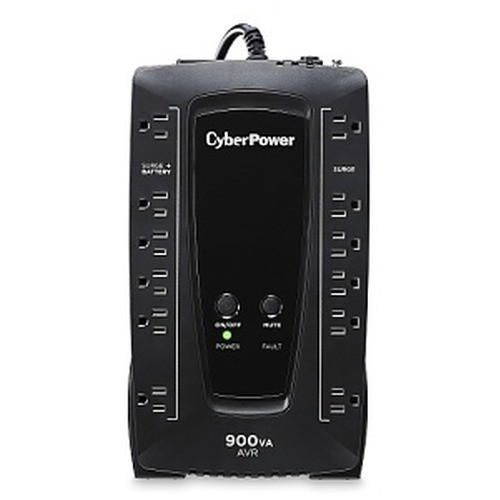
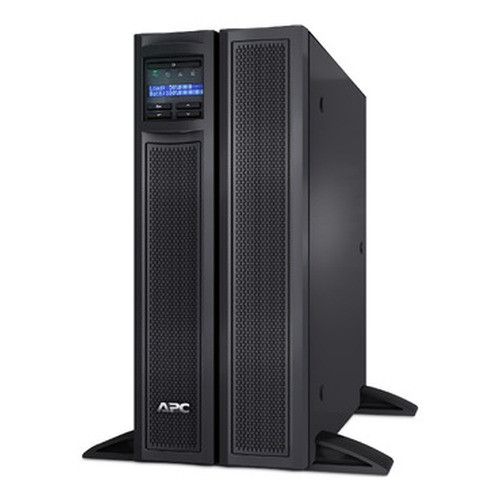
Both the CyberPower PR2000RT2UC and the APC Smart-UPS X SMX2000LVNCUS are 2000VA-class rack/tower line-interactive UPS units delivering pure sine wave output at 120 V for North American installations. They target IT closets, edge deployments, and small data center rows requiring regulated, conditioned power with runtime extension capability. The comparison covers real output power, input voltage tolerance and surge protection, and management and alarm features — the three axes that most directly drive purchasing decisions in this product class.
In This Guide
- Which UPS delivers more usable power output and how do the input tolerance windows compare?
- How do the surge protection ratings and power quality filtering compare?
- What management interfaces and alarm capabilities does each unit provide?
- Which should you choose: the PR2000RT2UC or the SMX2000LVNCUS?
- Side-by-Side Specs
- FAQ
Which UPS delivers more usable power output and how do the input tolerance windows compare?
The CyberPower PR2000RT2UC is rated at a full 2000 W / 2.0 kVA output at a unity power factor (1.0), meaning it can support loads up to its full nameplate capacity without derating. The APC SMX2000LVNCUS is rated at 1800 W / 1.92 kVA, reflecting a power factor of approximately 0.94 — so at its nameplate kVA it can only supply 1800 W of real work. For power-hungry edge servers or workstations that draw close to 2000 W, the CyberPower holds a 200 W / 0.08 kVA advantage.
On input voltage tolerance, the CyberPower accepts utility voltage as low as 75 V and as high as 149 V before switching to battery. The APC accepts a slightly wider low end of 70 V and a slightly wider high end of 153 V. In very low-voltage environments (70–74 V) the APC will ride through on utility power while the CyberPower will transfer to battery. Above 149 V up to 153 V the same advantage holds for the APC. For most commercial utility environments — where voltage rarely dips below 90 V or rises above 140 V — the practical difference is negligible. Both units share the same output voltage of 120 V and support 50/60 Hz input and output.
How do the surge protection ratings and power quality filtering compare?
Surge energy absorption is where the two products diverge most sharply. The CyberPower PR2000RT2UC carries a surge energy rating of 2430 J, versus only 540 J for the APC SMX2000LVNCUS — a 4.5× difference. A higher joule rating means the CyberPower can absorb more cumulative surge energy before its surge protection degrades, which matters in environments with frequent or severe line transients (industrial neighborhoods, areas with frequent lightning, or shared utility feeds with heavy electrical loads).
The CyberPower spec list explicitly confirms EMI/RFI noise filtering and reports a heat dissipation of 124.5 BTU/h. The APC specification sheet lists output voltage Total Harmonic Distortion (THD) at 5%, a figure absent from the CyberPower spec data provided. EMI/RFI filtering is not listed as a discrete spec for the APC. Both units share a noise level near 55 dB (CyberPower 55.5 dB; APC 55 dB), so acoustic impact in open offices or small wiring closets is essentially equivalent. The APC lists AVR (Automatic Voltage Regulation) explicitly; the CyberPower spec does not call it out by name, though line-interactive topology provides buck/boost AVR by definition.
What management interfaces and alarm capabilities does each unit provide?
The APC SMX2000LVNCUS lists web-based management as a specified feature, enabling browser-accessible status monitoring and configuration without a separate network management card dependency (subject to APC's actual hardware implementation; no NMC card spec is provided here). It also enumerates two specific alarm modes: alarm when on battery, and low battery alarm. Auto-restart is also listed for the APC, meaning the unit will automatically restore output power when utility returns after a shutdown.
The CyberPower PR2000RT2UC references 'Cloud' in its product name and lists audible alarms as present, but the spec data provided does not enumerate specific alarm modes, confirm web-based management as a discrete feature, or list auto-restart. The CyberPower does specify a 6 ms transfer time to battery — a figure absent from the APC spec data — which is relevant for load equipment sensitive to switchover gaps. For IT buyers who need verified out-of-box remote monitoring or scripted auto-restart, the APC's explicit listings carry more spec-sheet certainty than the CyberPower's spec set as provided.
Outlet configurations: the APC lists three outlet types — NEMA 5-15R, NEMA 5-20R, and NEMA L5-20R — providing flexibility for mixed receptacle loads including twist-lock circuits. The CyberPower spec identifies the cord as 8×5-20R with a 10 ft cord and 15 A maximum current; individual outlet type enumeration is not broken out further in the provided spec data.
Which should you choose: the PR2000RT2UC or the SMX2000LVNCUS?
Our take: The PR2000RT2UC is the stronger choice when raw real-power capacity and surge protection margin are the primary concerns. It delivers 200 W more usable output (2000 W vs. 1800 W) at unity power factor, absorbs surge energy at 2430 J versus the APC's 540 J — a 4.5× advantage — and specifies a 6 ms battery transfer time absent from the APC data. The SMX2000LVNCUS is the stronger choice when verified remote management and outlet versatility are required: it explicitly lists web-based management, auto-restart, and three outlet types including NEMA L5-20R twist-lock, and it accepts a slightly wider input voltage window (70–153 V vs. 75–149 V). Buyers powering dense server rows near the 2000 W ceiling or in surge-prone utility environments should favor the CyberPower; IT teams who need confirmed browser-based monitoring or must terminate twist-lock feeds should favor the APC.
Side-by-Side Comparison
Spec-for-spec, from manufacturer data.
| Specification | CyberPower PR2000RT2UC | APC by Schneider Electric SMX2000LVNCUS |
|---|---|---|
| UPS Topology | Line-Interactive | Line-Interactive |
| Output Power Capacity | 2.0 kVA | 1.92 kVA |
| Output Power (Watts) | 2000 W | 1800 W |
| Power Factor | 1.0 | — |
| Waveform | Sine | Sine |
| Input Voltage Min | 75 V | 70 V |
| Input Voltage Max | 149 V | 153 V |
| Input Frequency | 47–63 Hz | 50/60 Hz |
| Output Voltage Max | 120 V | 120 V |
| Output Frequency | 50/60 Hz | 50/60 Hz |
| Surge Energy Rating | 2430 J | 540 J |
| Battery Transfer Time | 6 ms | — |
| Output Voltage THD | — | 5% |
| Noise Level | 55.5 dB | 55 dB |
| Web-Based Management | — | Yes |
| Auto-Restart | — | Yes |
| AVR | — | Yes |
| EMI/RFI Filtering | Yes | — |
| Audible Alarms | Yes | Yes (on battery, low battery) |
| Outlet Types | NEMA 5-20R (×8, 10 ft cord) | NEMA 5-15R, NEMA 5-20R, NEMA L5-20R |
| Maximum Current | 15 A | — |
| Heat Dissipation | 124.5 BTU/h | — |
Frequently Asked Questions
Which should you choose: the PR2000RT2UC or the SMX2000LVNCUS?
The PR2000RT2UC is the stronger choice when raw real-power capacity and surge protection margin are the primary concerns. It delivers 200 W more usable output (2000 W vs. 1800 W) at unity power factor, absorbs surge energy at 2430 J versus the APC's 540 J — a 4.5× advantage — and specifies a 6 ms battery transfer time absent from the APC data. The SMX2000LVNCUS is the stronger choice when verified remote management and outlet versatility are required: it explicitly lists web-based management, auto-restart, and three outlet types including NEMA L5-20R twist-lock, and it accepts a slightly wider input voltage window (70–153 V vs. 75–149 V). Buyers powering dense server rows near the 2000 W ceiling or in surge-prone utility environments should favor the CyberPower; IT teams who need confirmed browser-based monitoring or must terminate twist-lock feeds should favor the APC.
Is the PR2000RT2UC or the SMX2000LVNCUS better for powering servers that draw close to 2000 W?
The PR2000RT2UC is the better fit. It is rated for a full 2000 W at a power factor of 1.0, meaning it can deliver its entire nameplate wattage to the load. The SMX2000LVNCUS is rated at 1800 W despite its 1.92 kVA nameplate, so a 2000 W load would exceed its specified real-power capacity.
Which unit offers better protection against power surges and line transients?
The PR2000RT2UC has a surge energy rating of 2430 J, compared to 540 J for the SMX2000LVNCUS — roughly 4.5 times more surge absorption capacity. In environments with frequent lightning activity, shared industrial utility feeds, or a history of line transients, the CyberPower's higher joule rating provides substantially more cumulative surge protection before the suppressor degrades.
Does either UPS support web-based remote monitoring out of the box?
The SMX2000LVNCUS explicitly lists web-based management as a specified feature. The PR2000RT2UC includes 'Cloud' in its product name, but the provided spec data does not list web-based management as a discrete confirmed spec. Buyers who require verified out-of-box browser-accessible monitoring should confirm the CyberPower's network management capabilities against its full product documentation before selecting it.
More UPS Comparisons
- APC by Schneider Electric SMX2000LV vs CyberPower PR2000RTXL2UC
- APC by Schneider Electric SMX2000LV vs CyberPower CP2000PFCRM2U
- APC by Schneider Electric SMX2000LV vs CyberPower PR2000RT2UCN
- APC by Schneider Electric SMX2000LV vs Middle Atlantic UPX-EXPANRUN-OL20
- APC by Schneider Electric SMX2000LV vs APC by Schneider Electric SMX2000LVNCUS
- APC by Schneider Electric SMX2000LV vs APC by Schneider Electric SMX2000RMLV2U
UPS Buying Guides
Get a Second Opinion on Your Camera Choice
Share your site layout, coverage goals, and budget. Our team will validate the camera selection, flag anything we would change, and recommend products that match the use case.