
CyberPower PR1000RT2UC vs APC by Schneider Electric SMT1000J: Specification Comparison
Both the CyberPower PR1000RT2UC and the APC SMT1000J are 1000VA line-interactive UPS units targeting small-to-medium installations that need conditioned sine wave output during outages. The CyberPower is a 2U rack-mount unit rated for North American 120V infrastructure; the APC is a tower unit localized for the Japanese 100V market. Despite the shared VA class and topology, buyers should note the differing input voltage ranges, true watt ratings, and form factors before cross-shopping for a single deployment.
In This Guide
- How much real watt capacity and input voltage tolerance does each unit deliver?
- What level of surge protection and noise filtering does each UPS provide?
- What management interfaces, physical form factor, and environmental specs are provided?
- Which should you choose: the PR1000RT2UC or the SMT1000J?
- Side-by-Side Specs
- FAQ
How much real watt capacity and input voltage tolerance does each unit deliver?
The PR1000RT2UC carries a 1000W true power rating at a 1.0 power factor, meaning its full 1000VA translates directly into 1000W of usable load. The SMT1000J is rated at 670W from its 1000VA, reflecting a 0.67 power factor — common in older APC Smart-UPS designs — so roughly 33% less watt headroom under the same VA label.
On the input side, the PR1000RT2UC accepts 75–149V AC, a wide 74V window that accommodates significant browndowns before switching to battery. The SMT1000J lists a standard range of 80–123V AC (with an adjustable range of 70–125V), a narrower tolerance and one calibrated for Japan's 100V nominal rather than North America's 120V. Buyers on a 120V grid cannot deploy the SMT1000J without a step-down transformer.
What level of surge protection and noise filtering does each UPS provide?
The PR1000RT2UC specifies a surge energy rating of 2,430 joules and explicitly lists both EMI/RFI noise filtering and surge protection as included features. The SMT1000J lists a surge energy rating of 459 joules — approximately one-fifth the joule rating of the CyberPower unit. Neither spec set provides clamping voltage or IEEE 587 category data, so the comparison is limited to the joule figures provided.
EMI/RFI noise filtering is confirmed for the PR1000RT2UC; the SMT1000J spec sheet does not state EMI/RFI filtering capability, so that attribute cannot be confirmed from the provided data.
What management interfaces, physical form factor, and environmental specs are provided?
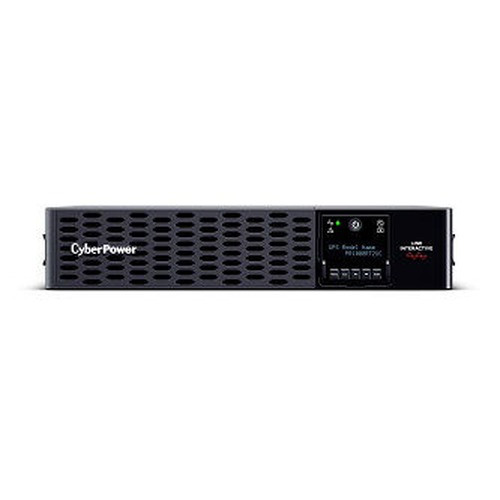
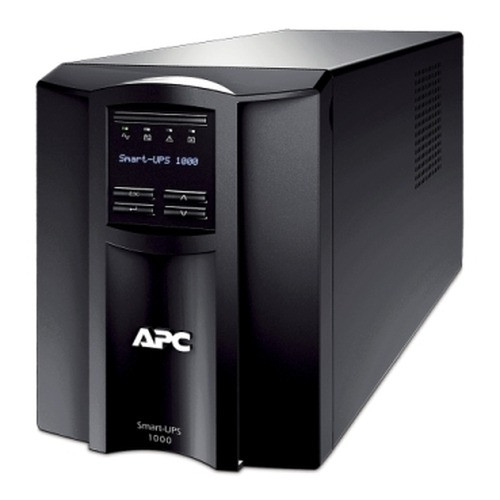
The PR1000RT2UC is described as a 2U rack-mount unit with cloud management capability implied by its product name suffix ('Cloud'), though no specific software platform or SNMP card details are enumerated in the provided specs. The SMT1000J is a tower unit featuring an LCD display, a USB Type-A remote management interface, and an expansion SmartSlot for optional network management cards — a well-documented APC proprietary slot.
Environmental operating limits are specified only for the SMT1000J: 32–104°F (0–40°C) operating temperature and 0–95% relative humidity. The SMT1000J also lists a sound emission of 45 dBA. The PR1000RT2UC provides none of these environmental ratings in the supplied spec data. The APC unit carries a stated 2-year limited warranty and lists compliance with UL 1449, VCCI Class A ITE, RoHS Exemption 7b, and REACH; compliance certifications are not enumerated for the PR1000RT2UC in the provided data.
Which should you choose: the PR1000RT2UC or the SMT1000J?
Our take: The PR1000RT2UC is the stronger choice when deploying on a North American 120V grid and prioritizing maximum watt capacity and surge protection headroom. The PR1000RT2UC delivers 1000W true output versus the SMT1000J's 670W — a 330W advantage under equivalent load — and its surge energy rating of 2,430J dwarfs the SMT1000J's 459J, offering substantially greater transient protection. Its input window of 75–149V also tolerates deeper brownouts before switching to battery compared to the SMT1000J's 80–123V. However, the SMT1000J is specifically localized for Japan's 100V infrastructure and is the only appropriate choice for that market without voltage conversion. The SMT1000J also provides documented operating-temperature limits, an LCD display, a SmartSlot expansion bay, and a stated 2-year warranty — all absent from the PR1000RT2UC's provided specifications. The PR1000RT2UC suits North American rack environments; the SMT1000J is purpose-built for Japanese 100V tower deployments.
Side-by-Side Comparison
Spec-for-spec, from manufacturer data.
| Specification | CyberPower PR1000RT2UC | APC by Schneider Electric SMT1000J |
|---|---|---|
| UPS Topology | Line-Interactive | Line-Interactive |
| Output Capacity (VA) | 1000 VA | 1000 VA |
| Output Power (Watts) | 1000 W | 670 W |
| Power Factor | 1.0 | — |
| Output Waveform | Sine Wave | Sine Wave |
| Nominal Input Voltage | 120 V | 100 V |
| Input Voltage Range | 75–149 V | 80–123 V (adj. 70–125 V) |
| Input Frequency | 47–63 Hz | 50/60 Hz (47–53 / 57–63 Hz) |
| Output Voltage | 120 V | 100 V ±5% |
| Output Frequency | 60 Hz | 47–53 / 57–63 Hz |
| Surge Energy Rating | 2430 J | 459 J |
| Transfer/Response Time | 6 ms | — |
| EMI/RFI Filtering | Yes | — |
| Audible Alarm | Yes | Yes |
| LCD Display | — | Yes |
| Management Interface | Cloud (per model name) | USB Type-A; SmartSlot expansion |
| Form Factor | 2U Rack-Mount | Tower |
| Outlet Type | NEMA 5-15R (×8 implied) | NEMA 5-15 ×8 |
| Battery Recharge Time | — | 4 hours |
| Operating Temperature | — | 32–104 °F (0–40 °C) |
| Sound Emission | — | 45 dBA |
| Weight | — | 50.2 lbs |
| Warranty | — | 2 years limited |
| Compliance / Certifications | — | UL 1449, VCCI Class A ITE, RoHS Exemption 7b, REACH |
Frequently Asked Questions
Which should you choose: the PR1000RT2UC or the SMT1000J?
The PR1000RT2UC is the stronger choice when deploying on a North American 120V grid and prioritizing maximum watt capacity and surge protection headroom. The PR1000RT2UC delivers 1000W true output versus the SMT1000J's 670W — a 330W advantage under equivalent load — and its surge energy rating of 2,430J dwarfs the SMT1000J's 459J, offering substantially greater transient protection. Its input window of 75–149V also tolerates deeper brownouts before switching to battery compared to the SMT1000J's 80–123V. However, the SMT1000J is specifically localized for Japan's 100V infrastructure and is the only appropriate choice for that market without voltage conversion. The SMT1000J also provides documented operating-temperature limits, an LCD display, a SmartSlot expansion bay, and a stated 2-year warranty — all absent from the PR1000RT2UC's provided specifications. The PR1000RT2UC suits North American rack environments; the SMT1000J is purpose-built for Japanese 100V tower deployments.
Can I use the APC SMT1000J in the United States on a standard 120V outlet?
Based on the provided specifications, the SMT1000J is localized for Japan and lists an input voltage of AC 100V with a range of 80–123V. North American 120V nominal feed falls near the top of its range and may be outside its optimal operating band. The SMT1000J spec does not list North American compliance certifications. Without step-down transformation, use on a standard US 120V circuit is not recommended based on the provided data.
Which unit can support a heavier watt load from the same 1000VA rating?
The PR1000RT2UC specifies a 1000W output at a 1.0 power factor, meaning all 1000VA converts to watts. The SMT1000J is rated at 670W from its 1000VA, a 0.67 power factor. If your connected equipment draws more than 670W, the PR1000RT2UC has the capacity; the SMT1000J does not, based on the specifications provided.
Which UPS offers better surge protection for sensitive electronics?
Based solely on the provided specifications, the PR1000RT2UC lists a 2,430-joule surge energy rating versus the SMT1000J's 459 joules — a roughly 5:1 difference. The PR1000RT2UC also explicitly confirms EMI/RFI noise filtering; the SMT1000J's spec data does not confirm that feature. On the joule metric alone, the PR1000RT2UC provides substantially greater surge protection as specified.
More UPS Comparisons
- CyberPower PR1000RTXL2UC vs APC by Schneider Electric SURT1000RMXLI
- CyberPower PR1000RTXL2UC vs APC by Schneider Electric SMT1000CUS
- CyberPower PR1000RTXL2UC vs Vertiv GXT5-1000LVRT2UXL
- CyberPower PR1000RTXL2UC vs APC by Schneider Electric SMT1000J
- CyberPower PR1000RTXL2UC vs CyberPower CP1000PFCLCD
- CyberPower PR1000RTXL2UC vs CyberPower PR1000LCD
UPS Buying Guides
Get a Second Opinion on Your Camera Choice
Share your site layout, coverage goals, and budget. Our team will validate the camera selection, flag anything we would change, and recommend products that match the use case.