
CyberPower OR500LCDRM1U vs APC by Schneider Electric SCL500RM1UC: Specification Comparison
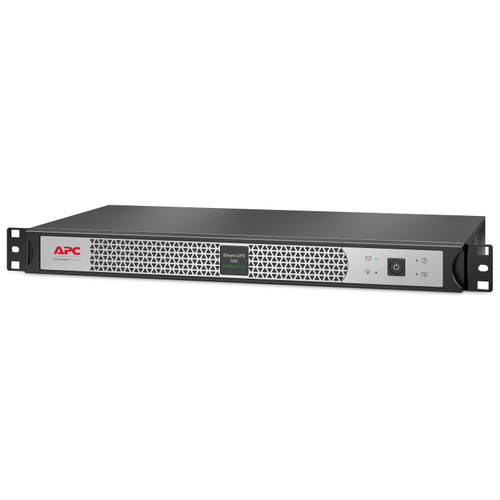
Both the CyberPower OR500LCDRM1U and the APC by Schneider Electric SCL500RM1UC are 500VA, 1U rackmount line-interactive UPS units designed for small server rooms, network closets, and edge deployments running on 120V North American power. A buyer evaluating either unit is looking at the same product class: compact rack UPS with battery backup and surge protection for critical loads. The comparison turns on power output, voltage regulation quality, runtime characteristics, and the supplemental specs each manufacturer chose to publish.

In This Guide
- Which unit delivers more usable watts and how does each regulate output voltage?
- What do the battery specs and runtime characteristics reveal about backup duration?
- How do surge protection, alarm handling, and certifications compare for a deployment decision?
- Which should you choose: the OR500LCDRM1U or the SCL500RM1UC?
- Side-by-Side Specs
- FAQ
Which unit delivers more usable watts and how does each regulate output voltage?
The APC SCL500RM1UC is rated at 400W output versus the CyberPower OR500LCDRM1U's 300W — a 33% advantage in real watt capacity at the same 500VA nameplate. For loads that draw close to the VA ceiling, this difference is meaningful: the SCL500RM1UC can support heavier single-phase equipment before the UPS is driven into derating territory.
On voltage regulation, the SCL500RM1UC specifies an output voltage regulation of ±5% and confirms a pure sine wave output waveform. The OR500LCDRM1U lists output voltage as 120VAC ±10%. Tighter regulation (±5% vs ±10%) matters for active PFC power supplies common in modern servers and network switches, which can behave erratically on wider-tolerance or simulated sine waveforms. The OR500LCDRM1U's datasheet does not specify waveform type in the provided specs.
The SCL500RM1UC also lists AVR (Automatic Voltage Regulation) as a confirmed feature with a published input operating range of 92–139V. The OR500LCDRM1U specifies an input range of 90–140V — marginally wider on both ends — but does not explicitly list AVR as a named feature in the provided specs.
What do the battery specs and runtime characteristics reveal about backup duration?
The CyberPower OR500LCDRM1U provides an explicit battery specification: 2 × 6V/7Ah sealed lead-acid cells (12V/7Ah effective). This allows installers and maintenance teams to identify replacement batteries precisely and calculate approximate runtime using standard SLA discharge curves. No battery specification is provided in the APC SCL500RM1UC's supplied specs.
Neither product's provided specifications include a published runtime table (e.g., minutes at 50% or 100% load). Buyers who need runtime estimates for a specific load will need to consult manufacturer runtime calculators or full datasheets beyond the specs supplied here.
The OR500LCDRM1U's lower watt rating (300W) may translate to longer runtime at equivalent actual loads compared to the SCL500RM1UC (400W capacity), since a smaller load represents a higher percentage of reserve capacity on the CyberPower — but this cannot be confirmed without runtime tables from both units.
How do surge protection, alarm handling, and certifications compare for a deployment decision?
The APC SCL500RM1UC publishes a surge energy rating of 680 joules and specifies a transfer response time of 6ms — two figures directly relevant to how well the unit protects downstream equipment during transients and how quickly it switches to battery. It also lists a noise level of 45 dB and confirms audible alarms activate when running on battery. Output frequency is specified at 50/60Hz. No surge joule rating, transfer time, noise level, or output frequency is provided in the CyberPower OR500LCDRM1U's supplied specs.
On certifications, the OR500LCDRM1U carries UL1778, cUL 107.1, FCC DOC Class B, ENERGY STAR Certified, and RoHS Compliant listings. The SCL500RM1UC's supplied specs do not list certifications. ENERGY STAR and FCC Class B listings on the CyberPower are relevant for facilities with strict emissions or energy-efficiency procurement requirements.
The OR500LCDRM1U ships with a 3-year limited warranty, explicitly stated. Warranty terms for the SCL500RM1UC are not included in the provided specs.
Which should you choose: the OR500LCDRM1U or the SCL500RM1UC?
Our take: The SCL500RM1UC is the stronger choice when load wattage, output waveform quality, and published surge protection data are the primary selection criteria. It delivers 400W versus the OR500LCDRM1U's 300W — a 33% higher real-power ceiling — specifies a pure sine wave output and tighter ±5% voltage regulation versus ±10%, and publishes a 680J surge rating and 6ms transfer time that the OR500LCDRM1U specs do not include. The OR500LCDRM1U holds advantages where documented battery replaceability, certifications, and warranty terms drive procurement: it specifies 2×6V/7Ah SLA cells (enabling direct battery sourcing), carries ENERGY STAR and FCC Class B listings, and comes with an explicit 3-year warranty — none of which appear in the SCL500RM1UC's provided specs. Deployments running active PFC server PSUs should weight the SCL500RM1UC's sine wave confirmation heavily; facilities with strict energy-efficiency or emissions compliance requirements will favor the CyberPower's published certifications.
Side-by-Side Comparison
Spec-for-spec, from manufacturer data.
| Specification | CyberPower OR500LCDRM1U | APC by Schneider Electric SCL500RM1UC |
|---|---|---|
| VA Rating | 500 VA | 500 VA |
| Watt Rating | 300 W | 400 W |
| UPS Topology | Not specified in provided specs | Line-Interactive |
| Output Waveform | Not specified in provided specs | Sine |
| Input Voltage Range | 90–140 VAC | 92–139 V |
| Output Voltage | 120 VAC ±10% | 120 V ±5% |
| Output Frequency | Not specified in provided specs | 50/60 Hz |
| AVR | Not specified in provided specs | Yes |
| Surge Energy Rating | Not specified in provided specs | 680 J |
| Transfer Response Time | Not specified in provided specs | 6 ms |
| Noise Level | Not specified in provided specs | 45 dB |
| Audible Alarm | Not specified in provided specs | Yes — on battery |
| Battery Type | 2 × 6V/7Ah Sealed Lead-Acid | — |
| Form Factor | 1U Rackmount | 1U Rackmount |
| Certifications | UL1778, cUL 107.1, FCC Class B, ENERGY STAR, RoHS | Not specified in provided specs |
| Warranty | 3 Year Limited | Not specified in provided specs |
Frequently Asked Questions
Which should you choose: the OR500LCDRM1U or the SCL500RM1UC?
The SCL500RM1UC is the stronger choice when load wattage, output waveform quality, and published surge protection data are the primary selection criteria. It delivers 400W versus the OR500LCDRM1U's 300W — a 33% higher real-power ceiling — specifies a pure sine wave output and tighter ±5% voltage regulation versus ±10%, and publishes a 680J surge rating and 6ms transfer time that the OR500LCDRM1U specs do not include. The OR500LCDRM1U holds advantages where documented battery replaceability, certifications, and warranty terms drive procurement: it specifies 2×6V/7Ah SLA cells (enabling direct battery sourcing), carries ENERGY STAR and FCC Class B listings, and comes with an explicit 3-year warranty — none of which appear in the SCL500RM1UC's provided specs. Deployments running active PFC server PSUs should weight the SCL500RM1UC's sine wave confirmation heavily; facilities with strict energy-efficiency or emissions compliance requirements will favor the CyberPower's published certifications.
Which UPS — the OR500LCDRM1U or the SCL500RM1UC — can handle a heavier server load?
Based on provided specs, the APC SCL500RM1UC is rated at 400W output versus the CyberPower OR500LCDRM1U's 300W. If your equipment draws more than 300W, only the SCL500RM1UC has the specified headroom to support it within rated limits.
Does either unit produce a pure sine wave output, which matters for modern server power supplies?
The APC SCL500RM1UC explicitly specifies a sine waveform output. The CyberPower OR500LCDRM1U's provided specifications do not state the output waveform type. Buyers with active PFC power supplies should confirm waveform type with CyberPower directly before selecting the OR500LCDRM1U.
Which unit is easier to maintain in the field, particularly for battery replacement?
The CyberPower OR500LCDRM1U specifies its battery as 2×6V/7Ah sealed lead-acid cells, giving technicians a clear replacement target. The APC SCL500RM1UC's provided specifications do not include battery details. The OR500LCDRM1U also carries an explicit 3-year limited warranty; warranty terms for the SCL500RM1UC are not present in the supplied specs.
More UPS Comparisons
- Vertiv GXT5-500LVRT2UXL vs APC by Schneider Electric SUA500PDR-H
- Vertiv GXT5-500LVRT2UXL vs APC by Schneider Electric BE500G3
- Vertiv GXT5-500LVRT2UXL vs APC by Schneider Electric SCL500RM1UC
- Vertiv GXT5-500LVRT2UXL vs APC by Schneider Electric SCL500RMI1UC
- APC by Schneider Electric SUA500PDR-H vs Middle Atlantic S500R
- APC by Schneider Electric SUA500PDR-H vs APC by Schneider Electric BE500G3
UPS Buying Guides
Get a Second Opinion on Your Camera Choice
Share your site layout, coverage goals, and budget. Our team will validate the camera selection, flag anything we would change, and recommend products that match the use case.