
Vertiv GXT5-500LVRT2UXL vs APC by Schneider Electric SCL500RMI1UC: Specification Comparison
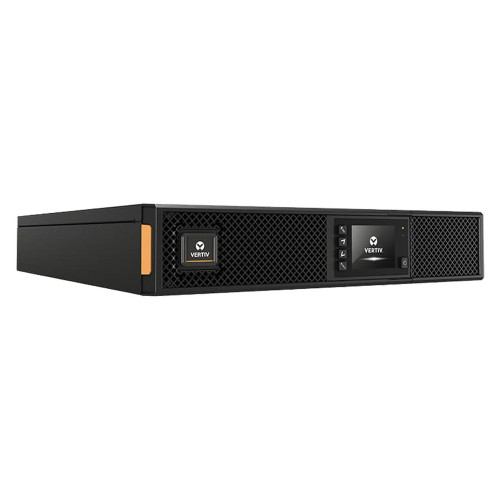
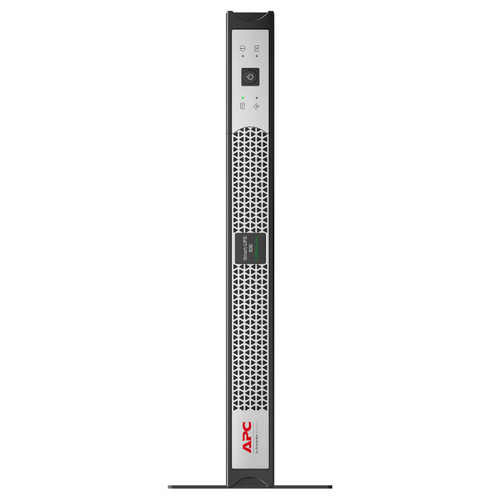
Both units are 500VA rack-mountable UPS devices marketed to IT and physical-security installers who need protected, conditioned power for edge servers, NVRs, access-control panels, or network switches. The Vertiv Liebert GXT5-500LVRT2UXL is a 120V North American model with online double-conversion topology, while the APC SCL500RMI1UC is a 230V international model with line-interactive topology. Despite the same VA rating, they diverge on topology, battery chemistry, watt rating, voltage region, and form-factor depth — dimensions that matter enormously at the rack level.
In This Guide
Which unit delivers cleaner, more continuous power protection?
The Vertiv GXT5-500LVRT2UXL uses online double-conversion topology, meaning utility power is continuously rectified to DC and re-inverted to AC; the transfer time to battery is zero milliseconds. Output is a pure sinewave regulated to ±3% regardless of input fluctuations across a 60–150VAC operating window. Rated output is 500VA / 500W, yielding a unity (1.0) power factor.
The APC SCL500RMI1UC uses line-interactive topology, which passes utility power directly to the load under normal conditions and only switches the inverter on a fault or out-of-range input. APC specifies a pure sine output waveform. The unit is rated 500VA / 400W, reflecting a 0.8 power factor. Input operating range is 208–253V (230V nominal), and input frequency is 47–63 Hz. Surge energy rating is specified at 510 J; the Vertiv datasheet does not publish a surge joule figure.
For loads that are sensitive to any waveform distortion or brief transition events — such as active-PFC power supplies in servers, high-resolution IP cameras, or precision timing equipment — the zero-transfer-time online topology of the Vertiv unit provides a qualitatively higher level of protection. The APC's line-interactive design is adequate for most standard IT loads and offers a 510 J surge rating explicitly stated in its spec sheet, a figure absent from the Vertiv listing.
How do battery technology, estimated runtime, and serviceability compare?
The Vertiv GXT5-500LVRT2UXL uses hot-swappable sealed lead-acid (VRLA) batteries. Vertiv publishes runtime estimates of 15–18 minutes at 50% load (250W) and 8–10 minutes at 80% load (400W). Hot-swap capability means batteries can be replaced without powering down the protected load — a critical advantage in 24/7 surveillance or access-control environments.
The APC SCL500RMI1UC uses Lithium-Ion (Li-Ion) battery technology. APC does not publish runtime figures in the provided specification set for this model. Lithium-Ion cells offer a longer calendar life, lower weight, and faster recharge compared to VRLA chemistry, but the actual runtime at any given load cannot be confirmed from the available data.
Buyers who need a published, verified runtime for battery backup planning (e.g., generator start-up intervals, city-inspection compliance for door-control panels) can rely on Vertiv's stated figures. Those who prioritize battery longevity and reduced replacement frequency may favor the APC Li-Ion chemistry, understanding that runtime data was not provided in the specification sheet supplied.
Which unit offers broader management connectivity and integration options?
The Vertiv GXT5-500LVRT2UXL provides USB, RS485, and RS232 ports natively, plus an optional RDU101 network card slot for SNMP/network management. A color LCD displays real-time load percentage, estimated runtime, input/output voltage, and battery health. The unit is compatible with PowerAlert software, VMware, Windows Server, and Linux shutdown daemons. It ships with a NEMA 5-15P input plug and 6 ft cord, with 6 x NEMA 5-15R output receptacles (4 programmable, 2 non-programmable) suited for North American 120V infrastructure.
The APC SCL500RMI1UC includes a SmartConnect port (APC's cloud-based monitoring interface) for remote visibility without a separate network management card. It does not include a SmartSlot for optional network card expansion — that spec is explicitly listed as 'No' in the provided data. Output is 4 x IEC C13 receptacles at 230V, appropriate for international rack equipment. Display and software compatibility specs are not provided in the available data.
For integrators deploying in North American 120V environments with existing Vertiv/Liebert management infrastructure or VMware/Hyper-V hypervisors, the Vertiv's native multi-port connectivity and optional SNMP card slot offer more flexibility. The APC's built-in SmartConnect cloud port removes the need for a separate NMC for basic remote monitoring, but the absence of a SmartSlot limits expansion. The two units target different voltage regions (120V vs 230V) and are not interchangeable on that basis alone.
Which should you choose: the GXT5-500LVRT2UXL or the SCL500RMI1UC?
Our take: The GXT5-500LVRT2UXL is the stronger choice when zero-transfer-time power protection, North American 120V infrastructure, and published runtime guarantees are required. Its online double-conversion topology eliminates all transfer delay versus the APC's line-interactive design, it delivers 500W versus the SCL500RMI1UC's 400W (a 25% higher real-power output), and it publishes concrete runtime figures (15–18 min at 50% load, 8–10 min at 80% load) that the APC spec sheet does not provide. The APC SCL500RMI1UC is the appropriate selection for 230V international deployments, where its Lithium-Ion battery chemistry offers longer service life and its SmartConnect port enables cloud monitoring without a separate NMC. These units are not direct substitutes: voltage region alone (120V vs 230V nominal) disqualifies cross-deployment without additional infrastructure changes.
Side-by-Side Comparison
Spec-for-spec, from manufacturer data.
| Specification | Vertiv GXT5-500LVRT2UXL | APC by Schneider Electric SCL500RMI1UC |
|---|---|---|
| UPS Topology | Online Double Conversion | Line-Interactive |
| Capacity (VA) | 500 VA | 500 VA |
| Capacity (Watts) | 500 W | 400 W |
| Power Factor | 1.0 (unity) | 0.8 |
| Input Voltage (Nominal) | 120 VAC | 230 VAC |
| Input Voltage Range | 60–150 VAC | 208–253 VAC |
| Input Frequency | 50/60 Hz auto-sensing | 47–63 Hz |
| Output Voltage | 110/115/120/125 VAC (user-configurable, ±3%) | 230 VAC |
| Output Waveform | Pure sinewave | Pure sinewave |
| Transfer Time | Zero (continuous online) | Not specified |
| Battery Chemistry | VRLA (sealed lead-acid) | Lithium-Ion (Li-Ion) |
| Battery Hot-Swappable | Yes | Not specified |
| Runtime at 50% Load | 15–18 minutes | Not specified |
| Runtime at 80% Load | 8–10 minutes | Not specified |
| Output Receptacles | 6 x NEMA 5-15R (4 programmable, 2 non-programmable) | 4 x IEC C13 |
| Form Factor / Rack Height | 2U Rack/Tower Convertible | 1U Rackmount/Tower |
| Connectivity Ports | USB, RS485, RS232, optional SNMP card slot | SmartConnect port (cloud); no SmartSlot |
| Display | Color LCD (load, runtime, voltage, battery health) | Not specified |
| Surge Energy Rating | Not specified | 510 J |
| Efficiency | >92% at 50% load (Energy Star 2.0) | Not specified |
| Operating Temperature | 0–40°C (32–104°F) | Not specified |
| Weight | ~28 lbs (12.7 kg) | Not specified |
| Warranty | 3-year advanced replacement (UPS + battery) | Not specified |
| Certifications | UL 1778, CSA 22.2 No. 107.1, Energy Star 2.0, RoHS2, REACH | Not specified |
Frequently Asked Questions
Which should you choose: the GXT5-500LVRT2UXL or the SCL500RMI1UC?
The GXT5-500LVRT2UXL is the stronger choice when zero-transfer-time power protection, North American 120V infrastructure, and published runtime guarantees are required. Its online double-conversion topology eliminates all transfer delay versus the APC's line-interactive design, it delivers 500W versus the SCL500RMI1UC's 400W (a 25% higher real-power output), and it publishes concrete runtime figures (15–18 min at 50% load, 8–10 min at 80% load) that the APC spec sheet does not provide. The APC SCL500RMI1UC is the appropriate selection for 230V international deployments, where its Lithium-Ion battery chemistry offers longer service life and its SmartConnect port enables cloud monitoring without a separate NMC. These units are not direct substitutes: voltage region alone (120V vs 230V nominal) disqualifies cross-deployment without additional infrastructure changes.
Can I use either of these UPS units in both North America and Europe?
No. The Vertiv GXT5-500LVRT2UXL is rated for 120VAC input (operating range 60–150VAC) and ships with a NEMA 5-15P plug — it is designed exclusively for North American 120V circuits. The APC SCL500RMI1UC operates at 208–253VAC input (230V nominal) with IEC C13 outputs, making it a 230V international model. Using either unit outside its rated voltage region requires infrastructure changes and may void certifications.
Which UPS is better for powering an NVR or server that must never experience a power interruption?
The Vertiv GXT5-500LVRT2UXL's online double-conversion topology provides zero milliseconds transfer time, meaning the load is continuously powered from the inverter with no switching event at all — the utility input never connects directly to the output. The APC SCL500RMI1UC uses line-interactive topology, which does involve a brief inverter-takeover transition during an outage. For active-PFC server power supplies or NVRs where even a sub-millisecond gap can cause a reset, the Vertiv's online topology is the technically superior choice, assuming a 120V North American environment.
Does the APC SCL500RMI1UC support adding a network management card for SNMP monitoring?
No. The provided APC specification sheet explicitly lists SmartSlot as 'No,' meaning this model does not have an expansion slot for an optional network management card. It does include a SmartConnect port for APC's cloud-based remote monitoring service. The Vertiv GXT5-500LVRT2UXL, by contrast, includes an optional RDU101 network card slot that supports SNMP-based management integration.
More UPS Comparisons
- Vertiv GXT5-500LVRT2UXL vs APC by Schneider Electric SUA500PDR-H
- Vertiv GXT5-500LVRT2UXL vs APC by Schneider Electric BE500G3
- Vertiv GXT5-500LVRT2UXL vs APC by Schneider Electric SCL500RM1UC
- APC by Schneider Electric SUA500PDR-H vs Middle Atlantic S500R
- APC by Schneider Electric SUA500PDR-H vs APC by Schneider Electric BE500G3
- APC by Schneider Electric SUA500PDR-H vs APC by Schneider Electric SCL500RM1UC
UPS Buying Guides
Get a Second Opinion on Your Camera Choice
Share your site layout, coverage goals, and budget. Our team will validate the camera selection, flag anything we would change, and recommend products that match the use case.