
CyberPower OR2200PFCRT2U vs Panduit U02S12V: Specification Comparison
Both the CyberPower OR2200PFCRT2U and the Panduit U02S12V are 2000VA-class rack-mount uninterruptible power supplies delivering pure sine wave output at 120V AC, making them direct cross-shop candidates for IT closets, edge deployments, and data center rows. This comparison examines the three dimensions that matter most for a UPS purchasing decision: power delivery and output quality, physical form factor and installation fit, and standards compliance plus application suitability — drawing exclusively from the published specifications for each unit.

In This Guide
- How do the two units compare on rated power, output quality, and battery characteristics?
- Which unit fits better physically in standard 19-inch rack and mixed rack/tower environments?
- How do the units differ in certifications, application targets, and additional management features?
- Which should you choose: the OR2200PFCRT2U or the U02S12V?
- Side-by-Side Specs
- FAQ
How do the two units compare on rated power, output quality, and battery characteristics?
The CyberPower OR2200PFCRT2U is rated 2000VA / 1540W with a published watt figure, giving buyers a concrete power-factor of approximately 0.77. Output voltage is 120 VAC ±5% with AVR (Automatic Voltage Regulation) included. The battery system is specified as four sealed lead-acid cells (4× 12V/9Ah, 24VDC total), which is useful for runtime estimation and replacement planning. Output waveform is pure sine wave.
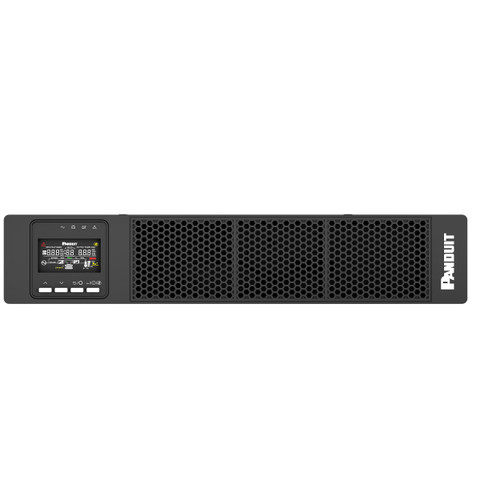
The Panduit U02S12V is also rated 2000VA, but no watt (VA×PF) figure appears in the provided specifications, so the true watt capacity cannot be confirmed from available data. Output is likewise pure sine wave. Panduit publishes a Total Harmonic Distortion figure of <3% THD and a transfer time of <4ms — neither of which appears in the CyberPower spec sheet. Frequency regulation is specified at 60Hz ±0.1Hz. Battery chemistry, voltage, and Ah rating are not disclosed in the available Panduit specifications.
For buyers who need to size runtime or plan battery replacements, the CyberPower's explicit 4×12V/9Ah spec is actionable data; the Panduit's battery spec is absent. Conversely, buyers who need to validate power quality for sensitive active-PFC loads will find Panduit's <3% THD and <4ms transfer time figures directly useful — CyberPower does not publish those values in the provided specs.
Which unit fits better physically in standard 19-inch rack and mixed rack/tower environments?
The CyberPower OR2200PFCRT2U occupies 2U of rack space at 432 × 89 × 389 mm (17.01 × 3.5 × 15.32 in) and supports dual mounting modes — 2U rackmount or freestanding tower — providing flexibility for environments where rack space has not yet been built out or where the UPS may be relocated. It weighs 57.2 lb (25.95 kg), which is relevant for rail and shelf load ratings.
The Panduit U02S12V is specified as a 2U rack-mount unit at 440 × 86.5 mm (17.3 × 3.4 in width × height). Depth and weight are not provided in the available specifications. It is explicitly designed for 19-inch EIA-310 rack mounting only; no tower mode is mentioned. The 86.5 mm height (3.4 in) is marginally shorter than the CyberPower's 89 mm, which may matter in very tight rack builds.
Without a published depth or weight for the Panduit, rack shelf load planning and cable-management depth comparisons cannot be completed from available data. The CyberPower is the only unit here with a confirmed tower-conversion option, making it more suitable for mixed or evolving environments. The Panduit's EIA-310 compliance callout signals a data-center-grade rack fit.
How do the units differ in certifications, application targets, and additional management features?
The CyberPower OR2200PFCRT2U carries UL 1778 5th Edition and RoHS compliance. The unit includes an LCD panel for local status monitoring, 8 output receptacles, and a 3-year limited warranty. Input voltage range is 88–139 VAC (nominal 120V), and operating temperature is 0–40°C (32–104°F). No network management card, SNMP, or software integration spec is present in the provided data.
The Panduit U02S12V carries UL 1778 and cUL (Canadian UL), adding Canadian market coverage not confirmed for the CyberPower in the provided specs. Panduit explicitly targets Data Center, Edge, and Enterprise MTDC applications under the SteadySine™ sub-brand. No outlet count, LCD/display feature, input voltage range, operating temperature, or warranty term is disclosed in the available Panduit specifications.
The Panduit's cUL listing is a differentiator for Canadian installations where CyberPower's cUL status is unconfirmed from available data. The CyberPower's 8-outlet count, LCD, and explicit operating temperature range give installers concrete commissioning data. Neither unit's spec sheet — as provided — discloses network management, SNMP, or software compatibility details.
Which should you choose: the OR2200PFCRT2U or the U02S12V?
Our take: The OR2200PFCRT2U is the stronger choice when outlet count, confirmed watt rating, dual rack/tower flexibility, and fully disclosed battery specs are decision drivers. CyberPower publishes a concrete 1540W output figure (vs. no watt spec for the Panduit), an 8-outlet count (vs. none disclosed for the Panduit), and a 4×12V/9Ah battery specification enabling runtime calculation and replacement planning. The Panduit U02S12V holds the advantage where output power quality, transfer time, and Canadian compliance matter: its <3% THD, <4ms transfer time, and cUL listing are not matched by data in the CyberPower spec sheet. The Panduit's explicit Data Center / MTDC application targeting also suits buyers procuring to a data-center standard. Neither unit discloses SNMP or network management from the provided specs. Buyers in Canadian facilities or those requiring documented THD and transfer time for sensitive active-PFC loads should favor the Panduit; IT generalists and field installers needing a confirmed watt budget, outlet count, and rack/tower flexibility should favor the CyberPower.
Side-by-Side Comparison
Spec-for-spec, from manufacturer data.
| Specification | CyberPower OR2200PFCRT2U | Panduit U02S12V |
|---|---|---|
| Product Type | UPS | UPS |
| Capacity (VA) | 2000 VA | 2000 VA |
| Rated Output (Watts) | 1540 W | — |
| Output Waveform | Pure Sine Wave | Pure Sine Wave |
| Output Voltage | 120 VAC ±5% | — |
| Input Voltage Range | 88–139 VAC (nominal 120V) | — |
| Transfer Time | — | <4ms |
| Total Harmonic Distortion | — | <3% THD |
| Frequency Regulation | — | 60Hz ±0.1Hz |
| Battery | 4× 12V/9Ah Sealed Lead-Acid (24VDC) | — |
| Outlet Count | 8 | — |
| Form Factor | 2U Rack / Tower (convertible) | 2U Rack-mount only |
| Rack Standard | — | 19-inch EIA-310 |
| Dimensions (W×H×D) | 432 × 89 × 389 mm | 440 × 86.5 mm (depth —) |
| Weight | 57.2 lb (25.95 kg) | — |
| Operating Temperature | 0–40°C (32–104°F) | — |
| Certifications | UL 1778 5th Ed., RoHS | UL 1778, cUL |
| Warranty | 3 Year Limited | — |
| Display | LCD | — |
| Application Target | — | Data Center, Edge, Enterprise MTDC |
| Sub-Brand | — | SteadySine™ |
Frequently Asked Questions
Which should you choose: the OR2200PFCRT2U or the U02S12V?
The OR2200PFCRT2U is the stronger choice when outlet count, confirmed watt rating, dual rack/tower flexibility, and fully disclosed battery specs are decision drivers. CyberPower publishes a concrete 1540W output figure (vs. no watt spec for the Panduit), an 8-outlet count (vs. none disclosed for the Panduit), and a 4×12V/9Ah battery specification enabling runtime calculation and replacement planning. The Panduit U02S12V holds the advantage where output power quality, transfer time, and Canadian compliance matter: its <3% THD, <4ms transfer time, and cUL listing are not matched by data in the CyberPower spec sheet. The Panduit's explicit Data Center / MTDC application targeting also suits buyers procuring to a data-center standard. Neither unit discloses SNMP or network management from the provided specs. Buyers in Canadian facilities or those requiring documented THD and transfer time for sensitive active-PFC loads should favor the Panduit; IT generalists and field installers needing a confirmed watt budget, outlet count, and rack/tower flexibility should favor the CyberPower.
Which UPS gives me a better idea of how long my equipment will run on battery?
The CyberPower OR2200PFCRT2U specifies its battery pack as 4× 12V/9Ah (24VDC total), which allows runtime estimation using your load wattage against the 1540W maximum. The Panduit U02S12V does not disclose battery chemistry, voltage, or Ah rating in the available specifications, so runtime cannot be calculated from provided data alone.
Is either unit suitable for installation in a Canadian data center?
The Panduit U02S12V lists both UL 1778 and cUL compliance, covering Canadian requirements. The CyberPower OR2200PFCRT2U lists UL 1778 5th Edition and RoHS, but cUL compliance is not stated in the provided specifications. Buyers with Canadian certification requirements should confirm CyberPower's cUL status directly before specifying the OR2200PFCRT2U.
Which unit is better for protecting sensitive active-PFC servers and networking gear?
Both units output pure sine wave, which is required for active-PFC loads. The Panduit U02S12V additionally publishes a <3% THD figure and a <4ms transfer time, which are common thresholds cited in data-center equipment specifications. The CyberPower OR2200PFCRT2U does not publish THD or transfer time in the provided specs. If your equipment vendor mandates specific THD or transfer time values, the Panduit's disclosed figures give you documented compliance data that the CyberPower spec sheet does not.
More UPS Comparisons
- APC by Schneider Electric SMX2000LV vs CyberPower PR2000RTXL2UC
- APC by Schneider Electric SMX2000LV vs CyberPower CP2000PFCRM2U
- APC by Schneider Electric SMX2000LV vs CyberPower PR2000RT2UCN
- APC by Schneider Electric SMX2000LV vs Middle Atlantic UPX-EXPANRUN-OL20
- APC by Schneider Electric SMX2000LV vs APC by Schneider Electric SMX2000LVNCUS
- APC by Schneider Electric SMX2000LV vs APC by Schneider Electric SMX2000RMLV2U
UPS Buying Guides
Get a Second Opinion on Your Camera Choice
Share your site layout, coverage goals, and budget. Our team will validate the camera selection, flag anything we would change, and recommend products that match the use case.