
CyberPower OL6KRTHW vs APC by Schneider Electric SYH6K6RMI: Specification Comparison
Both the CyberPower OL6KRTHW and the APC Symmetra SYH6K6RMI are rack-mount double-conversion (online) UPS units rated at 6 kVA, the class most commonly deployed in mid-sized server rooms, network closets, and edge data centres. This comparison evaluates them across the three axes that matter most to integrators and IT buyers in this segment: true power output and efficiency design, connectivity and management capability, and environmental operating envelope — drawing exclusively on the published specifications supplied for each model.
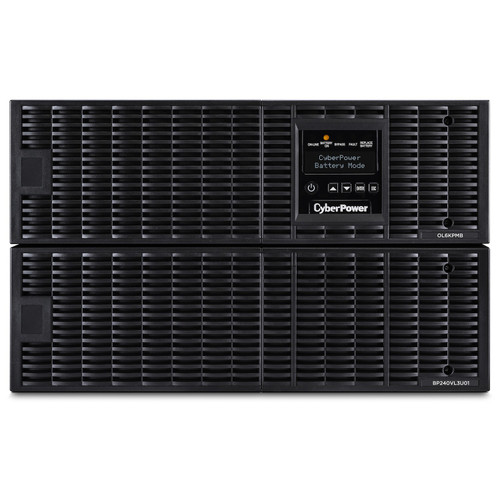
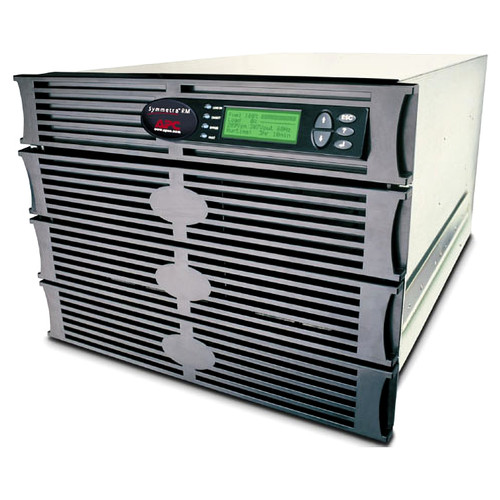
In This Guide
- How do the two units differ in usable power output, power factor, and waveform quality?
- Which unit offers more complete connectivity, outlet options, and remote management?
- How do the two units compare on operating environment, physical dimensions, and noise?
- Which should you choose: the OL6KRTHW or the SYH6K6RMI?
- Side-by-Side Specs
- FAQ
How do the two units differ in usable power output, power factor, and waveform quality?
The OL6KRTHW is rated at 6,000 W (6 kVA) with a power factor of 1.0, meaning every volt-amp translates directly to usable watts with no derating. The SYH6K6RMI shares the 6 kVA kVA rating but delivers only 4,200 W, reflecting an effective power factor of 0.7 on the output side — a 1,800 W gap that becomes critical when powering high-density, unity-PF server loads.
Both units produce a true sine-wave output, appropriate for active PFC power supplies. The OL6KRTHW additionally specifies output voltage THD of ≤5% and a crest factor of 3:1 — APC's published spec sheet for the SYH6K6RMI does not list THD or crest factor figures, so a direct comparison on output waveform cleanliness cannot be made from available data.
Input range is documented only for the OL6KRTHW: 120–280 V at 40–70 Hz, indicating broad international input tolerance. The SYH6K6RMI's input voltage range and frequency tolerance are not stated in the provided specs.
Which unit offers more complete connectivity, outlet options, and remote management?
The SYH6K6RMI specifies its output receptacles explicitly: eight IEC 320 C13 outlets plus two IEC 320 C19 outlets (10 total), with a hard-wire 3-wire input connection. It also lists two management interfaces — a DB-9 RS-232 serial port and an RJ-45 10Base-T Ethernet port supporting web, SNMP, and Telnet management — and includes Emergency Power Off (EPO) capability. These are significant operational advantages in a managed data-centre environment.
The OL6KRTHW's specifications do not list output receptacle types, quantity, or arrangement, nor do they document any network management interface or EPO function. Buyers requiring SNMP/web-based monitoring or EPO integration should note this data is absent for the CyberPower unit from the specs provided.
The SYH6K6RMI also names its replacement battery cartridge (SYBT2) and provides runtime estimates: 12.7 minutes at full load and 30.3 minutes at half load. The OL6KRTHW provides no runtime or battery replacement data in the supplied specification set.
How do the two units compare on operating environment, physical dimensions, and noise?
The SYH6K6RMI is the only model with a documented operating envelope: 0–40 °C operating temperature, −15 to 45 °C storage, and 0–95% relative humidity (both operating and storage). These are standard data-centre parameters. The OL6KRTHW does not list operating or storage temperature ranges in the provided specs.
Physical dimensions are specified only for the SYH6K6RMI: 482.6 × 730.3 × 355.6 mm (W × D × H). At 355.6 mm height, this equates to approximately 8U of rack space. The OL6KRTHW is described as 6U in its product name, but exact dimensions are not provided in the spec data supplied.
The OL6KRTHW lists an audible noise level of 65 dB — the only acoustic figure available between the two products. The SYH6K6RMI provides no noise rating in the provided specs. The OL6KRTHW also specifies an input power factor of 0.99, indicating minimal reactive load on the upstream circuit; no equivalent figure is provided for the SYH6K6RMI.
Which should you choose: the OL6KRTHW or the SYH6K6RMI?
Our take: The OL6KRTHW is the stronger choice when maximising usable watt output is the primary requirement: its unity power factor (PF=1) delivers the full 6,000 W against the SYH6K6RMI's 4,200 W — a 30% shortfall that matters directly when sizing UPS capacity for modern unity-PF server PSUs. Its wide input range (120–280 V, 40–70 Hz) and ≤5% output THD also favour installations with variable feed quality. However, the SYH6K6RMI leads on documented management depth: built-in SNMP/web/Telnet via RJ-45, EPO support, named runtime figures (12.7 min full / 30.3 min half load), and a specified replacement battery — none of which appear in the OL6KRTHW's provided spec set. Buyers deploying into a managed data centre with EPO requirements or SNMP monitoring infrastructure should verify the OL6KRTHW's management capabilities before selecting it; the SYH6K6RMI suits N+1 managed environments where 4,200 W suffices.
Side-by-Side Comparison
Spec-for-spec, from manufacturer data.
| Specification | CyberPower OL6KRTHW | APC by Schneider Electric SYH6K6RMI |
|---|---|---|
| UPS topology | Double-conversion (Online) | — |
| Output power capacity | 6 kVA | 6 kVA |
| Output power (watts) | 6,000 W | 4,200 W |
| Output power factor | 1.0 | 0.7 (derived: 4200W ÷ 6000VA) |
| Input voltage range | 120–280 V | — |
| Input frequency range | 40–70 Hz | — |
| Input power factor | 0.99 | — |
| Output voltage THD | ≤5% | — |
| Crest factor | 3:1 | — |
| Output waveform | Sine wave | Sine wave (implied by topology) |
| Output receptacles | — | (8) IEC 320 C13 + (2) IEC 320 C19 |
| Input connection | — | Hard wire 3-wire |
| Management interfaces | — | DB-9 RS-232; RJ-45 10Base-T (SNMP/web/Telnet) |
| Emergency Power Off (EPO) | — | Yes |
| Runtime at full load | — | 12.7 min |
| Runtime at half load | — | 30.3 min |
| Replacement battery | — | APC SYBT2 |
| Operating temperature | — | 0–40 °C |
| Storage temperature | — | −15–45 °C |
| Operating humidity | — | 0–95% |
| Audible noise | 65 dB | — |
| Form factor / rack height | 6U (per product name) | ~8U (355.6 mm H) |
| Dimensions (W×D×H mm) | — | 482.6 × 730.3 × 355.6 |
| Product colour | — | Black |
Frequently Asked Questions
Which should you choose: the OL6KRTHW or the SYH6K6RMI?
The OL6KRTHW is the stronger choice when maximising usable watt output is the primary requirement: its unity power factor (PF=1) delivers the full 6,000 W against the SYH6K6RMI's 4,200 W — a 30% shortfall that matters directly when sizing UPS capacity for modern unity-PF server PSUs. Its wide input range (120–280 V, 40–70 Hz) and ≤5% output THD also favour installations with variable feed quality. However, the SYH6K6RMI leads on documented management depth: built-in SNMP/web/Telnet via RJ-45, EPO support, named runtime figures (12.7 min full / 30.3 min half load), and a specified replacement battery — none of which appear in the OL6KRTHW's provided spec set. Buyers deploying into a managed data centre with EPO requirements or SNMP monitoring infrastructure should verify the OL6KRTHW's management capabilities before selecting it; the SYH6K6RMI suits N+1 managed environments where 4,200 W suffices.
If I need to power 6,000 W of servers, can the SYH6K6RMI handle it?
No — based on the provided specifications, the SYH6K6RMI is rated at 4,200 W output despite its 6 kVA nameplate. At a 6,000 W load it would be overloaded. The OL6KRTHW, with its unity power factor and 6,000 W output rating, is the appropriate choice for a true 6 kW load.
Does the OL6KRTHW support SNMP or web-based monitoring like the SYH6K6RMI?
The provided specifications for the OL6KRTHW do not list any network management interface, SNMP support, or web/Telnet capability. The SYH6K6RMI explicitly includes an RJ-45 10Base-T Ethernet port for web, SNMP, and Telnet management. Buyers requiring network-based monitoring should verify the OL6KRTHW's management options directly with CyberPower before purchasing.
Which unit is better suited to a deployment that requires Emergency Power Off (EPO)?
The SYH6K6RMI is the only model in this comparison with a documented EPO capability based on the provided specs. The OL6KRTHW's spec sheet does not reference EPO. Any facility requiring EPO integration — typically mandated by data-centre build standards — should select the SYH6K6RMI or confirm EPO availability with CyberPower independently.
More UPS Comparisons
- APC by Schneider Electric SYH6K6RMT vs CyberPower OL6KRTHW
- APC by Schneider Electric SYH6K6RMT vs CyberPower OL6KRTHD
- APC by Schneider Electric SYH6K6RMT vs Vertiv GXT5-6000MVRT4UXLN
- APC by Schneider Electric SYH6K6RMT vs Vertiv GXT5-6KL630RT5UXLN
- APC by Schneider Electric SYH6K6RMT vs APC by Schneider Electric SYH6K6RMI
- APC by Schneider Electric SYH6K6RMT vs APC by Schneider Electric SYH6K6RMT-TF3
UPS Buying Guides
Get a Second Opinion on Your Camera Choice
Share your site layout, coverage goals, and budget. Our team will validate the camera selection, flag anything we would change, and recommend products that match the use case.