
CyberPower CP850PFCLCD vs CyberPower CP850AVRLCD: Specification Comparison
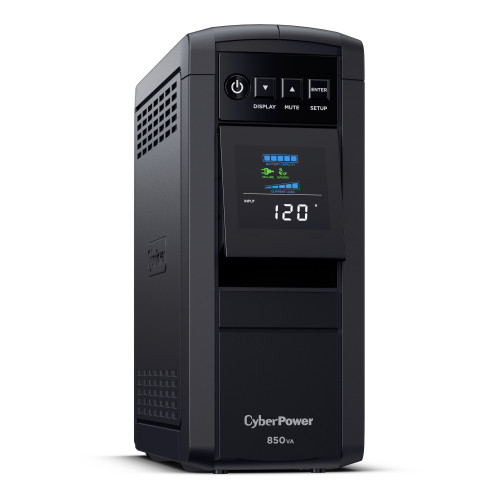
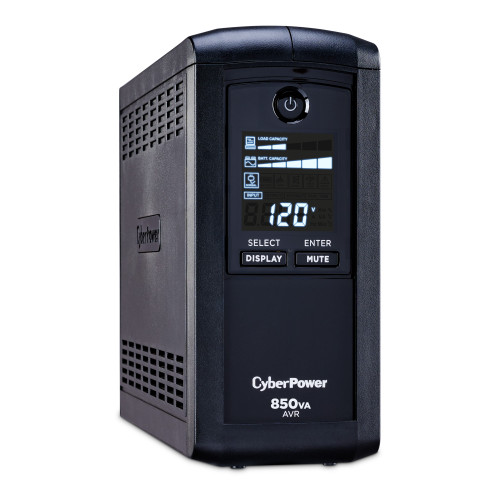
Both the CP850PFCLCD and CP850AVRLCD are CyberPower 850VA mini-tower UPS units designed for desktop workstations, small network equipment, and PoE security devices running on 120VAC North American power. The comparison centers on three decision-relevant axes for this product class: output waveform and voltage regulation topology, physical and electrical interface differences, and certification/warranty profile. Buyers cross-shopping these two will primarily be choosing between pure sine wave output and line-interactive AVR simulation.
In This Guide
- Does the output waveform and voltage regulation topology matter for my connected equipment?
- How many outlets and which protection interfaces does each model provide?
- What are the certification, battery replaceability, and warranty differences between these two models?
- Which should you choose: the CP850PFCLCD or the CP850AVRLCD?
- Side-by-Side Specs
- FAQ
Does the output waveform and voltage regulation topology matter for my connected equipment?
The CP850PFCLCD is specified under the 'PFC Sinewave' sub-brand, indicating a pure sine wave output. Its input voltage tolerance is rated 88–144 VAC. Pure sine wave output is required for active PFC power supplies found in modern servers, NVRs, and high-end workstations, as simulated sine wave can cause instability or damage to those loads.
The CP850AVRLCD is a line-interactive AVR model. Its product name explicitly states 'Line-interactive AVR,' and no pure sine wave claim appears in its specifications. Input voltage tolerance is 90–142 VAC — a marginally narrower range than the CP850PFCLCD's 88–144 VAC. Line-interactive AVR is appropriate for loads that tolerate stepped approximated waveforms, such as most passive power supplies and basic networking gear.
The CP850PFCLCD's sub-brand designation 'PFC Sinewave' and the CP850AVRLCD's 'Line-interactive AVR' label are the single most consequential differentiator for load compatibility. Neither model's rated VA capacity (850VA) nor weight (14.9 lb vs. 15 lb) changes this fundamental topology difference.
How many outlets and which protection interfaces does each model provide?
The CP850PFCLCD product title specifies '10 OUT' — ten output receptacles — and includes RJ11/RJ45 and coaxial surge protection ports, per the SKU title. The CP850AVRLCD title specifies '9 OL' — nine outlets — with no coaxial port mentioned in the provided specifications.
Both models include RJ11/RJ45 data-line surge protection per their title descriptions. The CP850PFCLCD adds a coaxial port, which matters for deployments protecting cable modem or CATV-connected equipment. The additional tenth outlet on the CP850PFCLCD provides one extra device connection point versus the CP850AVRLCD's nine.
Neither model's provided specifications detail how many outlets are battery-backed versus surge-only. Buyers requiring that breakdown should consult the respective datasheets at the paths provided (/content/product-datasheets/CP850PFCLCD.pdf and /content/product-datasheets/CP850AVRLCD.pdf), as that spec is absent from the data supplied here.
What are the certification, battery replaceability, and warranty differences between these two models?
The CP850PFCLCD battery is explicitly specified as 'user replaceable' — a meaningful operational advantage allowing in-place battery swap without returning the unit. The CP850AVRLCD specifications do not state whether the battery is user replaceable; that information is absent from the provided data.
On certifications, both units carry UL1778, FCC Class B (CP850PFCLCD) / FCC DOC Class B (CP850AVRLCD), RoHS, and ENERGY STAR. The CP850PFCLCD lists 'cUL 107.3'; the CP850AVRLCD lists 'cUL 107 5th edition.' These reference the same Canadian standard but different edition designations — buyers with strict Canadian compliance requirements should verify which edition their jurisdiction currently requires.
Warranty terms are effectively identical: both carry a 3-year warranty. The CP850PFCLCD specification explicitly states batteries are included in the 3-year warranty term. The CP850AVRLCD warranty is described as '3 Year Limited' without explicit battery inclusion language in the provided specs.
Which should you choose: the CP850PFCLCD or the CP850AVRLCD?
Our take: The CP850PFCLCD is the stronger choice when the connected load includes active PFC power supplies — such as those in NVRs, rack servers, modern workstations, or high-efficiency networking gear — because it delivers pure sine wave output, which the CP850AVRLCD's line-interactive AVR topology does not provide. Three concrete spec deltas support this: (1) output waveform — pure sine wave vs. simulated/AVR; (2) outlet count — 10 vs. 9, with the CP850PFCLCD also adding a coaxial surge port absent from the CP850AVRLCD; (3) battery replaceability — the CP850PFCLCD explicitly supports user-replaceable batteries, while the CP850AVRLCD does not state this in the provided specifications. The CP850AVRLCD remains a viable option for loads with passive power supplies — basic switches, older workstations, peripherals — where pure sine wave is not required and the lower outlet count is acceptable. Both units are 850VA mini-tower form factors with identical operating temperature ranges and near-identical weight.
Side-by-Side Comparison
Spec-for-spec, from manufacturer data.
| Specification | CyberPower CP850PFCLCD | CyberPower CP850AVRLCD |
|---|---|---|
| VA Rating | 850VA | 850VA |
| Watt Rating | — | 510W |
| Output Topology | Pure Sine Wave (PFC Sinewave) | Line-Interactive AVR |
| Output Voltage | 120VAC ± 5% | 120VAC ± 5% |
| Input Voltage (Nominal) | 120VAC | 120VAC |
| Input Voltage Range | 88–144 VAC | 90–142 VAC |
| Number of Outlets | 10 | 9 |
| Data-Line Protection | RJ11/RJ45, Coaxial | RJ11/RJ45 (coaxial not specified) |
| Battery Type | Sealed Lead-Acid, 12V/9Ah | Sealed Lead-Acid, 12V/9Ah |
| Battery User-Replaceable | Yes | — |
| Form Factor | Mini-Tower | Mini-Tower / Desktop |
| Dimensions (in) | 3.9 x 9.7 x 10.2 | 3.9 x 9.0 x 10.2 |
| Weight | 14.9 lb (6.76 kg) | 15 lb (6.8 kg) |
| Operating Temperature | 32–104°F (0–40°C) | 32–104°F (0–40°C) |
| Certifications | UL1778, cUL 107.3, FCC Class B, RoHS, ENERGY STAR | UL1778, cUL 107 5th, FCC DOC Class B, RoHS, ENERGY STAR |
| Warranty | 3 Years (batteries included) | 3 Year Limited |
Frequently Asked Questions
Which should you choose: the CP850PFCLCD or the CP850AVRLCD?
The CP850PFCLCD is the stronger choice when the connected load includes active PFC power supplies — such as those in NVRs, rack servers, modern workstations, or high-efficiency networking gear — because it delivers pure sine wave output, which the CP850AVRLCD's line-interactive AVR topology does not provide. Three concrete spec deltas support this: (1) output waveform — pure sine wave vs. simulated/AVR; (2) outlet count — 10 vs. 9, with the CP850PFCLCD also adding a coaxial surge port absent from the CP850AVRLCD; (3) battery replaceability — the CP850PFCLCD explicitly supports user-replaceable batteries, while the CP850AVRLCD does not state this in the provided specifications. The CP850AVRLCD remains a viable option for loads with passive power supplies — basic switches, older workstations, peripherals — where pure sine wave is not required and the lower outlet count is acceptable. Both units are 850VA mini-tower form factors with identical operating temperature ranges and near-identical weight.
Which UPS is better for protecting an NVR or server with an active PFC power supply?
The CP850PFCLCD. Active PFC power supplies require a pure sine wave output to operate correctly and safely. The CP850PFCLCD is rated as a PFC Sinewave model. The CP850AVRLCD is a line-interactive AVR unit; its output waveform type is not stated as pure sine wave in the provided specifications, making it unsuitable for active PFC loads.
Can I replace the battery myself on either of these CyberPower UPS units?
The CP850PFCLCD specifications explicitly state the battery (12V/9Ah sealed lead-acid) is user replaceable. The CP850AVRLCD specifications do not address battery replaceability in the data provided; consult the CP850AVRLCD datasheet or manufacturer directly to confirm.
Is there a difference in how many devices I can plug into each model?
Yes. The CP850PFCLCD provides 10 output receptacles; the CP850AVRLCD provides 9. The CP850PFCLCD also includes a coaxial surge protection port (in addition to RJ11/RJ45), which is not listed in the CP850AVRLCD's provided specifications. How many of each unit's outlets are battery-backed versus surge-only is not specified in the data provided.
More UPS Comparisons
- APC by Schneider Electric BX850M vs CyberPower CP850PFCLCD
- APC by Schneider Electric BX850M vs CyberPower CP850AVRLCD
- APC by Schneider Electric BX850M vs APC by Schneider Electric BE850G2
- CyberPower CP850PFCLCD vs APC by Schneider Electric BE850G2
- CyberPower CP850AVRLCD vs APC by Schneider Electric BE850G2
UPS Buying Guides
Get a Second Opinion on Your Camera Choice
Share your site layout, coverage goals, and budget. Our team will validate the camera selection, flag anything we would change, and recommend products that match the use case.