
APC by Schneider Electric BX850M vs CyberPower CP850PFCLCD: Specification Comparison
This comparison covers two 850 VA tower UPS units aimed at small office, workstation, and light AV or security installations: the APC BX850M (Back-UPS Pro series) and the CyberPower CP850PFCLCD (PFC Sinewave series). Both share the same 850 VA class, NEMA tower form factor, and target similar budgets, making them direct cross-shop candidates. The comparison examines power capacity and waveform quality, outlet count and battery runtime, and data-line protection along with certifications and warranty terms.
In This Guide
Which unit delivers cleaner power and better voltage regulation?
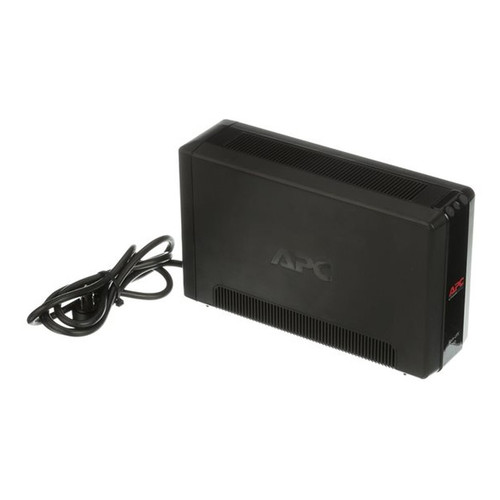
The APC BX850M is rated at 850 VA and 510 W with a stated Boost AVR function and an input voltage range of 88–139 VAC. Its output waveform is not specified in the provided data, meaning it may produce a stepped approximation or modified sine wave rather than a true sine wave — a meaningful gap for active-PFC power supplies common in modern workstations and network equipment. Input connection is NEMA 5-15P at 120 V nominal, 60 Hz ± 3 Hz.
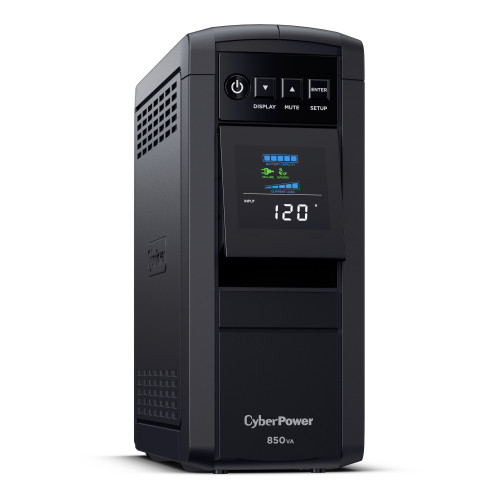
The CyberPower CP850PFCLCD is explicitly marketed under the PFC Sinewave sub-brand, indicating a pure sine wave output — confirmed by the sub-brand designation. Its VA rating is identical at 850 VA; however, watt capacity is not specified in the provided data, preventing a direct watt-for-watt comparison. Input voltage range is 88–144 VAC, fractionally wider than the APC at the high end. AVR is confirmed present. For any load with an active-PFC power supply — including most current enterprise switches, NVRs, and workstations — the pure sine wave output of the CP850PFCLCD is the technically safer choice, as modified or stepped sine wave output can cause PFC supplies to run hot or trip.
How do outlet count, usable runtime, and battery serviceability compare?
The APC BX850M provides 8 total outlets: 4 NEMA 5-15R with battery backup and surge protection, plus 4 NEMA 5-15R surge-only. Battery runtime is stated as 2.1 minutes at full load and 8.9 minutes at half load, with a 12-hour recharge time. The battery chemistry is sealed lead-acid; user replaceability is not specified in the provided data. The surge energy rating is 1,103 joules, which is a concrete and useful figure for evaluating transient protection.
The CyberPower CP850PFCLCD offers 10 outlets (described as '10 OUT 15A' in the product title), giving two additional protected positions over the APC. Battery is a 12 V / 9 Ah sealed lead-acid, explicitly user-replaceable — an operationally significant advantage for sites that need to swap batteries without a service call. Battery runtime and recharge time are not provided in the available specifications. Surge energy rating is also not specified, making a direct joule comparison impossible. Weight is 14.9 lb; APC weight is not stated.
What data-line protection, certifications, and warranty terms does each unit carry?
The APC BX850M includes two data-line protection paths: a 10/100/1000 Base-T Ethernet port (RJ-45) for network equipment and a coaxial port (CATV/SATV/modem/AV) for cable or satellite lines. Interface for monitoring is USB. Certifications include CEC, ENERGY STAR, FCC Part 15 Class B, and UL 1778. Warranty terms are not specified in the provided data. The LCD status display and USB interface support local monitoring; no network card slot or SNMP interface is mentioned.
The CyberPower CP850PFCLCD references RJ-11/45 and coaxial data-line protection in its product title, though the exact protection specifications (pass-through speed, clamping level) are not provided in the available data. Interface details beyond the title reference are also not specified. Certifications include UL 1778, cUL 107.3, FCC Class B, RoHS, and ENERGY STAR — adding Canadian certification (cUL) and RoHS compliance not listed for the APC. The CP850PFCLCD carries a stated 3-year warranty explicitly covering batteries, a concrete advantage over the APC where no warranty term is provided in the available specs. An LCD display is confirmed.
Which should you choose: the BX850M or the CP850PFCLCD?
Our take: The BX850M is the stronger choice when watt-rated load capacity transparency and documented surge protection are the primary procurement requirements, while the CP850PFCLCD is the stronger choice when output waveform quality and battery serviceability matter most. Concretely: the BX850M publishes a 510 W capacity and a 1,103-joule surge rating, neither of which the CP850PFCLCD provides in available specs; the CP850PFCLCD delivers confirmed pure sine wave output and 10 outlets versus the BX850M's 8, and its battery is explicitly user-replaceable with a 3-year warranty covering batteries — terms absent from the APC data. For installations protecting active-PFC loads such as current-generation NVRs, managed PoE switches, or workstations with modern PSUs, the CP850PFCLCD's pure sine wave output reduces compatibility risk. For legacy or resistive loads where waveform is less critical and a published joule surge rating is a procurement checkpoint, the BX850M's stated figures support easier spec-sheet compliance.
Side-by-Side Comparison
Spec-for-spec, from manufacturer data.
| Specification | APC by Schneider Electric BX850M | CyberPower CP850PFCLCD |
|---|---|---|
| VA Rating | 850 VA | 850 VA |
| Watt Rating | 510 W | — |
| Output Waveform | Not specified | Pure Sine Wave |
| AVR | Boost AVR | Yes |
| Input Voltage Range | 88–139 VAC | 88–144 VAC |
| Total Outlets | 8 | 10 |
| Battery-Backup Outlets | 4 | — |
| Surge-Only Outlets | 4 | — |
| Battery Type | Sealed Lead-Acid | Sealed Lead-Acid, 12V/9Ah |
| User-Replaceable Battery | — | Yes |
| Runtime at Full Load | 2.1 min | — |
| Runtime at Half Load | 8.9 min | — |
| Battery Recharge Time | 12 hours | — |
| Surge Energy Rating | 1,103 J | — |
| Data-Line Protection | RJ-45 Gigabit Ethernet + Coaxial | RJ-11/45 + Coaxial (title reference only) |
| Certifications | CEC, ENERGY STAR, FCC Class B, UL 1778 | UL 1778, cUL 107.3, FCC Class B, RoHS, ENERGY STAR |
| Warranty | — | 3 years (including batteries) |
| Weight | — | 14.9 lb (6.76 kg) |
| Dimensions | 7.48 x 3.58 x 12.20 in | 3.9 x 9.7 x 10.2 in |
| Monitoring Interface | USB | — |
| LCD Display | Yes | Yes |
Frequently Asked Questions
Which should you choose: the BX850M or the CP850PFCLCD?
The BX850M is the stronger choice when watt-rated load capacity transparency and documented surge protection are the primary procurement requirements, while the CP850PFCLCD is the stronger choice when output waveform quality and battery serviceability matter most. Concretely: the BX850M publishes a 510 W capacity and a 1,103-joule surge rating, neither of which the CP850PFCLCD provides in available specs; the CP850PFCLCD delivers confirmed pure sine wave output and 10 outlets versus the BX850M's 8, and its battery is explicitly user-replaceable with a 3-year warranty covering batteries — terms absent from the APC data. For installations protecting active-PFC loads such as current-generation NVRs, managed PoE switches, or workstations with modern PSUs, the CP850PFCLCD's pure sine wave output reduces compatibility risk. For legacy or resistive loads where waveform is less critical and a published joule surge rating is a procurement checkpoint, the BX850M's stated figures support easier spec-sheet compliance.
Will either of these UPS units work safely with a modern NVR or PoE switch that has an active-PFC power supply?
The CyberPower CP850PFCLCD is explicitly a pure sine wave unit, making it the safe choice for active-PFC loads. The APC BX850M does not specify its output waveform in the available data, so compatibility with active-PFC supplies cannot be confirmed from specs alone — verify against APC's full datasheet before deploying with PFC-sensitive equipment.
Can I replace the battery myself without sending the unit in for service?
The CyberPower CP850PFCLCD specifies a user-replaceable 12 V / 9 Ah sealed lead-acid battery. The APC BX850M does not state whether its battery is user-replaceable in the provided specifications; consult APC documentation before purchase if on-site battery swap is a requirement.
Which unit protects more devices at once, and does either cover coaxial lines for a camera DVR or cable modem?
The CyberPower CP850PFCLCD provides 10 outlets versus 8 on the APC BX850M, giving two additional positions. Both units reference coaxial data-line protection — the APC explicitly lists CATV/SATV/modem/AV coaxial ports, and the CyberPower references coaxial in its product title, though detailed specs for the CyberPower's coax port are not provided in the available data.
More UPS Comparisons
- APC by Schneider Electric BX850M vs CyberPower CP850AVRLCD
- APC by Schneider Electric BX850M vs APC by Schneider Electric BE850G2
- CyberPower CP850PFCLCD vs APC by Schneider Electric BE850G2
- CyberPower CP850PFCLCD vs CyberPower CP850AVRLCD
- CyberPower CP850AVRLCD vs APC by Schneider Electric BE850G2
UPS Buying Guides
Get a Second Opinion on Your Camera Choice
Share your site layout, coverage goals, and budget. Our team will validate the camera selection, flag anything we would change, and recommend products that match the use case.