
CyberPower CP850PFCLCD vs APC by Schneider Electric BE850G2: Specification Comparison
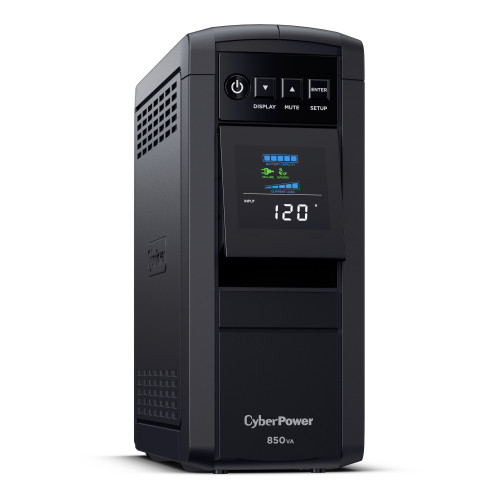
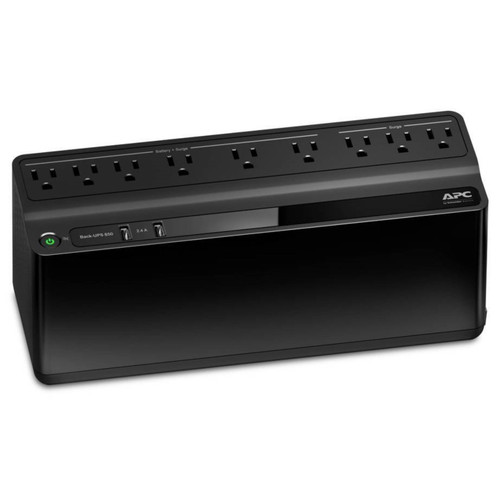
Both the CyberPower CP850PFCLCD and the APC BE850G2 are 850VA desktop UPS units designed to protect connected equipment from power disturbances at the 120V/North American standard. Buyers in the SMB, home-office, and light commercial security-installation segments routinely cross-shop these two models for workstations, NVRs, PoE switches, and access-control panels. The comparison turns on topology (Pure Sine Wave vs. Standby), battery and connectivity specs, power conditioning depth, and warranty coverage — all of which differ meaningfully between the two units.
In This Guide
- What UPS topology and output waveform does each unit deliver, and why does that matter for sensitive loads?
- How do the two units compare on rated capacity, outlet count, input protection range, and connectivity options?
- Which unit offers better battery serviceability, physical specifications, and long-term warranty protection?
- Which should you choose: the CP850PFCLCD or the BE850G2?
- Side-by-Side Specs
- FAQ
What UPS topology and output waveform does each unit deliver, and why does that matter for sensitive loads?
The CP850PFCLCD uses an Active PFC Pure Sine Wave topology, delivering a true sine-wave output rated at 120VAC ±5%. This matters for loads with Active Power Factor Corrected (PFC) internal power supplies — such as modern servers, NVRs, and PoE switches — which can malfunction or sustain damage when fed a simulated or stepped approximation waveform during a transfer. The spec sheet confirms the output waveform class as Pure Sine Wave under the PFC Sinewave sub-brand designation.
The BE850G2 is specified as a Standby topology UPS. Its spec data does not state output waveform type (sine wave, simulated sine wave, or stepped approximation). For a standby unit, the output during a power event typically reverts to whatever the inverter produces, and APC's published data for this SKU does not confirm pure sine wave output. Buyers powering Active PFC loads should treat the waveform as unconfirmed for the BE850G2 based on the provided specifications.
For security installations driving modern IP cameras, NVRs, or managed PoE switches with PFC supplies, the confirmed pure sine wave output of the CP850PFCLCD is a directly relevant differentiator. The BE850G2's topology is confirmed as Standby, which carries a faster transfer-time risk compared to line-interactive or double-conversion designs, though transfer time figures are not provided in either spec set.
How do the two units compare on rated capacity, outlet count, input protection range, and connectivity options?
Both units share an 850VA rating, establishing baseline comparability. The CP850PFCLCD provides 10 output outlets on a 15A circuit and includes RJ11/45 (telephone/network) and coaxial surge protection ports — relevant for protecting DSL modems, IP phone systems, and cable-connected equipment alongside the power outlets. Its input voltage range is specified as 88–144 VAC, meaning it can ride through sags and surges within that window without switching to battery.
The BE850G2 is specified with 6 outlets and a USB interface; its input voltage tolerance range is not provided in the supplied specifications. The cord length is listed as 5 (units not specified in the provided data). Coaxial or data-line surge protection ports are not listed for the BE850G2 in the provided specifications. Its power output in watts is noted as 450W.
The CP850PFCLCD's watt rating is not explicitly stated in the provided specifications, so a direct watt-for-watt comparison cannot be made. The BE850G2's 450W figure is the only watt-level data available. On outlet count, the CP850PFCLCD's 10 outlets versus BE850G2's 6 outlets is a concrete capacity differentiator for multi-device security racks or workstation setups.
Which unit offers better battery serviceability, physical specifications, and long-term warranty protection?
The CP850PFCLCD uses a sealed lead-acid battery rated 12V/9Ah, explicitly noted as user-replaceable. This is a meaningful operational advantage in installed security environments: batteries can be swapped on-site without returning the unit or calling a technician, extending useful product life beyond a single battery cycle. The warranty covers 3 years including batteries, which is a defined, comprehensive term.
The BE850G2 uses a maintenance-free sealed lead-acid battery with suspended electrolyte described as leakproof. User-replaceability is not stated in the provided specifications. The warranty term for the BE850G2 is not provided in the supplied spec data. Buyers should verify APC's published warranty terms independently, as this comparison cannot confirm a warranty period from the data provided.
On physical footprint, the CP850PFCLCD is specified at 3.9 × 9.7 × 10.2 in (99 × 246 × 259 mm), weighing 14.9 lb (6.76 kg), in a Mini-Tower form factor. The BE850G2's dimensions are listed only as 12.87 in. (axis unspecified) with no weight provided in the supplied data, making a direct physical-fit comparison for rack rooms or equipment closets incomplete from these specs alone. The CP850PFCLCD also carries UL1778, cUL 107.3, FCC Class B, RoHS, and ENERGY STAR certifications; no certifications are listed for the BE850G2 in the provided data.
Which should you choose: the CP850PFCLCD or the BE850G2?
Our take: The CP850PFCLCD is the stronger choice when powering loads with Active PFC power supplies — such as modern NVRs, managed PoE switches, or workstations — because its confirmed Pure Sine Wave output eliminates the waveform-compatibility risk that a Standby unit's unconfirmed waveform introduces. Three concrete spec deltas support this: (1) CP850PFCLCD delivers 10 protected outlets vs. BE850G2's 6, giving more device coverage per UPS; (2) CP850PFCLCD's input range of 88–144 VAC is explicitly defined, whereas BE850G2's tolerance window is not stated in the provided specs; (3) CP850PFCLCD carries a confirmed 3-year warranty including batteries with user-replaceable cells, while BE850G2's warranty term and replaceability are unconfirmed from the supplied data. The BE850G2 may suit price-sensitive, low-sensitivity loads where standby topology and 6-outlet capacity are sufficient, but its spec sheet as provided leaves critical details unconfirmed for a professional installation decision.
Side-by-Side Comparison
Spec-for-spec, from manufacturer data.
| Specification | CyberPower CP850PFCLCD | APC by Schneider Electric BE850G2 |
|---|---|---|
| VA Rating | 850VA | 850VA |
| Watt Rating | — (not stated in provided specs) | 450W |
| UPS Topology | Active PFC / Line-Interactive Pure Sine Wave | Standby |
| Output Waveform | Pure Sine Wave | — (not stated in provided specs) |
| Output Voltage | 120VAC ±5% | 120V |
| Input Voltage Range | 88–144 VAC (nominal 120 VAC) | — (not stated in provided specs) |
| Number of Outlets | 10 | 6 |
| Data-Line Protection | RJ11/45 + Coaxial ports | — (not stated in provided specs) |
| USB Interface | — (not stated in provided specs) | Yes |
| Battery Type | Sealed Lead-Acid 12V/9Ah | Maintenance-free sealed Lead-Acid, suspended electrolyte |
| Battery User-Replaceable | Yes | — (not stated in provided specs) |
| Form Factor | Mini-Tower | — (not stated in provided specs) |
| Dimensions | 3.9 × 9.7 × 10.2 in (99 × 246 × 259 mm) | 12.87 in. (axis not specified) |
| Weight | 14.9 lb (6.76 kg) | — (not stated in provided specs) |
| Certifications | UL1778, cUL 107.3, FCC Class B, RoHS, ENERGY STAR | — (not stated in provided specs) |
| Warranty | 3 years including batteries | — (not stated in provided specs) |
Frequently Asked Questions
Which should you choose: the CP850PFCLCD or the BE850G2?
The CP850PFCLCD is the stronger choice when powering loads with Active PFC power supplies — such as modern NVRs, managed PoE switches, or workstations — because its confirmed Pure Sine Wave output eliminates the waveform-compatibility risk that a Standby unit's unconfirmed waveform introduces. Three concrete spec deltas support this: (1) CP850PFCLCD delivers 10 protected outlets vs. BE850G2's 6, giving more device coverage per UPS; (2) CP850PFCLCD's input range of 88–144 VAC is explicitly defined, whereas BE850G2's tolerance window is not stated in the provided specs; (3) CP850PFCLCD carries a confirmed 3-year warranty including batteries with user-replaceable cells, while BE850G2's warranty term and replaceability are unconfirmed from the supplied data. The BE850G2 may suit price-sensitive, low-sensitivity loads where standby topology and 6-outlet capacity are sufficient, but its spec sheet as provided leaves critical details unconfirmed for a professional installation decision.
Will either UPS work safely with my NVR or server that has an Active PFC power supply?
The CP850PFCLCD is explicitly rated for Active PFC loads — its Pure Sine Wave output is confirmed in the specifications. The BE850G2 is listed as a Standby topology unit, and its output waveform type is not stated in the provided specifications. Standby UPS units with non-sine outputs can cause instability or damage to Active PFC supplies. Buyers with PFC-equipped equipment should verify the BE850G2's waveform independently before deploying it on those loads.
Can I replace the battery myself when it wears out, or do I have to send the unit in?
The CP850PFCLCD's battery (12V/9Ah sealed lead-acid) is explicitly specified as user-replaceable, making on-site swap straightforward for installers. The BE850G2's battery is described as maintenance-free and leakproof, but user-replaceability is not confirmed in the provided specifications. Verify with APC's documentation before assuming field-serviceability for the BE850G2.
Which unit is better suited to protecting a security system with a cable modem and IP phones in addition to power equipment?
The CP850PFCLCD includes RJ11/45 (telephone/data) and coaxial surge protection ports alongside its 10 power outlets, providing comprehensive protection for cable modems, IP phones, and data lines in a single unit. The BE850G2's provided specifications list only a USB interface and 6 power outlets — data-line or coaxial protection ports are not listed. For a multi-device security or communications setup requiring data-line surge suppression, the CP850PFCLCD covers more connection types based on the available spec data.
More UPS Comparisons
- APC by Schneider Electric BX850M vs CyberPower CP850PFCLCD
- APC by Schneider Electric BX850M vs CyberPower CP850AVRLCD
- APC by Schneider Electric BX850M vs APC by Schneider Electric BE850G2
- CyberPower CP850PFCLCD vs CyberPower CP850AVRLCD
- CyberPower CP850AVRLCD vs APC by Schneider Electric BE850G2
UPS Buying Guides
Get a Second Opinion on Your Camera Choice
Share your site layout, coverage goals, and budget. Our team will validate the camera selection, flag anything we would change, and recommend products that match the use case.