
CyberPower CP850AVRLCD vs APC by Schneider Electric BE850G2: Specification Comparison
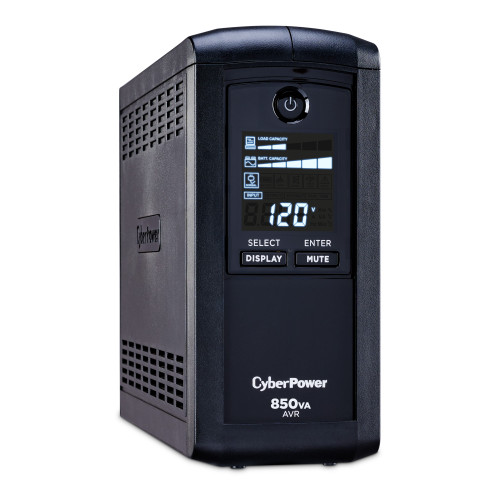
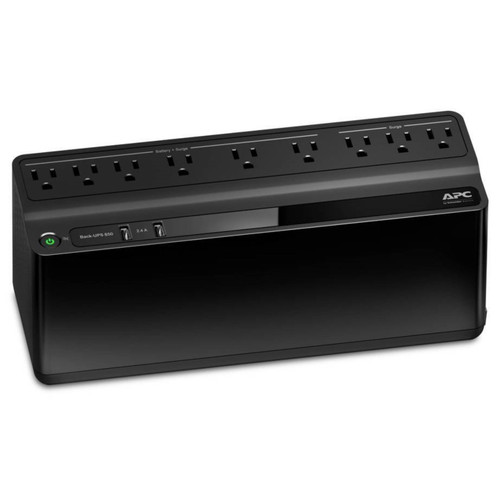
Both the CyberPower CP850AVRLCD and the APC BE850G2 are 850VA desktop UPS units designed for workstations, networking gear, and small office equipment running on 120V North American power. The CP850AVRLCD is a line-interactive AVR model with an LCD display, while the BE850G2 is a standby-topology unit. This comparison evaluates their power conditioning approach, physical and runtime specs, and feature sets to help installers and IT buyers choose the right unit for their deployment.
In This Guide
- Which UPS offers better power conditioning — line-interactive AVR or standby?
- How do rated capacity, wattage, and battery specs compare for real-world load planning?
- What do the physical form factor, outlet count, and certifications tell buyers about installation fit?
- Which should you choose: the CP850AVRLCD or the BE850G2?
- Side-by-Side Specs
- FAQ
Which UPS offers better power conditioning — line-interactive AVR or standby?
The CP850AVRLCD uses a line-interactive topology with Automatic Voltage Regulation (AVR). This means it actively corrects brownbrownouts and overvoltages within its stated input range of 90–142 VAC without switching to battery, delivering a regulated 120 VAC ±5% output continuously. This reduces battery wear and provides cleaner power to connected equipment during voltage fluctuations.
The BE850G2 is specified as a standby (offline) topology. In standby mode, the unit passes utility power directly to the load and only switches to battery when input power falls outside acceptable thresholds. APC's provided specs do not state an AVR input voltage range for the BE850G2. The absence of active voltage regulation means that sags and swells within the switchover window are passed through to the load uncorrected.
For environments with frequent voltage instability — common in older commercial buildings or on circuits shared with motors and HVAC — the CP850AVRLCD's line-interactive AVR is a meaningful functional advantage. The BE850G2's standby topology is adequate for stable utility environments where the primary concern is outright power loss rather than ongoing power quality.
How do rated capacity, wattage, and battery specs compare for real-world load planning?
The CP850AVRLCD is rated at 850VA / 510W. Its battery is specified as a 12V / 9Ah sealed lead-acid cell. These figures allow installers to calculate estimated runtime at a given load using standard SLA runtime curves. The 510W true-power rating is the operative ceiling for connected equipment.
The BE850G2 carries the same 850VA nameplate but is rated at 450W, representing a lower VA-to-watt ratio (approximately 53%) compared to the CP850AVRLCD's 60%. APC describes the battery as a maintenance-free sealed lead-acid with suspended electrolyte (leakproof), but does not specify voltage or amp-hour capacity in the provided specs. Without Ah data, runtime cannot be independently calculated from the spec sheet alone.
For loads approaching the watt ceiling, the CP850AVRLCD supports up to 510W versus the BE850G2's 450W — a 60W delta that matters when powering workstations with discrete GPUs or multiple hard drives. The CP850AVRLCD's published Ah rating also gives integrators more transparency for runtime planning.
What do the physical form factor, outlet count, and certifications tell buyers about installation fit?
The CP850AVRLCD is specified with full three-dimensional measurements: 3.9 × 9 × 10.2 in (99 × 229 × 259 mm), weighing 15 lb (6.8 kg), in a desktop/mini-tower form factor. It carries UL1778, cUL 107 5th Edition, FCC DOC Class B, RoHS, and ENERGY STAR certifications. The LCD display is part of the model name and implied by the SKU designation. Nine outlets are noted in the product description (9 OL).
The BE850G2's provided specs list only one linear dimension (12.87 in) without height or depth, and do not state a weight. It is described as external/desktop. The spec sheet confirms 6 outlets and a USB port for computer communication and graceful shutdown software integration. Color is listed as black. No safety certifications (UL, cUL, FCC) are present in the provided specs.
The CP850AVRLCD's fuller certification disclosure — including ENERGY STAR and dual UL marks covering both US and Canadian markets — provides compliance documentation that enterprise procurement and facilities teams frequently require. The BE850G2's USB interface for software-driven shutdown is noted in its specs; the CP850AVRLCD's specs do not explicitly confirm a USB or serial communication port in the data provided.
Which should you choose: the CP850AVRLCD or the BE850G2?
Our take: The CP850AVRLCD is the stronger choice when power conditioning, load capacity, and certification documentation are priorities. Its line-interactive AVR topology actively regulates voltage across a stated 90–142 VAC input range, whereas the BE850G2 is a standby unit that passes utility fluctuations through to the load uncorrected. The CP850AVRLCD's 510W true-power rating exceeds the BE850G2's 450W ceiling by 60W — a meaningful margin for high-draw workstations. Its battery is explicitly rated at 12V / 9Ah, enabling deterministic runtime calculations; the BE850G2's Ah capacity is not stated in the provided specs. The CP850AVRLCD also carries ENERGY STAR, dual UL (US and Canada), and FCC Class B marks, which matter for regulated or multi-site deployments. The BE850G2 is appropriate for stable-grid environments where USB-based graceful shutdown software integration is valued and the load stays comfortably below 450W. For network closets, security workstations, or sites with known voltage instability, the CP850AVRLCD's AVR and higher watt rating make it the more capable unit.
Side-by-Side Comparison
Spec-for-spec, from manufacturer data.
| Specification | CyberPower CP850AVRLCD | APC by Schneider Electric BE850G2 |
|---|---|---|
| Product Type | Uninterruptible Power Supply | Uninterruptible Power Supply |
| VA Rating | 850 VA | 850 VA |
| Watt Rating | 510 W | 450 W |
| Topology | Line-Interactive AVR | Standby |
| Input Voltage (Nominal) | 120 VAC | 120 V |
| Input Voltage Range | 90–142 VAC | — |
| Output Voltage | 120 VAC ±5% | 120 V |
| Battery Type | Sealed Lead-Acid, 12V / 9Ah | Maintenance-free sealed Lead-Acid (leakproof) |
| Battery Ah Capacity | 9 Ah | — |
| Number of Outlets | 9 | 6 |
| Communication Port | — | USB |
| Form Factor | Desktop / Mini-Tower | External / Desktop |
| Dimensions | 3.9 × 9 × 10.2 in (99 × 229 × 259 mm) | 12.87 in (one dimension only) |
| Weight | 15 lb (6.8 kg) | — |
| Operating Temperature | 32–104°F (0–40°C) | — |
| Certifications | UL1778, cUL 107 5th, FCC Class B, RoHS, ENERGY STAR | — |
| Warranty | 3 Year Limited | — |
Frequently Asked Questions
Which should you choose: the CP850AVRLCD or the BE850G2?
The CP850AVRLCD is the stronger choice when power conditioning, load capacity, and certification documentation are priorities. Its line-interactive AVR topology actively regulates voltage across a stated 90–142 VAC input range, whereas the BE850G2 is a standby unit that passes utility fluctuations through to the load uncorrected. The CP850AVRLCD's 510W true-power rating exceeds the BE850G2's 450W ceiling by 60W — a meaningful margin for high-draw workstations. Its battery is explicitly rated at 12V / 9Ah, enabling deterministic runtime calculations; the BE850G2's Ah capacity is not stated in the provided specs. The CP850AVRLCD also carries ENERGY STAR, dual UL (US and Canada), and FCC Class B marks, which matter for regulated or multi-site deployments. The BE850G2 is appropriate for stable-grid environments where USB-based graceful shutdown software integration is valued and the load stays comfortably below 450W. For network closets, security workstations, or sites with known voltage instability, the CP850AVRLCD's AVR and higher watt rating make it the more capable unit.
Does the CyberPower CP850AVRLCD protect against brownouts, or does it only cover full outages?
Yes. The CP850AVRLCD uses line-interactive AVR topology, which means it continuously corrects input voltage within a rated range of 90–142 VAC without switching to battery. It will regulate brownouts and overvoltages in real time, delivering a stable 120 VAC ±5% output. The APC BE850G2 is a standby unit and does not provide this active voltage correction.
Which unit supports more connected devices — the CP850AVRLCD or the BE850G2?
The CP850AVRLCD provides 9 outlets per its product description; the BE850G2 provides 6 outlets per its spec sheet. If outlet count is a constraint — for example, powering a switch, NVR, and several IP cameras — the CP850AVRLCD offers more connection points without requiring an additional power strip.
How long will each UPS run my equipment during a power outage?
Runtime depends on the actual load draw. The CP850AVRLCD's battery is specified at 12V / 9Ah, which allows runtime to be estimated using standard SLA discharge curves at a known watt load (maximum 510W). The BE850G2's battery amp-hour capacity is not stated in the provided specs, so runtime cannot be independently calculated from the spec sheet. Consult APC's published runtime charts for the BE850G2 at your specific load level.
More UPS Comparisons
- APC by Schneider Electric BX850M vs CyberPower CP850PFCLCD
- APC by Schneider Electric BX850M vs CyberPower CP850AVRLCD
- APC by Schneider Electric BX850M vs APC by Schneider Electric BE850G2
- CyberPower CP850PFCLCD vs APC by Schneider Electric BE850G2
- CyberPower CP850PFCLCD vs CyberPower CP850AVRLCD
UPS Buying Guides
Get a Second Opinion on Your Camera Choice
Share your site layout, coverage goals, and budget. Our team will validate the camera selection, flag anything we would change, and recommend products that match the use case.