
CyberPower BRG1000AVRLCD vs CyberPower PR1000RTXL2UC: Specification Comparison
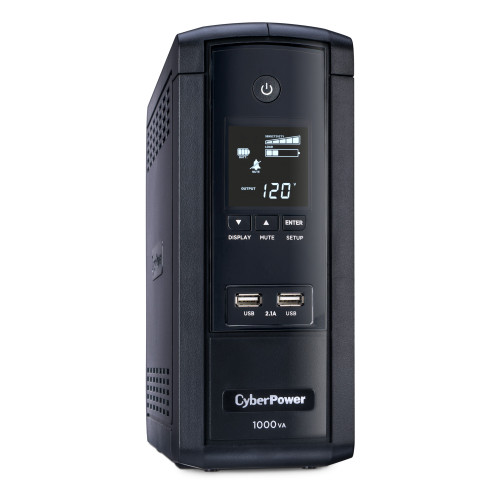
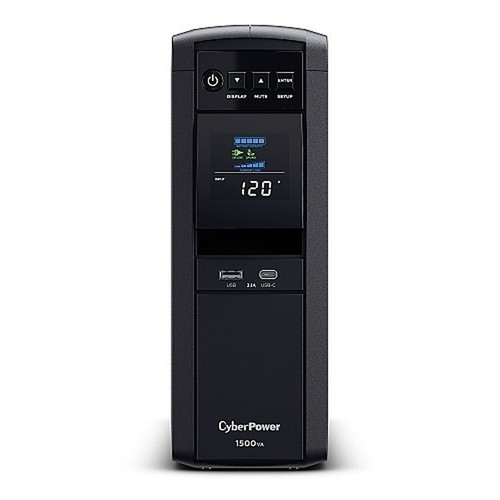
Both the CyberPower BRG1000AVRLCD and the PR1000RTXL2UC are 1000VA line-interactive UPS systems from the same manufacturer, each targeting different deployment environments. The BRG1000AVRLCD is a 600W mini-tower unit aimed at desktop and small-office workstation protection, while the PR1000RTXL2UC is a 1000W rack/tower unit with enterprise-grade management designed for IT closets and server rooms. This comparison examines runtime and power capacity, physical form factor and battery architecture, and management and communication capabilities.
In This Guide
- Which unit delivers more usable power and runtime under load?
- How do the physical form factor, battery design, and build materials compare?
- Which unit offers broader management, communication, and integration options?
- Which should you choose: the BRG1000AVRLCD or the PR1000RTXL2UC?
- Side-by-Side Specs
- FAQ
Which unit delivers more usable power and runtime under load?
The BRG1000AVRLCD is rated at 1000VA but only 600W, yielding a power factor of 0.60. It provides 1 minute of runtime at full load and 9 minutes at half load (300W). Its simulated sine wave output is suitable for devices tolerant of non-pure waveforms, such as most desktop computers, monitors, and network switches, but it is not recommended for active PFC power supplies.
The PR1000RTXL2UC carries the same 1000VA rating but delivers 1000W — a power factor of 1.0 — meaning it can sustain its full VA capacity in watts. It provides 8 minutes at full load (1000W) and 20 minutes at half load (500W). Its output is a true sine wave, making it compatible with active PFC power supplies common in servers and enterprise networking gear. The PR1000RTXL2UC's four 12V/7Ah batteries (total 28Ah capacity across four cells) and a 3-hour typical recharge time support heavier cycling demands.
How do the physical form factor, battery design, and build materials compare?
The BRG1000AVRLCD is a plastic-chassis mini-tower measuring 3.9 x 9.7 x 10.2 in and weighing 15 lb (6.8 kg). It uses a single 12V/9Ah sealed lead-acid battery that is user-replaceable. Its compact footprint suits a desktop or under-desk installation but provides no rack-mount option. Material of construction is not specified in the provided specs.
The PR1000RTXL2UC is a metal-chassis 2U rack/tower convertible unit measuring 17.1 x 3.4 x 16.2 in and weighing 55.30 lb (25.08 kg) — more than 3.5 times heavier. It houses four 12V/7Ah batteries. Its 2U rack height makes it suitable for standard 19-inch equipment racks, while the tower orientation accommodates floor or shelf deployment. The heavier metal construction and higher weight reflect its role in infrastructure environments. Battery replaceability is not explicitly stated in the provided specs for the PR1000RTXL2UC.
Which unit offers broader management, communication, and integration options?
The BRG1000AVRLCD provides USB (HID-compliant) and DB9 serial communication interfaces along with a multifunction LCD display. It includes 2 USB Type-A charging ports (2.1A shared) and data-line protection for Ethernet (RJ45) and coaxial (RG6) connections. Its 10 NEMA 5-15R outlets are split: 5 with battery backup and surge, 5 with surge-only protection. Management software compatibility is not specified in the provided specs.
The PR1000RTXL2UC supports USB, serial, SNMP, relay contact, and EPO (Emergency Power Off) — a significantly broader set of communication interfaces. It ships with PowerPanel® Business management software, enabling network-wide UPS monitoring, automated shutdown scheduling, and event logging. All 8 NEMA 5-15R outlets are battery-backed, with 4 designated as critical-load outlets. The inclusion of SNMP makes it compatible with network management systems and DCIM platforms. EPO support is a data-center and code-compliance requirement absent from the BRG1000AVRLCD's spec sheet. Surge suppression is rated at 2430 J versus 1080 J on the BRG1000AVRLCD.
Which should you choose: the BRG1000AVRLCD or the PR1000RTXL2UC?
Our take: The PR1000RTXL2UC is the stronger choice when protecting servers, network infrastructure, or any load with active PFC power supplies in a rack environment. Three spec deltas drive that conclusion: first, it delivers 1000W versus 600W at the same 1000VA rating, meaning it can actually power its full nameplate load; second, it provides true sine wave output versus simulated sine wave, a hard requirement for server-grade PSUs; third, it offers SNMP, EPO, relay, and PowerPanel® Business versus USB/serial only — essential for remote management and automated graceful shutdown in unattended IT spaces. Its 20-minute half-load runtime (versus 9 minutes) and 2430 J surge suppression (versus 1080 J) further separate it for infrastructure use. The BRG1000AVRLCD is appropriate for desktop workstations, point-of-sale terminals, or small-office peripherals where a compact tower form, 5-year warranty, USB charging ports, and lower cost-of-entry matter more than enterprise management or full-wattage output.
Side-by-Side Comparison
Spec-for-spec, from manufacturer data.
| Specification | CyberPower BRG1000AVRLCD | CyberPower PR1000RTXL2UC |
|---|---|---|
| Capacity (VA) | 1000 VA | 1000 VA |
| Capacity (Watts) | 600 W | 1000 W |
| Output Power Factor | 0.60 (derived) | 1.0 |
| Topology | Line Interactive | Line Interactive |
| Output Waveform | Simulated Sine Wave | True Sine Wave |
| AVR Type | Single Boost, Single Buck | Double Boost, Single Buck |
| Form Factor | Mini-Tower | 2U Rack/Tower |
| Runtime @ Full Load | 1 minute | 8 minutes |
| Runtime @ Half Load | 9 minutes | 20 minutes |
| Total Outlets | 10 x NEMA 5-15R | 8 x NEMA 5-15R |
| Battery-Backed Outlets | 5 | 8 (4 critical-load) |
| Surge Suppression | 1080 J | 2430 J |
| Battery Configuration | 1 x 12V/9Ah | 4 x 12V/7Ah |
| Communication Interfaces | USB, DB9 Serial | USB, Serial, SNMP, Relay, EPO |
| Management Software | — | PowerPanel® Business |
| Warranty | 5-Year Limited | 3-Year Limited |
| Connected Equipment Guarantee | $350,000 | $400,000 |
| Weight | 15 lb (6.8 kg) | 55.30 lb (25.08 kg) |
| Certifications | UL1778, cUL 107.5, FCC Class B, RoHS, ENERGY STAR | UL1778, CSA C22.2 No 107.3, FCC Class B, VCCI, RoHS, DOE |
Frequently Asked Questions
Which should you choose: the BRG1000AVRLCD or the PR1000RTXL2UC?
The PR1000RTXL2UC is the stronger choice when protecting servers, network infrastructure, or any load with active PFC power supplies in a rack environment. Three spec deltas drive that conclusion: first, it delivers 1000W versus 600W at the same 1000VA rating, meaning it can actually power its full nameplate load; second, it provides true sine wave output versus simulated sine wave, a hard requirement for server-grade PSUs; third, it offers SNMP, EPO, relay, and PowerPanel® Business versus USB/serial only — essential for remote management and automated graceful shutdown in unattended IT spaces. Its 20-minute half-load runtime (versus 9 minutes) and 2430 J surge suppression (versus 1080 J) further separate it for infrastructure use. The BRG1000AVRLCD is appropriate for desktop workstations, point-of-sale terminals, or small-office peripherals where a compact tower form, 5-year warranty, USB charging ports, and lower cost-of-entry matter more than enterprise management or full-wattage output.
Can either UPS protect a server with an active PFC power supply?
Only the PR1000RTXL2UC is suitable for active PFC power supplies. It produces a true sine wave output. The BRG1000AVRLCD produces a simulated sine wave, which can cause instability, overcurrent trips, or damage with active PFC PSUs commonly found in servers and high-end workstations.
Which unit is better for a network closet or server rack installation?
The PR1000RTXL2UC is purpose-built for rack environments: it is a 2U rack/tower convertible with a metal chassis, SNMP management, EPO support, PowerPanel® Business software, and all 8 outlets battery-backed. The BRG1000AVRLCD has no rack-mount form factor and lacks SNMP or EPO.
Is the BRG1000AVRLCD or PR1000RTXL2UC better for a small office desktop setup?
The BRG1000AVRLCD is better suited to a small-office desktop setup. It is a lightweight mini-tower (15 lb vs 55.30 lb), includes 2 USB charging ports, provides Ethernet and coaxial data-line protection, carries a 5-year limited warranty (versus 3 years on the PR1000RTXL2UC), and has a $350,000 connected equipment guarantee. Its 600W capacity is adequate for typical desktop workstation and peripheral loads.
More UPS Comparisons
- CyberPower PR1000RTXL2UC vs APC by Schneider Electric SURT1000RMXLI
- CyberPower PR1000RTXL2UC vs APC by Schneider Electric SMT1000CUS
- CyberPower PR1000RTXL2UC vs Vertiv GXT5-1000LVRT2UXL
- CyberPower PR1000RTXL2UC vs APC by Schneider Electric SMT1000J
- CyberPower PR1000RTXL2UC vs CyberPower CP1000PFCLCD
- CyberPower PR1000RTXL2UC vs CyberPower PR1000LCD
UPS Buying Guides
Get a Second Opinion on Your Camera Choice
Share your site layout, coverage goals, and budget. Our team will validate the camera selection, flag anything we would change, and recommend products that match the use case.