
Comnet CNGE24MS vs TP-Link SG6428X: Specification Comparison
Both the Comnet CNGE24MS and TP-Link SG6428X are managed 24-port gigabit Ethernet switches intended for network infrastructure roles, making them plausible cross-shop candidates for installers evaluating edge or aggregation switching. The CNGE24MS is an industrial-hardened unit with fiber SFP combo ports and wide-temperature tolerance, while the SG6428X is a commercial L3 stackable switch with 10GE uplinks and advanced routing. The comparison covers port architecture and throughput, environmental and power specifications, and management and redundancy capabilities.
In This Guide
- How do port counts, uplink speeds, and switching throughput compare?
- Which switch is better suited for harsh or outdoor-adjacent installation environments?
- How do the two switches compare on network redundancy, routing, and security management?
- Which should you choose: the CNGE24MS or the SG6428X?
- Side-by-Side Specs
- FAQ
How do port counts, uplink speeds, and switching throughput compare?
The CNGE24MS provides 16 x 10/100/1000Base-T RJ45 ports and 8 x 100/1000Base-FX SFP combo ports, yielding a total of 24 ports with a switching bandwidth of 48 Gbps and a forwarding latency of 7 μs. All uplinks top out at 1 Gbps; no 10GE capability is listed in the provided specifications.
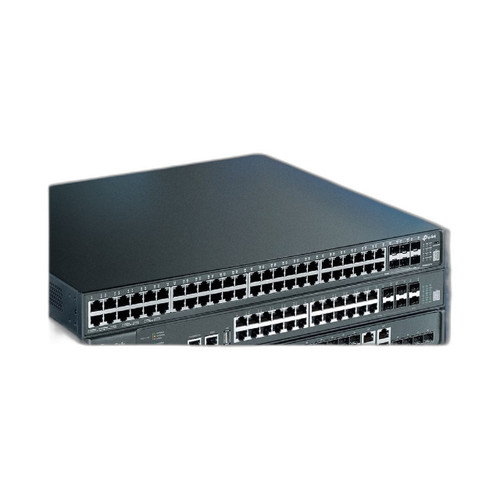
The SG6428X offers 24 Gigabit RJ45 ports plus 4 x 10GE SFP+ uplink slots, for 28 total ports, with a switching capacity of 128 Gbps — nearly 2.7× the CNGE24MS fabric. The four 10GE uplinks enable high-bandwidth aggregation to core switches or servers. MAC table size and forwarding latency are not stated in the provided SG6428X specifications.
For deployments requiring high-throughput uplinks or server connectivity, the SG6428X's 128 Gbps fabric and 10GE SFP+ ports represent a significant architectural advantage. For deployments where fiber SFP combo flexibility at the edge matters more than raw speed, the CNGE24MS's eight 100/1000Base-FX slots are purpose-suited.
Which switch is better suited for harsh or outdoor-adjacent installation environments?
The CNGE24MS is rated for an operating temperature range of -40 °C to +70 °C and a storage temperature of -40 °C to +85 °C, with humidity tolerance of 5% to 95% non-condensing. It consumes only 25 W and carries an MTBF rating of greater than 100,000 hours. These specifications indicate an industrial-grade design intended for cabinets, enclosures, or locations subject to temperature extremes common in physical-security and outdoor infrastructure.
The SG6428X is rated for an operating temperature of -5 °C to +45 °C — a commercial data-center or IDF-room envelope. Power supply input is 100–240 V AC; power consumption figure is not present in the provided specifications. MTBF is not stated.
For any installation exposed to sub-zero temperatures, high heat, or demanding industrial conditions, the CNGE24MS's -40 °C to +70 °C rating is decisive. The SG6428X's -5 °C to +45 °C range limits it to climate-controlled spaces.
How do the two switches compare on network redundancy, routing, and security management?
The CNGE24MS supports an extensive set of ring and redundancy protocols: C-Ring, Legacy Ring, C-Chain, MRP (Media Redundancy Protocol), Fast Recovery, MSTP, RSTP, and STP. Security features include Device Binding, Port-Based Network Access Control, RADIUS, SNMPv3, and HTTPS/SSH. VLAN support is listed at a maximum of 256. Jumbo frame support reaches 9.6 KB. MAC table capacity is 8,000 entries. Layer 3 routing capability is not stated in the provided specifications.
The SG6428X is a Layer 3 managed switch supporting dynamic routing protocols including RIP, OSPF, VRRP, ECMP, PIM-SM/DM, Static Routing, and PBR. Management interfaces include CLI, SNMP v1/v2c/v3, and RMON. It ships with a dual-core ARM processor at 1.5 GHz and 8 GB eMMC storage. Specific VLAN count limit, MAC table size, and jumbo frame size are not stated in the provided specifications. Ring-topology redundancy protocols comparable to C-Ring or MRP are not listed.
For ring-topology physical-security networks where sub-50 ms recovery is critical — common in IP surveillance deployments — the CNGE24MS's proprietary and standards-based ring protocols provide capabilities the SG6428X does not list. The SG6428X's full L3 routing suite (OSPF, VRRP, PIM) addresses requirements the CNGE24MS does not document, making it the stronger choice for routed campus or multi-VLAN core deployments.
Which should you choose: the CNGE24MS or the SG6428X?
Our take: The CNGE24MS is the stronger choice when the installation demands industrial temperature tolerance and ring-topology redundancy, while the SG6428X leads in throughput, routing depth, and uplink speed for commercial environments. Three concrete spec deltas: switching bandwidth is 128 Gbps vs. 48 Gbps in favor of the SG6428X; operating temperature range is -40 °C to +70 °C vs. -5 °C to +45 °C in favor of the CNGE24MS; and the SG6428X adds four 10GE SFP+ uplinks where the CNGE24MS tops out at 1 Gbps on all ports. Buyers deploying IP cameras or access control in outdoor enclosures, transportation infrastructure, or any sub-zero environment should specify the CNGE24MS. Buyers building or upgrading a climate-controlled IDF or MDF with routed multi-VLAN architecture and high-speed server uplinks should evaluate the SG6428X.
Side-by-Side Comparison
Spec-for-spec, from manufacturer data.
| Specification | Comnet CNGE24MS | TP-Link SG6428X |
|---|---|---|
| RJ45 Gigabit Ports | 16 × 10/100/1000Base-T | 24 × 10/100/1000Base-T |
| SFP / Fiber Ports | 8 × 100/1000Base-FX SFP combo | 4 × 10GE SFP+ |
| Total Port Count | 24 | 28 |
| Switching Capacity | 48 Gbps | 128 Gbps |
| Forwarding Latency | 7 μs | — |
| MAC Table Size | 8,000 entries | — |
| Max VLANs | 256 | — |
| Jumbo Frame Support | 9.6 KB | — |
| Layer 3 Routing | — | OSPF, RIP, VRRP, ECMP, PIM-SM/DM, Static, PBR |
| Redundancy Protocols | C-Ring, MRP, MSTP, RSTP, STP, C-Chain, Fast Recovery | — |
| Operating Temperature | -40 °C to +70 °C | -5 °C to +45 °C |
| Storage Temperature | -40 °C to +85 °C | — |
| Power Consumption | 25 W | — |
| Input Voltage | 100–240 VAC | 100–240 VAC 50/60 Hz |
| MTBF | > 100,000 hours | — |
| Dimensions | 30 × 16.5 × 8.8 cm | 440 × 420 × 44 mm (17.3 × 16.5 × 1.7 in) |
Frequently Asked Questions
Which should you choose: the CNGE24MS or the SG6428X?
The CNGE24MS is the stronger choice when the installation demands industrial temperature tolerance and ring-topology redundancy, while the SG6428X leads in throughput, routing depth, and uplink speed for commercial environments. Three concrete spec deltas: switching bandwidth is 128 Gbps vs. 48 Gbps in favor of the SG6428X; operating temperature range is -40 °C to +70 °C vs. -5 °C to +45 °C in favor of the CNGE24MS; and the SG6428X adds four 10GE SFP+ uplinks where the CNGE24MS tops out at 1 Gbps on all ports. Buyers deploying IP cameras or access control in outdoor enclosures, transportation infrastructure, or any sub-zero environment should specify the CNGE24MS. Buyers building or upgrading a climate-controlled IDF or MDF with routed multi-VLAN architecture and high-speed server uplinks should evaluate the SG6428X.
Can either switch operate in an outdoor or unheated cabinet installation?
The CNGE24MS is rated from -40 °C to +70 °C and is explicitly designed for industrial environments, making it suitable for outdoor-adjacent or unheated enclosures. The SG6428X is rated only from -5 °C to +45 °C, which limits it to climate-controlled spaces. For outdoor or harsh-environment deployments, only the CNGE24MS meets the thermal requirements based on the provided specifications.
Which switch provides faster network recovery if a link fails in a ring topology?
The CNGE24MS explicitly lists C-Ring, Legacy Ring, C-Chain, MRP, Fast Recovery, MSTP, RSTP, and STP — a comprehensive set of ring-redundancy protocols commonly used in physical-security and industrial Ethernet networks. The SG6428X's provided specifications do not list any ring-topology redundancy protocols. If ring recovery time is a requirement, only the CNGE24MS documents that capability.
Is the SG6428X or CNGE24MS better suited for a routed, multi-VLAN campus core?
The SG6428X is a Layer 3 managed switch with documented support for OSPF, RIP, VRRP, ECMP, PIM-SM/DM, static routing, and PBR, along with a 128 Gbps switching fabric and 10GE uplinks — all attributes suited to a routed core or distribution role. The CNGE24MS's provided specifications do not list L3 routing protocols. For a routed, multi-VLAN campus core, the SG6428X is the appropriate choice based on the available specifications.
More Network Switch Comparisons
- TP-Link S5500-24GP4XF vs NETGEAR GS728TP-300NAS
- TP-Link S5500-24GP4XF vs Comnet CNGE24FX12TX12MSPOE
- TP-Link S5500-24GP4XF vs Ubiquiti USW-24
- TP-Link S5500-24GP4XF vs Ubiquiti USW-ENTERPRISEXG-24
- TP-Link S5500-24GP4XF vs TP-Link SL2428P
- TP-Link S5500-24GP4XF vs TP-Link SG3428XPP-M2
Network Switch Buying Guides
Get a Second Opinion on Your Camera Choice
Share your site layout, coverage goals, and budget. Our team will validate the camera selection, flag anything we would change, and recommend products that match the use case.