
Comelit 10081 vs Comelit 1440: Specification Comparison
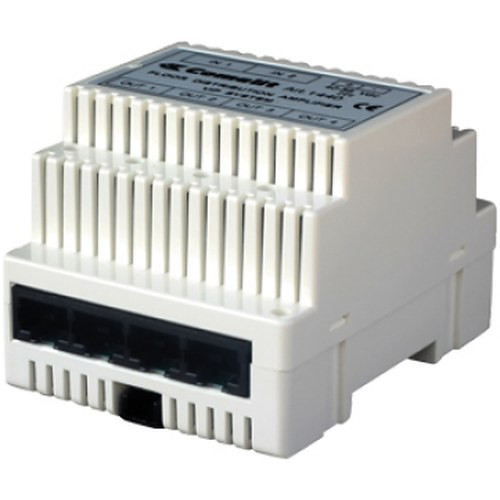
Both the Comelit 10081 and Comelit 1440 are 6-port PoE switches designed for IP surveillance and access control deployments, making them directly cross-shoppable in compact network infrastructure. The 10081 is positioned as an unmanaged PoE switch with a straightforward feature set, while the 1440 introduces a Gigabit backbone, managed capabilities including VLAN, QoS, and port mirroring, and flexible wall or rack mounting. This comparison evaluates PoE power delivery, physical form and deployment flexibility, and management and integration capabilities.

In This Guide
- How does PoE power delivery and per-port wattage differ between the 10081 and 1440?
- Which switch offers more deployment flexibility in terms of physical form factor and mounting options?
- How do the two switches compare on network management, switching performance, and system integration?
- Which should you choose: the 10081 or the 1440?
- Side-by-Side Specs
- FAQ
How does PoE power delivery and per-port wattage differ between the 10081 and 1440?
Both switches implement 802.3af PoE across all 6 ports. The 10081 specifies 15.4W per port, which is the maximum rated output under the 802.3af standard. The 1440 specifies 13W per port with a stated total PoE budget of 78W. With 6 ports at 13W each, the 1440's aggregate budget aligns with its per-port figure, though it runs below the 802.3af ceiling of 15.4W per port.
For powering standard 2MP fixed cameras, door controllers, and access readers—as noted in the 10081 spec bullets—both switches are viable. Installations requiring devices that draw closer to the 15.4W 802.3af ceiling may find the 10081's stated per-port headroom more suitable. No total PoE budget is specified for the 10081, so aggregate power capacity under simultaneous full load cannot be confirmed from available specs.
Which switch offers more deployment flexibility in terms of physical form factor and mounting options?
The 1440 explicitly supports both wall-mount and rack-mount installation, giving integrators flexibility across enclosure types and rack environments. Physical dimensions are provided: 66" x 85" x 35" (noting these figures appear unusually large and may reflect a unit or data entry anomaly; the decimal dimensions of 2.6" wide x 3.35" high x 1.38" deep are also listed and are consistent with a compact switch). Housing color is white for both units.
The 10081 describes a compact fit suitable for 19-inch racks, access cabinets, or wall enclosures in its marketing bullets, but no discrete mounting type attribute or physical dimensions are specified in its structured specs. Its form factor is listed as both 'cable' and 'Network Switch' in separate fields, suggesting a data inconsistency. The 1440 provides cleaner, more verifiable physical and mounting data for planning enclosure and rack space.
How do the two switches compare on network management, switching performance, and system integration?
The 1440 is a managed switch with documented support for VLAN, QoS, and port mirroring—features directly relevant to video traffic segmentation, prioritization, and troubleshooting in surveillance networks. It also specifies a Gigabit switching fabric, enabling simultaneous handling of multiple high-resolution camera streams. No uplink speed or switching fabric specification is provided for the 10081.
The 10081 lists 'Software 6' under management and notes ONVIF compatibility and VMS compatibility via ONVIF. However, no VLAN, QoS, or port mirroring capabilities are indicated, suggesting an unmanaged or minimally managed design. The 1440 does not list an ONVIF attribute in its specs. For Comelit VIP intercom and access ecosystems, the 10081's explicit ONVIF declaration may carry integration value, but the 1440 offers substantially more network control for segmented or mixed-vendor deployments.
Which should you choose: the 10081 or the 1440?
Our take: The 1440 is the stronger choice when the installation requires managed network features and Gigabit throughput; the 10081 is more appropriate for simple, plug-and-play Comelit VIP deployments with ONVIF device integration. The 1440 delivers VLAN, QoS, and port mirroring absent from the 10081's spec sheet, and its Gigabit switching fabric is explicitly documented versus unspecified on the 10081. Per-port PoE, the 10081 claims 15.4W versus the 1440's 13W—a meaningful delta for devices drawing near the 802.3af ceiling. The 1440 also provides verified wall and rack mounting with dimensional data, while the 10081 lacks confirmed physical dimensions. Choose the 10081 for tight Comelit VIP or ONVIF-centric systems where unmanaged simplicity is acceptable; choose the 1440 for multi-VLAN surveillance networks or installations requiring traffic prioritization and port-level diagnostics.
Side-by-Side Comparison
Spec-for-spec, from manufacturer data.
| Specification | Comelit 10081 | Comelit 1440 |
|---|---|---|
| Product Type | 6-Port PoE Switch (Unmanaged) | 6-Port PoE Switch (Managed) |
| PoE Standard | 802.3af | 802.3af |
| PoE Per Port | 15.4W | 13W |
| Total PoE Budget | — | 78W |
| Number of Ports | 6 | 6 |
| Switching Fabric | — | Gigabit |
| Port Speed | — | 6x Gigabit Ethernet |
| Management | Software 6 (unmanaged-class) | Managed (VLAN, QoS, port mirroring) |
| VLAN Support | — | Yes |
| QoS | — | Yes |
| Port Mirroring | — | Yes |
| ONVIF | Yes | — |
| Mount Type | Rack / Cabinet / Wall (per bullet, unconfirmed spec) | Wall and Rack (confirmed) |
| Dimensions (W x H x D) | — | 2.6" x 3.35" x 1.38" |
| Housing Color | White | White |
| Warranty | 2-Year | 2-Year |
Frequently Asked Questions
Which should you choose: the 10081 or the 1440?
The 1440 is the stronger choice when the installation requires managed network features and Gigabit throughput; the 10081 is more appropriate for simple, plug-and-play Comelit VIP deployments with ONVIF device integration. The 1440 delivers VLAN, QoS, and port mirroring absent from the 10081's spec sheet, and its Gigabit switching fabric is explicitly documented versus unspecified on the 10081. Per-port PoE, the 10081 claims 15.4W versus the 1440's 13W—a meaningful delta for devices drawing near the 802.3af ceiling. The 1440 also provides verified wall and rack mounting with dimensional data, while the 10081 lacks confirmed physical dimensions. Choose the 10081 for tight Comelit VIP or ONVIF-centric systems where unmanaged simplicity is acceptable; choose the 1440 for multi-VLAN surveillance networks or installations requiring traffic prioritization and port-level diagnostics.
Is the 10081 or 1440 better for powering devices that draw close to the 802.3af maximum?
Based on available specs, the 10081 states 15.4W per port—the 802.3af ceiling—while the 1440 specifies 13W per port. For devices requiring maximum 802.3af draw, the 10081's stated per-port wattage provides more headroom. However, no total PoE budget is listed for the 10081, so aggregate load capacity across all 6 ports simultaneously cannot be confirmed from the provided specifications.
Which switch is better suited for a network that requires VLAN segmentation or traffic prioritization?
The 1440 is the clear choice here. Its specs explicitly list VLAN, QoS, and port mirroring as supported management features. The 10081 does not include any of these capabilities in its specifications, indicating it operates as an unmanaged or minimally managed switch. For deployments separating camera traffic from access control or corporate LAN, the 1440 is the appropriate selection.
Does either switch confirm compatibility with Comelit VIP intercom systems or ONVIF devices?
The 10081 explicitly lists ONVIF compatibility and VMS compatibility via ONVIF in its specifications, and its tagline references use with IP cameras and intercoms within the Comelit VIP ecosystem. The 1440 does not list ONVIF as a specified attribute. Integrators building primarily around Comelit VIP or ONVIF-certified devices should note this distinction; the 10081's ONVIF declaration is documented while the 1440's compatibility in that context is not confirmed by the provided specs.
More Network Switch Comparisons
- Vivotek GEL-065A-060 vs Comelit 10081
- Vivotek GEL-065A-060 vs Comelit 1440
- Vivotek GEL-065A-060 vs Comelit 1440A
- Comelit 10081 vs Code Blue SLNP0018
- Comelit 10081 vs Comelit 1440A
- Code Blue SLNP0018 vs Comelit 1440
Network Switch Buying Guides
Get a Second Opinion on Your Camera Choice
Share your site layout, coverage goals, and budget. Our team will validate the camera selection, flag anything we would change, and recommend products that match the use case.