
Vivotek GEL-065A-060 vs Comelit 1440: Specification Comparison
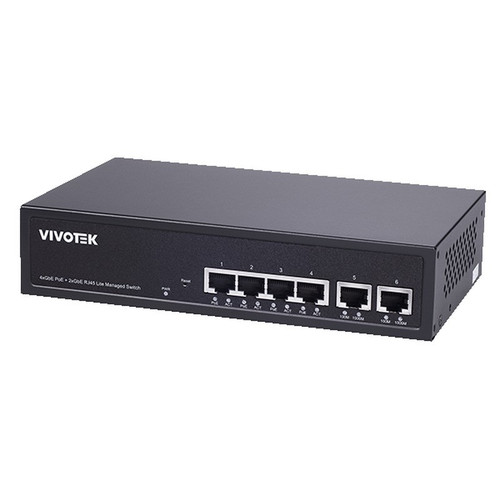
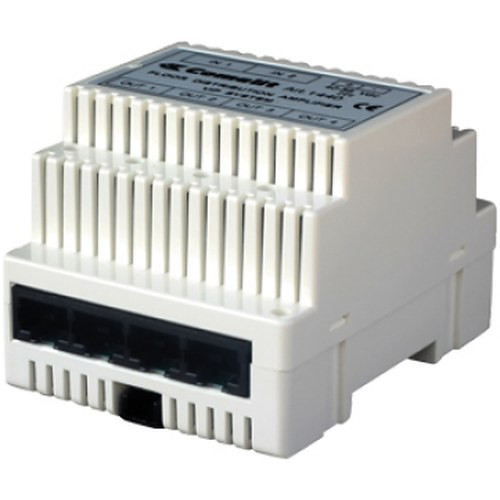
Both the Vivotek AW-GEL-065A-060 and the Comelit 1440 are 6-port Gigabit PoE switches aimed at small-to-mid surveillance deployments where edge switching with power delivery is required. The Vivotek unit specifies 4 PoE ports plus 2 standard uplinks, while the Comelit 1440 specifies PoE on all 6 ports. Both are managed switches supporting VLAN and QoS. The comparison below evaluates PoE capacity and port architecture, physical and environmental specifications, and management feature depth based solely on the provided specifications.
In This Guide
- Which switch delivers more usable PoE power and how are ports allocated?
- How do the two switches compare on physical form factor, environmental ratings, and power input?
- Which switch offers deeper management, redundancy, and network protection features?
- Which should you choose: the GEL-065A-060 or the 1440?
- Side-by-Side Specs
- FAQ
Which switch delivers more usable PoE power and how are ports allocated?
The Vivotek AW-GEL-065A-060 provides 4 PoE ports rated at 802.3af/at (up to 30W per port) with a total PoE power budget of 60W. The remaining 2 ports are standard Gigabit RJ45 uplinks with no PoE capability. This means a maximum of 4 powered devices can be connected, with the 2 uplink ports reserved for network infrastructure such as a router or upstream switch.
The Comelit 1440 specifies 802.3af PoE on all 6 ports, rated at 13W per port with a stated total budget of 78W. This gives the 1440 a two-port numerical advantage for powered endpoints and a higher aggregate budget (78W vs 60W). However, the Comelit 1440 does not list 802.3at (PoE+) support in the provided specs, capping per-port delivery at 13W — less than half the Vivotek's 30W per-port ceiling. Buyers powering high-wattage devices such as PTZ cameras or multi-sensor units should note this per-port ceiling difference.
How do the two switches compare on physical form factor, environmental ratings, and power input?
The Vivotek AW-GEL-065A-060 provides full environmental ratings in its specifications: operating temperature 0°C to 50°C, storage temperature -20°C to 70°C, and operating humidity 10–90% RH. Its physical dimensions are 200 × 118 × 44 mm and weight is 0.66 kg. Power input is AC 100–240V at 50–60 Hz with a maximum draw of 65W. The unit ships with a power cord, quick installation guide, and rack mount kit, confirming it supports rack installation. Its regulatory certifications are CE, FCC, LVD, and VCCI.
The Comelit 1440 lists dimensions of 66" × 85" × 35" — these values appear inconsistent with a standard switch form factor and are likely a unit-of-measure or data-entry error in the provided specs; they cannot be used as reliable physical references. Width, height, and depth are separately listed as 2.6, 3.35, and 1.38 (units unspecified). The 1440 supports both wall-mount and rack-mount installation per the provided specs. No operating temperature range, humidity rating, or AC input specification is provided for the Comelit 1440 in the supplied data. The Vivotek therefore has a clear documentation advantage for environment-sensitive installations.
Which switch offers deeper management, redundancy, and network protection features?
The Vivotek AW-GEL-065A-060 provides a detailed management feature set in its specifications: 802.1Q tag-based VLAN with 4,096 VLAN IDs, port-based VLAN, IEEE 802.1d STP, IEEE 802.1w RSTP, Link Aggregation Control Protocol (LACP), CoS port-based, 802.1p-based, and DSCP-based QoS, loop protection, flow control, storm control, port-based mirroring, port isolation, bandwidth control, and static MAC. On the PoE management side it lists PoE On/Off control, PoE auto-checking, Non-Stop PoE, and an Extend PoE Mode rated to 250 meters. Surge protection is specified at 4KV per PoE port. MAC address table capacity is 4K entries; jumbo frames are supported up to 9,216 bytes; switching bandwidth is 12 Gbps; buffer memory is 1 Mb.
The Comelit 1440 specifies managed operation with VLAN, QoS, and port mirroring per its provided data, and a Gigabit switching fabric. No quantitative switching bandwidth figure, MAC table size, buffer memory, VLAN ID count, STP/RSTP support, LACP, storm control, loop protection, surge protection rating, or PoE management sub-features (auto-check, non-stop PoE, extend mode) are present in the supplied Comelit specifications. The Vivotek's specification sheet is materially more detailed; where the Comelit 1440 may support equivalent features, those are not documented in the provided data and cannot be assumed.
Which should you choose: the GEL-065A-060 or the 1440?
Our take: The AW-GEL-065A-060 is the stronger choice when per-port power headroom, documented network resilience, and PoE surge protection are priorities. Three concrete spec deltas: (1) per-port PoE ceiling is 30W (802.3af/at) on the Vivotek versus 13W (802.3af only) on the Comelit 1440 — a 2.3× difference that matters for PTZ cameras or multi-sensor units; (2) the Vivotek documents 4KV surge protection per PoE port, RSTP, LACP, storm control, and a 250-meter Extend PoE Mode — none of these are present in the Comelit 1440's provided specifications; (3) switching bandwidth is specified at 12 Gbps for the Vivotek; no equivalent figure is provided for the 1440. The Comelit 1440 supports PoE on all 6 ports versus 4 on the Vivotek, which suits deployments needing to power six low-wattage (≤13W) cameras from a single switch. Buyers on a Comelit VIP intercom platform may prefer the 1440 for ecosystem continuity, but should confirm management feature depth directly with Comelit documentation.
Side-by-Side Comparison
Spec-for-spec, from manufacturer data.
| Specification | Vivotek GEL-065A-060 | Comelit 1440 |
|---|---|---|
| Total Ports | 6 | 6 |
| PoE Ports | 4 | 6 |
| Non-PoE Uplink Ports | 2 | — |
| PoE Standard | 802.3af / 802.3at | 802.3af |
| Max Power per PoE Port | 30W | 13W |
| Total PoE Budget | 60W | 78W |
| Switching Bandwidth | 12 Gbps | — |
| MAC Address Table | 4K | — |
| Jumbo Frames | 9216 Bytes | — |
| VLAN Support | 802.1Q (4096 IDs) + Port-based | VLAN (count not specified) |
| STP / RSTP | 802.1d / 802.1w | — |
| LACP | Yes | — |
| Storm Control | Yes | — |
| PoE Surge Protection | 4KV per port | — |
| Operating Temperature | 0°C to 50°C | — |
| Warranty | 24 months | 2 years |
| Mount Type | Rack (kit included) | Wall / Rack |
| Regulatory | CE, FCC, LVD, VCCI | — |
Frequently Asked Questions
Which should you choose: the GEL-065A-060 or the 1440?
The AW-GEL-065A-060 is the stronger choice when per-port power headroom, documented network resilience, and PoE surge protection are priorities. Three concrete spec deltas: (1) per-port PoE ceiling is 30W (802.3af/at) on the Vivotek versus 13W (802.3af only) on the Comelit 1440 — a 2.3× difference that matters for PTZ cameras or multi-sensor units; (2) the Vivotek documents 4KV surge protection per PoE port, RSTP, LACP, storm control, and a 250-meter Extend PoE Mode — none of these are present in the Comelit 1440's provided specifications; (3) switching bandwidth is specified at 12 Gbps for the Vivotek; no equivalent figure is provided for the 1440. The Comelit 1440 supports PoE on all 6 ports versus 4 on the Vivotek, which suits deployments needing to power six low-wattage (≤13W) cameras from a single switch. Buyers on a Comelit VIP intercom platform may prefer the 1440 for ecosystem continuity, but should confirm management feature depth directly with Comelit documentation.
Can either switch power a PTZ camera that draws more than 15 watts?
Yes, the Vivotek AW-GEL-065A-060 supports 802.3at (PoE+) with up to 30W per port, which covers most PTZ cameras requiring 15–25W. The Comelit 1440 is specified as 802.3af only (13W per port maximum); the provided specs do not indicate 802.3at support, so high-wattage PTZ cameras may not be compatible without an external PoE injector.
Is either switch suitable for outdoor or unconditioned-space installation?
The Vivotek AW-GEL-065A-060 is rated for 0°C to 50°C operating temperature and 10–90% RH — suitable for conditioned indoor environments and mild unconditioned spaces. No operating temperature or humidity rating is provided for the Comelit 1440 in the supplied specifications, so its suitability for unconditioned spaces cannot be determined from the available data.
Which switch is better if I need to connect six IP cameras and no separate uplink port is required?
The Comelit 1440 specifies PoE on all 6 ports, making all ports available for powered endpoints. The Vivotek AW-GEL-065A-060 provides PoE on only 4 of its 6 ports; the remaining 2 are standard uplink ports with no PoE. If connecting six PoE cameras to a single switch with no dedicated uplink needed, the Comelit 1440's port layout is the better architectural fit — provided the cameras draw no more than 13W per port.
More Network Switch Comparisons
- Vivotek GEL-065A-060 vs Comelit 10081
- Vivotek GEL-065A-060 vs Comelit 1440A
- Comelit 10081 vs Code Blue SLNP0018
- Comelit 10081 vs Comelit 1440
- Comelit 10081 vs Comelit 1440A
- Code Blue SLNP0018 vs Comelit 1440
Network Switch Buying Guides
Get a Second Opinion on Your Camera Choice
Share your site layout, coverage goals, and budget. Our team will validate the camera selection, flag anything we would change, and recommend products that match the use case.