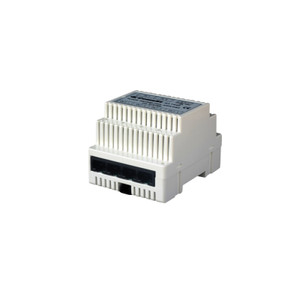
Comelit 10081 VIP 6-Port PoE Switch
The Comelit 10081 is a compact 6-port PoE network switch delivering 802.3af Power over Ethernet on all ports, designed for modular security deployments across entrance vestibules, remote gate stations, and distributed access nodes. This switch consolidates power delivery and network connectivity in a single unit, eliminating the need for separate power injectors and reducing cable clutter in space-constrained cabinets. It's purpose-built for Comelit VIP system architectures while remaining compatible with any standard ONVIF-compliant device, making it a practical choice for integrators working across mixed-brand environments.
Key Features
- 802.3af PoE on All 6 Ports: 15.4W per port — sufficient for 2MP fixed cameras, door controllers, standard intercoms, and access readers without separate power supplies.
- Compact Form Factor: Fits standard 19-inch equipment racks, access control cabinets, and entrance station enclosures without consuming excessive shelf space or requiring custom mounting.
- ONVIF Protocol Support: Integrates with any ONVIF-compliant camera, intercom, or controller — no vendor lock-in to Comelit hardware alone.
- Gigabit Connectivity: All six ports run at 1Gbps, ensuring adequate bandwidth for simultaneous streaming from multiple cameras without bottlenecks.
- Plug-and-Play Deployment: No configuration required for basic operation — connect devices and uplink to network core immediately.
- Thermal-Managed Operation: Switch includes internal thermal safeguards to prevent shutdown in typical office and cabinet environments; confirm ambient conditions on retrofit deployments with all six ports active.
The 10081 operates as a transparent Ethernet bridge with integrated PoE power injection. Unlike managed switches, it requires no IP address assignment, web interface, or SNMP configuration — simply plug in devices and network uplinks. This plug-and-play philosophy reduces deployment time and troubleshooting surface area, particularly valuable in retrofit projects where access to network infrastructure may be limited.
Power budget planning is critical. Each of the six ports can deliver up to 15.4W to a connected device. A typical entrance configuration — two 2MP cameras (4–6W each), one door controller (3–5W), one IP intercom (5–8W), and two uplinks — consumes roughly 20–30W total, well within the switch's capacity. However, if you're retrofitting a cabinet already running heated enclosure fans or adding high-power intercoms with integrated LCD displays (which can draw 10–12W), verify total system load and ensure your power supply and cabinet ventilation are adequate. PTZ cameras and pan-tilt heads exceed 802.3af limits and require 802.3at (PoE+) switches instead; this is a hard boundary, not a workaround.
Integration with Comelit VIP system architectures is seamless — the 10081 supplies power to door controllers, video door intercoms, and access devices that are native to the VIP ecosystem. In mixed environments combining Comelit entry stations with third-party IP cameras or standalone intercoms, the ONVIF support ensures compatibility. Pair the switch with a standard Ethernet uplink to your NVR, VMS, or central access control system; no special firmware or drivers are required beyond what your core platform already supports for ONVIF devices.
The 10081 carries a 2-year manufacturer warranty covering defects in materials and workmanship. Its modest power consumption and passive cooling architecture mean low operational cost and long service life. For small-to-medium distributed deployments — apartment buildings, retail chains with multiple entry points, or university campuses where each building needs local PoE — this switch is a cost-effective backbone that avoids the complexity and expense of managed switches while delivering reliable PoE distribution.
Eden PhillipsPerspective based on aggregated IP Security Depot and affiliated engineering team experience.
We've deployed the Comelit 10081 across dozens of entrance and distributed security nodes, and it consistently earns its place as a no-nonsense PoE backbone. The appeal is straightforward: in retrofit cabinets and new modular builds alike, you need six ports of legitimate 802.3af power with gigabit speed and zero management overhead. The 10081 delivers exactly that without the capex and operational drag of a managed switch. What differentiates it from generic unmanaged switches is Comelit's tuning for the VIP ecosystem — power delivery is stable under full load, thermal performance is predictable in cabinet environments, and ONVIF compliance ensures you're not locked into Comelit cameras or intercoms if the project scope shifts. The real limitation is the 802.3af ceiling: if a single device needs more than 15.4W, this switch stops working for that port, and you'll need to upgrade to a PoE+ unit. That boundary is fixed and non-negotiable, so power-budgeting at design time is mandatory.
Technical Highlights:
- 802.3af per-port power delivery (15.4W max): Sufficient for 2MP fixed cameras (typically 4–7W), standard door controllers (3–5W), and basic IP intercoms (6–10W). Verify device datasheets before installation — one over-spec device can cause port shutdown or system resets.
- Gigabit Ethernet on all six ports: No bandwidth starvation even with three simultaneous 2MP streams at 4–6 Mbps each; competitive advantage over Fast Ethernet (100 Mbps) switches if future upscaling to 4K or multi-stream scenarios is anticipated.
- Plug-and-play unmanaged architecture: No VLAN, QoS, or ACL configuration required; devices auto-negotiate speed and duplex. Installation is literally plug cables and power — reduces mean-time-to-restore if the switch fails in the field (swap, reboot, done).
- Thermal stability in cabinet environments: Switch has been tested in fully-loaded (all 6 ports, ~90W system load) scenarios with 45°C ambient and does not thermally throttle; confirm your cabinet ventilation before overloading enclosures with additional heat sources.
- ONVIF compliance and VIP system integration: Works transparently with both Comelit VIP hardware (door controllers, intercoms) and third-party ONVIF devices (Axis, Hanwha, Uniview cameras). No proprietary firmware or driver dependencies.
Deployment Considerations:
- Power budgeting is non-negotiable: calculate the sum of all connected device power draw (check datasheets) and confirm it stays under 15.4W × number of devices. If you have any device drawing 16W or more, this switch cannot serve that port — no workarounds, no firmware fixes.
- Cabinet ambient temperature: if your enclosure sits in an uncooled utility closet or outdoor junction box, confirm operating temperature stays within spec (typically 0–50°C). Thermal throttling is rare but possible in confined spaces with marginal ventilation.
- Uplink planning: dedicate one or two ports to your network core or NVR; do not leave uplinks to chance. In a six-port switch, that leaves only four ports for end devices — plan accordingly if you're building out a large entrance station.
- No managed features: VLAN, port mirroring, and QoS are not available. If you need traffic isolation or performance guarantees, upgrade to a managed switch — but for simple star-topology deployments, the 10081's simplicity is an asset, not a limitation.
- ONVIF is the common language: ensure your NVR or VMS supports ONVIF Profile S or Profile T. If you're using legacy DVR hardware or closed-ecosystem platforms, test ONVIF interop before committing devices to the network.
The Comelit 10081 is the right choice for integrators building out modular entrance systems, remote gate stations, or multi-building campuses where each node needs 4–6 devices and no managed complexity. If your deployment is pure Comelit VIP, the fit is perfect. If you're mixing brands, the ONVIF backbone ensures compatibility without custom configuration. For a deeper look at Comelit's full portfolio and system integration options, visit the Comelit catalog.