
Brother TD4410D vs Sato WWCT04241-NDR: Specification Comparison
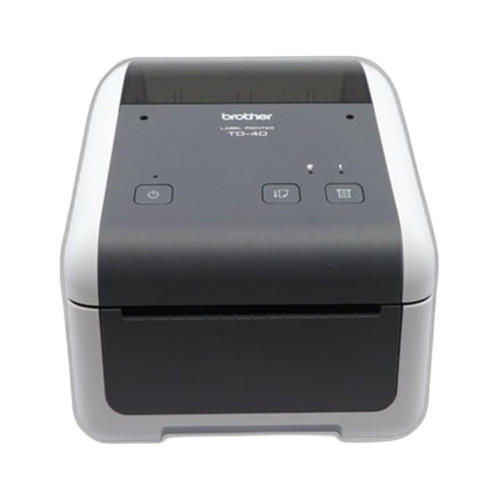
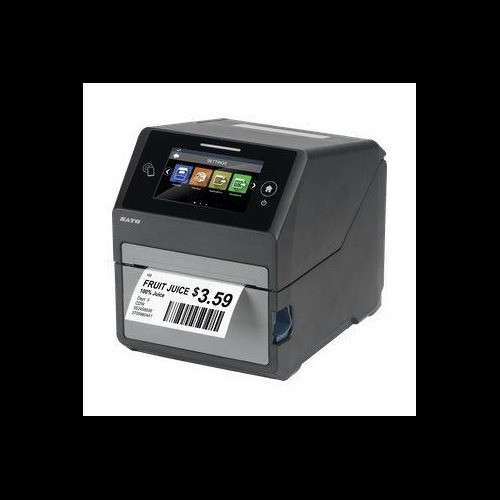
Both the Brother TD4410D and the Sato CT4-LX (WWCT04241-NDR) are direct thermal desktop label printers targeting the same physical footprint and media class. The comparison spans core print performance, connectivity breadth, and advanced encoding capability — specifically the Sato's integrated UHF RFID versus the Brother's legacy-protocol depth. Buyers evaluating a desktop thermal printer for warehousing, retail, healthcare wristbanding, or asset tracking would legitimately cross-shop these two units before committing to a platform.
In This Guide
- How do print resolution, speed, and supported print methods compare between the TD4410D and the WWCT04241-NDR?
- Which unit offers broader connectivity and does either support RFID or advanced on-device intelligence?
- Which printer better supports mixed or legacy label ecosystems through programming language and interface compatibility?
- Which should you choose: the TD4410D or the WWCT04241-NDR?
- Side-by-Side Specs
- FAQ
How do print resolution, speed, and supported print methods compare between the TD4410D and the WWCT04241-NDR?
Both units share an identical rated print speed of 8 ips. Resolution diverges: the Brother TD4410D is specified at 203 dpi, while the Sato WWCT04241-NDR carries a primary spec of 305 dpi (noted across datasheet and card bullets), though its structured field 'Print Resolution' also lists 203 — the datasheet and tilde-sourced specs consistently cite 305 dpi as the operative figure. Buyers requiring finer barcode density, small fonts, or detailed graphics should note that 305 dpi provides meaningfully higher dot density than 203 dpi at the same speed.
Print method is a significant differentiator. The TD4410D is direct thermal only — no ink or ribbon required. The WWCT04241-NDR supports both direct thermal and thermal transfer, allowing ribbon-based printing for longer-lasting labels on coated or synthetic media. The Brother's max print width is 4.27 inches (paper width range 0.75"–4.65"); the Sato's max print width is 4.09 inches with a media width range of 1"–4.1". The Brother accepts slightly wider media stock.
Which unit offers broader connectivity and does either support RFID or advanced on-device intelligence?
The Sato WWCT04241-NDR offers four connectivity options per spec: Ethernet, Wi-Fi, Bluetooth, and USB. The Brother TD4410D is specified with USB and Serial only — no Ethernet, no Wi-Fi, no Bluetooth appear in its spec set. For networked or wireless deployment environments, the Sato is the only option of the two based on provided specifications.
The Sato WWCT04241-NDR includes integrated UHF RFID encoding at 860–960 MHz, EPC Class 1 Gen 2 — a capability entirely absent from the TD4410D's specifications. Organizations tracking serialized assets, managing inventory with RFID-enabled cartons, or encoding smart labels require RFID at the printer; the Brother cannot fulfill this function per its published specs.
On-device intelligence also diverges. The Sato carries a 4.3-inch full-color touchscreen display and 4 GB Flash / 1 GB DDR3 / 2 GB user storage. The Brother TD4410D specifies 64 MB Flash (40 MB template/database) and 256 MB SDRAM with no display size or type listed in its specs. For standalone or operator-driven workflows requiring an on-unit UI, the Sato's touchscreen and larger memory pool represent a substantial difference.
Which printer better supports mixed or legacy label ecosystems through programming language and interface compatibility?
The Brother TD4410D explicitly lists four programming languages: ZPL II, CPCL, Raster Graphics, and Text (Template) ESC/P. ZPL II compatibility is particularly significant for drop-in replacement into Zebra-centric warehouse management or POS environments without reprinting label formats. CPCL support covers Intermec/Honeywell legacy stacks. The 9-pin Serial port extends compatibility to older host systems and embedded controllers that lack USB.
The Sato WWCT04241-NDR's supported programming languages are not enumerated in the provided specifications. Buyers cannot confirm ZPL II or CPCL compatibility from available data alone. Sato natively uses its own SBPL language and has historically offered ZPL emulation on certain models, but no such claim can be made here based solely on provided specs. Integrators with existing Zebra or Intermec label formats should verify language compatibility directly with Sato before selecting the WWCT04241-NDR.
The Brother's dual USB 2.0 and Serial port configuration targets legacy logistics, retail POS, and WMS environments explicitly. The Sato's Ethernet and Wi-Fi ports target networked infrastructure environments. Neither unit's spec set is a superset of the other from a protocol standpoint — the right choice depends on the host system's interface requirements.
Which should you choose: the TD4410D or the WWCT04241-NDR?
Our take: The TD4410D is the stronger choice when the deployment is Serial-port-dependent, requires ZPL II or CPCL drop-in compatibility, or budgets favor a direct thermal-only, ribbon-free operation. It prints at 203 dpi and 8 ips across a slightly wider media range (up to 4.65" vs 4.1"), and its four-language protocol stack enables integration into legacy WMS, POS, and mixed-vendor label ecosystems without reformatting. The WWCT04241-NDR is the stronger choice when the use case demands any of: 305 dpi resolution for dense barcodes or small text; UHF RFID encoding (860–960 MHz EPC C1G2) for smart-label or asset-tracking workflows; networked deployment via Ethernet, Wi-Fi, or Bluetooth; or an operator-facing 4.3-inch color touchscreen with 4 GB Flash storage. The Sato also supports thermal transfer in addition to direct thermal, extending label durability options. Platform qualifier: confirm WWCT04241-NDR programming language support before deploying into an existing Zebra-format environment.
Side-by-Side Comparison
Spec-for-spec, from manufacturer data.
| Specification | Brother TD4410D | Sato WWCT04241-NDR |
|---|---|---|
| Print Method | Direct Thermal only | Direct Thermal and Thermal Transfer |
| Print Resolution | 203 dpi | 305 dpi |
| Print Speed | 8 ips | 8 ips |
| Max Print Width | 4.27" | 4.09" |
| Media Width Range | 0.75" – 4.65" | 1" – 4.1" |
| Connectivity | USB, Serial | Ethernet, Wi-Fi, Bluetooth, USB |
| RFID | — | UHF 860–960 MHz EPC C1G2 |
| Display | — | 4.3" Full-Color Touchscreen |
| Flash Memory | 64 MB (40 MB template/DB) | 4 GB Flash / 2 GB user storage |
| RAM | 256 MB SDRAM | 1 GB DDR3 |
| Programming Languages | ZPL II, CPCL, Raster Graphics, ESC/P | Not specified in provided data |
| Max Ribbon Length | — | 984 ft (300 m) |
| Max Media OD | — | 5" |
| Dimensions (W×D×H) | 7.08" × 8.82" × 6.10" | 7.0" × 9.375" × 8.4375" |
| Weight | 4.58 lbs | 7.3 lbs |
| Warranty | Manufacturer Warranty (duration not specified) | 1-year Warranty |
Frequently Asked Questions
Which should you choose: the TD4410D or the WWCT04241-NDR?
The TD4410D is the stronger choice when the deployment is Serial-port-dependent, requires ZPL II or CPCL drop-in compatibility, or budgets favor a direct thermal-only, ribbon-free operation. It prints at 203 dpi and 8 ips across a slightly wider media range (up to 4.65" vs 4.1"), and its four-language protocol stack enables integration into legacy WMS, POS, and mixed-vendor label ecosystems without reformatting. The WWCT04241-NDR is the stronger choice when the use case demands any of: 305 dpi resolution for dense barcodes or small text; UHF RFID encoding (860–960 MHz EPC C1G2) for smart-label or asset-tracking workflows; networked deployment via Ethernet, Wi-Fi, or Bluetooth; or an operator-facing 4.3-inch color touchscreen with 4 GB Flash storage. The Sato also supports thermal transfer in addition to direct thermal, extending label durability options. Platform qualifier: confirm WWCT04241-NDR programming language support before deploying into an existing Zebra-format environment.
Can the WWCT04241-NDR replace a Zebra printer already running ZPL II label formats?
The WWCT04241-NDR's supported programming languages are not listed in the provided specifications, so ZPL II compatibility cannot be confirmed from available data. The TD4410D explicitly supports ZPL II and is the verifiable drop-in option for Zebra-format environments based on published specs. Verify directly with Sato before deploying the CT4-LX into an existing ZPL II workflow.
Which printer should I choose if I need to encode UHF RFID smart labels at the desktop?
The Sato WWCT04241-NDR is the only option of the two with integrated UHF RFID encoding, specified at 860–960 MHz EPC Class 1 Gen 2. The Brother TD4410D has no RFID capability listed in its specifications. For any smart-label encoding, asset tracking, or RFID-enabled inventory workflow, the WWCT04241-NDR is required.
Which unit fits better into a wireless or networked label printing environment?
The Sato WWCT04241-NDR supports Ethernet, Wi-Fi, Bluetooth, and USB per its specifications, making it suitable for networked and wireless deployments. The Brother TD4410D is specified with USB and Serial interfaces only — no network or wireless connectivity is listed. For any environment where the printer must connect over a LAN or wirelessly to a host system, the WWCT04241-NDR is the appropriate selection based on published specs.
More Label Printer Comparisons
- Brother TD4550DNWB vs Sato WWCT04241-WCN
- Brother TD4550DNWB vs Sato WWCT04241-NDR
- Brother TD4550DNWB vs Sato WT212-404CW-EX1-2
- Brother TD4550DNWB vs Sato WWCT04441-WDR
- Brother TD4550DNWB vs Brother TD4420DNC
- Brother TD4550DNWB vs Brother TD4410D
Label Printer Buying Guides
Get a Second Opinion on Your Camera Choice
Share your site layout, coverage goals, and budget. Our team will validate the camera selection, flag anything we would change, and recommend products that match the use case.