
Brother TD2120NT vs Sato WWCT04441-WDR: Specification Comparison
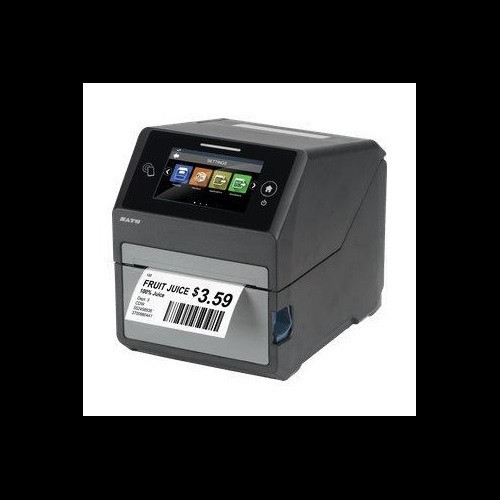
Both the Brother TD2120NT and the Sato WWCT04441-WDR are desktop-class label printers aimed at facility and operations buyers who need compact, networked printing at the workstation level. The TD2120NT is a 2.2-inch inkjet unit built for narrow-format labels and receipts, while the WWCT04441-WDR is a 4.09-inch direct thermal/thermal transfer printer with integrated HF/NFC RFID encoding. This comparison covers print capability, media handling, and connectivity across both units to help buyers identify which fits their workflow.

In This Guide
- How do print resolution, method, and output width compare between the TD2120NT and WWCT04441-WDR?
- What media range, memory, and physical form factor does each printer support?
- Which connectivity options and integration paths does each printer offer?
- Which should you choose: the TD2120NT or the WWCT04441-WDR?
- Side-by-Side Specs
- FAQ
How do print resolution, method, and output width compare between the TD2120NT and WWCT04441-WDR?
The Brother TD2120NT uses inkjet technology at 600 DPI and supports a maximum print width of 2.2 inches. The Sato WWCT04441-WDR uses direct thermal and thermal transfer methods at 305 DPI (note: one spec field lists 203 DPI, but the enriched spec and tagline consistently state 305 DPI) and supports a maximum print width of 4.09 inches — nearly double the Brother's output width.
Inkjet at 600 DPI delivers finer dot placement, which the TD2120NT's specs cite as sufficient for GS1-compliant barcode output on narrow labels. The CT4-LX's 305 DPI is the standard workhorse resolution for industrial thermal label printing and is widely accepted for most barcode symbologies. The CT4-LX adds RFID encoding at 13.56 MHz HF/NFC — a capability entirely absent from the TD2120NT — making it the only option here when smart-label output is required.
Print speed is specified only for the CT4-LX at 8 inches per second. The TD2120NT provides no print speed figure in its available specifications.
What media range, memory, and physical form factor does each printer support?
The Sato CT4-LX handles media widths from 1 inch to 4.1 inches and accepts roll diameters up to 5 inches. For thermal transfer operation it supports ribbon lengths up to 984 feet. It carries 4 GB flash storage, 1 GB DDR3 RAM, and 2 GB user storage. It weighs 7.3 lb and measures 7.0 × 9.375 × 8.4375 inches. A 4.3-inch full-color touchscreen is built in. Power input is AC 100–240 V, 50/60 Hz, and it operates between 32°F and 104°F (0°C–40°C).
The Brother TD2120NT's specifications do not disclose dimensions, weight, memory, storage, operating temperature range, power input, or media roll capacity. Its maximum paper/label width is 2.2 inches. No display is noted in its specs. Buyers who need to validate a physical footprint or environmental fit for the TD2120NT must consult the manufacturer datasheet directly, as those values are absent from the provided specification set.
For deployments where media flexibility, onboard storage for label formats, or a touchscreen operator interface matter, the CT4-LX provides concrete, verifiable figures; the TD2120NT does not.
Which connectivity options and integration paths does each printer offer?
The Sato WWCT04441-WDR supports USB, Ethernet, Wi-Fi, and Bluetooth — four distinct interface options. This gives IT teams flexibility to hard-wire the printer to a LAN via Ethernet, connect wirelessly via 802.11 Wi-Fi, or pair locally via Bluetooth. The HF/NFC RFID subsystem includes Sato's RF Analyze feature for per-inlay antenna auto-tuning.
The Brother TD2120NT lists Wi-Fi (802.11 b/g/n) as its connectivity method. Its specs cite TCP/IP print queue integration compatible with Windows and macOS spoolers. No wired Ethernet, USB host, or Bluetooth interface is listed in the provided specifications. For environments that require a wired network drop or Bluetooth pairing, the TD2120NT's spec sheet does not confirm those options.
The CT4-LX's broader interface portfolio makes it more adaptable across mixed-infrastructure deployments. The TD2120NT's Wi-Fi-only profile suits scenarios where cabling is impractical but does not provide a wired fallback as documented in its current spec set.
Which should you choose: the TD2120NT or the WWCT04441-WDR?
Our take: The WWCT04441-WDR is the stronger choice when print width beyond 2.2 inches, RFID smart-label encoding, or wired Ethernet connectivity are requirements. The CT4-LX prints up to 4.09 inches wide versus the TD2120NT's 2.2 inches, supports direct thermal and thermal transfer media versus inkjet only, and adds HF/NFC RFID encoding at 13.56 MHz — a capability the TD2120NT does not offer at all. It also provides USB, Ethernet, Wi-Fi, and Bluetooth versus the TD2120NT's Wi-Fi-only interface. The TD2120NT is the appropriate selection when the application is strictly narrow-format (≤2.2 inches), inkjet output at 600 DPI is preferred for fine barcode detail, and a lightweight Wi-Fi-only desktop form factor with macOS/Windows spooler compatibility is the deployment constraint. Buyers should note that several physical and environmental specs — dimensions, weight, memory, operating temperature — are absent from the TD2120NT's provided specification set and must be verified against its manufacturer datasheet before procurement.
Side-by-Side Comparison
Spec-for-spec, from manufacturer data.
| Specification | Brother TD2120NT | Sato WWCT04441-WDR |
|---|---|---|
| Print Method | Inkjet | Direct Thermal / Thermal Transfer |
| Print Resolution | 600 DPI | 305 DPI |
| Maximum Print Width | 2.2 inches | 4.09 inches |
| Media Width Range | Up to 2.2 inches | 1 inch to 4.1 inches |
| Print Speed | — | 8 ips |
| RFID Encoding | — | 13.56 MHz HF/NFC |
| Connectivity | Wi-Fi (802.11 b/g/n) | USB, Ethernet, Wi-Fi, Bluetooth |
| Display | — | 4.3-inch full-color touchscreen |
| Onboard Flash Memory | — | 4 GB |
| RAM | — | 1 GB DDR3 |
| User Storage | — | 2 GB |
| Max Roll Diameter | — | 5 inches |
| Max Ribbon Length | — | 984 feet |
| Weight | — | 7.3 lb (3.3 kg) |
| Operating Temperature | — | 32°F to 104°F (0°C to 40°C) |
| Warranty | Manufacturer Warranty (duration not specified) | 1-year Warranty |
Frequently Asked Questions
Which should you choose: the TD2120NT or the WWCT04441-WDR?
The WWCT04441-WDR is the stronger choice when print width beyond 2.2 inches, RFID smart-label encoding, or wired Ethernet connectivity are requirements. The CT4-LX prints up to 4.09 inches wide versus the TD2120NT's 2.2 inches, supports direct thermal and thermal transfer media versus inkjet only, and adds HF/NFC RFID encoding at 13.56 MHz — a capability the TD2120NT does not offer at all. It also provides USB, Ethernet, Wi-Fi, and Bluetooth versus the TD2120NT's Wi-Fi-only interface. The TD2120NT is the appropriate selection when the application is strictly narrow-format (≤2.2 inches), inkjet output at 600 DPI is preferred for fine barcode detail, and a lightweight Wi-Fi-only desktop form factor with macOS/Windows spooler compatibility is the deployment constraint. Buyers should note that several physical and environmental specs — dimensions, weight, memory, operating temperature — are absent from the TD2120NT's provided specification set and must be verified against its manufacturer datasheet before procurement.
Can either printer encode RFID smart labels?
Only the Sato WWCT04441-WDR supports RFID encoding. It encodes at 13.56 MHz HF/NFC and includes RF Analyze for automatic antenna tuning per inlay. The Brother TD2120NT has no RFID capability listed in its specifications.
Which printer handles wider label stock?
The Sato WWCT04441-WDR accepts media from 1 inch to 4.1 inches wide, with a maximum print width of 4.09 inches. The Brother TD2120NT is limited to 2.2 inches maximum print and paper width. If your label format exceeds 2.2 inches, the CT4-LX is the only option of the two.
Does the Brother TD2120NT support wired Ethernet like the Sato CT4-LX?
Based on the provided specifications, the TD2120NT lists Wi-Fi (802.11 b/g/n) as its only connectivity interface. The Sato WWCT04441-WDR lists Ethernet, Wi-Fi, Bluetooth, and USB. No wired Ethernet interface is documented for the TD2120NT in its available spec set; confirm with the manufacturer datasheet if a wired connection is a requirement.
More Label Printer Comparisons
- Brother TD4550DNWB vs Sato WWCT04241-WCN
- Brother TD4550DNWB vs Sato WWCT04241-NDR
- Brother TD4550DNWB vs Sato WT212-404CW-EX1-2
- Brother TD4550DNWB vs Sato WWCT04441-WDR
- Brother TD4550DNWB vs Brother TD4420DNC
- Brother TD4550DNWB vs Brother TD4410D
Label Printer Buying Guides
Get a Second Opinion on Your Camera Choice
Share your site layout, coverage goals, and budget. Our team will validate the camera selection, flag anything we would change, and recommend products that match the use case.