
APC by Schneider Electric SYH2K6RMI vs Panduit U02N12L: Specification Comparison
Both the APC Symmetra RM SYH2K6RMI and the Panduit SteadySine U02N12L are rack-mount online UPS units rated at 2 kVA / 230 V, positioned for data center, edge, and enterprise power protection. The APC unit is a scalable N+1 platform expandable to 6 kVA, while the Panduit is a fixed 2 kVA true double-conversion unit with lithium-ion chemistry and built-in network management. Both target IT buyers who need conditioned sine-wave output and rack integration, making them genuine cross-shop candidates at the 2 kVA tier.
In This Guide
- How do power rating, output quality, and scalability compare between the two units?
- Which unit offers better battery technology, serviceability, and expected operational life?
- How do the two units differ in rack footprint, physical installation, and remote management capability?
- Which should you choose: the SYH2K6RMI or the U02N12L?
- Side-by-Side Specs
- FAQ
How do power rating, output quality, and scalability compare between the two units?
The SYH2K6RMI is rated at 2000 VA / 1400 W, delivering a power factor of 0.70. Its core differentiator is modular scalability: the platform supports expansion to 6 kVA and N+1 redundancy without replacing the base chassis, a meaningful advantage in growing installations. Output waveform is specified as sine wave. UPS topology is not explicitly stated in the provided specs for the SYH2K6RMI.
The U02N12L is rated at 2000 VA / 2000 W, yielding a power factor of 1.0 — a significant efficiency advantage. Topology is explicitly specified as True Online Double-Conversion, meaning output power is always inverter-derived with zero transfer time. Output is specified as 230 V single-phase. The U02N12L is a fixed-capacity unit; no scalability spec is provided.
Which unit offers better battery technology, serviceability, and expected operational life?
The SYH2K6RMI uses sealed lead-acid batteries. Lead-acid chemistry is a mature, widely supported technology but carries lower energy density, heavier weight (the unit weighs 74.55 kg), and a typical service life of 3–5 years under standard conditions. No hot-swap capability is stated in the provided specs for the SYH2K6RMI.
The U02N12L uses Lithium-Ion batteries. The provided specs cite an expected battery life of 8–10 years and explicitly state hot-swappable design, allowing battery replacement without taking the UPS offline. Lithium-Ion chemistry also contributes to lower weight and higher charge cycle count versus lead-acid. These are direct, spec-stated differences; no independent test results are available to confirm runtime figures.
How do the two units differ in rack footprint, physical installation, and remote management capability?
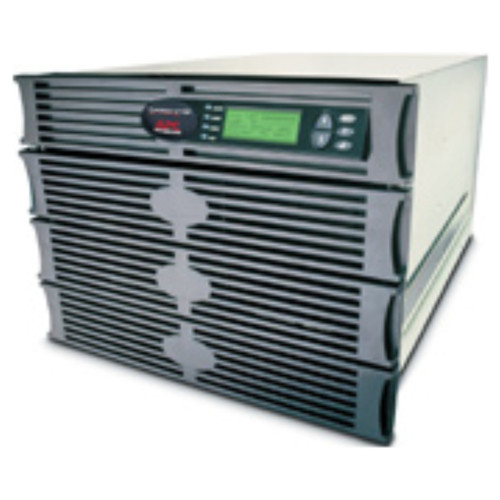
The SYH2K6RMI provides one dimension spec — 35.6 cm depth — but rack unit height is not stated in the provided specs. Weight is 74.55 kg, which has significant implications for rack load planning. Color is black. No network management card, LCD display, or rail kit is specified in the provided data.
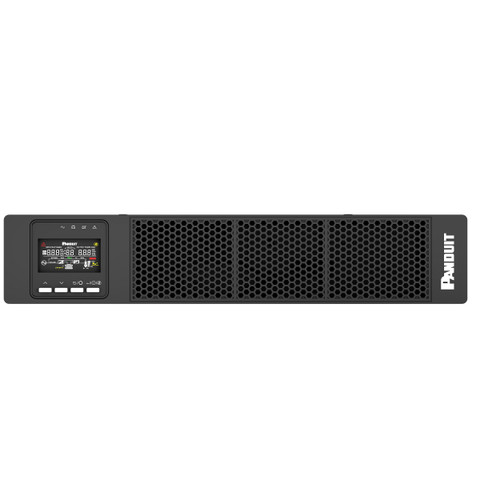
The U02N12L occupies a stated 2U form factor (86.5 mm / 3.4 in height; 440 mm / 17.3 in width). An adjustable rail kit for 2-post and 4-post racks (24–36 in depth) is included. An intelligent network management card with SNMP v3 is included in the box. A front-panel LCD with diagnostics is specified. Compliance certifications listed include UL 1778, CE, and RoHS. Weight is not provided in the available specs for the U02N12L.
Which should you choose: the SYH2K6RMI or the U02N12L?
Our take: The U02N12L is the stronger choice when runtime efficiency, battery longevity, management visibility, and physical integration certainty are the primary drivers. Its 1.0 power factor versus the SYH2K6RMI's 0.70 means 2000 W of usable load capacity compared to 1400 W at the same 2 kVA rating — a 43% difference in real output power. Its lithium-ion chemistry carries a spec-stated 8–10 year battery life against lead-acid's typical 3–5 years, and hot-swap serviceability avoids downtime during replacement. Included SNMP v3 network card and 2U rail kit reduce ancillary procurement. The SYH2K6RMI holds a clear advantage in one scenario: installations that anticipate load growth, where its stated scalability to 6 kVA N+1 avoids full UPS replacement. Buyers committed to APC ecosystem infrastructure or already standardized on Symmetra architecture will also weigh that platform continuity. For net-new, fixed-capacity deployments under 2000 W, the U02N12L's specs are demonstrably stronger on efficiency and battery design.
Side-by-Side Comparison
Spec-for-spec, from manufacturer data.
| Specification | APC by Schneider Electric SYH2K6RMI | Panduit U02N12L |
|---|---|---|
| Device Type | UPS (Rack-Mountable) | Online UPS (Rack-Mount) |
| UPS Topology | Not stated in provided specs | True Online Double-Conversion |
| Power Rating (VA) | 2000 VA | 2000 VA |
| Power Rating (W) | 1400 W | 2000 W |
| Power Factor | 0.70 (derived) | 1.0 (derived) |
| Input Voltage | 230 V | 230 V Single-Phase |
| Output Voltage | 230 V | 230 V Single-Phase |
| Output Waveform | Sine wave | Not stated in provided specs |
| Battery Chemistry | Lead-Acid | Lithium-Ion |
| Hot-Swappable Battery | Not stated in provided specs | Yes |
| Expected Battery Life | Not stated in provided specs | 8–10 Years |
| Scalability | Scalable to 6 kVA, N+1 | Fixed 2 kVA |
| Form Factor / Rack Units | Rack-mountable (RU not stated) | 2U Rack-Mount |
| Network Management | Not stated in provided specs | Included (SNMP v3) |
| Rail Kit | Not stated in provided specs | Adjustable 2-Post/4-Post, 24"–36" |
| Weight | 74.55 kg | — |
| Dimensions (H × W) | 35.6 cm (one axis only) | 86.5 mm H × 440 mm W |
| Compliance | Not stated in provided specs | UL 1778, CE, RoHS |
| Color | Black | Not stated in provided specs |
Frequently Asked Questions
Which should you choose: the SYH2K6RMI or the U02N12L?
The U02N12L is the stronger choice when runtime efficiency, battery longevity, management visibility, and physical integration certainty are the primary drivers. Its 1.0 power factor versus the SYH2K6RMI's 0.70 means 2000 W of usable load capacity compared to 1400 W at the same 2 kVA rating — a 43% difference in real output power. Its lithium-ion chemistry carries a spec-stated 8–10 year battery life against lead-acid's typical 3–5 years, and hot-swap serviceability avoids downtime during replacement. Included SNMP v3 network card and 2U rail kit reduce ancillary procurement. The SYH2K6RMI holds a clear advantage in one scenario: installations that anticipate load growth, where its stated scalability to 6 kVA N+1 avoids full UPS replacement. Buyers committed to APC ecosystem infrastructure or already standardized on Symmetra architecture will also weigh that platform continuity. For net-new, fixed-capacity deployments under 2000 W, the U02N12L's specs are demonstrably stronger on efficiency and battery design.
Is the SYH2K6RMI or U02N12L better for larger deployments that may grow beyond 2 kVA?
Based on provided specs, the SYH2K6RMI is purpose-built for growth: it is explicitly described as scalable to 6 kVA with N+1 redundancy support without replacing the chassis. The U02N12L is specified as a fixed 2 kVA unit with no scalability noted in its provided specs. If your load may exceed 2 kVA, the SYH2K6RMI's architecture is the relevant differentiator.
Which UPS will cost less to maintain over a 5-year period based on battery replacement cycles?
Spec-derived answer only: the U02N12L's lithium-ion battery carries a stated 8–10 year expected life, meaning no scheduled battery replacement within a standard 5-year ownership cycle. The SYH2K6RMI uses lead-acid batteries, which typically require replacement every 3–5 years, though no specific replacement interval is stated in the provided specs. Additionally, the U02N12L specifies hot-swappable batteries, eliminating downtime cost during replacement. No total-cost-of-ownership figures are available from the provided specifications.
Does either UPS include remote monitoring out of the box, or do I need to purchase a network card separately?
The U02N12L specs explicitly state an intelligent network card with SNMP v3 is included. The SYH2K6RMI's provided specs make no mention of a network management card, SNMP capability, or remote monitoring features. Buyers requiring out-of-box network management should verify separately whether a card is bundled or sold as an accessory for the SYH2K6RMI.
More UPS Comparisons
- Panduit U02N12V vs Middle Atlantic OL2000R-2
- Panduit U02N12V vs Panduit U02N12L
- Panduit U02N12V vs Panduit U02S12L
- Panduit U02N12L vs Middle Atlantic OL2000R-2
- Panduit U02N12L vs Panduit U02S12L
- Middle Atlantic FWD-CBS-2KVA-BGR32 vs Panduit U02N14L
UPS Buying Guides
Get a Second Opinion on Your Camera Choice
Share your site layout, coverage goals, and budget. Our team will validate the camera selection, flag anything we would change, and recommend products that match the use case.