
APC by Schneider Electric SYA8K8I vs APC by Schneider Electric SRT8KRMXLT: Specification Comparison
Both the SYA8K8I and SRT8KRMXLT are 8 kVA UPS units from APC by Schneider Electric, placing them in the same capacity tier for protecting critical infrastructure loads. The SYA8K8I is a tower-format Symmetra LX targeting high-availability, scalable deployments at 220–415 V, while the SRT8KRMXLT is a 6U rackmount Smart-UPS On-Line unit targeting data-center and server-room racks at 208–240 V. This comparison examines power output efficiency, physical form factor and environmental tolerances, and management and connectivity capabilities.
In This Guide
- How do the SYA8K8I and SRT8KRMXLT differ in real-world power delivery and efficiency?
- Which unit better fits the physical and environmental demands of the intended installation?
- How do the SYA8K8I and SRT8KRMXLT compare for remote management, monitoring, and integration?
- Which should you choose: the SYA8K8I or the SRT8KRMXLT?
- Side-by-Side Specs
- FAQ
How do the SYA8K8I and SRT8KRMXLT differ in real-world power delivery and efficiency?
The most significant spec delta between these two units is watt output relative to their shared 8 kVA rating. The SRT8KRMXLT delivers 8,000 W — a unity power factor of 1.0 — meaning it converts its full kVA rating into usable watts. The SYA8K8I delivers only 5,600 W from the same 8 kVA, implying a 0.7 power factor. For loads that draw close to or at unity power factor (most modern servers and networking gear), the SRT8KRMXLT can sustain substantially more real load before the UPS is taxed.
The SRT8KRMXLT is specified as a double-conversion (online) topology with a sine-wave output, meaning it continuously regenerates AC power and provides zero transfer time during outages. The SYA8K8I's topology is not stated in the provided specifications. The SRT8KRMXLT also lists input voltage tolerance of 100–275 V and input frequency of 40–70 Hz, indicating broad utility-power acceptance. No comparable input tolerance figures are available for the SYA8K8I.
The SRT8KRMXLT carries a 480 J surge energy rating and a crest factor of 3:1, with input current THD of 2% — numbers relevant to buyers powering sensitive electronics or connecting to generator sets. None of these figures are present in the SYA8K8I specifications.
Which unit better fits the physical and environmental demands of the intended installation?
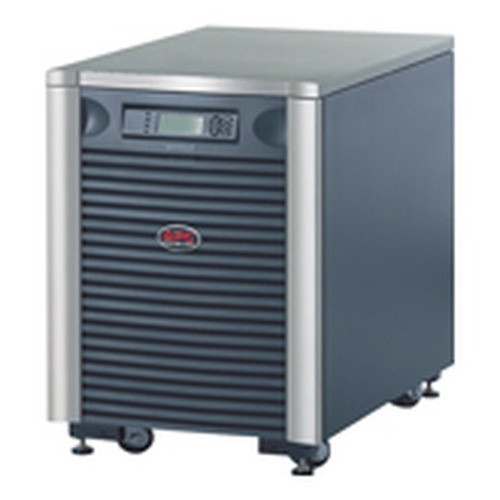
The SYA8K8I is a tower unit weighing 202 kg. It targets 220/230/240 V or 380/400/415 V environments and connects via a single hardwire 3-wire (H N + G) output — appropriate for facilities with dedicated electrical panels and floor space for freestanding equipment. Its substantial weight (202 kg) means installation requires planning for floor load ratings and potentially mechanical lifting.
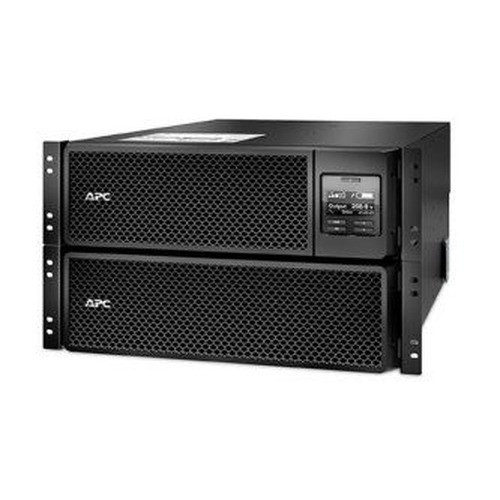
The SRT8KRMXLT is a 6U rackmount unit, making it appropriate for standard 19-inch equipment racks. Its output connections include four L6-20R receptacles and two L6-30R receptacles on a 208 V NEMA configuration, providing direct plug-in connectivity without hardwiring. Physical weight and dimensions are not provided in the supplied SRT8KRMXLT specifications.
Environmental operating range specs are available only for the SYA8K8I: 0–40 °C operating temperature, 0–95% relative humidity (non-condensing), and an operating altitude up to 3,000 m. Storage range is –15 to 45 °C. No equivalent environmental figures are provided in the SRT8KRMXLT specifications, so a direct environmental comparison cannot be made from the data supplied.
How do the SYA8K8I and SRT8KRMXLT compare for remote management, monitoring, and integration?
The SYA8K8I includes one Smart-Slot interface with the AP9619 network management card pre-installed, plus a DB-9 RS-232 serial interface. The AP9619 enables network-based monitoring and control. The Symmetra LX platform also supports Emergency Power Off (EPO), which is a code-required feature in many data center and industrial environments.
The SRT8KRMXLT specifies web-based management as a built-in feature, an audible alarm, and auto-restart capability. No Smart-Slot card model or serial interface is listed in the provided specifications, so the exact management card ecosystem cannot be confirmed from available data. EPO support is not listed in the SRT8KRMXLT specifications.
The SYA8K8I uses the Symmetra SYBT5 battery cartridge, identifying it within APC's modular Symmetra battery ecosystem. The SRT8KRMXLT's replacement battery reference is not provided in the given specifications. Buyers with existing Symmetra infrastructure should verify battery compatibility with their current spares inventory before selecting either unit.
Which should you choose: the SYA8K8I or the SRT8KRMXLT?
Our take: The SRT8KRMXLT is the stronger choice when maximum real-power output and rackmount form factor are the priorities. Its 8,000 W output versus the SYA8K8I's 5,600 W represents a 43% greater watt capacity at the same 8 kVA rating, meaning it can support substantially heavier IT loads before reaching its limit. Its double-conversion online topology guarantees zero transfer time and a clean sine-wave output — topology details absent from the SYA8K8I's provided specs. Its six NEMA receptacles (four L6-20R, two L6-30R) also eliminate the need for hardwire installation, reducing commissioning complexity. Conversely, the SYA8K8I suits facilities requiring 380–415 V three-phase input compatibility, hardwired panel integration, EPO support, and the Symmetra modular battery ecosystem. Its 0–3,000 m altitude and full environmental ratings are confirmed; equivalent SRT8KRMXLT figures are not available in the supplied specs.
Side-by-Side Comparison
Spec-for-spec, from manufacturer data.
| Specification | APC by Schneider Electric SYA8K8I | APC by Schneider Electric SRT8KRMXLT |
|---|---|---|
| Output Power Capacity | 8 kVA | 8 kVA |
| Output Power (Watts) | 5,600 W | 8,000 W |
| UPS Topology | — | Double-conversion (Online) |
| Output Waveform | — | Sine |
| Form Factor | Tower | Rackmount (6U) |
| Input Voltage Range | 220/230/240 V or 380/400/415 V | 100–275 V |
| Input Frequency | — | 40–70 Hz |
| Output Voltage | 220/230/240 V or 380/400/415 V | 208–240 V |
| Output Connections | Hard Wire 3-wire (H N + G) | 4× L6-20R, 2× L6-30R |
| Emergency Power Off (EPO) | Yes | — |
| Surge Energy Rating | — | 480 J |
| Input Current THD | — | 2% |
| Noise Level | — | 55 dB |
| Management Interface | DB-9 RS-232, Smart-Slot (AP9619) | Web-based |
| Replacement Battery | SYBT5 | — |
| Weight | 202 kg | — |
| Operating Temperature | 0–40 °C | — |
| Operating Altitude | 0–3,000 m | — |
Frequently Asked Questions
Which should you choose: the SYA8K8I or the SRT8KRMXLT?
The SRT8KRMXLT is the stronger choice when maximum real-power output and rackmount form factor are the priorities. Its 8,000 W output versus the SYA8K8I's 5,600 W represents a 43% greater watt capacity at the same 8 kVA rating, meaning it can support substantially heavier IT loads before reaching its limit. Its double-conversion online topology guarantees zero transfer time and a clean sine-wave output — topology details absent from the SYA8K8I's provided specs. Its six NEMA receptacles (four L6-20R, two L6-30R) also eliminate the need for hardwire installation, reducing commissioning complexity. Conversely, the SYA8K8I suits facilities requiring 380–415 V three-phase input compatibility, hardwired panel integration, EPO support, and the Symmetra modular battery ecosystem. Its 0–3,000 m altitude and full environmental ratings are confirmed; equivalent SRT8KRMXLT figures are not available in the supplied specs.
Is the SYA8K8I or SRT8KRMXLT better for powering a high-density server rack?
Based on the provided specs, the SRT8KRMXLT delivers 8,000 W versus the SYA8K8I's 5,600 W from the same 8 kVA rating. For high-density server racks where servers draw at or near unity power factor, the SRT8KRMXLT's higher watt output is more suitable. The SYA8K8I's 5,600 W limit would be reached sooner under equivalent load.
Which unit is easier to install in an existing data center?
The SRT8KRMXLT is a 6U rackmount unit with six built-in NEMA receptacles (L6-20R and L6-30R), allowing direct plug-in connection to equipment without hardwiring. The SYA8K8I is a 202 kg tower unit with a single hardwire 3-wire output, requiring panel integration and floor space. For a standard rack environment, the SRT8KRMXLT is the less complex installation.
Does the SYA8K8I or SRT8KRMXLT support Emergency Power Off (EPO)?
Based on the provided specifications, only the SYA8K8I explicitly lists Emergency Power Off (EPO) support. EPO is not listed in the SRT8KRMXLT's provided specifications. Buyers in jurisdictions or facilities where EPO is code-required should verify SRT8KRMXLT EPO capability directly with APC before specifying that unit.
More UPS Comparisons
- APC by Schneider Electric SRTL8KRM4UT-5KTF vs Vertiv GXT5-8000HVRT5UXLN
- APC by Schneider Electric SRTL8KRM4UT-5KTF vs Vertiv GXT5-8000MVRT6UXLN
- APC by Schneider Electric SRT8KRMXLT vs Vertiv GXT5-8000HVRT5UXLN
- APC by Schneider Electric SRT8KRMXLT vs Vertiv GXT5-8000MVRT6UXLN
- APC by Schneider Electric SRT8KRMXLT vs APC by Schneider Electric SYA8K16I
- APC by Schneider Electric SYA8K16I vs Vertiv GXT5-8000HVRT5UXLN
UPS Buying Guides
Get a Second Opinion on Your Camera Choice
Share your site layout, coverage goals, and budget. Our team will validate the camera selection, flag anything we would change, and recommend products that match the use case.