
APC by Schneider Electric SRT8KRMXLT vs Vertiv GXT5-8000MVRT6UXLN: Specification Comparison
Both the APC SRT8KRMXLT and the Vertiv GXT5-8000MVRT6UXLN are 8 kVA / 8 kW double-conversion online UPS units designed for rackmount data center and IT room deployment. Each delivers true online double-conversion topology, sine-wave output, and network management capabilities, placing them squarely in the same enterprise UPS class. This comparison examines their input/output electrical characteristics, physical and environmental specifications, and management and interface capabilities—the three axes most relevant to a facilities engineer or IT buyer selecting a critical-power device.
In This Guide
- How do the SRT8KRMXLT and GXT5-8000MVRT6UXLN compare on input acceptance range, output flexibility, and power quality?
- What are the physical footprint, weight, and operating environment differences between the two units?
- Which unit offers broader management, monitoring, and integration options for IT and facilities teams?
- Which should you choose: the SRT8KRMXLT or the GXT5-8000MVRT6UXLN?
- Side-by-Side Specs
- FAQ
How do the SRT8KRMXLT and GXT5-8000MVRT6UXLN compare on input acceptance range, output flexibility, and power quality?
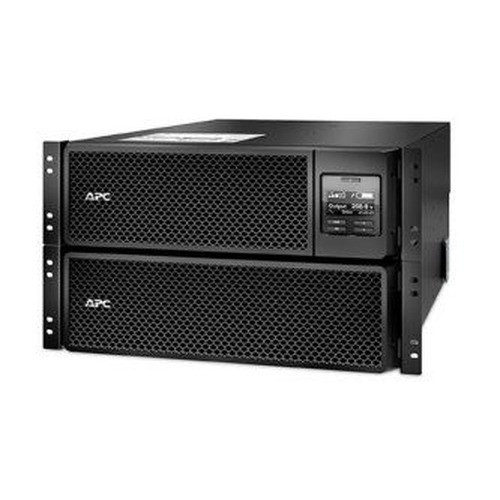
The APC SRT8KRMXLT accepts input from 100 V to 275 V across a 40–70 Hz window, making it unusually tolerant of brown-brown or international supply conditions. Its output is fixed at 208–240 V with a 50/60 Hz selectable frequency, and it delivers a rated crest factor of 3:1—indicating strong non-linear load handling. Input THD is specified at 2%, which reduces upstream generator and PDU stress. Output receptacles are four NEMA L6-20R plus two NEMA L6-30R, giving direct plug-in connectivity for standard 208 V equipment.
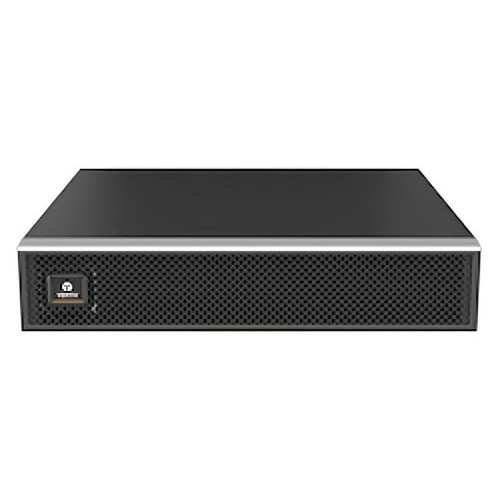
The Vertiv GXT5-8000MVRT6UXLN specifies a typical input of 208 VAC with a range of 176–280 VAC, and its output is 208/120 VAC user-configurable—a meaningful distinction for mixed-voltage environments. Efficiency reaches up to 98% in Active ECO Mode and up to 95% in online mode; no equivalent efficiency figure is provided for the APC unit. The Vertiv unit uses hardwired input and output with optional PODs for receptacle flexibility, whereas APC ships with pre-wired outlets. Crest factor, THD, and surge energy figures are not specified for the Vertiv.
What are the physical footprint, weight, and operating environment differences between the two units?
Physical dimensions and weight are only specified for the Vertiv GXT5-8000MVRT6UXLN: 10.2 in H × 16.9 in W × 25.6 in D, weighing 224.8 lb. Its rated operating temperature is +32 to +104 °F (0 to +40 °C). The Vertiv carries a 6U rack form factor and supports flexible rack/tower orientation. No weight, height, width, depth, or operating temperature data is provided in the supplied specifications for the APC SRT8KRMXLT; buyers must consult APC documentation to confirm rack space and floor-load requirements for that unit.
The Vertiv unit holds ENERGY STAR 2.0 certification, UL1778 listing, c-UL listing, RoHS2 compliance, and REACH compliance—regulatory credentials explicitly documented. No certification or compliance listings are provided in the supplied APC specifications. The Vertiv's full-color graphic LCD with gravity-sensing orientation aids installation in either rack or tower position. The APC unit specifies an audible alarm and a noise level of 55 dB; no acoustic data is provided for the Vertiv.
Which unit offers broader management, monitoring, and integration options for IT and facilities teams?
The Vertiv GXT5-8000MVRT6UXLN ships from the factory with a pre-installed Vertiv RDU101 SNMP/Webcard, plus USB, RS-485, RS-232, a terminal block, and an external battery connector. SNMP and web management are enabled out of the box, and RS-232/RS-485 provide out-of-band serial management paths. The full-color LCD panel provides local status at a glance regardless of rack or tower orientation.
The APC SRT8KRMXLT specifies web-based management and auto-restart as standard features; a surge energy rating of 480 J is also documented. However, the supplied specification does not detail which management card or interface hardware (e.g., SmartSlot) is included in the box versus purchased separately, nor does it list communication port types. Buyers integrating into existing NMS or DCIM platforms should verify factory-included versus optional card configurations for the APC unit before purchasing.
Which should you choose: the SRT8KRMXLT or the GXT5-8000MVRT6UXLN?
Our take: The GXT5-8000MVRT6UXLN is the stronger choice when out-of-box network management, documented efficiency, and mixed 208/120 V output flexibility are priorities. The Vertiv ships with a factory-installed SNMP/Webcard—no additional purchase required—delivers up to 98% efficiency in ECO Mode versus no published efficiency figure for the APC, and its 208/120 VAC user-configurable output accommodates mixed-voltage loads in a single device. Conversely, the SRT8KRMXLT specifies a substantially wider input voltage window (100–275 V vs. 176–280 VAC) and documents input THD at 2% plus a 3:1 crest factor—power-quality data absent from the Vertiv spec sheet—making it the better-documented choice for environments with unstable utility power or high non-linear loads. Physical data (weight, dimensions, temperature) is only confirmed for the Vertiv; APC buyers must source that data separately. Choose the SRT8KRMXLT for wide-range input tolerance and documented power-quality specs; choose the GXT5-8000MVRT6UXLN for certified efficiency, factory SNMP inclusion, and regulatory listings.
Side-by-Side Comparison
Spec-for-spec, from manufacturer data.
| Specification | APC by Schneider Electric SRT8KRMXLT | Vertiv GXT5-8000MVRT6UXLN |
|---|---|---|
| UPS Topology | Double-conversion (Online) | On-line double conversion |
| Power Rating | 8 kVA / 8000 W | 8,000 VA / 8,000 W |
| Input Voltage Range | 100–275 V | Typical 208 VAC; Range 176–280 VAC |
| Input Frequency | 40–70 Hz | — |
| Output Voltage | 208–240 V | 208/120 VAC (user-configurable) |
| Output Frequency | 50/60 Hz | — |
| Waveform | Sine | — |
| Efficiency (Online Mode) | — | Up to 95% |
| Efficiency (ECO Mode) | — | Up to 98% |
| Input THD | 2% | — |
| Crest Factor | 3:1 | — |
| Surge Energy Rating | 480 J | — |
| Noise Level | 55 dB | — |
| Management Interfaces | Web-based (card details not specified) | Factory SNMP/Webcard (RDU101), USB, RS-485, RS-232, terminal block |
| Certifications / Listings | — | ENERGY STAR 2.0, UL1778, c-UL, RoHS2, REACH |
| Weight | — | 224.8 lb |
| Dimensions (H × W × D) | — | 10.2 in × 16.9 in × 25.6 in |
| Operating Temperature | — | +32 to +104 °F (0 to +40 °C) |
| Form Factor | 6U Rackmount | 6U Rack / Tower (flexible) |
| Output Receptacles | 4× L6-20R, 2× L6-30R | Hardwired; optional PODs |
Frequently Asked Questions
Which should you choose: the SRT8KRMXLT or the GXT5-8000MVRT6UXLN?
The GXT5-8000MVRT6UXLN is the stronger choice when out-of-box network management, documented efficiency, and mixed 208/120 V output flexibility are priorities. The Vertiv ships with a factory-installed SNMP/Webcard—no additional purchase required—delivers up to 98% efficiency in ECO Mode versus no published efficiency figure for the APC, and its 208/120 VAC user-configurable output accommodates mixed-voltage loads in a single device. Conversely, the SRT8KRMXLT specifies a substantially wider input voltage window (100–275 V vs. 176–280 VAC) and documents input THD at 2% plus a 3:1 crest factor—power-quality data absent from the Vertiv spec sheet—making it the better-documented choice for environments with unstable utility power or high non-linear loads. Physical data (weight, dimensions, temperature) is only confirmed for the Vertiv; APC buyers must source that data separately. Choose the SRT8KRMXLT for wide-range input tolerance and documented power-quality specs; choose the GXT5-8000MVRT6UXLN for certified efficiency, factory SNMP inclusion, and regulatory listings.
Does either UPS ship with a network management card included, or is that an add-on?
The Vertiv GXT5-8000MVRT6UXLN ships with a factory pre-installed Vertiv RDU101 SNMP/Webcard, enabling SNMP and web management out of the box. The supplied specifications for the APC SRT8KRMXLT confirm web-based management capability but do not specify whether a management card is included in the base unit or must be purchased separately; verify with APC documentation or your distributor before ordering.
Which unit is better suited to a site with unstable or wide-ranging utility voltage?
Based on the provided specs, the APC SRT8KRMXLT accepts input from 100 V to 275 V—a wider stated range than the Vertiv GXT5's 176–280 VAC typical range. If your facility experiences significant voltage sags or you need international voltage compatibility, the SRT8KRMXLT's documented input window provides a broader margin. The Vertiv's input range is not specified as narrowly as the APC's lower 100 V floor, so buyers in severely under-voltage environments should favor the APC on this dimension.
Is the Vertiv GXT5-8000MVRT6UXLN more energy-efficient than the APC SRT8KRMXLT?
The Vertiv GXT5-8000MVRT6UXLN specifies up to 98% efficiency in Active ECO Mode and up to 95% in online double-conversion mode, and carries ENERGY STAR 2.0 certification. No efficiency percentage or ENERGY STAR certification is included in the supplied specifications for the APC SRT8KRMXLT. On documented evidence alone, the Vertiv has the advantage in efficiency; however, buyers should consult APC's published datasheets for efficiency figures before drawing a final conclusion.
More UPS Comparisons
- APC by Schneider Electric SRTL8KRM4UT-5KTF vs Vertiv GXT5-8000HVRT5UXLN
- APC by Schneider Electric SRTL8KRM4UT-5KTF vs Vertiv GXT5-8000MVRT6UXLN
- APC by Schneider Electric SRT8KRMXLT vs Vertiv GXT5-8000HVRT5UXLN
- APC by Schneider Electric SRT8KRMXLT vs APC by Schneider Electric SYA8K16I
- APC by Schneider Electric SYA8K16I vs Vertiv GXT5-8000HVRT5UXLN
- APC by Schneider Electric SYA8K16I vs Vertiv GXT5-8000MVRT6UXLN
UPS Buying Guides
Get a Second Opinion on Your Camera Choice
Share your site layout, coverage goals, and budget. Our team will validate the camera selection, flag anything we would change, and recommend products that match the use case.