
APC by Schneider Electric SUVTP15KF2B4S vs APC by Schneider Electric SURT15KRMXLT-1TF10K: Specification Comparison
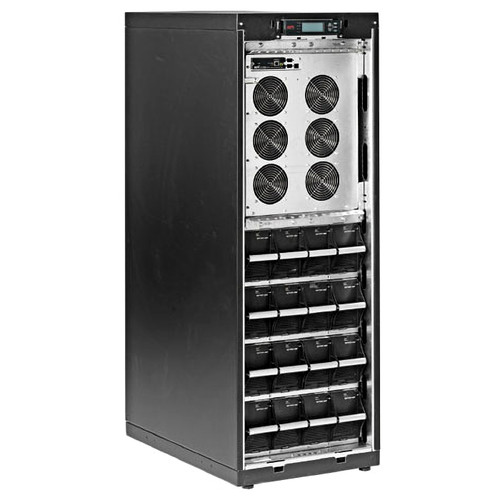
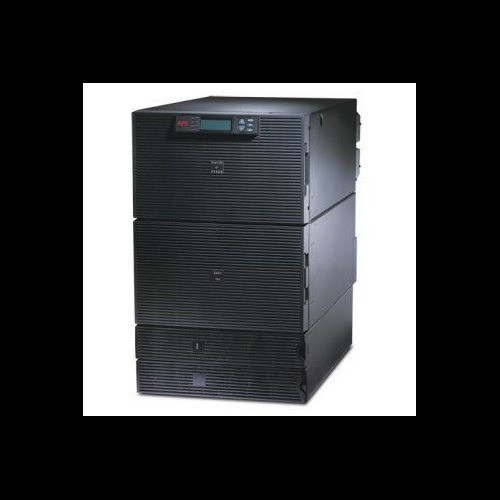
Both products are 15 kVA / 12,000 W rackmount uninterruptible power supplies from APC by Schneider Electric, making them directly cross-shoppable by facilities engineers and IT buyers sizing power protection for critical infrastructure. The SUVTP15KF2B4S is the Smart-UPS VT platform with modular battery expansion; the SURT15KRMXLT-1TF10K is the Smart-UPS RT platform bundled with a 10 kVA step-down transformer. The comparison covers power delivery and output flexibility, battery and runtime characteristics, and physical/environmental envelope.
In This Guide
- How do the two UPS units differ in output voltage flexibility and load protection?
- Which unit offers stronger battery performance and recharge characteristics?
- How do the two units compare in physical footprint, environmental ratings, and management features?
- Which should you choose: the SUVTP15KF2B4S or the SURT15KRMXLT-1TF10K?
- Side-by-Side Specs
- FAQ
How do the two UPS units differ in output voltage flexibility and load protection?
The SUVTP15KF2B4S provides 15 kVA / 12,000 W of output capacity; its spec sheet lists 1 AC outlet and does not disclose the output voltage or connector mix. Output voltage THD is rated at 5%, and the unit includes Emergency Power Off (EPO) functionality. Waveform type and bypass topology are not specified in the provided data.
The SURT15KRMXLT-1TF10K matches the same 15,000 VA / 12,000 W rating and adds substantial output flexibility through its bundled 10 kVA step-down transformer: output connectors include 2× NEMA L5-20R, 4× NEMA L6-20R, 2× NEMA L6-30R, and 2× NEMA L14-30R, plus 1 hard-wire 4-wire (2PH+N+G). Main output voltages are 120 V and 208 V, with 220 V and 240 V also listed. The unit uses a true double-conversion online topology, delivers a sine wave output, supports a crest factor of 3:1, and carries a built-in static bypass. Harmonic distortion on the output is stated as less than 5%. Overload capacity is rated at 125% for 60 seconds and 150% for 30 seconds, giving clear load-surge headroom.
Which unit offers stronger battery performance and recharge characteristics?
The SUVTP15KF2B4S ships with 2 battery modules and is expandable to 4, using sealed lead-acid (VRLA) technology. Its recharge time is rated at 5 hours. Battery voltage and RBC count are not specified in the provided data.
The SURT15KRMXLT-1TF10K includes 4 battery modules at time of purchase with 0 empty battery slots, uses lead-acid technology at a split ±192 V bus (referenced to neutral), and recharges in a notably faster 2.5 hours — half the recharge time of the SUVTP15KF2B4S. Battery charge power is rated at 1,530 W. End-of-discharge voltage is ±154 V. Battery life is estimated at 3–5 years. Extended runtime capability is noted (extendable run time: 1). Run time at a given load is not directly specified for either model in the provided data.
How do the two units compare in physical footprint, environmental ratings, and management features?
The SUVTP15KF2B4S specifies a rackmount form factor; exact rack-unit height, physical dimensions, and weight are not provided in its spec data. It includes 1 serial port. No network management card or SmartSlot details are listed. Operating temperature is 0–40 °C; storage temperature is −50 to 40 °C; operating humidity is 0–95%; operating altitude is up to 999.9 m (approximately 3,280 ft); non-operating altitude reaches 15,000 m.
The SURT15KRMXLT-1TF10K occupies 16U of rack space and measures 70.8 cm H × 43.2 cm W × 77.3 cm D, weighing 347.73 kg — a significant physical commitment. It ships with a pre-installed Network Management Card 2 (SmartSlot), enabling out-of-box remote monitoring without an additional card purchase. Full-time multi-pole noise filtering, an IEEE surge let-through of 0.3%, and zero-clamping response time are specified. Acoustic output is 50 dBA and online thermal dissipation is 2,610 Btu/h. Operating altitude is up to 10,000 ft (3,048 m) — meaningfully higher than the SUVTP15KF2B4S's 999.9 m ceiling. IP protection is rated IP20. Storage temperature is −15 to 45 °C. A 2-year repair-or-replace warranty is stated.
Which should you choose: the SUVTP15KF2B4S or the SURT15KRMXLT-1TF10K?
Our take: The SURT15KRMXLT-1TF10K is the stronger choice when the deployment requires multi-voltage output flexibility, faster battery recharge, higher-altitude operation, or integrated remote management. Its bundled 10 kVA step-down transformer and ten output receptacles (covering 120 V and 208 V simultaneously) serve mixed-load server rooms that the SUVTP15KF2B4S — with only 1 disclosed AC outlet and no stated output voltage mix — cannot match without additional distribution hardware. Battery recharge time is 2.5 hours versus 5 hours on the SUVTP15KF2B4S, a critical advantage in facilities with frequent utility events. Operating altitude ceiling is 10,000 ft versus 999.9 m (~3,280 ft), making the SURT relevant for high-elevation data centers where the SUVTP15KF2B4S falls outside spec. The pre-installed NMC2 eliminates a separate management card purchase. The SUVTP15KF2B4S's modular battery design and EPO feature may suit staged-deployment or safety-regulated environments, but key specs such as topology, waveform, output voltage, and physical dimensions are absent from its provided data, limiting direct validation.
Side-by-Side Comparison
Spec-for-spec, from manufacturer data.
| Specification | APC by Schneider Electric SUVTP15KF2B4S | APC by Schneider Electric SURT15KRMXLT-1TF10K |
|---|---|---|
| Product Platform | Smart-UPS VT | Smart-UPS RT |
| SKU | SUVTP15KF2B4S | SURT15KRMXLT-1TF10K |
| Rated Power (VA) | 15,000 VA | 15,000 VA |
| Rated Power (W) | 12,000 W | 12,000 W |
| Efficiency at Full Load | 93% | 93% |
| Topology | — | Double Conversion Online |
| Output Waveform | — | Sine wave |
| Output Voltage(s) | — | 120 V, 208 V (also 220 V, 240 V) |
| Output Connectors | 1 AC outlet | 2×L5-20R, 4×L6-20R, 2×L6-30R, 2×L14-30R + hard-wire |
| Output THD | 5% | Less than 5% |
| Emergency Power Off (EPO) | Yes | — |
| Bypass Type | — | Built-in Static Bypass |
| Battery Technology | Sealed Lead Acid (VRLA) | Lead-Acid |
| Included Battery Modules | 2 (expandable to 4) | 4 (0 empty slots) |
| Battery Recharge Time | 5 h | 2.5 h |
| Operating Temperature | 0–40 °C | 0–40 °C |
| Storage Temperature | −50 to 40 °C | −15 to 45 °C |
| Operating Altitude | 0–999.9 m (~3,280 ft) | 0–10,000 ft (~3,048 m) |
| Non-Operating Altitude | 0–15,000 m | 0–50,000 ft (~15,240 m) |
| Operating Humidity | 0–95% | 0–95% non-condensing |
| Form Factor | Rackmount | Rack-mounted (16U) |
| Dimensions (H×W×D) | — | 70.8 cm × 43.2 cm × 77.3 cm |
| Net Weight | — | 347.73 kg (766.61 lb) |
| Acoustic Level | — | 50 dBA |
| Network Management | — | NMC2 pre-installed (SmartSlot) |
| Serial Ports | 1 | — |
| Step-Down Transformer Included | — | 10 kVA (208 V → 120 V) |
| Warranty | — | 2 years repair or replace |
| Color | Black | Black |
Frequently Asked Questions
Which should you choose: the SUVTP15KF2B4S or the SURT15KRMXLT-1TF10K?
The SURT15KRMXLT-1TF10K is the stronger choice when the deployment requires multi-voltage output flexibility, faster battery recharge, higher-altitude operation, or integrated remote management. Its bundled 10 kVA step-down transformer and ten output receptacles (covering 120 V and 208 V simultaneously) serve mixed-load server rooms that the SUVTP15KF2B4S — with only 1 disclosed AC outlet and no stated output voltage mix — cannot match without additional distribution hardware. Battery recharge time is 2.5 hours versus 5 hours on the SUVTP15KF2B4S, a critical advantage in facilities with frequent utility events. Operating altitude ceiling is 10,000 ft versus 999.9 m (~3,280 ft), making the SURT relevant for high-elevation data centers where the SUVTP15KF2B4S falls outside spec. The pre-installed NMC2 eliminates a separate management card purchase. The SUVTP15KF2B4S's modular battery design and EPO feature may suit staged-deployment or safety-regulated environments, but key specs such as topology, waveform, output voltage, and physical dimensions are absent from its provided data, limiting direct validation.
Which UPS supports both 120 V and 208 V output for a mixed server and network equipment rack?
The SURT15KRMXLT-1TF10K explicitly lists 120 V and 208 V main output voltages, backed by its bundled 10 kVA step-down transformer and a wide connector selection (NEMA L5-20R, L6-20R, L6-30R, L14-30R, plus hard-wire). The SUVTP15KF2B4S does not disclose its output voltage or connector types in the provided specifications, so dual-voltage capability cannot be confirmed for that model.
Is the SUVTP15KF2B4S or SURT15KRMXLT-1TF10K better for a site that suffers frequent power outages and needs fast battery recovery?
The SURT15KRMXLT-1TF10K recharges in 2.5 hours at a rated 1,530 W charge power, compared to 5 hours for the SUVTP15KF2B4S. For sites with repeated utility interruptions within a single shift, the SURT's faster recharge significantly reduces the window of reduced runtime protection between events.
Does either UPS come with remote network management included, or must a card be purchased separately?
The SURT15KRMXLT-1TF10K includes a pre-installed APC Network Management Card 2 (SmartSlot), enabling SNMP/web-based monitoring and control out of the box. The SUVTP15KF2B4S lists only 1 serial port in the provided specifications; no network management card or SmartSlot capability is mentioned, so network management would need to be confirmed with APC or sourced separately.
More UPS Comparisons
- APC by Schneider Electric E3SUPS15KFBS vs Vertiv GXT5-15KMVRT11UXLN
- APC by Schneider Electric E3SUPS15KFBS vs APC by Schneider Electric SURT15KRMXLT-1TF10K
- APC by Schneider Electric E3SUPS15KFBS vs APC by Schneider Electric SUVTP15KF2B2S
- APC by Schneider Electric SURT15KRMXLT-1TF10K vs Vertiv GXT5-15KMVRT11UXLN
- APC by Schneider Electric SURT15KRMXLT-1TF10K vs APC by Schneider Electric SUVTP15KF2B2S
- APC by Schneider Electric SUVTP15KF2B2S vs Vertiv GXT5-15KMVRT11UXLN
UPS Buying Guides
Get a Second Opinion on Your Camera Choice
Share your site layout, coverage goals, and budget. Our team will validate the camera selection, flag anything we would change, and recommend products that match the use case.