
APC by Schneider Electric SURT15KRMXLT-1TF10K vs APC by Schneider Electric SUVTP15KF2B2S: Specification Comparison
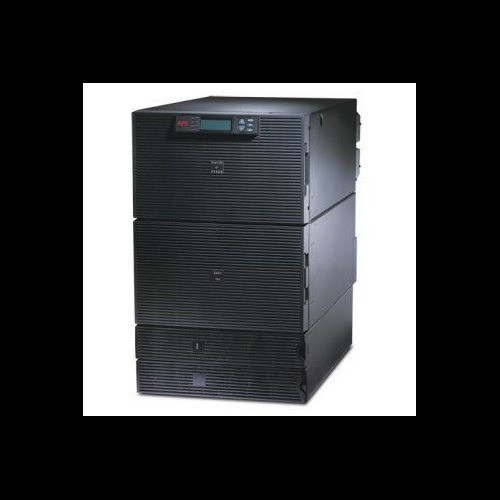
Both the SURT15KRMXLT-1TF10K and the SUVTP15KF2B2S are APC by Schneider Electric 15 kVA uninterruptible power supplies designed for enterprise and data-center loads. The SURT15KRMXLT-1TF10K is a rack-mounted Smart-UPS RT with an integrated 10 kVA step-down transformer, while the SUVTP15KF2B2S is a tower-form Smart-UPS VT with two internal battery modules. Both use double-conversion-class topology and lead-acid chemistry, making them legitimate cross-shop candidates for buyers sizing a 15 kVA online UPS.
In This Guide
- How do runtime, battery capacity, and recharge time compare between the two units?
- How do power architecture, input/output configuration, and physical form factor differ?
- What management capabilities and environmental operating parameters does each unit support?
- Which should you choose: the SURT15KRMXLT-1TF10K or the SUVTP15KF2B2S?
- Side-by-Side Specs
- FAQ
How do runtime, battery capacity, and recharge time compare between the two units?
The SURT15KRMXLT-1TF10K ships with four included battery modules (RBC quantity: 4) rated for a typical recharge time of 2.5 hours, with a battery charge power of 1,530 W and an end-of-discharge battery voltage of ±154 V (battery voltage ±192 V split, referenced to neutral). The specs do not provide a discrete full-load or half-load runtime figure for this model.
The SUVTP15KF2B2S ships with two battery modules and provides explicit runtime figures: 10 minutes at full load (15 kVA) and 28.1 minutes at half load. Its typical recharge time is 5 hours — double that of the SURT15KRMXLT-1TF10K. Buyers who need longer recharge windows or can tolerate the 5-hour recovery should factor that into maintenance planning, while those prioritizing fast battery recovery after an outage will favor the SURT15KRMXLT-1TF10K's 2.5-hour recharge.
How do power architecture, input/output configuration, and physical form factor differ?
The SURT15KRMXLT-1TF10K is a 16U rack-mount unit rated at 15,000 VA / 12,000 W with a double-conversion online topology, a built-in static bypass, and an integrated 10 kVA step-down transformer enabling simultaneous 120 V and 208 V output. Input is a single hard-wire 3-wire connection (2PH + G) at 208 V (240 V also accepted), rated up to 83 A per phase with a switching current capacity of 100 A. Output connectors include 2× NEMA L5-20R, 4× NEMA L6-20R, 2× NEMA L6-30R, and 2× NEMA L14-30R, plus a hard-wire 4-wire output. Efficiency at full load is specified at 93%. Online thermal dissipation is 2,610 Btu/h and acoustic level is 50 dBA.
The SUVTP15KF2B2S is a tower unit also rated at 15 kVA. Its input voltage is specified as 220 V AC at up to 40 A, and its input frequency ceiling is listed as 70 Hz. Output voltages are 120 V AC and 208 V AC. The specs list a manual static maintenance bypass in addition to an automatic bypass switch. Efficiency, wattage (kW) rating, acoustic level, and thermal dissipation are not provided in the available specifications. The tower form factor (59" H × 14" W × 32" D, 873 lb) demands floor space rather than rack real estate, which is a hard constraint in dense rack environments.
What management capabilities and environmental operating parameters does each unit support?
The SURT15KRMXLT-1TF10K ships with a pre-installed Network Management Card 2, enabling SNMP and web-based monitoring out of the box with no additional card purchase required. It also includes a SmartSlot for expansion. Environmental ratings are fully specified: operating temperature 0–40 °C, operating altitude 0–10,000 ft, storage altitude 0–50,000 ft, relative humidity 0–95% non-condensing, and IP20 ingress protection. Surge filtering is rated at 0.3% IEEE let-through with zero-clamping response time and full-time multi-pole noise filtering. Input THD is less than 5% at full load; crest factor is 3:1.
The SUVTP15KF2B2S is listed as SNMP manageable and includes a SmartSlot. However, no pre-installed management card is indicated in the available specifications — buyers should confirm whether a separate card purchase is required. Operating temperature, humidity, altitude, IP rating, surge let-through, THD, and crest factor are all absent from the provided specs, leaving environmental fit unverifiable from the data at hand. The warranty period is 1 year, versus 2 years for the SURT15KRMXLT-1TF10K.
Which should you choose: the SURT15KRMXLT-1TF10K or the SUVTP15KF2B2S?
Our take: The SURT15KRMXLT-1TF10K is the stronger choice when the deployment is rack-based, requires simultaneous 120 V and 208 V output, and demands full management visibility from day one. Key spec deltas: recharge time is 2.5 hours versus 5 hours for the SUVTP15KF2B2S — a critical gap in high-availability environments with frequent outages; the SURT15KRMXLT-1TF10K ships with NMC2 pre-installed while the SUVTP15KF2B2S's management card status is unconfirmed; and the warranty is 2 years versus 1 year. The SUVTP15KF2B2S's explicit runtime figures (10 min full load / 28.1 min half load) and tower form factor suit buyers with floor space who need documented runtime SLAs and no rack footprint. Buyers cannot fully evaluate the SUVTP15KF2B2S's environmental compatibility because operating temperature, altitude, and humidity specs are not provided.
Side-by-Side Comparison
Spec-for-spec, from manufacturer data.
| Specification | APC by Schneider Electric SURT15KRMXLT-1TF10K | APC by Schneider Electric SUVTP15KF2B2S |
|---|---|---|
| Rated Power (VA) | 15,000 VA | 15,000 VA |
| Rated Power (W) | 12,000 W | — |
| Topology | Double Conversion Online | — |
| Form Factor | Rack-mount (16U) | Tower |
| Dimensions (H × W × D) | 27.87" × 17.01" × 30.43" | 59" × 14" × 32" |
| Weight | 766.61 lb (347.73 kg) | 873 lb |
| Input Voltage | 208 V (240 V alt.) | 220 V AC |
| Input Current (max) | 83 A per phase | 40 A |
| Output Voltage | 120 V / 208 V | 120 V AC / 208 V AC |
| Bypass Type | Built-in Static Bypass | Automatic + Manual Static Maintenance |
| Runtime at Full Load | — | 10 min |
| Runtime at Half Load | — | 28.1 min |
| Typical Recharge Time | 2.5 h | 5 h |
| Battery Chemistry | Lead-Acid | Lead Acid |
| Included Battery Modules | 4 | 2 |
| Pre-installed Mgmt Card | Network Management Card 2 | — |
| SmartSlot | Yes | Yes |
| Efficiency at Full Load | 93% | — |
| Acoustic Level | 50 dBA | — |
| Operating Temperature | 0–40 °C (32–104 °F) | — |
| Warranty | 2 years | 1 year |
Frequently Asked Questions
Which should you choose: the SURT15KRMXLT-1TF10K or the SUVTP15KF2B2S?
The SURT15KRMXLT-1TF10K is the stronger choice when the deployment is rack-based, requires simultaneous 120 V and 208 V output, and demands full management visibility from day one. Key spec deltas: recharge time is 2.5 hours versus 5 hours for the SUVTP15KF2B2S — a critical gap in high-availability environments with frequent outages; the SURT15KRMXLT-1TF10K ships with NMC2 pre-installed while the SUVTP15KF2B2S's management card status is unconfirmed; and the warranty is 2 years versus 1 year. The SUVTP15KF2B2S's explicit runtime figures (10 min full load / 28.1 min half load) and tower form factor suit buyers with floor space who need documented runtime SLAs and no rack footprint. Buyers cannot fully evaluate the SUVTP15KF2B2S's environmental compatibility because operating temperature, altitude, and humidity specs are not provided.
Which unit is better for a high-density server rack environment?
Based on the provided specifications, the SURT15KRMXLT-1TF10K is the rack-native option — it occupies 16U and includes an integrated step-down transformer for mixed 120 V / 208 V loads. The SUVTP15KF2B2S is a tower unit (59" tall, 873 lb) and requires dedicated floor space; it is not designed for rack mounting per the available specs.
Does either UPS include a network management card, or do I need to buy one separately?
The SURT15KRMXLT-1TF10K explicitly lists a pre-installed Network Management Card 2. The SUVTP15KF2B2S is described as SNMP manageable and includes a SmartSlot, but the available specifications do not confirm whether a management card is pre-installed or must be purchased separately — verify with the distributor before ordering.
How does battery recharge time compare if power is restored after an outage?
The SURT15KRMXLT-1TF10K has a specified typical recharge time of 2.5 hours. The SUVTP15KF2B2S has a specified typical recharge time of 5 hours — twice as long. For facilities with frequent short outages or strict recovery-time objectives, the SURT15KRMXLT-1TF10K's faster recharge is a material advantage.
More UPS Comparisons
- APC by Schneider Electric E3SUPS15KFBS vs Vertiv GXT5-15KMVRT11UXLN
- APC by Schneider Electric E3SUPS15KFBS vs APC by Schneider Electric SURT15KRMXLT-1TF10K
- APC by Schneider Electric E3SUPS15KFBS vs APC by Schneider Electric SUVTP15KF2B2S
- APC by Schneider Electric SURT15KRMXLT-1TF10K vs Vertiv GXT5-15KMVRT11UXLN
- APC by Schneider Electric SUVTP15KF2B2S vs Vertiv GXT5-15KMVRT11UXLN
- APC by Schneider Electric G35T15KH4B4S vs Vertiv GXT5-15KMVRT11UXLN
UPS Buying Guides
Get a Second Opinion on Your Camera Choice
Share your site layout, coverage goals, and budget. Our team will validate the camera selection, flag anything we would change, and recommend products that match the use case.