
APC by Schneider Electric SUA500PDR-S vs APC by Schneider Electric BE500G3: Specification Comparison
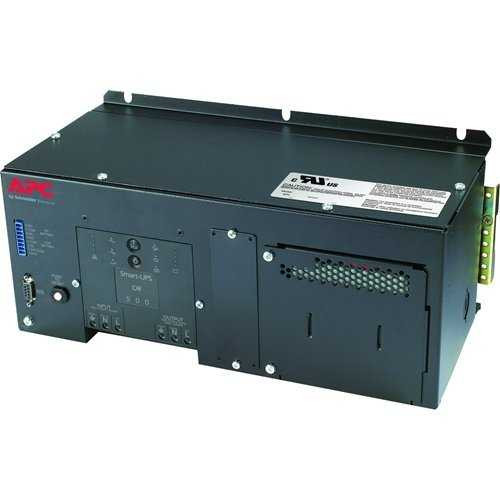
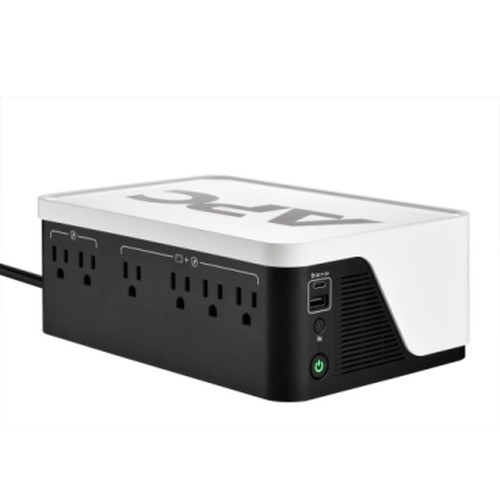
Both products are 500 VA line-voltage UPS units from APC by Schneider Electric targeting small office and network closet applications in North American 120 V environments. The SUA500PDR-S is a line-interactive unit with a hardwired output and higher watt capacity, while the BE500G3 is a plug-in Back-UPS with six NEMA 5-15R receptacles and USB charging. Buyers evaluating these will weigh runtime versus recharge speed, outlet configuration and connectivity, and load capacity in watts—the three axes most critical to selecting a 500 VA UPS.
In This Guide
- Which UPS delivers better runtime, recharge speed, and battery performance?
- Which UPS supports more load, more outlets, and better device connectivity?
- Which UPS handles a wider input voltage range, operating environment, and efficiency?
- Which should you choose: the SUA500PDR-S or the BE500G3?
- Side-by-Side Specs
- FAQ
Which UPS delivers better runtime, recharge speed, and battery performance?
The SUA500PDR-S is rated at 320 W output with a typical backup time of 7.4 minutes at full load and 21 minutes at half load, with a battery recharge time of 2 hours. The BE500G3 is rated at 300 W output; no runtime figures at full or half load are provided in its specifications. Its recharge time is listed at 10 hours—five times longer than the SUA500PDR-S's 2-hour recharge.
Battery chemistry for both is lead-acid (SUA500PDR-S: Sealed Lead Acid/VRLA; BE500G3: Lead-Acid). The SUA500PDR-S supports 1 internal battery. The BE500G3 does not specify battery count or VRLA/sealed status in the provided specs. The SUA500PDR-S's 2-hour recharge cycle is a significant operational advantage in environments with frequent outages or rapid recovery requirements.
Which UPS supports more load, more outlets, and better device connectivity?
The SUA500PDR-S provides 500 VA / 320 W capacity through 3 AC outlets with a hardwired (hard-wire) output configuration. No outlet type (NEMA) is specified for the SUA500PDR-S in the provided specs. The BE500G3 offers 6 NEMA 5-15R outlets total—4 with battery and surge protection, 2 with surge protection only—plus a NEMA 5-15P plug for direct wall connection.
The BE500G3 also includes a 1x USB-A charging port (5 VDC, 3 A, 15 W) and a USB-B communications port for software/monitoring integration. The SUA500PDR-S lists a LED display for local status indication; no communications port or USB connectivity is specified in its provided specs. For environments needing software-based monitoring or USB device charging, the BE500G3 has a clear connectivity edge. For hardwired rack or panel installations, the SUA500PDR-S's hard-wire output is the appropriate fit.
Which UPS handles a wider input voltage range, operating environment, and efficiency?
The SUA500PDR-S accepts input voltages from 75 V to 154 V and an input frequency of 47–63 Hz, providing a wide tolerance window beneficial in environments with unstable utility power. Operating temperature is rated 0–40 °C with storage from -15 to 45 °C and relative humidity up to 95% (non-condensing implied). Efficiency is specified at 94%. Surge energy rating is 540 J.
The BE500G3 specifies a nominal input of 120 VAC at 50/60 Hz; no minimum or maximum input voltage range is provided in the specs. No operating temperature, storage temperature, humidity rating, efficiency figure, or surge energy rating is provided for the BE500G3. The SUA500PDR-S's documented wide input range, environmental ratings, efficiency, and surge protection figure give it a measurable advantage for buyers in electrically noisy or thermally varied installations.
Which should you choose: the SUA500PDR-S or the BE500G3?
Our take: The SUA500PDR-S is the stronger choice when installation environment quality, recharge speed, and documented electrical tolerance are priorities. Its 320 W output exceeds the BE500G3's 300 W by 20 W, its battery recharge time of 2 hours is five times faster than the BE500G3's 10 hours, and it supports a wide input range of 75–154 V versus no documented range for the BE500G3—a meaningful advantage where utility power fluctuates. The BE500G3 is the more practical fit for small office or desktop deployments where plug-in convenience matters: it provides 6 NEMA 5-15R outlets (vs. the SUA500PDR-S's 3 with a hardwired output), a USB-B monitoring port, and a USB-A charging port, none of which are present on the SUA500PDR-S per the provided specs. Choose the SUA500PDR-S for hardwired panel or rack installs, electrically unstable environments, and rapid-recovery duty cycles; choose the BE500G3 for desktop, plug-in, multi-device office scenarios where outlet count and USB connectivity are decisive.
Side-by-Side Comparison
Spec-for-spec, from manufacturer data.
| Specification | APC by Schneider Electric SUA500PDR-S | APC by Schneider Electric BE500G3 |
|---|---|---|
| UPS Topology | Line-Interactive | — |
| VA Capacity | 500 VA | 500 VA |
| Watt Capacity | 320 W | 300 W |
| Output Configuration | Hardwired | 6x NEMA 5-15R |
| Battery-Protected Outlets | 3 AC outlets | 4x NEMA 5-15R |
| Surge-Only Outlets | — | 2x NEMA 5-15R |
| USB Charging Port | — | 1x USB-A (5 VDC, 3 A, 15 W) |
| Communications Port | — | USB-B |
| Input Voltage Range | 75–154 V | — |
| Input Frequency | 47–63 Hz | 50/60 Hz |
| Surge Energy Rating | 540 J | — |
| Efficiency | 94% | — |
| Battery Chemistry | Sealed Lead Acid (VRLA) | Lead-Acid |
| Battery Recharge Time | 2 hours | 10 hours |
| Runtime at Full Load | 7.4 min | — |
| Operating Temperature | 0–40 °C | — |
Frequently Asked Questions
Which should you choose: the SUA500PDR-S or the BE500G3?
The SUA500PDR-S is the stronger choice when installation environment quality, recharge speed, and documented electrical tolerance are priorities. Its 320 W output exceeds the BE500G3's 300 W by 20 W, its battery recharge time of 2 hours is five times faster than the BE500G3's 10 hours, and it supports a wide input range of 75–154 V versus no documented range for the BE500G3—a meaningful advantage where utility power fluctuates. The BE500G3 is the more practical fit for small office or desktop deployments where plug-in convenience matters: it provides 6 NEMA 5-15R outlets (vs. the SUA500PDR-S's 3 with a hardwired output), a USB-B monitoring port, and a USB-A charging port, none of which are present on the SUA500PDR-S per the provided specs. Choose the SUA500PDR-S for hardwired panel or rack installs, electrically unstable environments, and rapid-recovery duty cycles; choose the BE500G3 for desktop, plug-in, multi-device office scenarios where outlet count and USB connectivity are decisive.
Is the SUA500PDR-S or BE500G3 better for a network closet with hardwired equipment?
The SUA500PDR-S is the correct choice for hardwired installations. It features a hard-wire output configuration and a wide input voltage tolerance of 75–154 V. The BE500G3 uses a standard NEMA 5-15P plug with NEMA 5-15R receptacles and is designed for plug-in desktop or small office use, not hardwired panels.
Which unit gets back to full charge faster after a power event?
The SUA500PDR-S recharges in 2 hours per its specifications. The BE500G3 requires 10 hours to recharge. If rapid recovery between outages is a requirement—common in environments with unstable utility power—the SUA500PDR-S has a significant advantage on this metric.
Does either UPS support software monitoring or USB device management?
The BE500G3 includes a USB-B communications port for software-based UPS monitoring and a USB-A port for device charging (5 VDC, 3 A, 15 W). The SUA500PDR-S's provided specifications list only an LED display for local status indication; no communications port or USB connectivity is documented in the specs provided.
More UPS Comparisons
- Vertiv GXT5-500LVRT2UXL vs APC by Schneider Electric SUA500PDR-H
- Vertiv GXT5-500LVRT2UXL vs APC by Schneider Electric BE500G3
- Vertiv GXT5-500LVRT2UXL vs APC by Schneider Electric SCL500RM1UC
- Vertiv GXT5-500LVRT2UXL vs APC by Schneider Electric SCL500RMI1UC
- APC by Schneider Electric SUA500PDR-H vs Middle Atlantic S500R
- APC by Schneider Electric SUA500PDR-H vs APC by Schneider Electric BE500G3
UPS Buying Guides
Get a Second Opinion on Your Camera Choice
Share your site layout, coverage goals, and budget. Our team will validate the camera selection, flag anything we would change, and recommend products that match the use case.