APC by Schneider Electric BE500G3 500VA/300W Battery Backup UPS
Overview
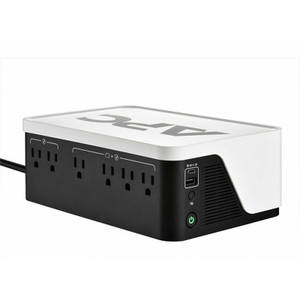
The APC BE500G3 is a 500VA/300W line-interactive UPS designed for small workstations, network edge devices, and security equipment that can't tolerate a power interruption. With six NEMA 5-15R outlets — four of which deliver both battery backup and surge protection, plus two surge-only — it gives you layered protection across a mix of critical and non-critical loads without requiring a separate power strip. If you're deploying IP cameras, access control panels, or small NVRs in an environment where brief outages are a real operational risk, this unit handles the last-mile power protection piece cleanly.
The BE500G3 draws a standard 120 VAC input at 50/60 Hz via a NEMA 5-15P plug, so it drops into any existing outlet configuration without adapter gymnastics. It ships ready to deploy — no special wiring, no electrician needed.
Key Features
- 500VA / 300W Load Capacity: The 500VA/300W rating is the honest boundary here. That's enough headroom for a small NVR plus two or three IP cameras, or a desktop workstation with a monitor — not a full rack. Size your connected load to stay under 300W continuous or you'll hit the inverter ceiling mid-shift.
- Four Battery-Backed Outlets + Two Surge-Only: The four protected NEMA 5-15R outlets keep your critical gear running during an outage; the two surge-only outlets cover peripherals like monitors or printers that can ride out a brief interruption without losing data. That split means you're not burning runtime on non-essential loads.
- Sub-6ms Transfer Time: At under 6 milliseconds, the switchover from utility to battery is fast enough that most powered equipment — including network switches, NVRs, and access control panels — won't even register the transition. Compare this to offline UPS units that can hit 20ms+, which is long enough for some devices to reboot.
- 1x USB-A Charging Port (5 VDC, 3 A, 15 W): The integrated USB-A port delivers up to 15W — enough to charge a tablet or keep a mobile device topped up at a security desk without consuming one of the NEMA outlets. Marginal convenience, but real in a cramped wiring closet.
- USB-B Communications Port: The USB-B interface lets compatible UPS management software (such as APC's PowerChute) monitor battery status, configure shutdown sequences, and log power events from a connected PC or server. Useful if you want automatic graceful shutdown of a connected NVR before the battery depletes.
- Lead-Acid Battery, 10-Hour Recharge: The sealed lead-acid chemistry is field-proven and the battery is user-replaceable — a practical consideration for installations where the UPS will run for years before needing service. Budget a full 10-hour recharge after a deep discharge before the unit returns to full runtime capacity.
- ENERGY STAR Certified: The ENERGY STAR certification means the unit meets federal efficiency standards — relevant if you're deploying in facilities with green building requirements or just want to minimize idle draw across a large number of units.
- CEC and FCC Certified: CEC compliance satisfies California Energy Commission efficiency regulations, relevant for California deployments. FCC certification confirms the unit meets emissions standards for commercial environments.
Integration & Compatibility
The BE500G3 integrates with network video recorders and edge network gear via its USB-B port and compatible UPS management software. The NEMA 5-15P plug is the standard North American 15A plug, compatible with virtually all commercial outlet configurations. If you're pairing this with a PoE switch powering downstream cameras, verify your switch's total load stays within 300W — a midsize 8-port PoE switch at full load can hit that ceiling quickly. For larger deployments or rackmount requirements, step up to a higher-VA model in the APC UPS line.
Frequently Asked Questions
Q: What is the maximum wattage the BE500G3 can support?
A: The BE500G3 supports a maximum load of 300 watts (500VA). Keep your connected equipment under that threshold to ensure stable battery runtime and avoid inverter overload.
Q: How many outlets does the BE500G3 have, and which ones are battery backed?
A: There are six NEMA 5-15R outlets total. Four provide both battery backup and surge protection. The remaining two provide surge protection only — they won't keep equipment running during an outage.
Q: How long does the BE500G3 battery take to recharge after a full discharge?
A: A full recharge from a deep discharge takes approximately 10 hours. Plan accordingly if you're in an area with frequent outages.
Q: Can the BE500G3 communicate with a connected computer for automatic shutdown?
A: Yes. The BE500G3 includes a USB-B communications port that works with compatible UPS management software to monitor battery status and trigger graceful shutdowns before battery depletion.
Q: What certifications does the BE500G3 carry?
A: The BE500G3 is certified by ENERGY STAR, CEC (California Energy Commission), and FCC.
Q: Is the BE500G3 suitable for a small NVR and camera setup?
A: It depends on your load. The 300W ceiling accommodates a small NVR and a few IP cameras, but verify your actual wattage draw before committing. A mid-range 8-port PoE switch at full load can approach or exceed 300W on its own.
The BE500G3's sub-6ms transfer time is the spec I'd lead with in any small security deployment conversation. At that switchover speed, a connected NVR or access control panel almost never resets — compared to offline UPS designs that can take 20ms or more, which is long enough for some embedded systems to drop off and require a manual restart. If you've ever shown up to a site after a momentary outage and found a camera system that rebooted into a bad state, that transfer time gap is usually why.
Technical Highlights:
- Split outlet design (4+2): Four battery-backed outlets keep critical gear on during an outage; two surge-only outlets protect non-essential peripherals without drawing down battery runtime on equipment that doesn't need it.
- 300W continuous capacity: Honest ceiling for small edge deployments — a compact NVR at ~40W, a PoE injector powering two cameras at ~25W each, and a managed switch at ~15W lands you around 105W, well within range. Add an access control panel and you're still comfortable.
- USB-B management port: Pairs with PowerChute or compatible software to automate graceful NVR shutdown before battery exhaustion — prevents database corruption on video management systems that write continuously to disk.
Deployment Considerations:
- The 10-hour recharge time after a deep discharge is a real operational factor in high-outage environments — if utility power is unreliable and outages are frequent, this unit may not fully recharge between events. Consider a higher-capacity unit or a generator hand-off in those scenarios.
- The 300W ceiling is firm. A single midrange PoE switch running a full port load can push 150W or more on its own — confirm your switch's actual consumption before assuming the BE500G3 has comfortable headroom.
For a small physical security edge node — a single NVR, one or two PoE injectors, and a managed switch in a remote IDF or lobby closet — the BE500G3 covers the power protection piece without over-engineering it. It's the right size for that use case and nothing larger.