
APC by Schneider Electric SUA3000RMXLI3U vs APC by Schneider Electric SRT3000XLT: Specification Comparison
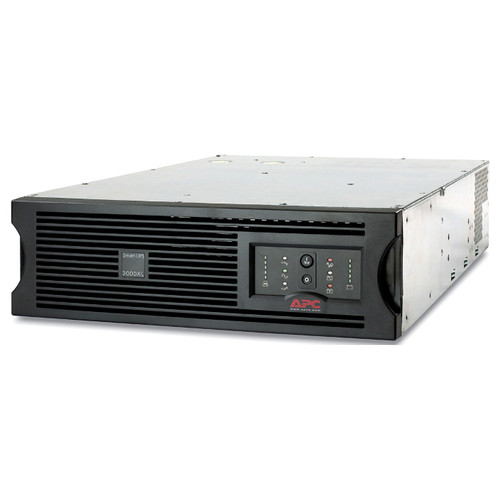
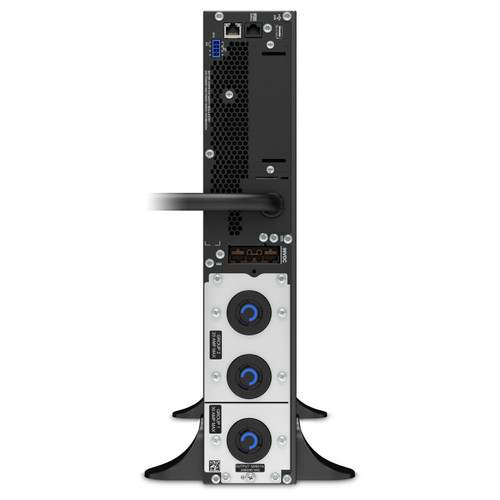
Both units are 3000 VA / rack-mount uninterruptible power supplies from APC by Schneider Electric, making them direct cross-shop candidates for installers and IT buyers sizing power protection for surveillance servers, NVRs, or network closets. The SUA3000RMXLI3U is a line-interactive unit targeting 230 V international/European installations, while the SRT3000XLT is a double-conversion online unit targeting 208/240 V North American environments. The comparison turns on topology, output voltage ecosystem, runtime extensibility, and physical footprint.
In This Guide
- Which UPS topology and output power quality better protects sensitive equipment?
- Which unit offers better runtime flexibility and battery management for growing or critical deployments?
- Which unit provides better management, connectivity options, and physical integration into a rack?
- Which should you choose: the SUA3000RMXLI3U or the SRT3000XLT?
- Side-by-Side Specs
- FAQ
Which UPS topology and output power quality better protects sensitive equipment?
The SUA3000RMXLI3U uses line-interactive topology with automatic voltage regulation (AVR), delivering a sinewave output at AC 220/230/240 V ±5%. Its surge energy rating is 480 joules with circuit-breaker protection. Total capacity is 2700 W / 3000 VA.
The SRT3000XLT uses double-conversion online topology, which regenerates output power continuously from the inverter, isolating connected equipment from all input anomalies — not just voltage sags and surges. Output is a sine wave at 208 V or 240 V (configurable) with less than 2% total harmonic distortion and a crest factor of 3:1. Capacity is identical at 2700 W / 3000 VA. It also includes both automatic and manual internal bypass.
For sites where power quality is consistently poor or where zero transfer time to battery is required (e.g., medical-grade or precision industrial loads), the SRT3000XLT's online topology provides inherently superior conditioning. The SUA3000RMXLI3U's line-interactive design is adequate for typical IT closets where brief transfer times (typically 2–6 ms) are acceptable, but its topology spec does not quantify transfer time — that figure is absent from the provided data.
Which unit offers better runtime flexibility and battery management for growing or critical deployments?
The SUA3000RMXLI3U provides a single internal lead-acid battery with up to 5.4 minutes of runtime at full load and a 3-hour recharge time. No external battery extension options are listed in the provided specifications. Battery capacity figures (VAh or voltage) are not specified.
The SRT3000XLT ships with one included battery module rated at 96 V / 497 VAh runtime capacity, with a rated charge power of 165 W and a 3-hour recharge time. Battery life is specified at 3–5 years, and the replacement cartridge is identified as APCRBC152 / SRT96RMBPUS. Critically, the SRT3000XLT supports up to 10 external SRT96BP battery packs, scaling runtime from the base 497 VAh up to 10,437 VAh — a more than 20× increase documented in the provided specs.
For deployments requiring extended runtime during prolonged outages — common in surveillance or security operations centers — the SRT3000XLT's documented scalability is a decisive structural advantage. The SUA3000RMXLI3U provides no equivalent extensibility per the supplied specification data.
Which unit provides better management, connectivity options, and physical integration into a rack?
The SUA3000RMXLI3U includes RS-232 (DB-9) and USB management interfaces, one free SmartSlot expansion slot for optional network management cards, and ships with a serial cable and USB cable. Output connectors are 1× IEC 60320 C19 and 8× IEC 60320 C13 — the standard IEC outlet mix for international IT equipment. It occupies 3U of rack space and weighs 139.33 lbs. Sound emission is 53 dBA.
The SRT3000XLT lists one free expansion slot (type not specified in provided data) but does not enumerate discrete serial or USB management ports in the supplied specifications. Output connectors are 2× NEMA L6-20R and 1× NEMA L6-30R — North American twist-lock receptacles incompatible with IEC-equipped gear without adapters. It is rack-mounted with a kit, front-mounted at the lower position, with vertical mounting orientation. Weight is 69.00 lbs and acoustic level is 55 dBA. Operating altitude is specified up to 10,000 ft; storage altitude up to 50,000 ft — neither figure is present for the SUA3000RMXLI3U.
The SUA3000RMXLI3U's 8× C13 + 1× C19 outlet complement directly serves IEC-standard rack PDUs and server PSUs common in international deployments. The SRT3000XLT's NEMA L6 outlets serve North American 208 V circuits but require adapters or compatible PDUs for standard C13/C14 gear. The SRT3000XLT is substantially lighter (69 lbs vs. 139.33 lbs), which is relevant for upper-rack placement. Neither unit's network management card capabilities are detailed beyond slot availability in the provided data.
Which should you choose: the SUA3000RMXLI3U or the SRT3000XLT?
Our take: The SRT3000XLT is the stronger choice when power conditioning quality and runtime scalability are the primary requirements — its double-conversion online topology eliminates transfer time entirely, its <2% THD output protects sensitive electronics more rigorously than line-interactive AVR, and its documented battery extension path scales from 497 VAh to over 10,437 VAh via up to 10 SRT96BP packs, versus the SUA3000RMXLI3U's fixed 5.4-minute full-load runtime with no extension option specified. The SUA3000RMXLI3U, however, is the correct selection for 230 V international installations: its IEC 60320 C13/C19 outlet complement, 220/230/240 V input/output, and compliance marks (VDE, EN 50091-1/2, C-Tick, GOST) are absent from the SRT3000XLT's specifications. The SRT3000XLT targets 208/240 V North American circuits with NEMA L6 receptacles. Platform match — voltage ecosystem and outlet type — should be confirmed before topology or runtime considerations.
Side-by-Side Comparison
Spec-for-spec, from manufacturer data.
| Specification | APC by Schneider Electric SUA3000RMXLI3U | APC by Schneider Electric SRT3000XLT |
|---|---|---|
| UPS Topology | Line Interactive | Double Conversion Online |
| Rated Power | 2700 W / 3000 VA | 2700 W / 3000 VA |
| Input Voltage | AC 220/230/240 V | 208 V (also 240 V) |
| Output Voltage | AC 220/230/240 V ±5% | 208 V or 240 V (configurable) |
| Output Waveform | Sine wave | Sine wave |
| Total Harmonic Distortion | — | <2% |
| Output Connectors | 1× IEC C19, 8× IEC C13 | 2× NEMA L6-20R, 1× NEMA L6-30R |
| Runtime at Full Load | 5.4 min (internal battery) | — |
| Base Battery Capacity | — | 497 VAh (96 V) |
| Battery Extensibility | — | Up to 10× SRT96BP (max 10,437 VAh) |
| Recharge Time | 3 hours | 3 hours |
| Battery Life | — | 3–5 years |
| Acoustic Level | 53 dBA | 55 dBA |
| Expansion Slot | 1× SmartSlot (free) | 1 free slot (type not specified) |
| Management Interfaces | RS-232 (DB-9), USB | — |
| Weight | 139.33 lbs | 69.00 lbs |
| Rack Height | 3U | — |
| Bypass | — | Internal (Automatic and Manual) |
| Surge Energy Rating | 480 joules | — |
| Compliance Marks | VDE, EN 50091-1/2, C-Tick, GOST, UL 1449 | — |
| Warranty | 2 years (limited) | — |
| Operating Humidity | 0–95% | 0–95% non-condensing |
| Operating Altitude | — | 0–10,000 ft |
Frequently Asked Questions
Which should you choose: the SUA3000RMXLI3U or the SRT3000XLT?
The SRT3000XLT is the stronger choice when power conditioning quality and runtime scalability are the primary requirements — its double-conversion online topology eliminates transfer time entirely, its <2% THD output protects sensitive electronics more rigorously than line-interactive AVR, and its documented battery extension path scales from 497 VAh to over 10,437 VAh via up to 10 SRT96BP packs, versus the SUA3000RMXLI3U's fixed 5.4-minute full-load runtime with no extension option specified. The SUA3000RMXLI3U, however, is the correct selection for 230 V international installations: its IEC 60320 C13/C19 outlet complement, 220/230/240 V input/output, and compliance marks (VDE, EN 50091-1/2, C-Tick, GOST) are absent from the SRT3000XLT's specifications. The SRT3000XLT targets 208/240 V North American circuits with NEMA L6 receptacles. Platform match — voltage ecosystem and outlet type — should be confirmed before topology or runtime considerations.
Is the SUA3000RMXLI3U or SRT3000XLT better for a data center or security operations center that needs extended runtime during outages?
The SRT3000XLT is better suited for extended runtime deployments. Its specifications document support for up to 10 external SRT96BP battery packs, scaling capacity from a base 497 VAh to over 10,437 VAh. The SUA3000RMXLI3U provides a fixed maximum of 5.4 minutes at full load with no external battery extension options listed in the provided specifications.
Can I use the SRT3000XLT with standard IEC C13-equipped servers and rack PDUs?
Not directly. The SRT3000XLT's output connectors, per the provided specifications, are 2× NEMA L6-20R and 1× NEMA L6-30R — North American 208 V twist-lock receptacles. Standard IEC 60320 C13/C14 equipment would require compatible PDUs or adapters. The SUA3000RMXLI3U provides 8× IEC C13 and 1× IEC C19 outputs natively.
Which unit is certified for international or European installations?
The SUA3000RMXLI3U carries compliance marks including VDE, EN 50091-1, EN 50091-2, C-Tick, GOST, and UL 1449, and is rated for 220/230/240 V input and output — making it appropriate for European and other international markets. The SRT3000XLT's provided specifications do not list equivalent international compliance marks; it is configured for 208/240 V North American circuits.
More UPS Comparisons
- APC by Schneider Electric SMT3000RMI2U vs Vertiv GXT5-3000LVRT2UXL
- APC by Schneider Electric SMT3000RMI2U vs Panduit U03N11L
- APC by Schneider Electric SMT3000RMI2U vs Panduit U03N12L
- APC by Schneider Electric SMT3000RMI2U vs Panduit U03S12V
- APC by Schneider Electric SMT3000RMI2U vs APC by Schneider Electric SRT3000XLT
- APC by Schneider Electric SMT3000RMI2U vs APC by Schneider Electric SRT3000XLW-IEC
UPS Buying Guides
Get a Second Opinion on Your Camera Choice
Share your site layout, coverage goals, and budget. Our team will validate the camera selection, flag anything we would change, and recommend products that match the use case.