
APC by Schneider Electric SRTL5KRMTF vs Vertiv GXT5-5000HVRT5UXLN: Specification Comparison
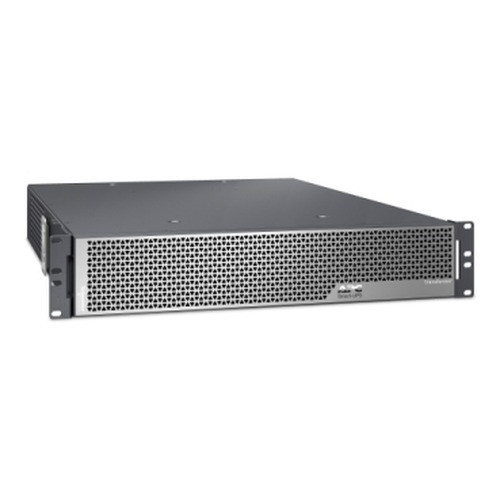
Both the APC SRTL5KRMTF and the Vertiv GXT5-5000HVRT5UXLN are rack-mountable, on-line double-conversion UPS units rated at 5,000 VA, targeting data center, server room, and critical-load installations. The APC unit is a step-down isolation transformer variant designed to accept 208V input and deliver 120V output, while the Vertiv unit operates at 208V in and out with user-configurable output voltage. Despite the shared VA class, the voltage architecture and intended load types differ meaningfully, making this a valid cross-shop for buyers evaluating 5kVA protection in mixed-voltage environments.
In This Guide
- How do the power ratings, voltage architecture, and output receptacles differ between these two 5kVA units?
- Which unit offers stronger efficiency ratings and remote management capabilities?
- How do the two units compare on physical footprint, weight, and environmental operating limits?
- Which should you choose: the SRTL5KRMTF or the GXT5-5000HVRT5UXLN?
- Side-by-Side Specs
- FAQ
How do the power ratings, voltage architecture, and output receptacles differ between these two 5kVA units?
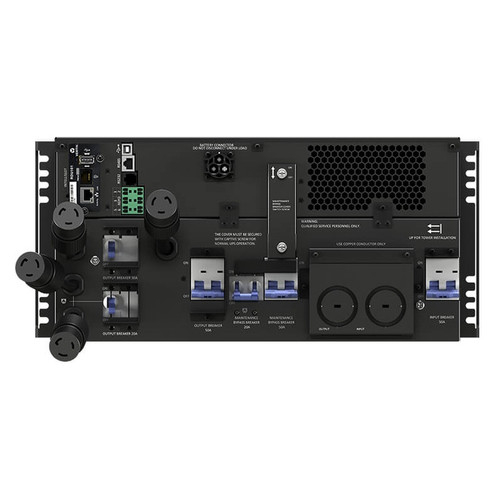
The APC SRTL5KRMTF is rated at 5,000 VA with no watts figure stated in the provided specs. It accepts 208V input via a NEMA L6-30P plug (30A circuit, 24A max line current) and steps voltage down to 120V output, delivering power through twelve NEMA 5-20R receptacles. This makes it purpose-built for environments where 208V facilities power must feed 120V-only equipment.
The Vertiv GXT5-5000HVRT5UXLN is rated at 5,000 VA and 5,000 W (unity power factor), accepting a wide input voltage range of 176–288VAC (typical 208VAC). Output voltage is user-configurable among 200, 208, 220, 230, and 240VAC, with wiring described as hardwired in/out plus two NEMA L6-20R and two NEMA L6-30R receptacles. No step-down capability is specified for the Vertiv unit; it operates within the same voltage tier throughout. Buyers needing 120V loads on a 208V feed should note the APC's transformer role versus the Vertiv's pass-through high-voltage architecture.
Which unit offers stronger efficiency ratings and remote management capabilities?
The Vertiv GXT5-5000HVRT5UXLN provides explicit efficiency data: up to 98% in Active ECO Mode and up to 95% in standard on-line mode. It also ships with a factory pre-installed Vertiv RDU101 SNMP/Webcard, enabling SNMP and web management out of the box. Additional interfaces include USB, RS485, RS232, a terminal block, and an external battery connector. The control panel features a full-color graphic LCD with gravity-sensing orientation for rack or tower use.
The APC SRTL5KRMTF specs as provided do not include an efficiency rating, SNMP card, or management interface details. No protocol or monitoring capability is listed in the supplied specification set. Buyers who require quantified efficiency or built-in network management should note this gap; it is possible the APC unit supports these features, but they cannot be confirmed from the data provided.
How do the two units compare on physical footprint, weight, and environmental operating limits?
The APC SRTL5KRMTF occupies 2U of rack space, weighs 95 lb (43.09 kg), and lists a height dimension of 3.50 in. Its operating altitude is rated to 10,000 ft, storage altitude to 50,000 ft, and relative humidity (operating and storage) to 95% non-condensing. Operating temperature is not listed in the provided specs; storage temperature is given as 5–113°F (−15–45°C).
The Vertiv GXT5-5000HVRT5UXLN is considerably heavier at 156.7 lb, with physical dimensions of 8.5 in (H) × 16.9 in (W) × 24.8 in (D). Its rack unit count is not stated in the provided specs, though the 8.5 in height implies approximately 5U. Operating temperature is rated at 32–104°F (0–40°C). No operating humidity or altitude spec is provided for the Vertiv in the supplied data. The APC unit is substantially lighter and more compact, an advantage in space- or weight-constrained installations.
Which should you choose: the SRTL5KRMTF or the GXT5-5000HVRT5UXLN?
Our take: The SRTL5KRMTF is the stronger choice when a 208V facility must reliably power legacy or mixed 120V equipment loads, thanks to its built-in isolation and step-down transformer function—a capability the GXT5-5000HVRT5UXLN does not provide per the supplied specs. The Vertiv unit, however, holds measurable advantages in three areas: it specifies a 5,000 W (unity power factor) real-power rating versus no watts figure stated for the APC; it documents efficiency up to 98% ECO / 95% on-line against no efficiency rating available for the APC; and it includes a factory-installed SNMP/Webcard with web, USB, RS485, and RS232 interfaces against no management specs listed for the APC. The Vertiv is also 61.7 lb heavier and occupies more rack space. Choose the APC for 208V-to-120V step-down environments; choose the Vertiv for high-voltage, unity-power-factor loads requiring built-in network management and certified energy efficiency.
Side-by-Side Comparison
Spec-for-spec, from manufacturer data.
| Specification | APC by Schneider Electric SRTL5KRMTF | Vertiv GXT5-5000HVRT5UXLN |
|---|---|---|
| Device Type | UPS with isolation/step-down transformer | On-line double-conversion UPS |
| Load Capacity (VA) | 5,000 VA | 5,000 VA |
| Real Power (W) | — | 5,000 W |
| Input Voltage | 208V | Typical 208VAC / Range 176–288VAC |
| Input Connection | NEMA L6-30P | Hardwired |
| Input Current (max) | 30A circuit / 24A max line | — |
| Output Voltage | 120V | 200/208/220/230/240VAC (user-configurable) |
| Output Receptacles | (12) NEMA 5-20R | 2× L6-20R, 2× L6-30R + hardwired out |
| Efficiency | — | Up to 98% ECO / 95% on-line |
| Management Interfaces | — | SNMP/Web (RDU101), USB, RS485, RS232, terminal block |
| Form Factor / Rack Units | 2U rack-mount | Rack/tower (8.5 in H, ~5U implied) |
| Weight | 95 lb (43.09 kg) | 156.7 lb |
| Dimensions (H × W × D) | 3.50 in H (W/D not provided) | 8.5 in × 16.9 in × 24.8 in |
| Operating Temperature | — | 32–104°F (0–40°C) |
| Operating Altitude | 0–10,000 ft | — |
| Certifications | — | ENERGY STAR 2.0, UL1778, c-UL, RoHS2, REACH |
Frequently Asked Questions
Which should you choose: the SRTL5KRMTF or the GXT5-5000HVRT5UXLN?
The SRTL5KRMTF is the stronger choice when a 208V facility must reliably power legacy or mixed 120V equipment loads, thanks to its built-in isolation and step-down transformer function—a capability the GXT5-5000HVRT5UXLN does not provide per the supplied specs. The Vertiv unit, however, holds measurable advantages in three areas: it specifies a 5,000 W (unity power factor) real-power rating versus no watts figure stated for the APC; it documents efficiency up to 98% ECO / 95% on-line against no efficiency rating available for the APC; and it includes a factory-installed SNMP/Webcard with web, USB, RS485, and RS232 interfaces against no management specs listed for the APC. The Vertiv is also 61.7 lb heavier and occupies more rack space. Choose the APC for 208V-to-120V step-down environments; choose the Vertiv for high-voltage, unity-power-factor loads requiring built-in network management and certified energy efficiency.
Can either the SRTL5KRMTF or the GXT5-5000HVRT5UXLN power standard 120V servers and workstations from a 208V circuit?
Yes, but only the APC SRTL5KRMTF is designed to do this: it accepts 208V input and steps it down to 120V output across twelve NEMA 5-20R receptacles. The Vertiv GXT5-5000HVRT5UXLN outputs 200–240VAC (user-configurable) and does not list step-down or 120V output capability in its provided specifications, making it suited for equipment designed to operate at 200V or above.
Which unit is easier to monitor and manage remotely—the SRTL5KRMTF or the GXT5-5000HVRT5UXLN?
Based on the supplied specifications, the Vertiv GXT5-5000HVRT5UXLN has a clear advantage: it ships with a factory pre-installed RDU101 SNMP/Webcard, enabling SNMP and web-based management out of the box, plus USB, RS485, RS232, and terminal block interfaces. No management interface, SNMP capability, or protocol support is listed in the APC SRTL5KRMTF's provided specs, so a direct comparison cannot be made from the available data.
Is the SRTL5KRMTF or the GXT5-5000HVRT5UXLN better suited for a high-density rack where weight and space are constrained?
The APC SRTL5KRMTF is the better fit: it weighs 95 lb versus the Vertiv's 156.7 lb—a 61.7 lb difference—and occupies 2U of rack space. The Vertiv GXT5-5000HVRT5UXLN, at 8.5 in tall (approximately 5U) and nearly 25 in deep, demands considerably more rack real estate and floor load capacity. If rack density and weight limits are primary constraints, the APC unit has a substantial advantage per the provided specifications.
More UPS Comparisons
- APC by Schneider Electric SRTL5KRM2UT-5KRMTF vs Panduit U05N11V
- APC by Schneider Electric SRTL5KRM2UT-5KRMTF vs Vertiv GXT5-5000HVRT5UXLN
- APC by Schneider Electric SRTL5KRM2UT-5KRMTF vs Vertiv GXT5-5000MVRT4UXLN
- APC by Schneider Electric SRTL5KRM2UT-5KRMTF vs APC by Schneider Electric SRTL5KRMTF
- APC by Schneider Electric SRT5KRMTF vs Vertiv GXT5-5000HVRT5UXLN
- APC by Schneider Electric SRT5KRMTF vs Vertiv GXT5-5000MVRT4UXLN
UPS Buying Guides
Get a Second Opinion on Your Camera Choice
Share your site layout, coverage goals, and budget. Our team will validate the camera selection, flag anything we would change, and recommend products that match the use case.