
APC by Schneider Electric SRT6KRMXLIM vs Vertiv GXT5LI-6000MVRT3UXLN: Specification Comparison
Both the APC Smart-UPS SRT 6000VA RM 230V Marine (SRT6KRMXLIM) and the Vertiv GXT5 LI 6000VA RT XL (GXT5LI-6000MVRT3UXLN) are rack-mount, double-conversion online UPS units rated at 6000VA, placing them in the same power-protection class for data centers, network closets, and critical infrastructure. Key points of divergence include battery chemistry, input/output voltage architecture, certifications, and physical footprint — all of which are material to site compatibility and regulatory compliance decisions for installers and IT buyers.
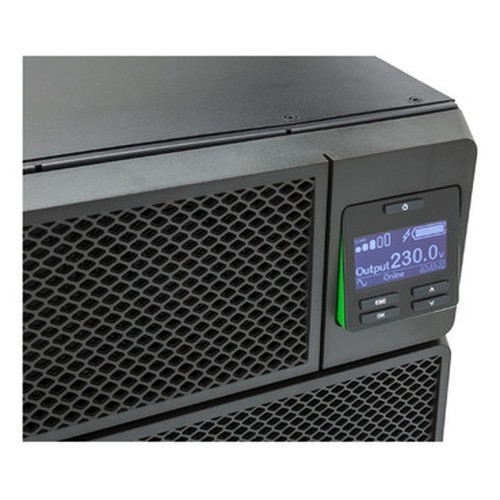
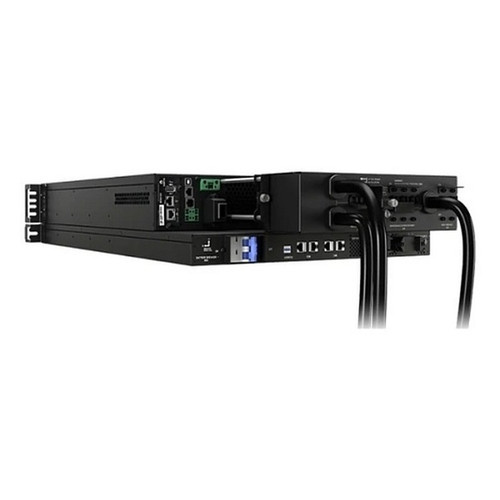
In This Guide
- How do the input/output voltage ranges and power architecture differ between these two 6000VA UPS units?
- What does each UPS offer in terms of battery technology, runtime scalability, and physical form factor?
- Which unit provides more comprehensive management interfaces and regulatory certifications for enterprise and compliance-driven environments?
- Which should you choose: the SRT6KRMXLIM or the GXT5LI-6000MVRT3UXLN?
- Side-by-Side Specs
- FAQ
How do the input/output voltage ranges and power architecture differ between these two 6000VA UPS units?
The SRT6KRMXLIM is designed for 230V single-phase AC environments. Its input accepts 160–275 V across a wide 40–70 Hz frequency window, and its output is fixed in the 220–240 V range at 50/60 Hz. Output THD is specified at 3% with a crest factor of 3:1, and the waveform is a true sine wave — all consistent with a double-conversion topology. Surge energy absorption is rated at 480 J.
The GXT5LI-6000MVRT3UXLN targets North American split-phase infrastructure: its input range is 120V/240V and its output is 120V/208V, with user-configurable 120V/240V output. Wiring is hardwired (L1, L2, N, G) rather than a plug-in connector. The input voltage range floor, ceiling, and frequency tolerance are not specified in the provided data. Output THD, crest factor, surge joule rating, and waveform type are also not specified for the Vertiv.
The two units operate on fundamentally different voltage architectures. The APC is a single-phase 230V unit suited to international and marine installations; the Vertiv is a split-phase 208/120V unit matched to U.S. data-center power distribution. An installer cannot substitute one for the other without a complete electrical infrastructure change.
What does each UPS offer in terms of battery technology, runtime scalability, and physical form factor?
The GXT5LI-6000MVRT3UXLN uses lithium-ion battery chemistry, as confirmed by its UL 1642 (Li-Ion Battery Cells) and UL 1973 (Li-Ion Battery Pack w/UPS) certifications. Li-Ion cells generally deliver longer design life, lower weight per watt-hour, and faster recharge versus VRLA, though specific runtime figures and battery capacity are not provided in the available specs. The unit weighs 100 lbs and occupies a 5.2 in (H) × 16.9 in (W) × 35 in (D) envelope in a 3U rackmount form.
The SRT6KRMXLIM's battery chemistry is not stated in the provided specifications. Runtime figures, battery capacity (Ah), and recharge time are also not specified. Physical dimensions and weight are not provided. The product name includes 'XL' which in the APC SRT family often denotes extended runtime capacity, but this cannot be confirmed from the given data alone.
The Vertiv's Li-Ion chemistry is a concrete, certifiable advantage where battery longevity and reduced replacement frequency matter. Physical dimension and weight data are only available for the Vertiv; buyers cannot compare rack-space requirements from the provided specs alone.
Which unit provides more comprehensive management interfaces and regulatory certifications for enterprise and compliance-driven environments?
The GXT5LI-6000MVRT3UXLN specifies three management interfaces: a serial port, USB, and an RJ-45 network port supporting the RDU101 network card. Its certification list is extensive: UL 1642, UL 1973, UL 1778, CSA 22.2 No. 107.3, c-UL, FCC Part 15 Class A, and Energy Star 2.0. The Energy Star 2.0 listing is relevant to data-center efficiency mandates and may affect rebate eligibility.
The SRT6KRMXLIM specifies EPO (Emergency Power Off) support, audible alarms, auto-restart, and surge protection as features. Management interfaces (network card, USB, serial) are not listed in the provided specifications. Certifications are also not listed, though the 'Marine' designation implies adherence to relevant marine electrical standards not enumerated here.
From the provided data, the Vertiv has a clear advantage in documented management connectivity and certification breadth. The APC's EPO feature is relevant for facilities requiring hard-wired emergency shutoff, and its marine rating addresses a niche the Vertiv does not address — but neither of those APC attributes overlaps with the Vertiv's network manageability or Energy Star compliance.
Which should you choose: the SRT6KRMXLIM or the GXT5LI-6000MVRT3UXLN?
Our take: The GXT5LI-6000MVRT3UXLN is the stronger choice for U.S. enterprise data-center deployments requiring modern battery technology, documented network management, and broad regulatory compliance. The Vertiv's lithium-ion chemistry (certified to UL 1642 and UL 1973) offers a longer battery service life than conventional VRLA, its RDU101-capable RJ-45 port enables remote monitoring out of the box, and its Energy Star 2.0 listing supports efficiency mandates. The SRT6KRMXLIM is the correct choice for 230V single-phase or marine environments: it accepts 160–275 V input with a 40–70 Hz frequency window, delivers 220–240 V output with a specified 3% THD and 480 J surge rating, and includes hardware EPO — none of which the Vertiv's provided specs address. The two units are not interchangeable; voltage architecture is the primary site-compatibility gate.
Side-by-Side Comparison
Spec-for-spec, from manufacturer data.
| Specification | APC by Schneider Electric SRT6KRMXLIM | Vertiv GXT5LI-6000MVRT3UXLN |
|---|---|---|
| UPS Topology | Double-Conversion Online | Double-Conversion Online |
| Power Rating (VA) | 6000 VA | 6000 VA |
| Power Rating (W) | 6000 W | 6000 W |
| Input Voltage Range | 160–275 V (single-phase 230V) | 120V/240V (split-phase, North America) |
| Input Frequency | 40–70 Hz | — |
| Output Voltage Range | 220–240 V | 120V/208V (user-configurable 120V/240V) |
| Output Frequency | 50/60 Hz | — |
| Output Waveform | Sine | — |
| Output THD | 3% | — |
| Crest Factor | 3:1 | — |
| Surge Energy Rating | 480 J | — |
| Battery Chemistry | — | Lithium-Ion (Li-Ion) |
| Wiring / Connection | — | Hardwired (L1, L2, N, G) |
| Management Interfaces | — | Serial, USB, RJ-45 (RDU101) |
| Emergency Power Off (EPO) | Yes | — |
| Certifications | — | UL 1642, UL 1973, UL 1778, CSA 22.2 No. 107.3, c-UL, FCC Part 15 Class A, Energy Star 2.0 |
| Noise Level | 55 dB | — |
| Weight | — | 100 lbs |
| Dimensions (H × W × D) | — | 5.2 in × 16.9 in × 35 in |
| Operating Temperature | — | 32°F–104°F (0°C–40°C); 10% derate at 50°C |
| Auto-Restart | Yes | — |
| Audible Alarms | Yes | — |
Frequently Asked Questions
Which should you choose: the SRT6KRMXLIM or the GXT5LI-6000MVRT3UXLN?
The GXT5LI-6000MVRT3UXLN is the stronger choice for U.S. enterprise data-center deployments requiring modern battery technology, documented network management, and broad regulatory compliance. The Vertiv's lithium-ion chemistry (certified to UL 1642 and UL 1973) offers a longer battery service life than conventional VRLA, its RDU101-capable RJ-45 port enables remote monitoring out of the box, and its Energy Star 2.0 listing supports efficiency mandates. The SRT6KRMXLIM is the correct choice for 230V single-phase or marine environments: it accepts 160–275 V input with a 40–70 Hz frequency window, delivers 220–240 V output with a specified 3% THD and 480 J surge rating, and includes hardware EPO — none of which the Vertiv's provided specs address. The two units are not interchangeable; voltage architecture is the primary site-compatibility gate.
Can I use the SRT6KRMXLIM or the GXT5LI-6000MVRT3UXLN in a standard U.S. data center running 208V three-phase distribution?
The GXT5LI-6000MVRT3UXLN is designed for 120V/208V (or user-configurable 120V/240V) split-phase North American infrastructure and is the appropriate unit for that environment. The SRT6KRMXLIM is rated for 220–240V single-phase (international/marine) input and output; it is not matched to U.S. 208V distribution without electrical infrastructure changes. Confirm your facility's wiring with a licensed electrician before purchasing either unit.
Which UPS has the longer-lasting battery — the SRT6KRMXLIM or the GXT5LI-6000MVRT3UXLN?
The GXT5LI-6000MVRT3UXLN specifies lithium-ion battery chemistry, certified under UL 1642 and UL 1973. Li-Ion cells typically have a longer design life and faster recharge cycle than conventional VRLA batteries. The SRT6KRMXLIM's battery chemistry is not stated in the provided specifications, so a direct life-cycle comparison cannot be made from the available data. Consult the APC product datasheet for battery type and replacement interval.
Does either UPS support remote network monitoring without an add-on card?
The GXT5LI-6000MVRT3UXLN lists an RJ-45 network port (RDU101) along with USB and serial interfaces in its provided specifications, suggesting network management capability is built in or slot-ready. The SRT6KRMXLIM's management interfaces are not listed in the provided specifications; buyers should verify SmartSlot or network management card availability separately via the APC product documentation.
More UPS Comparisons
- APC by Schneider Electric SRT6KXLT vs Vertiv GXT5-6000RT208
- APC by Schneider Electric SRT6KXLT vs Vertiv GXT5LI-6000MVRT3UXLN
- APC by Schneider Electric SRT6KXLT vs Vertiv GXT5LI-6000GVRT3UXLN
- APC by Schneider Electric SRT6KXLT vs APC by Schneider Electric SRT6KRMXLI
- APC by Schneider Electric SRT6KXLT vs APC by Schneider Electric SRT6KRMXLIM
- APC by Schneider Electric SRT6KRMXLI vs Vertiv GXT5-6000RT208
UPS Buying Guides
Get a Second Opinion on Your Camera Choice
Share your site layout, coverage goals, and budget. Our team will validate the camera selection, flag anything we would change, and recommend products that match the use case.