
APC by Schneider Electric SRT3000XLW-IEC vs Panduit U03N12L: Specification Comparison
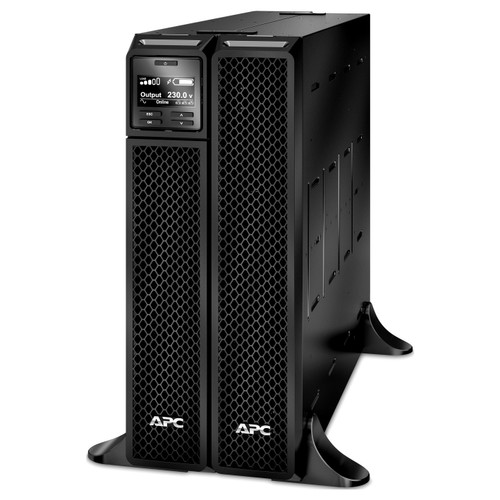
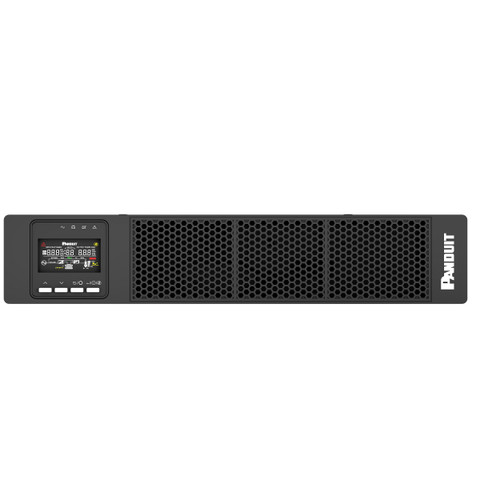
Both the APC by Schneider Electric SRT3000XLW-IEC and the Panduit SteadySine U03N12L are 3000VA / 2700W uninterruptible power supplies using double-conversion (online) topology with pure sine wave output — a class a buyer would directly cross-shop for protecting servers, network equipment, and edge infrastructure. The primary structural difference is form factor: the APC ships as a tower unit while the Panduit is a 2U rackmount, which immediately narrows the use case. This comparison evaluates topology and power quality, physical deployment and battery serviceability, and management and integration capabilities.
In This Guide
- How do the two units compare on UPS topology, output power quality, and input voltage flexibility?
- Which unit is better suited to rack or tower deployments, and how do the battery serviceability and environmental ratings compare?
- How do these UPS units differ in management interfaces, connectivity, and integration into monitored infrastructure?
- Which should you choose: the SRT3000XLW-IEC or the U03N12L?
- Side-by-Side Specs
- FAQ
How do the two units compare on UPS topology, output power quality, and input voltage flexibility?
Both units share the same 3000VA / 2700W capacity and use online double-conversion topology, meaning neither product has an advantage in those two headline figures. Output waveform is pure sine wave on both, confirmed by APC's 'Sine' waveform spec and Panduit's 'Pure Sine Wave' output spec.
On output voltage distortion, the APC SRT3000XLW-IEC is specified at less than 2% THD. The Panduit U03N12L specifies total harmonic distortion of less than 3% at full load — a measurable, if modest, difference in power cleanliness that may matter for sensitive analog or medical-adjacent loads.
Input voltage range is a meaningful differentiator. The APC accepts 208 V and 230 V nominal (configurable for 220 or 240 V) with an input frequency range of 40–70 Hz. The Panduit specifies a wider automatic voltage regulation input range of 160–290 V, offering broader tolerance against under-voltage brownouts and international grid variation. The APC's power factor correction figure is not provided in its specs; the Panduit lists 0.99 PF correction (typical), indicating near-unity input draw — relevant where generator or PDU capacity is tight. The APC carries a load crest factor rating of 3:1; this figure is not provided for the Panduit.
The APC also specifies a surge energy rating of 340 joules. No equivalent surge rating is listed in the Panduit spec sheet.
Which unit is better suited to rack or tower deployments, and how do the battery serviceability and environmental ratings compare?
Form factor is the sharpest dividing line between these two products. The APC SRT3000XLW-IEC is a tower unit measuring 17.0 × 3.3 × 25.0 in (43.2 × 8.5 × 63.5 cm) and weighing 75 lb per the provided specs. It is not specified as a rack unit and carries no U-height rating. The Panduit U03N12L is a 2U rackmount with overall dimensions of 17.3 in (W) × 3.4 in / 86.5 mm (H); depth and weight are not provided in the supplied spec data. A buyer with an open rack bay should default to the Panduit; a buyer deploying beside network closet equipment without rack space should consider the APC tower.
Battery serviceability is an operational differentiator. The Panduit U03N12L specifies hot-swappable sealed lead-acid batteries, meaning replacement can occur without powering down the protected load. The APC SRT3000XLW-IEC uses maintenance-free sealed lead-acid batteries with suspended electrolytes and supports extended run time via external battery modules (model APC-Smart-UPS-SRT-3000VA-208-230V-IEC), but the provided spec does not designate the internal battery as hot-swappable. APC lists expected battery life of 3–5 years and replacement battery APCRBC152; no equivalent end-of-life or replacement part number is listed for the Panduit.
For operating environment, the APC provides full thermal and elevation data: 0–40°C operating, 0–95% RH non-condensing, up to 3,000 m elevation, 55 dBA audible noise at 1.0 m, and 703 BTU/hr thermal dissipation. The Panduit spec does not include operating temperature, humidity, elevation, noise, or heat dissipation figures in the provided data. The APC carries an IP20 ingress protection rating; no IP rating is listed for the Panduit.
The APC holds a broad approval set including UL 1778, CE Mark, CSA C22.2, EAC, EN/IEC 62040-1 and -2, ENERGY STAR V1.0 (USA and EU), FCC Part 15 Class A, RCM, and VDE. No certifications are listed in the provided Panduit spec data.
How do these UPS units differ in management interfaces, connectivity, and integration into monitored infrastructure?
The APC SRT3000XLW-IEC provides three interface ports: RJ-45 serial, SmartSlot (APC's proprietary expansion slot for network management cards), and USB. The SmartSlot accommodates optional APC network management cards for SNMP/web-based monitoring, but the card itself is not included per the provided spec. The control panel is a multi-function LCD with status and control, and alarms are audible and visible, prioritized by severity.
The Panduit U03N12L specifies a network management card slot supporting SNMP as the management interface, along with a front-panel LCD displaying real-time load and runtime. The spec does not detail whether the SNMP card is included or sold separately, nor does it list serial or USB connectivity. Both units therefore offer SNMP-capable network management via a card slot, but neither spec confirms the card is in-box.
Transfer time — the window during which protected equipment runs without clean power during a mains failure — is specified only for the Panduit at less than 1 ms, consistent with online double-conversion design. The APC spec does not state a transfer time figure, though online (double-conversion) topology inherently provides near-zero transfer time. Buyers integrating with data center infrastructure management (DCIM) platforms should verify card compatibility independently, as neither spec lists DCIM or third-party software integrations.
Which should you choose: the SRT3000XLW-IEC or the U03N12L?
Our take: The SRT3000XLW-IEC is the stronger choice when deploying in a non-rack environment, requiring certified safety and environmental compliance, or needing extended runtime scalability. The APC specifies output voltage distortion below 2% versus the Panduit's below 3% at full load, a broader approval set including UL 1778, ENERGY STAR, CE, and VDE (versus no certifications listed for the Panduit), and a fully documented operating envelope of 0–40°C, 0–3,000 m, with 703 BTU/hr dissipation — figures absent from the Panduit spec. The Panduit U03N12L is the more appropriate choice for rack-dense data center or edge deployments: its 2U rackmount form factor and hot-swappable battery (versus no hot-swap designation on the APC) directly address uptime and space constraints in live rack environments. Its 160–290 V AVR input range also exceeds the APC's stated input tolerance, benefiting sites with unstable supply voltage.
Side-by-Side Comparison
Spec-for-spec, from manufacturer data.
| Specification | APC by Schneider Electric SRT3000XLW-IEC | Panduit U03N12L |
|---|---|---|
| Capacity | 3000 VA / 2700 W | 3000 VA / 2700 W |
| UPS Topology | Double Conversion Online | Double Conversion Online (implied by <1ms transfer) |
| Output Waveform | Sine Wave | Pure Sine Wave |
| Output Voltage Distortion / THD | <2% | <3% at full load |
| Form Factor | Tower | 2U Rackmount |
| Dimensions (W × H × D) | 17.0 × 3.3 × 25.0 in (43.2 × 8.5 × 63.5 cm) | 17.3 in W × 3.4 in H (440 × 86.5 mm); depth not provided |
| Weight | 75 lb | Not provided |
| Nominal Input Voltage | 208 & 230 V (configurable 220/240 V) | Not specified (AVR range: 160–290 V) |
| Input Voltage AVR Range | Not specified | 160–290 V |
| Input Frequency | 40–70 Hz (auto sensing) | Not provided |
| Transfer Time | Not specified | <1 ms |
| Power Factor Correction | Not provided | 0.99 (typical) |
| Battery Type | Maintenance-free sealed lead-acid | Hot-swappable sealed lead-acid |
| Hot-Swap Battery | Not specified | Yes |
| Expected Battery Life | 3–5 years | Not provided |
| Replacement Battery | APCRBC152 | Not provided |
| Extended Runtime | Yes (external battery module supported) | Not specified |
| Management Interfaces | RJ-45 Serial, SmartSlot, USB | Network management card slot (SNMP) |
| Surge Energy Rating | 340 joules | Not provided |
| Audible Noise | 55 dBA at 1.0 m | Not provided |
| Operating Temperature | 0–40°C (32–104°F) | Not provided |
| Operating Humidity | 0–95% non-condensing | Not provided |
| Operating Elevation | 0–3,000 m | Not provided |
| Thermal Dissipation | 703 BTU/hr | Not provided |
| IP Rating | IP20 | Not provided |
| Safety Certifications | UL 1778, CE, CSA, EAC, EN/IEC 62040-1/-2, ENERGY STAR V1.0 (USA/EU), FCC Part 15 Class A, RCM, VDE | Not provided |
| RoHS Compliant | Yes | Not provided |
| Color | Black | Not provided |
Frequently Asked Questions
Which should you choose: the SRT3000XLW-IEC or the U03N12L?
The SRT3000XLW-IEC is the stronger choice when deploying in a non-rack environment, requiring certified safety and environmental compliance, or needing extended runtime scalability. The APC specifies output voltage distortion below 2% versus the Panduit's below 3% at full load, a broader approval set including UL 1778, ENERGY STAR, CE, and VDE (versus no certifications listed for the Panduit), and a fully documented operating envelope of 0–40°C, 0–3,000 m, with 703 BTU/hr dissipation — figures absent from the Panduit spec. The Panduit U03N12L is the more appropriate choice for rack-dense data center or edge deployments: its 2U rackmount form factor and hot-swappable battery (versus no hot-swap designation on the APC) directly address uptime and space constraints in live rack environments. Its 160–290 V AVR input range also exceeds the APC's stated input tolerance, benefiting sites with unstable supply voltage.
Can I install either of these UPS units in a standard server rack?
Only the Panduit U03N12L is specified as a rackmount unit — it occupies 2U in a standard rack at 17.3 in wide and 3.4 in tall. The APC SRT3000XLW-IEC is specified as a tower form factor with no rack-unit height listed in the provided specs. If rack mounting is a requirement, the Panduit is the only option of the two based on available spec data.
Which unit allows battery replacement without shutting down the protected equipment?
The Panduit U03N12L explicitly specifies hot-swappable sealed lead-acid batteries, allowing replacement under load. The APC SRT3000XLW-IEC spec does not designate its internal battery as hot-swappable. APC does support runtime extension via external battery modules, but the ability to swap the internal battery without downtime is not confirmed in the provided APC spec data.
Which UPS has stronger third-party safety certifications?
The APC SRT3000XLW-IEC carries a documented approval list including UL 1778, CE Mark, CSA C22.2 No.107.3-05, EN/IEC 62040-1, EN/IEC 62040-2, ENERGY STAR V1.0 (USA and EU), FCC Part 15 Class A, EAC, RCM, and VDE. No safety certifications or regulatory approvals are listed in the provided Panduit U03N12L spec data. Buyers in regulated environments or government procurement scenarios should request the Panduit certification documentation directly from the manufacturer before specifying.
More UPS Comparisons
- APC by Schneider Electric SMT3000RMI2U vs Vertiv GXT5-3000LVRT2UXL
- APC by Schneider Electric SMT3000RMI2U vs Panduit U03N11L
- APC by Schneider Electric SMT3000RMI2U vs Panduit U03N12L
- APC by Schneider Electric SMT3000RMI2U vs Panduit U03S12V
- APC by Schneider Electric SMT3000RMI2U vs APC by Schneider Electric SRT3000XLT
- APC by Schneider Electric SMT3000RMI2U vs APC by Schneider Electric SRT3000XLW-IEC
UPS Buying Guides
Get a Second Opinion on Your Camera Choice
Share your site layout, coverage goals, and budget. Our team will validate the camera selection, flag anything we would change, and recommend products that match the use case.