
APC by Schneider Electric SRT3000XLT vs Panduit U03N12L: Specification Comparison
Both the APC Smart-UPS On-Line SRT3000XLT and the Panduit SteadySine U03N12L are 3000VA / 2700W rackmount uninterruptible power supplies targeting data center and enterprise edge environments. This comparison examines how they differ across power architecture and output characteristics, physical form factor and installation requirements, and battery management and runtime extensibility — the three dimensions that most directly drive purchasing decisions in this UPS class.
In This Guide
- How do the two UPS units compare on power architecture, topology, and output quality?
- How do the two units differ in physical footprint, mounting, and installation requirements?
- Which unit offers stronger battery management, runtime extensibility, and remote monitoring capabilities?
- Which should you choose: the SRT3000XLT or the U03N12L?
- Side-by-Side Specs
- FAQ
How do the two UPS units compare on power architecture, topology, and output quality?
The SRT3000XLT uses a Double Conversion Online topology, which means the load is continuously powered from the inverter with no transfer switching required during a utility event. APC specifies harmonic distortion at less than 2% and a crest factor of 3:1, with a sine wave output synchronized to mains at 50/60 Hz ±3 Hz. It also features an internal automatic and manual bypass. Output voltage is configurable for either 208V or 240V nominal.
The Panduit U03N12L specifies Pure Sine Wave output and a transfer time of less than 1ms, but does not explicitly state its UPS topology (e.g., double conversion vs. line-interactive) in the provided specifications. Its total harmonic distortion is listed at less than 3% at full load, and its power factor correction input is rated at 0.99 (typical). Its input voltage range for AVR is 160–290V, indicating a wide-range automatic voltage regulation capability, though topology is unconfirmed from available specs.
In the output quality dimension, the SRT3000XLT's confirmed double conversion architecture eliminates transfer time entirely by design — a distinction not verifiable for the U03N12L from provided specs. The SRT3000XLT's sub-2% THD also edges out the U03N12L's sub-3% figure, though both are within acceptable thresholds for most sensitive loads.
How do the two units differ in physical footprint, mounting, and installation requirements?
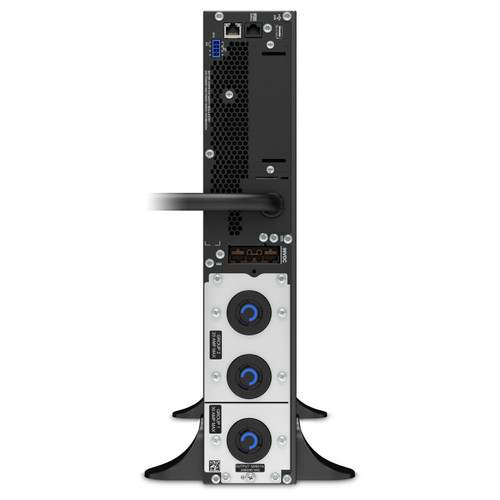
The SRT3000XLT is described as rack-mounted with a kit, with a mounting position listed as vertical and a front-mount preference at the lower position. Its listed dimension is 17.01 in (43.2 cm) — this appears to correspond to depth or width, but rack height (U) is not explicitly stated in the provided specs. The unit weighs 69.00 lb (31.3 kg). Input connection is a NEMA L6-20P plug on a 10 ft (3.05 m) cord, and output receptacles are (2) NEMA L6-20R and (1) NEMA L6-30R. Color is black.
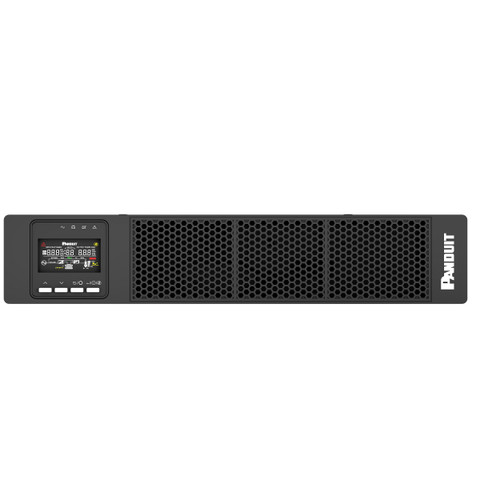
The Panduit U03N12L is explicitly rated as a 2U rackmount unit with an overall height of 3.4 in (86.5 mm) and width of 17.3 in (440 mm). Depth is not specified in the provided data. Weight is not listed in the provided specifications. Output and input receptacle types are not specified in the provided data.
The U03N12L offers a confirmed 2U rack height — useful for high-density deployments. The SRT3000XLT's rack height is not stated in its provided specs, and its weight of 69 lb is a notable installation consideration. The SRT3000XLT provides explicit NEMA receptacle detail (L6-20P in, L6-20R/L6-30R out) for 208V/240V environments, while the U03N12L's connector types are absent from provided data.
Which unit offers stronger battery management, runtime extensibility, and remote monitoring capabilities?
The SRT3000XLT ships with one included battery module providing 96V / 497 VAh runtime capacity with a rated recharge time of 3 hours. Battery life is specified at 3–5 years. Critically, APC documents a structured runtime extension path: up to 10 additional SRT96BP battery packs can be added, scaling runtime capacity from 1,491 VAh (1 pack) up to 10,437 VAh (10 packs). Replacement batteries are identified as APCRBC152 and SRT96RMBPUS. The alarm system provides audible and visible alerts prioritized by severity. The provided specs do not describe a network management card or SNMP interface for the SRT3000XLT.
The Panduit U03N12L specifies hot-swappable sealed lead-acid batteries — meaning battery replacement can be performed without powering down the load. It includes a network management card slot with SNMP support and a front-panel LCD displaying real-time load and runtime data. Runtime extensibility options and replacement battery part numbers are not provided in the available specifications. Recharge time and battery voltage are also not listed.
The SRT3000XLT offers a well-documented, scalable runtime extension system with quantified VAh increments per added pack. The U03N12L's hot-swap capability is a meaningful operational advantage for environments requiring zero-downtime battery maintenance. The U03N12L's built-in SNMP management card slot is specified; the SRT3000XLT's management interface is not described in the provided specs.
Which should you choose: the SRT3000XLT or the U03N12L?
Our take: The SRT3000XLT is the stronger choice when confirmed double conversion topology, quantified runtime scalability, and explicit output receptacle configuration are the primary requirements. APC documents sub-2% THD versus Panduit's sub-3%, a structured battery extension path scaling from 497 VAh base to over 10,000 VAh with up to ten external packs, and specific NEMA L6-20R/L6-30R output receptacles suited to 208V/240V data center PDUs. The U03N12L holds advantages where operational serviceability and integrated remote monitoring matter most: its hot-swappable batteries allow maintenance without load interruption, its sub-1ms transfer time is stated (topology unconfirmed), and a native SNMP management card slot is included — neither feature is confirmed in the SRT3000XLT's provided specs. Buyers managing distributed or unattended sites lean toward the U03N12L's monitoring posture; buyers with confirmed double conversion requirements and planned runtime extension lean toward the SRT3000XLT.
Side-by-Side Comparison
Spec-for-spec, from manufacturer data.
| Specification | APC by Schneider Electric SRT3000XLT | Panduit U03N12L |
|---|---|---|
| Rated Capacity (VA) | 3000VA | 3000VA |
| Rated Power (W) | 2700W | 2700W |
| UPS Topology | Double Conversion Online | Not specified in provided specs |
| Output Waveform | Sine wave | Pure Sine Wave |
| Total Harmonic Distortion | <2% | <3% at full load |
| Transfer Time | 0ms (double conversion) | <1ms |
| Input Voltage (Main) | 208V (also 240V) | 160–290V (AVR range) |
| Output Voltage | 208V or 240V (configurable) | Not specified in provided specs |
| Input Connection | NEMA L6-20P | Not specified in provided specs |
| Output Receptacles | (2) NEMA L6-20R, (1) NEMA L6-30R | Not specified in provided specs |
| Form Factor / Rack Height | Rack-mounted with kit (U not specified) | 2U Rackmount |
| Dimensions | 17.01 in (43.2 cm) listed | 17.3" W x 3.4" H (440 x 86.5mm) |
| Weight | 69.00 lb (31.3 kg) | Not specified in provided specs |
| Battery Type | Lead-Acid | Hot-swappable sealed lead-acid |
| Runtime Extensibility | Up to 10x SRT96BP packs (up to 10,437 VAh) | Not specified in provided specs |
| Network Management | Not specified in provided specs | SNMP card slot (included) |
| Recharge Time | 3 hours | Not specified in provided specs |
| Battery Life | 3–5 years | Not specified in provided specs |
| Acoustic Level | 55 dBA | Not specified in provided specs |
| Operating Humidity | 0–95% non-condensing | Not specified in provided specs |
Frequently Asked Questions
Which should you choose: the SRT3000XLT or the U03N12L?
The SRT3000XLT is the stronger choice when confirmed double conversion topology, quantified runtime scalability, and explicit output receptacle configuration are the primary requirements. APC documents sub-2% THD versus Panduit's sub-3%, a structured battery extension path scaling from 497 VAh base to over 10,000 VAh with up to ten external packs, and specific NEMA L6-20R/L6-30R output receptacles suited to 208V/240V data center PDUs. The U03N12L holds advantages where operational serviceability and integrated remote monitoring matter most: its hot-swappable batteries allow maintenance without load interruption, its sub-1ms transfer time is stated (topology unconfirmed), and a native SNMP management card slot is included — neither feature is confirmed in the SRT3000XLT's provided specs. Buyers managing distributed or unattended sites lean toward the U03N12L's monitoring posture; buyers with confirmed double conversion requirements and planned runtime extension lean toward the SRT3000XLT.
Can either UPS extend runtime by adding external battery modules?
Yes, the SRT3000XLT explicitly supports up to ten SRT96BP external battery packs, with documented runtime increments from 1,491 VAh (one pack) to 10,437 VAh (ten packs). The Panduit U03N12L's provided specifications do not describe an external battery extension option or compatible external battery modules.
Which unit is easier to maintain in a live production environment?
The Panduit U03N12L specifies hot-swappable sealed lead-acid batteries, meaning battery replacement does not require shutting down the protected load. The SRT3000XLT does not list hot-swap battery capability in its provided specifications, though it does identify replacement battery part numbers (APCRBC152, SRT96RMBPUS) for planned maintenance.
Does either UPS include built-in network management or SNMP support?
The Panduit U03N12L includes a network management card slot with SNMP support and a front-panel LCD for real-time load and runtime monitoring. The SRT3000XLT's provided specifications do not describe a network management card slot or SNMP interface; buyers requiring remote monitoring should verify APC's available management card options separately.
More UPS Comparisons
- APC by Schneider Electric SMT3000RMI2U vs Vertiv GXT5-3000LVRT2UXL
- APC by Schneider Electric SMT3000RMI2U vs Panduit U03N11L
- APC by Schneider Electric SMT3000RMI2U vs Panduit U03N12L
- APC by Schneider Electric SMT3000RMI2U vs Panduit U03S12V
- APC by Schneider Electric SMT3000RMI2U vs APC by Schneider Electric SRT3000XLT
- APC by Schneider Electric SMT3000RMI2U vs APC by Schneider Electric SRT3000XLW-IEC
UPS Buying Guides
Get a Second Opinion on Your Camera Choice
Share your site layout, coverage goals, and budget. Our team will validate the camera selection, flag anything we would change, and recommend products that match the use case.