
APC by Schneider Electric SMX750I vs CyberPower PR750RTXL2UC: Specification Comparison
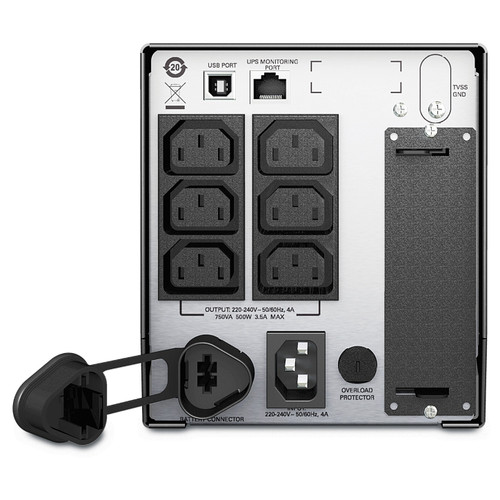
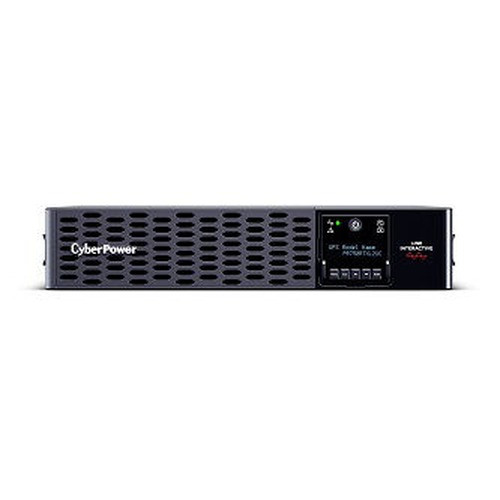
Both the APC SMX750I and CyberPower PR750RTXL2UC are 750 VA, 2U rack/tower line-interactive sine-wave UPS units — the core product class enterprise installers and IT buyers deploy to protect networking gear, servers, and critical edge equipment. However, a fundamental incompatibility exists before detailed comparison begins: the SMX750I is rated for 230 V AC output (international/EU markets), while the PR750RTXL2UC operates at 100–125 VAC (North American market). These units cannot serve the same installation. A buyer comparing them must be operating in the correct voltage region for each device.
In This Guide
- How do the two units compare on power capacity, watt rating, and voltage compatibility for your region?
- Which unit provides longer runtime and what do the battery specifications reveal about recharge and serviceability?
- What management, monitoring, and connectivity options does each unit offer for IT and facilities teams?
- Which should you choose: the SMX750I or the PR750RTXL2UC?
- Side-by-Side Specs
- FAQ
How do the two units compare on power capacity, watt rating, and voltage compatibility for your region?
Both units share a 750 VA nameplate rating, but their watt ratings and output voltages differ significantly. The APC SMX750I is rated at 600 W with a 230 V AC output, targeting European, Middle Eastern, and international installations. Its power factor is 0.80 (600 W ÷ 750 VA). The CyberPower PR750RTXL2UC is rated at 750 W with 100–125 VAC output, designed explicitly for North American infrastructure. Its output power factor is 1.0, meaning it delivers the full 750 W from its 750 VA capacity — a meaningful real-world advantage when powering resistive or modern active-PFC loads. Voltage compatibility is non-negotiable: the SMX750I must not be connected to a 120 V circuit, and the PR750RTXL2UC cannot serve a 230 V environment. Installers must confirm regional voltage requirements before any other evaluation.
Which unit provides longer runtime and what do the battery specifications reveal about recharge and serviceability?
The SMX750I edges out the PR750RTXL2UC at both load points in the runtime comparison. At full load (750 VA), the SMX750I provides 12 minutes versus the PR750RTXL2UC's 11.3 minutes — a modest 0.7-minute advantage. At half load, the SMX750I extends to 34 minutes compared to 28 minutes for the PR750RTXL2UC, a more meaningful 6-minute difference that matters during extended outages or staged shutdowns. Both units use sealed lead-acid battery chemistry. APC describes its battery as maintenance-free, sealed, and spill-proof; CyberPower specifies four sealed lead-acid cells and a typical recharge time of 3 hours — APC does not publish a recharge time in the provided specifications. CyberPower's battery count of 4 is disclosed; APC does not specify cell count in the provided data.
What management, monitoring, and connectivity options does each unit offer for IT and facilities teams?
The CyberPower PR750RTXL2UC carries a substantially richer management feature set per the provided specifications. It includes USB, Serial (1 port), dry contact, SNMP, relay, EPO (Emergency Power Off), and cloud connectivity as standard communication interfaces, plus CyberPower's PowerPanel® Business management software and optional RMCARD205 for full remote management. A multifunction LCD display provides local status. It also specifies audible alarms for five conditions: battery mode, low battery, overload, overcharge, and overheat. The APC SMX750I's provided specifications do not enumerate communication ports, management software, LCD, or audible alarm details. Buyers requiring documented management capability — particularly SNMP, EPO, or cloud monitoring — will find the PR750RTXL2UC's spec sheet more complete. APC's SMX platform is known to support network management cards, but no such specifications are present in the data provided here.
Which should you choose: the SMX750I or the PR750RTXL2UC?
Our take: The SMX750I is the stronger choice when the deployment site requires 230 V AC infrastructure — it is the only option of the two that can legally and safely operate in that environment. For North American 120 V installations, the PR750RTXL2UC is the applicable unit, and on directly comparable specs it holds measurable advantages: a higher watt output (750 W vs 600 W), a power factor of 1.0 versus 0.80, and a documented management stack including SNMP, EPO, cloud connectivity, PowerPanel® Business software, and a multifunction LCD — none of which appear in the SMX750I's provided specifications. The PR750RTXL2UC also carries a stated 3-year warranty and a $400,000 connected equipment guarantee; equivalent figures are absent from the SMX750I spec sheet. Runtime at half load favors the SMX750I (34 min vs 28 min). In practice, these are region-specific products: cross-shopping them only makes sense if a buyer is evaluating international procurement options.
Side-by-Side Comparison
Spec-for-spec, from manufacturer data.
| Specification | APC by Schneider Electric SMX750I | CyberPower PR750RTXL2UC |
|---|---|---|
| VA Rating | 750 VA | 750 VA |
| Watt Rating | 600 W | 750 W |
| Power Factor | 0.80 | 1.0 |
| Topology | Line Interactive | Line Interactive |
| Waveform | Sine Wave | Sine Wave |
| Output Voltage | 230 V AC | 100–125 VAC ± 5% |
| Form Factor | 2U Rack/Tower | 2U Rack/Tower |
| Runtime — Full Load | 12 min | 11.3 min |
| Runtime — Half Load | 34 min | 28 min |
| Battery Chemistry | Sealed Lead-Acid | Sealed Lead-Acid |
| Battery Recharge Time | — | 3 hours |
| Battery + Surge Outlets | 10 | 8 |
| Critical Load Outlets | — | 4 x NEMA 5-15R |
| Communication Interfaces | — | USB, Serial, SNMP, Relay, EPO, Cloud |
| Management Software | — | PowerPanel® Business |
| Warranty | — | 3 years |
| Connected Equipment Guarantee | — | $400,000 |
| Surge Suppression | — | 2430 J |
| Audible Noise | — | 52.5 dB |
| Weight | 48.50 lb (22.0 kg) | 24.09 kg (53.1 lb) |
Frequently Asked Questions
Which should you choose: the SMX750I or the PR750RTXL2UC?
The SMX750I is the stronger choice when the deployment site requires 230 V AC infrastructure — it is the only option of the two that can legally and safely operate in that environment. For North American 120 V installations, the PR750RTXL2UC is the applicable unit, and on directly comparable specs it holds measurable advantages: a higher watt output (750 W vs 600 W), a power factor of 1.0 versus 0.80, and a documented management stack including SNMP, EPO, cloud connectivity, PowerPanel® Business software, and a multifunction LCD — none of which appear in the SMX750I's provided specifications. The PR750RTXL2UC also carries a stated 3-year warranty and a $400,000 connected equipment guarantee; equivalent figures are absent from the SMX750I spec sheet. Runtime at half load favors the SMX750I (34 min vs 28 min). In practice, these are region-specific products: cross-shopping them only makes sense if a buyer is evaluating international procurement options.
Can I use the APC SMX750I in the United States on a standard 120 V outlet?
No. The SMX750I is specified with a 230 V AC output and is designed for international markets operating at that voltage. Connecting it to a standard North American 120 V circuit is not supported by the provided specifications and would be unsafe. For a 120 V environment, the CyberPower PR750RTXL2UC — rated at 100–125 VAC — is the appropriate unit of the two.
Which UPS gives me longer battery runtime during a power outage?
The APC SMX750I provides longer runtime at both load levels per the supplied specs: 12 minutes at full load (vs 11.3 min) and 34 minutes at half load (vs 28 min). The half-load difference of 6 minutes is the more operationally significant figure for staged shutdowns. Note that runtime comparisons are only meaningful within the same voltage region — these two units are not interchangeable across 120 V and 230 V environments.
Does the CyberPower PR750RTXL2UC support SNMP and remote monitoring out of the box?
The PR750RTXL2UC's provided specifications list SNMP as a standard communication interface alongside USB, serial, dry contact, relay, EPO, and cloud connectivity, with PowerPanel® Business software included. Full remote management is available with the optional RMCARD205 card. The APC SMX750I's provided specifications do not enumerate SNMP, management software, or remote monitoring capabilities, so a direct comparison on this dimension cannot be made from the available data.
More UPS Comparisons
- APC by Schneider Electric SMT750C vs CyberPower PR750RTXL2UC
- APC by Schneider Electric SMT750C vs Vertiv GXT5-750LVRT2UXL
- APC by Schneider Electric SMT750C vs CyberPower PR750LCDRT1U
- APC by Schneider Electric SMT750C vs CyberPower AVRG750U
- APC by Schneider Electric SMT750C vs APC by Schneider Electric SMT750CUS
- APC by Schneider Electric SMT750CUS vs CyberPower PR750RTXL2UC
UPS Buying Guides
Get a Second Opinion on Your Camera Choice
Share your site layout, coverage goals, and budget. Our team will validate the camera selection, flag anything we would change, and recommend products that match the use case.