
APC by Schneider Electric SMX3000RMHV2U vs Panduit U03S12L: Specification Comparison
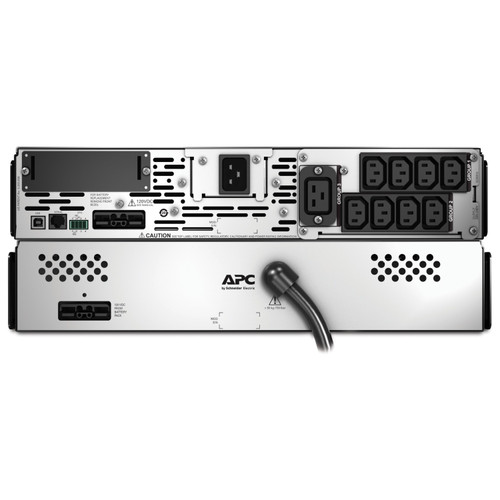
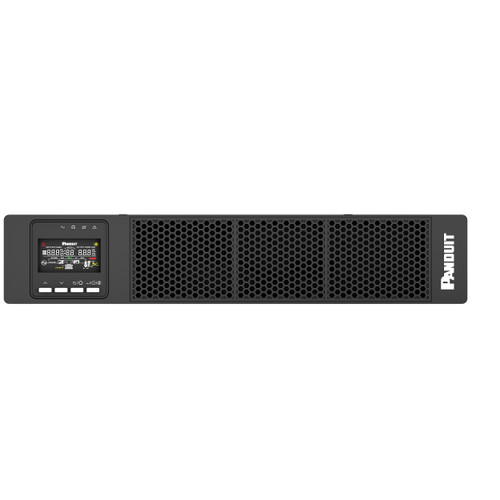
Both the APC SMX3000RMHV2U and the Panduit U03S12L are 3 kVA / 2.7 kW rack-mount UPS units targeting the same power-protection tier. The APC is a Line-Interactive unit with traditional VRLA-class design, while the Panduit is an Online Double-Conversion unit with a Lithium-Ion battery under the SteadySine brand. Buyers evaluating either for a server room, edge deployment, or data-center row will find both occupy a 2U rack slot and deliver identical rated output — making topology, battery technology, and management depth the defining differentiators.
In This Guide
- Which topology and power-quality architecture better protects sensitive loads?
- How do battery type, expected service life, and hot-swap capability compare?
- Which unit offers broader remote monitoring and integration options?
- Which should you choose: the SMX3000RMHV2U or the U03S12L?
- Side-by-Side Specs
- FAQ
Which topology and power-quality architecture better protects sensitive loads?
The SMX3000RMHV2U uses Line-Interactive topology with Automatic Voltage Regulation (AVR). In normal operation, utility power passes through the UPS with AVR correction; the inverter engages only on a true outage. APC specifies a hold time of 2–10 ms and a crest factor of 3:1, meaning the unit can handle loads with high inrush current. Output is a true sine wave at 208–240 V. Surge energy rating is 645 J with an additional dedicated surge-protection stage.
The U03S12L uses Online Double-Conversion topology. In this architecture the load is always powered from the inverter; utility power continuously charges the battery through a rectifier, so transfer time is zero — there is no switchover event at all. This eliminates the 2–10 ms transfer window present in the APC. The Panduit spec sheet does not publish a crest factor, surge joule rating, or hold-time figure. Output is 230 V AC. For loads that are intolerant of any voltage transient, the double-conversion architecture is the more robust design by definition.
How do battery type, expected service life, and hot-swap capability compare?
The SMX3000RMHV2U does not specify battery chemistry, hot-swap capability, or battery service life in the provided specifications. APC Smart-UPS X units typically use VRLA (valve-regulated lead-acid) batteries, but no chemistry, replacement interval, or hot-swap status is stated in the supplied spec data, so no claim can be made here.
The U03S12L specifies a Lithium-Ion battery with a stated service life of 10+ years and confirmed hot-swap capability. Li-ion batteries carry a significantly lower weight penalty and retain capacity better across wide temperature ranges than VRLA equivalents. The operating temperature range is documented as -5 °C to +45 °C. Hot-swap means the battery can be replaced without taking the load offline, which is a concrete operational advantage the Panduit's spec explicitly supports and the APC's spec does not address.
Which unit offers broader remote monitoring and integration options?
The SMX3000RMHV2U specifies audible alarms and Emergency Power Off (EPO) as its disclosed management features. No network management card, SNMP interface, or software platform is listed in the provided specifications. APC Smart-UPS X units typically support optional NMC cards, but because no such spec is supplied here, no claim about network management can be made for this product.
The U03S12L specifies built-in SNMP, Modbus TCP, and a Web GUI as native interfaces, with compatibility with Panduit's SmartZone monitoring platform. These are documented in the provided spec data. For environments already running SmartZone infrastructure — common in enterprise MTDC and edge deployments — the Panduit integrates without additional cards or licenses. The absence of a corresponding management spec for the APC means buyers requiring verified out-of-box network visibility have only the Panduit's spec to rely on from the data provided.
Which should you choose: the SMX3000RMHV2U or the U03S12L?
Our take: The U03S12L is the stronger choice when zero transfer time, long-life Lithium-Ion batteries, and built-in network management are required from day one. The double-conversion topology eliminates the 2–10 ms switchover window that the SMX3000RMHV2U carries under its Line-Interactive design, and the Panduit's Li-ion battery targets 10+ years of service versus no battery-life figure stated for the APC. Hot-swap is confirmed on the U03S12L; the APC spec does not address it. The SMX3000RMHV2U has a documented efficiency of 98.5%, a 645 J surge rating, a 3:1 crest factor for high-inrush loads, and an EPO circuit — specifications absent from the Panduit data. Buyers with high-inrush or surge-sensitive loads, or those needing a documented EPO terminal, should weigh the APC's concrete specs in those areas. The Panduit is best suited to data-center and enterprise MTDC environments with existing SmartZone infrastructure; the APC suits facilities requiring a proven surge and EPO specification.
Side-by-Side Comparison
Spec-for-spec, from manufacturer data.
| Specification | APC by Schneider Electric SMX3000RMHV2U | Panduit U03S12L |
|---|---|---|
| Topology | Line-Interactive | Online Double-Conversion |
| Power Capacity | 3 kVA / 2700 W | 3 kVA / 2700 W |
| Form Factor | Rack-Mount | 2U Rack-Mount |
| Output Voltage Range | 208–240 V | 230 V AC |
| Input Voltage / Frequency | 50/60 Hz | 230 V AC Single-Phase |
| Transfer Time | 2–10 ms | Zero (Double Conversion) |
| Waveform | Sine Wave | — |
| Efficiency | 98.5% | High-Efficiency Design (no figure stated) |
| Surge Energy Rating | 645 J | — |
| Crest Factor | 3:1 | — |
| AVR | Yes | — |
| EPO | Yes | — |
| Battery Type | — | Lithium-Ion |
| Battery Service Life | — | 10+ Years |
| Hot-Swap Battery | — | Yes |
| Network Management | — | SNMP, Modbus TCP, Web GUI, SmartZone |
| Operating Temperature | — | -5°C to +45°C |
| Audible Alarm | Yes | — |
| Noise Level | 55 dB | — |
| Dimensions (H × W) | — | 3.4 in × 17.3 in (86.5 × 440 mm) |
Frequently Asked Questions
Which should you choose: the SMX3000RMHV2U or the U03S12L?
The U03S12L is the stronger choice when zero transfer time, long-life Lithium-Ion batteries, and built-in network management are required from day one. The double-conversion topology eliminates the 2–10 ms switchover window that the SMX3000RMHV2U carries under its Line-Interactive design, and the Panduit's Li-ion battery targets 10+ years of service versus no battery-life figure stated for the APC. Hot-swap is confirmed on the U03S12L; the APC spec does not address it. The SMX3000RMHV2U has a documented efficiency of 98.5%, a 645 J surge rating, a 3:1 crest factor for high-inrush loads, and an EPO circuit — specifications absent from the Panduit data. Buyers with high-inrush or surge-sensitive loads, or those needing a documented EPO terminal, should weigh the APC's concrete specs in those areas. The Panduit is best suited to data-center and enterprise MTDC environments with existing SmartZone infrastructure; the APC suits facilities requiring a proven surge and EPO specification.
Does the SMX3000RMHV2U or the U03S12L provide cleaner power to sensitive servers?
The U03S12L's Online Double-Conversion topology delivers continuously inverted, regulated power to the load with zero transfer time, meaning the load never sees raw utility power or a switchover gap. The SMX3000RMHV2U uses Line-Interactive topology with a 2–10 ms transfer window. For the most sensitive servers and storage, double conversion provides superior isolation from utility anomalies.
Which unit will have lower long-term battery replacement costs?
The U03S12L specifies a Lithium-Ion battery rated for 10+ years of service life and supports hot-swap replacement without downtime. The SMX3000RMHV2U does not disclose battery chemistry, rated service life, or hot-swap status in the provided specifications, so a direct cost comparison cannot be made from the available data.
Can either unit be monitored over the network without buying additional accessories?
Based on the provided specifications, the U03S12L includes native SNMP, Modbus TCP, and a Web GUI, plus SmartZone platform compatibility — all built in. The SMX3000RMHV2U's provided spec data does not list any network management interface, so network monitoring capability for that unit cannot be confirmed from the supplied specifications.
More UPS Comparisons
- APC by Schneider Electric SMT3000RMT2U vs Panduit U03S12L
- APC by Schneider Electric SMT3000RMT2U vs Vertiv GXT5-3KL620RT2UXL
- APC by Schneider Electric SMT3000RMT2U vs Vertiv GXT5-3KL630RT2UXL
- APC by Schneider Electric SMT3000RMT2U vs Panduit U03N11V
- APC by Schneider Electric SMT3000RMT2U vs APC by Schneider Electric SMTL3000RM2UCNC
- APC by Schneider Electric SMT3000RMT2U vs APC by Schneider Electric SMX3000HV
UPS Buying Guides
Get a Second Opinion on Your Camera Choice
Share your site layout, coverage goals, and budget. Our team will validate the camera selection, flag anything we would change, and recommend products that match the use case.