
APC by Schneider Electric SMX3000LVUS vs Panduit U03S12L: Specification Comparison
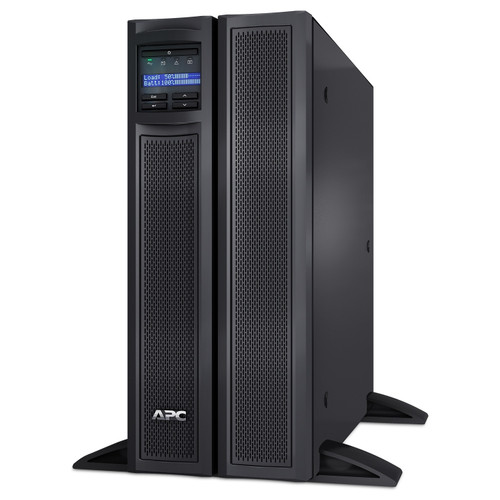
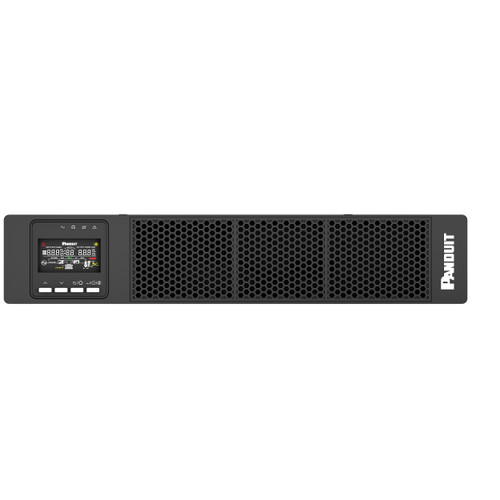
Both the APC SMX3000LVUS and the Panduit U03S12L are 3 kVA rack-mount uninterruptible power supplies rated at 2.7 kW output, placing them in the same capacity tier and general device class. However, they differ sharply in topology, input voltage standard, battery chemistry, and intended deployment region, making this a comparison of two architecturally distinct approaches to 3 kVA power protection for the installer or IT buyer evaluating which platform fits a specific site requirement.
In This Guide
- What level of power protection does each UPS provide, and how does topology affect runtime and output quality?
- Which unit is compatible with the site's electrical infrastructure, and what outlet types does each support?
- How do the battery technology, management interfaces, and serviceability features compare for ongoing data-center operation?
- Which should you choose: the SMX3000LVUS or the U03S12L?
- Side-by-Side Specs
- FAQ
What level of power protection does each UPS provide, and how does topology affect runtime and output quality?
The APC SMX3000LVUS uses Line-Interactive topology, which corrects voltage sags and surges through an automatic voltage regulator (AVR) without switching to battery, and delivers a true sine-wave output (specified). Battery is invoked only when input falls outside the regulated range. Efficiency is specified at 98%. Transfer time to battery is not stated in the provided specs.
The Panduit U03S12L uses Online Double Conversion topology under its SteadySine™ line. In double conversion, the load is continuously powered by the inverter; input AC is converted to DC and back to AC at all times, providing zero transfer time (explicitly specified) and complete isolation from all input disturbances — sags, surges, frequency variation, and noise. Efficiency is described only as 'High-Efficiency Design'; a numeric figure is not provided in the supplied specs.
For loads sensitive to any power anomaly — high-density servers, storage arrays, or precision network equipment — double conversion's zero transfer time and continuous inverter output offer a stronger protection profile. Line-Interactive at 98% efficiency will run cooler and dissipate less heat, but the load does see the raw AC waveform (regulated) during normal operation.
Which unit is compatible with the site's electrical infrastructure, and what outlet types does each support?
The APC SMX3000LVUS is designed for North American single-phase power: input operating voltage 100–127 V AC, plug NEMA L5-30P (30 A twist-lock), output 100–127 V AC. It provides 10 AC outlets across three receptacle types — NEMA 5-15R (standard 15 A), NEMA L5-20R (20 A twist-lock), and NEMA L5-30R (30 A twist-lock) — offering flexibility for mixed connected equipment. Surge energy rating is specified at 540 J. Input frequency is 50/60 Hz.
The Panduit U03S12L is designed for 230 V AC single-phase input and output, aligning it with international or European electrical standards. No plug type, outlet quantity, outlet receptacle types, or surge energy rating are provided in the supplied specs. Buyers in 120 V North American environments cannot use this unit without a step-up transformer, which is not specified or implied.
Voltage compatibility is a hard deployment constraint. These two units serve different grid standards and are not interchangeable on a given circuit without additional infrastructure.
How do the battery technology, management interfaces, and serviceability features compare for ongoing data-center operation?
The APC SMX3000LVUS does not specify its battery chemistry in the provided specs. Monitoring and management interfaces are not listed in the supplied data. Audible alarms are present with two specified modes: on-battery and low-battery. Form factor is 4U rack/tower, and noise level is specified at 55 dB.
The Panduit U03S12L uses Lithium-Ion batteries with a stated life of 10+ years — significantly longer than the VRLA batteries typical of comparably priced line-interactive UPS units (APC's battery chemistry and life are not stated in the provided specs, so direct comparison on that point is not possible from spec alone). Hot-swap battery replacement is specified. Management interfaces include SNMP, Modbus TCP, and a Web GUI, and the unit is listed as SmartZone™ compatible for Panduit's infrastructure monitoring platform. Form factor is 2U, saving 2U of rack space versus the SMX3000LVUS. Operating temperature range is specified at -5 °C to +45 °C; the APC unit's operating temperature is not provided in the supplied specs.
For managed data-center and edge deployments requiring SNMP integration, longer battery intervals between replacements, and hot-swap serviceability, the Panduit unit provides more specified features in those categories. The APC unit's management and battery service details are absent from the provided specs.
Which should you choose: the SMX3000LVUS or the U03S12L?
Our take: The SMX3000LVUS is the stronger choice when the deployment is in a 100–127 V North American environment and the buyer prioritizes a fully specified outlet mix, surge protection (540 J), and a proven line-interactive platform at 98% efficiency — particularly where budget and heat load management are priorities. The U03S12L is the stronger choice for 230 V international or data-center deployments where zero-transfer-time double-conversion protection, Lithium-Ion batteries rated 10+ years, hot-swap serviceability, and SNMP/Modbus TCP/Web GUI management are required. Key spec deltas: topology (line-interactive vs. double conversion / zero transfer time), input voltage (100–127 V vs. 230 V — a hard incompatibility on the same circuit), and management interfaces (none specified for APC vs. SNMP + Modbus TCP + Web GUI for Panduit). Buyers must resolve voltage compatibility before any other evaluation criterion applies.
Side-by-Side Comparison
Spec-for-spec, from manufacturer data.
| Specification | APC by Schneider Electric SMX3000LVUS | Panduit U03S12L |
|---|---|---|
| UPS Topology | Line-Interactive | Online Double Conversion |
| Output Capacity | 3 kVA / 2700 W | 3 kVA / 2700 W |
| Input Voltage | 100–127 V AC | 230 V AC |
| Output Voltage | 100–127 V AC | 230 V AC |
| Input Plug | NEMA L5-30P | — |
| AC Outlets | 10 (NEMA 5-15R, L5-20R, L5-30R) | — |
| Transfer Time | — | Zero (Double Conversion) |
| Waveform Output | Sine Wave | — |
| Efficiency | 98% | High-Efficiency Design (no figure stated) |
| Surge Energy Rating | 540 J | — |
| Battery Chemistry | — | Lithium-Ion |
| Battery Life | — | 10+ Years |
| Hot-Swap Battery | — | Yes |
| Management Interfaces | — | SNMP, Modbus TCP, Web GUI |
| Monitoring Platform | — | SmartZone™ Compatible |
| Form Factor | 4U Rack/Tower | 2U Rack-Mount |
| Operating Temperature | — | -5°C to +45°C |
| Noise Level | 55 dB | — |
Frequently Asked Questions
Which should you choose: the SMX3000LVUS or the U03S12L?
The SMX3000LVUS is the stronger choice when the deployment is in a 100–127 V North American environment and the buyer prioritizes a fully specified outlet mix, surge protection (540 J), and a proven line-interactive platform at 98% efficiency — particularly where budget and heat load management are priorities. The U03S12L is the stronger choice for 230 V international or data-center deployments where zero-transfer-time double-conversion protection, Lithium-Ion batteries rated 10+ years, hot-swap serviceability, and SNMP/Modbus TCP/Web GUI management are required. Key spec deltas: topology (line-interactive vs. double conversion / zero transfer time), input voltage (100–127 V vs. 230 V — a hard incompatibility on the same circuit), and management interfaces (none specified for APC vs. SNMP + Modbus TCP + Web GUI for Panduit). Buyers must resolve voltage compatibility before any other evaluation criterion applies.
Can I use either UPS on a standard North American 120 V wall circuit?
Only the APC SMX3000LVUS is specified for 100–127 V AC input with a NEMA L5-30P plug. The Panduit U03S12L requires 230 V AC single-phase input and cannot be connected to a 120 V North American circuit without a step-up transformer; no such accessory is specified.
Which unit is better suited for a managed data center requiring remote monitoring?
The Panduit U03S12L specifies SNMP, Modbus TCP, and a Web GUI interface, plus SmartZone™ compatibility. The APC SMX3000LVUS does not list any management interfaces in the provided specifications, so a direct comparison cannot be made from spec alone; buyers should verify APC's network management card options separately.
Is the Panduit U03S12L's Lithium-Ion battery a meaningful advantage over the APC unit?
The U03S12L specifies Lithium-Ion batteries with a stated life of 10+ years and hot-swap capability, which typically reduces replacement frequency and allows service without downtime. The APC SMX3000LVUS battery chemistry and expected life are not stated in the provided specifications, so a direct numerical comparison on battery longevity cannot be made from the data supplied.
More UPS Comparisons
- APC by Schneider Electric SMT3000RMT2U vs Panduit U03S12L
- APC by Schneider Electric SMT3000RMT2U vs Vertiv GXT5-3KL620RT2UXL
- APC by Schneider Electric SMT3000RMT2U vs Vertiv GXT5-3KL630RT2UXL
- APC by Schneider Electric SMT3000RMT2U vs Panduit U03N11V
- APC by Schneider Electric SMT3000RMT2U vs APC by Schneider Electric SMTL3000RM2UCNC
- APC by Schneider Electric SMT3000RMT2U vs APC by Schneider Electric SMX3000HV
UPS Buying Guides
Get a Second Opinion on Your Camera Choice
Share your site layout, coverage goals, and budget. Our team will validate the camera selection, flag anything we would change, and recommend products that match the use case.