
APC by Schneider Electric SMX3000LVUS vs Panduit U03N11V: Specification Comparison
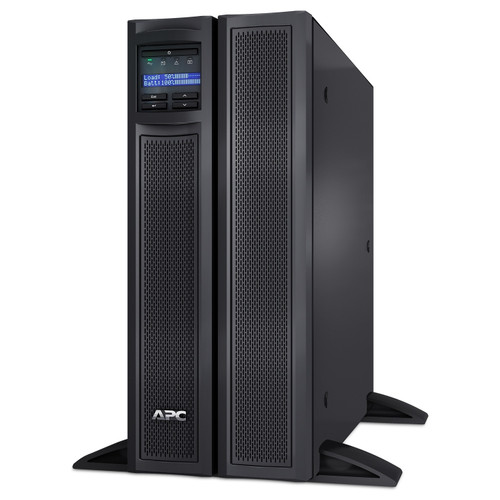
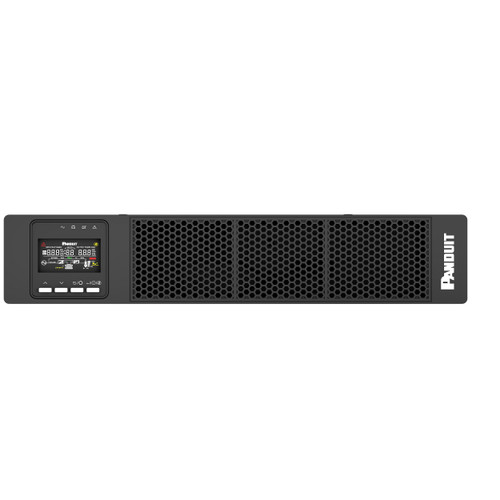
The APC SMX3000LVUS and Panduit U03N11V (SteadySine) are both rack-mount 3 kVA UPS units targeting small data centers, edge deployments, and enterprise infrastructure. The core trade-off is topology: the APC uses Line-Interactive conversion with a sine-wave output, while the Panduit employs Online Double-Conversion — a fundamental architectural difference affecting power conditioning quality, efficiency losses, and heat output. Buyers choosing between them are typically weighing APC's extensive outlet flexibility and published efficiency against Panduit's double-conversion isolation for sensitive loads.
In This Guide
Which UPS delivers cleaner, more isolated power to sensitive loads?
The Panduit U03N11V uses Online Double-Conversion (the spec sheet explicitly labels it 'On-line Double Conversion'), meaning AC input is continuously rectified to DC and re-inverted to AC. Load power is always drawn from the inverter — there is zero transfer time on utility failure and the output is electrically isolated from all input disturbances, including frequency excursions and sustained under/over-voltage events. This is the topology preferred for servers, storage arrays, and telecom equipment with zero-tolerance for microsecond interruptions.
The APC SMX3000LVUS is Line-Interactive. Under normal utility conditions the load is supplied directly through a buck-boost automatic voltage regulator; the inverter only takes over when voltage falls outside the 100–127 V operating window or utility fails entirely. APC specifies a sine-wave output waveform and a 50/60 Hz output frequency, so the output quality during battery transfer is high-grade. However, the brief transfer window (typically 2–4 ms, though APC does not publish this figure in the provided spec set) and the pass-through path under normal conditions mean it provides less electrical isolation than double-conversion.
For loads that are sensitive to frequency variation, conducted noise, or require certified zero-transfer-time operation, the Panduit's double-conversion topology is architecturally superior. The APC's line-interactive design is adequate for the vast majority of IT loads and is standard practice in SMB and mid-market deployments.
Which unit better matches real-world outlet and power distribution needs?
Both units are rated at 3 kVA capacity. The APC SMX3000LVUS specifies 2,700 W of real power output (a 0.9 power factor). The Panduit U03N11V does not disclose a watt rating or power factor in the provided specifications, so direct watt-output comparison is not possible from spec data alone.
Outlet flexibility is a clear APC differentiator. The SMX3000LVUS provides 10 AC outlets across three NEMA types: NEMA 5-15R (standard 15 A), NEMA L5-20R (locking 20 A), and NEMA L5-30R (locking 30 A), fed from a NEMA L5-30P input plug. This range accommodates diverse rack power distribution units, servers with 20 A IEC cords via adapters, and high-draw single devices on the 30 A locking outlets — all from a single UPS.
The Panduit U03N11V's outlet configuration is not disclosed in the provided specifications. Buyers cannot confirm outlet count, NEMA types, or input plug type from the available data without consulting the Panduit datasheet (referenced as /content/product-datasheets/U03N11V.pdf) directly.
Which unit is more practical to deploy in a shared or noise-sensitive environment?
APC publishes an efficiency rating of 98% for the SMX3000LVUS. This is high for a line-interactive design and translates directly to lower heat output and reduced operating cost over the unit's life. At 3 kVA, a 2% loss versus, say, a 5% loss means roughly 54 W less heat dissipated in the rack room continuously. The audible noise level is specified at 55 dB — audible in a quiet office but typical for a UPS of this class. Audible alarms are confirmed: on-battery and low-battery.
The Panduit U03N11V does not disclose an efficiency rating in the provided specifications. Online double-conversion topology is inherently less efficient than line-interactive — industry norms for double-conversion units at this power class typically range from 90–96% in standard mode (some offer an ECO/bypass mode to recover efficiency), but no such figure can be attributed to the U03N11V from spec data provided.
Physical form factor data is richer for the Panduit in the provided specs: 3.4 in (86.5 mm) height × 17.3 in (440 mm) width, indicating a 2U or compact rack profile. The APC SMX3000LVUS is specified as a 4U rack/tower unit. Buyers with tight rack-unit budgets should factor this in: the Panduit occupies significantly less vertical rack space if its depth and weight are compatible with the target rack.
Which should you choose: the SMX3000LVUS or the U03N11V?
Our take: The SMX3000LVUS is the stronger choice when outlet diversity, published efficiency, and acoustic transparency are the primary decision criteria. It specifies 2,700 W real power output (the U03N11V discloses no watt figure), a confirmed 98% efficiency rating (the U03N11V discloses none), and 10 outlets spanning three NEMA types versus the U03N11V's undisclosed outlet configuration. Conversely, the U03N11V's Online Double-Conversion topology provides a fundamental power-quality and zero-transfer-time advantage the SMX3000LVUS's line-interactive design cannot match on paper — and its 2U footprint beats the SMX3000LVUS's 4U form factor in space-constrained racks. Buyers protecting sensitive servers or storage in a data center or MTDC edge environment where continuous double-conversion isolation is required should lean toward the U03N11V pending full spec confirmation from Panduit's datasheet. Buyers in SMB, enterprise branch, or mixed-load environments will find the SMX3000LVUS the more transparent and fully specified option.
Side-by-Side Comparison
Spec-for-spec, from manufacturer data.
| Specification | APC by Schneider Electric SMX3000LVUS | Panduit U03N11V |
|---|---|---|
| UPS Topology | Line-Interactive | Online Double-Conversion |
| Capacity (VA) | 3,000 VA | 3,000 VA |
| Output Power (W) | 2,700 W | — |
| Output Waveform | Sine | — |
| Efficiency | 98% | — |
| Input Voltage Range | 100–127 V | 120 V (nominal) |
| Input Frequency | 50/60 Hz | — |
| Output Voltage Range | 100–127 V | — |
| Output Frequency | 50/60 Hz | — |
| AC Outlets | 10 | — |
| Outlet Types | NEMA 5-15R, L5-20R, L5-30R | — |
| Input Plug | NEMA L5-30P | — |
| Surge Energy Rating | 540 J | — |
| Audible Noise | 55 dB | — |
| Form Factor / Height | 4U Rack/Tower | 2U (~3.4 in / 86.5 mm) |
| Width | — | 17.3 in (440 mm) |
Frequently Asked Questions
Which should you choose: the SMX3000LVUS or the U03N11V?
The SMX3000LVUS is the stronger choice when outlet diversity, published efficiency, and acoustic transparency are the primary decision criteria. It specifies 2,700 W real power output (the U03N11V discloses no watt figure), a confirmed 98% efficiency rating (the U03N11V discloses none), and 10 outlets spanning three NEMA types versus the U03N11V's undisclosed outlet configuration. Conversely, the U03N11V's Online Double-Conversion topology provides a fundamental power-quality and zero-transfer-time advantage the SMX3000LVUS's line-interactive design cannot match on paper — and its 2U footprint beats the SMX3000LVUS's 4U form factor in space-constrained racks. Buyers protecting sensitive servers or storage in a data center or MTDC edge environment where continuous double-conversion isolation is required should lean toward the U03N11V pending full spec confirmation from Panduit's datasheet. Buyers in SMB, enterprise branch, or mixed-load environments will find the SMX3000LVUS the more transparent and fully specified option.
Is the SMX3000LVUS or U03N11V better for a server room with zero tolerance for power interruptions?
The Panduit U03N11V is better suited on topology alone: its Online Double-Conversion design means the load is always powered by the inverter, so there is no transfer delay when utility fails. The APC SMX3000LVUS is Line-Interactive, which involves a brief transfer to battery on outage — adequate for most IT gear but not architecturally equivalent to double-conversion for the most sensitive loads.
Does the APC SMX3000LVUS take up more rack space than the Panduit U03N11V?
Yes. The SMX3000LVUS is specified as a 4U rack/tower unit. The Panduit U03N11V is specified at 3.4 inches (86.5 mm) tall, which corresponds to a 2U profile. If rack unit space is constrained, the Panduit has a meaningful size advantage — though buyers should verify depth and weight from the Panduit datasheet before finalizing rack plans.
Can I confirm the Panduit U03N11V's watt output, outlet types, and efficiency before purchasing?
Not from the specifications provided here. The U03N11V spec set discloses topology (Online Double-Conversion), voltage class (120 V), dimensions, and application targets, but does not include watt output, power factor, outlet configuration, plug type, or efficiency rating. Buyers should obtain and review Panduit's published datasheet (referenced as U03N11V.pdf) before making a final purchasing decision.
More UPS Comparisons
- APC by Schneider Electric SMT3000RMT2U vs Panduit U03S12L
- APC by Schneider Electric SMT3000RMT2U vs Vertiv GXT5-3KL620RT2UXL
- APC by Schneider Electric SMT3000RMT2U vs Vertiv GXT5-3KL630RT2UXL
- APC by Schneider Electric SMT3000RMT2U vs Panduit U03N11V
- APC by Schneider Electric SMT3000RMT2U vs APC by Schneider Electric SMTL3000RM2UCNC
- APC by Schneider Electric SMT3000RMT2U vs APC by Schneider Electric SMX3000HV
UPS Buying Guides
Get a Second Opinion on Your Camera Choice
Share your site layout, coverage goals, and budget. Our team will validate the camera selection, flag anything we would change, and recommend products that match the use case.