
APC by Schneider Electric SMX3000LVNCUS vs Vertiv GXT5-3KL620RT2UXL: Specification Comparison
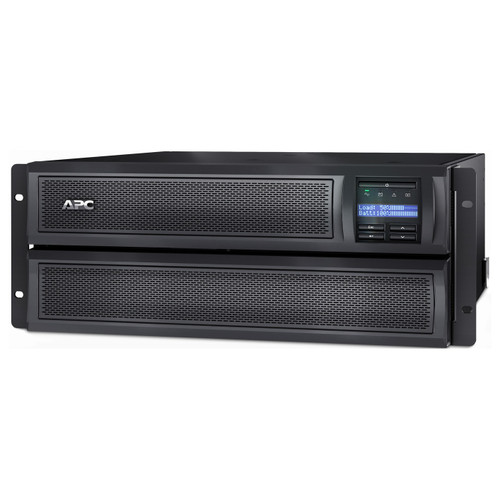
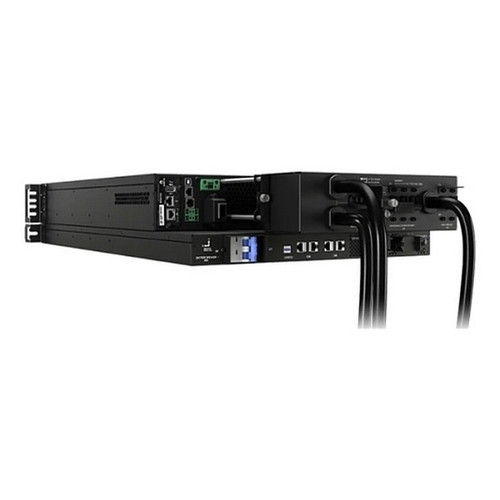
Both products are 3 kVA rack/tower UPS units designed for IT and network equipment protection, making them directly cross-shoppable in the same capacity class. The APC Smart-UPS X SMX3000LVNCUS is a 120 V line-interactive unit targeting standard North American single-phase loads, while the Vertiv GXT5-3KL620RT2UXL is a 208 V on-line double-conversion unit with L6-series twist-lock connections, aimed at higher-voltage rack environments. Buyers choosing between them will weigh topology, input/output voltage compatibility, power conversion efficiency, and management interface depth.
In This Guide
- How does each UPS protect power quality, and what does the topology difference mean for sensitive loads?
- What are the actual power ratings and input voltage requirements, and how do they affect deployment decisions?
- What remote monitoring, management interfaces, and certifications does each unit provide?
- Which should you choose: the SMX3000LVNCUS or the GXT5-3KL620RT2UXL?
- Side-by-Side Specs
- FAQ
How does each UPS protect power quality, and what does the topology difference mean for sensitive loads?
The SMX3000LVNCUS uses line-interactive topology with Automatic Voltage Regulation (AVR) and a sine-wave output. In normal operation, utility power passes through with AVR correction; the inverter engages only on outage. Output voltage THD is specified at 5%, and EMI/RFI noise filtering is rated at 55 dB. These figures indicate clean output suitable for most IT loads, but the inverter is not continuously active.
The GXT5-3KL620RT2UXL uses on-line double-conversion topology, meaning the load is powered exclusively from the inverter at all times—utility power never passes directly to the output. This delivers the highest available isolation from input disturbances. Output voltage THD is not specified in the provided data. Vertiv claims efficiency up to 98% in Active ECO Mode (a pass-through bypass mode) and up to 95% in full on-line mode. Double-conversion topology is the preferred choice for sensitive or mission-critical loads requiring complete isolation from input anomalies.
What are the actual power ratings and input voltage requirements, and how do they affect deployment decisions?
The SMX3000LVNCUS is rated 3 kVA / 2,700 W (power factor 0.9) with a 120 V output and an input operating range of 70–153 V at 50/60 Hz. Maximum output current is 15 A. The wide input voltage window (70–153 V) allows AVR to handle significant utility sag before switching to battery. Surge energy rating is 540 J. This unit requires a standard 120 V North American circuit.
The GXT5-3KL620RT2UXL is rated 3,000 VA / 3,000 W (unity power factor) with a 208 VAC nominal output. Input uses an L6-20P twist-lock plug. The input voltage range is described as variable based on output load rather than a fixed minimum/maximum window; no numeric low-voltage cutoff is provided in the supplied specs. Output receptacles are 2 × L6-15R and 2 × L6-20R, requiring compatible 208 V equipment or PDUs. Deployments must have a 208 V branch circuit, typical in larger data center or commercial environments.
What remote monitoring, management interfaces, and certifications does each unit provide?
The SMX3000LVNCUS includes built-in web-based management and Emergency Power Off (EPO) as standard features. Audible alarms are present. No additional detail on SNMP protocol support, communication card slots, or specific management software is provided in the supplied specifications.
The GXT5-3KL620RT2UXL provides USB, RS485, RS232, a terminal block, and an external battery connector as standard interfaces. SNMP and web management require the optional Vertiv RDU101 communications card (not included). A full-color graphic LCD with gravity-sensing orientation is standard on the control panel, adapting its display for rack or tower orientation. The unit carries ENERGY STAR 2.0 certification, UL1778, c-UL, RoHS2, and REACH listings. No certifications are listed in the provided specs for the SMX3000LVNCUS.
Which should you choose: the SMX3000LVNCUS or the GXT5-3KL620RT2UXL?
Our take: The GXT5-3KL620RT2UXL is the stronger choice when the deployment requires 208 V circuits, a unity power factor (3,000 W vs. 2,700 W on the SMX3000LVNCUS), and the highest power isolation via on-line double-conversion topology. Three concrete spec deltas drive this: the Vertiv delivers 300 W more usable power at unity PF compared to the APC's 2,700 W at 0.9 PF; its on-line double-conversion architecture keeps the load fully isolated from utility anomalies at all times versus the APC's line-interactive pass-through with AVR; and its up to 98% ECO-mode efficiency and ENERGY STAR 2.0 certification address operating cost concerns absent from the APC's provided specs. Conversely, the SMX3000LVNCUS is the correct fit for 120 V North American environments with standard NEMA connections, where its wide 70–153 V input window and built-in web management without an optional card add deployment simplicity.
Side-by-Side Comparison
Spec-for-spec, from manufacturer data.
| Specification | APC by Schneider Electric SMX3000LVNCUS | Vertiv GXT5-3KL620RT2UXL |
|---|---|---|
| Topology | Line-Interactive | On-line Double-Conversion |
| VA Rating | 3,000 VA | 3,000 VA |
| Watt Rating | 2,700 W | 3,000 W |
| Power Factor | 0.90 | 1.00 |
| Input Voltage (Nominal) | 120 V | 208 V |
| Input Voltage Range | 70–153 V | Variable (not specified) |
| Output Voltage | 120 V | 208 V |
| Input/Output Connection Type | Standard NEMA (120 V) | L6-20P in / L6-15R & L6-20R out |
| Input Frequency | 50/60 Hz | — |
| Output Waveform | Sine | — |
| Output Voltage THD | 5% | — |
| Efficiency | — | Up to 98% ECO / up to 95% on-line |
| EMI/RFI Filtering | 55 dB | — |
| Surge Energy Rating | 540 J | — |
| Web/SNMP Management | Web-based (built-in) | Requires optional Vertiv RDU101 card |
| Emergency Power Off (EPO) | Yes | — |
| AVR | Yes | N/A (double-conversion) |
| Certifications | — | ENERGY STAR 2.0, UL1778, c-UL, RoHS2, REACH |
| Form Factor | Rack/Tower | Rack/Tower |
| Weight | — | 65.1 lb |
| Dimensions (H × W × D) | — | 3.4 × 16.9 × 21.3 in |
| Operating Temperature | — | +32 to +122 °F (0 to 50 °C) |
Frequently Asked Questions
Which should you choose: the SMX3000LVNCUS or the GXT5-3KL620RT2UXL?
The GXT5-3KL620RT2UXL is the stronger choice when the deployment requires 208 V circuits, a unity power factor (3,000 W vs. 2,700 W on the SMX3000LVNCUS), and the highest power isolation via on-line double-conversion topology. Three concrete spec deltas drive this: the Vertiv delivers 300 W more usable power at unity PF compared to the APC's 2,700 W at 0.9 PF; its on-line double-conversion architecture keeps the load fully isolated from utility anomalies at all times versus the APC's line-interactive pass-through with AVR; and its up to 98% ECO-mode efficiency and ENERGY STAR 2.0 certification address operating cost concerns absent from the APC's provided specs. Conversely, the SMX3000LVNCUS is the correct fit for 120 V North American environments with standard NEMA connections, where its wide 70–153 V input window and built-in web management without an optional card add deployment simplicity.
Can I use the GXT5-3KL620RT2UXL on a standard 120 V outlet?
No. Based on the provided specifications, the GXT5-3KL620RT2UXL is designed for 208 VAC nominal input and output using L6-series twist-lock connections. It requires a dedicated 208 V branch circuit. The SMX3000LVNCUS is the 120 V option between these two units.
Does the SMX3000LVNCUS or the GXT5-3KL620RT2UXL provide better power isolation for sensitive servers?
The GXT5-3KL620RT2UXL's on-line double-conversion topology provides complete electrical isolation: the load runs entirely from the inverter and never sees raw utility power. The SMX3000LVNCUS is line-interactive, meaning utility power passes through to the load during normal operation with AVR correction—offering lower isolation. For the most sensitive server or storage loads, double-conversion topology is the stronger choice.
Is SNMP management included out of the box on both units?
Not on the GXT5-3KL620RT2UXL—SNMP and web management require the separately purchased optional Vertiv RDU101 communications card. The SMX3000LVNCUS lists web-based management as a standard feature, though the specific protocol support (SNMP version, NMS compatibility) is not detailed in the provided specifications.
More UPS Comparisons
- APC by Schneider Electric SMT3000RMT2U vs Panduit U03S12L
- APC by Schneider Electric SMT3000RMT2U vs Vertiv GXT5-3KL620RT2UXL
- APC by Schneider Electric SMT3000RMT2U vs Vertiv GXT5-3KL630RT2UXL
- APC by Schneider Electric SMT3000RMT2U vs Panduit U03N11V
- APC by Schneider Electric SMT3000RMT2U vs APC by Schneider Electric SMTL3000RM2UCNC
- APC by Schneider Electric SMT3000RMT2U vs APC by Schneider Electric SMX3000HV
UPS Buying Guides
Get a Second Opinion on Your Camera Choice
Share your site layout, coverage goals, and budget. Our team will validate the camera selection, flag anything we would change, and recommend products that match the use case.