
APC by Schneider Electric SMX3000LVNCUS vs Panduit U03N11V: Specification Comparison
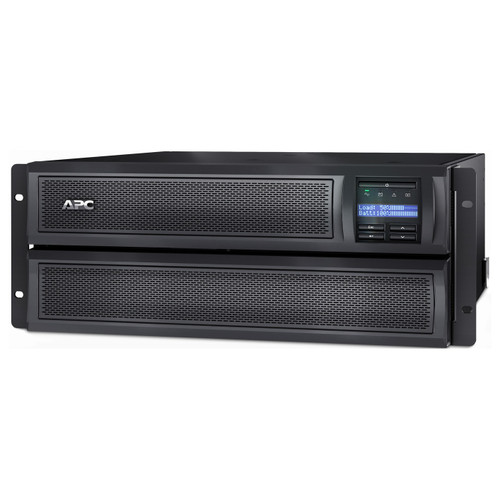
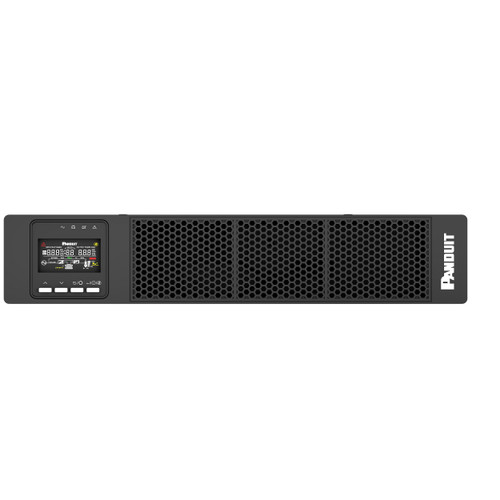
Both units target the 3 kVA rack-mount UPS segment, making them plausible cross-shop candidates for a data-center or edge-room buyer. The APC SMX3000LVNCUS is a Line-Interactive unit with published runtime, waveform, and protection specs. The Panduit U03N11V (SteadySine) is listed as an Online Double-Conversion unit at 3 kVA/120 V. Because topology, output power, and form factor differ meaningfully, a direct comparison is meaningful for buyers choosing between Line-Interactive and Online Double-Conversion at the same nominal kVA rating.
In This Guide
- Which UPS topology delivers cleaner, more reliable power to connected equipment?
- How do rated capacity, surge protection, and power management features compare?
- Which unit offers better remote monitoring, alerting, and ecosystem integration?
- Which should you choose: the SMX3000LVNCUS or the U03N11V?
- Side-by-Side Specs
- FAQ
Which UPS topology delivers cleaner, more reliable power to connected equipment?
The SMX3000LVNCUS uses Line-Interactive topology with a true sine-wave output and a published THD of 5% under load. Automatic Voltage Regulation (AVR) corrects sags and surges without switching to battery, extending battery life. The unit handles an input voltage range of 70–153 V before engaging the battery, a wide window that suits older or variable building power.
The Panduit U03N11V is specified as an Online Double-Conversion UPS. In double-conversion topology, incoming AC is continuously rectified to DC and re-inverted to AC, so the output is electrically isolated from the input at all times—zero transfer time to battery and inherently lower output distortion. No THD figure, input voltage window, or AVR detail is provided in the supplied specs for the U03N11V, so a direct numerical comparison of output quality cannot be made from available data.
How do rated capacity, surge protection, and power management features compare?
The SMX3000LVNCUS is rated at 2,880 VA / 2,700 W, yielding a power factor of approximately 0.94. It carries a 540 J surge energy rating, a 15 A maximum output current, and 55 dB EMI/RFI noise filtering. Overload protection and Emergency Power Off (EPO) are explicitly confirmed. Audible alarms and web-based management are built in.
The U03N11V is listed at 3 kVA but no watt rating, power factor, surge joule rating, EMI filtering level, or EPO confirmation is present in the supplied specifications. Package quantity is 1 unit; carton quantity is listed as 0. Physical dimensions are available (86.5 mm H × 440 mm W / 3.4 in × 17.3 in), but depth and weight are not provided for either unit, preventing a full rack-space comparison.
Which unit offers better remote monitoring, alerting, and ecosystem integration?
The SMX3000LVNCUS includes web-based management natively and supports audible alarms. APC's broader Smart-UPS X ecosystem typically integrates with network management cards, DCIM platforms, and PowerChute software—though only web-based management and alarms are confirmed in the supplied spec sheet.
The U03N11V spec data does not mention any network management interface, SNMP support, software compatibility, or alarm type. The application target is listed as 'Data Center, Edge, Enterprise MTDC,' suggesting enterprise intent, but no management feature is confirmed from the provided specifications. Buyers requiring verified remote monitoring should consult the Panduit datasheet at the referenced PDF path before making a decision.
Which should you choose: the SMX3000LVNCUS or the U03N11V?
Our take: The SMX3000LVNCUS is the stronger documented choice for buyers who need a fully specified, management-ready 3 kVA UPS with confirmed output quality. Its specs confirm a 2,700 W / 2,880 VA output at 5% THD, a 540 J surge rating, 55 dB EMI/RFI filtering, EPO, and built-in web management—all absent from the U03N11V's provided data. Conversely, the U03N11V's Online Double-Conversion topology is architecturally superior for zero-transfer-time protection and complete input/output isolation, which matters in sensitive or mission-critical environments—but none of its electrical performance numbers (watts, THD, input range, surge rating) are present in the supplied specs to validate that advantage quantitatively. A buyer running a Panduit-centric data-center infrastructure with MTDC requirements should pull the U03N11V datasheet before deciding; a buyer needing verified specs and management features today will find the SMX3000LVNCUS the only fully documentable option from the information provided.
Side-by-Side Comparison
Spec-for-spec, from manufacturer data.
| Specification | APC by Schneider Electric SMX3000LVNCUS | Panduit U03N11V |
|---|---|---|
| UPS Topology | Line-Interactive | Online Double-Conversion |
| Nominal kVA Rating | 2.88 kVA | 3 kVA |
| Output Power (Watts) | 2700 W | — |
| Power Factor | 0.94 (calculated) | — |
| Output Waveform | Sine | — |
| Output THD | 5% | — |
| Input Voltage Range | 70–153 V | — |
| Input Frequency | 50/60 Hz | — |
| Output Voltage (Max) | 120 V | 120 V |
| Surge Energy Rating | 540 J | — |
| EMI/RFI Filtering | 55 dB | — |
| Automatic Voltage Regulation (AVR) | Yes | — |
| Emergency Power Off (EPO) | Yes | — |
| Web-Based Management | Yes | — |
| Audible Alarms | Yes | — |
| Form Factor Height | — | 3.4 in / 86.5 mm |
Frequently Asked Questions
Which should you choose: the SMX3000LVNCUS or the U03N11V?
The SMX3000LVNCUS is the stronger documented choice for buyers who need a fully specified, management-ready 3 kVA UPS with confirmed output quality. Its specs confirm a 2,700 W / 2,880 VA output at 5% THD, a 540 J surge rating, 55 dB EMI/RFI filtering, EPO, and built-in web management—all absent from the U03N11V's provided data. Conversely, the U03N11V's Online Double-Conversion topology is architecturally superior for zero-transfer-time protection and complete input/output isolation, which matters in sensitive or mission-critical environments—but none of its electrical performance numbers (watts, THD, input range, surge rating) are present in the supplied specs to validate that advantage quantitatively. A buyer running a Panduit-centric data-center infrastructure with MTDC requirements should pull the U03N11V datasheet before deciding; a buyer needing verified specs and management features today will find the SMX3000LVNCUS the only fully documentable option from the information provided.
Does the Panduit U03N11V have zero transfer time to battery?
Online Double-Conversion topology—which the U03N11V is listed as—provides continuous re-inversion, meaning effective transfer time is zero milliseconds. The APC SMX3000LVNCUS is Line-Interactive and will have a brief transfer time (typically 2–10 ms) when switching to battery, though no specific transfer time figure is provided in the supplied specs for either unit.
Can I manage the SMX3000LVNCUS remotely over a network?
Yes—web-based management is explicitly confirmed in the SMX3000LVNCUS specifications. No network management capability is confirmed for the U03N11V from the supplied specifications.
Which unit is better suited for a sensitive edge or data-center load?
For load isolation and zero transfer time, Online Double-Conversion topology (U03N11V) is architecturally preferred. However, the U03N11V's electrical specs—watt rating, THD, input range, surge protection—are not provided in the available data. The SMX3000LVNCUS provides full electrical documentation and confirmed AVR, sine-wave output, and surge protection, making it the only verifiable option from the specs at hand. Buyers should review the Panduit U03N11V datasheet for complete electrical performance before selecting for critical loads.
More UPS Comparisons
- APC by Schneider Electric SMT3000RMT2U vs Panduit U03S12L
- APC by Schneider Electric SMT3000RMT2U vs Vertiv GXT5-3KL620RT2UXL
- APC by Schneider Electric SMT3000RMT2U vs Vertiv GXT5-3KL630RT2UXL
- APC by Schneider Electric SMT3000RMT2U vs Panduit U03N11V
- APC by Schneider Electric SMT3000RMT2U vs APC by Schneider Electric SMTL3000RM2UCNC
- APC by Schneider Electric SMT3000RMT2U vs APC by Schneider Electric SMX3000HV
UPS Buying Guides
Get a Second Opinion on Your Camera Choice
Share your site layout, coverage goals, and budget. Our team will validate the camera selection, flag anything we would change, and recommend products that match the use case.