
APC by Schneider Electric SMX3000HV vs Panduit U03N11V: Specification Comparison
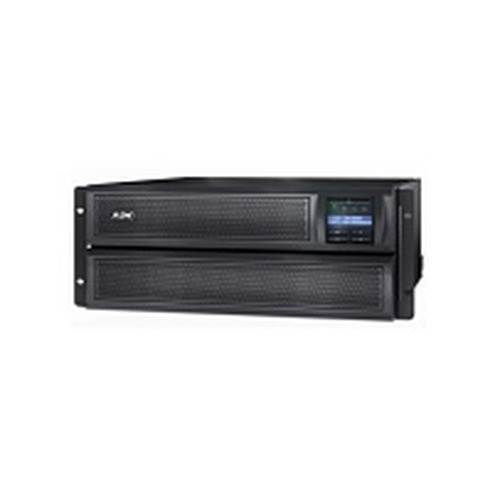
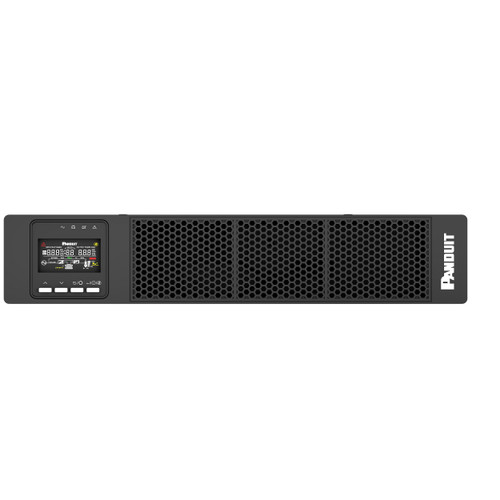
Both units target the 3 kVA UPS market, but they represent fundamentally different topologies: the APC SMX3000HV is a Line-Interactive UPS aimed at rack/tower deployments needing AVR and sine-wave output, while the Panduit U03N11V (SteadySine™) is an Online Double-Conversion UPS positioned for data center, edge, and enterprise MTDC environments. A buyer choosing between them is weighing topology trade-offs—transfer time, isolation, and efficiency—within the same power-capacity class. Direct spec comparison is limited because Panduit's published data is largely dimensional rather than electrical.
In This Guide
- Which UPS topology delivers better power conditioning and protection for sensitive loads?
- How do efficiency ratings and electrical performance specs compare between these two units?
- Which unit better fits the target deployment environment in terms of physical form factor and application scope?
- Which should you choose: the SMX3000HV or the U03N11V?
- Side-by-Side Specs
- FAQ
Which UPS topology delivers better power conditioning and protection for sensitive loads?
The APC SMX3000HV uses a Line-Interactive topology with a 3 kVA / 2,700 W output capacity, a true sine-wave waveform, and Automatic Voltage Regulation (AVR). Its input operating range spans 140 V to 280 V, with output regulated between 208 V and 240 V. A crest factor of 3:1 and a surge energy rating of 645 J are specified. Minimum hold time is 2 ms and maximum is 10 ms, meaning there is a brief transfer gap when the unit switches to battery.
The Panduit U03N11V is marketed as an Online Double-Conversion unit under the SteadySine™ sub-brand. Double-conversion topology eliminates the transfer-time gap entirely—output power is always regenerated from the inverter, providing complete electrical isolation from the input. However, Panduit's available spec data does not publish output wattage, waveform rating, input/output voltage range, AVR status, surge energy rating, hold time, crest factor, or efficiency for this model. These figures are noted as absent from the provided specification set.
For loads where any transfer gap is unacceptable—servers, VoIP infrastructure, active network gear—double-conversion is the preferred topology. The SMX3000HV's 2–10 ms transfer window is within the ride-through tolerance of most IT equipment but is not zero. The U03N11V's topology is the stronger architecture on paper for zero-transfer protection, but no published electrical specs are available to quantify that advantage numerically.
How do efficiency ratings and electrical performance specs compare between these two units?
The APC SMX3000HV specifies 98.5% efficiency, which is a high figure for a Line-Interactive unit and directly impacts operating costs and heat output in a rack environment. Input frequency is accepted at 50/60 Hz, and output frequency regulation is 50/60 Hz. The Emergency Power Off (EPO) function is confirmed present. Noise level is rated at 55 dB.
For the Panduit U03N11V, no efficiency figure, input frequency range, output frequency regulation, EPO availability, or acoustic noise rating is present in the provided specification data. Online double-conversion UPS units typically operate at lower efficiency than Line-Interactive designs due to the continuous AC-DC-AC conversion process, though high-efficiency eco-modes exist in some products. Without a published efficiency figure for the U03N11V, no numeric comparison is possible.
Buyers calculating total cost of ownership or sizing cooling loads should note that the SMX3000HV's 98.5% efficiency figure is a concrete, documentable number, whereas the U03N11V requires consulting the full Panduit datasheet (referenced as /content/product-datasheets/U03N11V.pdf) to obtain comparable figures before an apples-to-apples efficiency comparison can be made.
Which unit better fits the target deployment environment in terms of physical form factor and application scope?
The APC SMX3000HV is specified as a 4U Rack/Tower convertible form factor, though rack height in rack units and physical dimensions beyond that descriptor are not listed in the provided spec set. Its application scope is general-purpose rack or tower installation. The unit supports a wide input voltage window (140–280 V), which accommodates varying utility power quality across geographies.
The Panduit U03N11V publishes physical dimensions: 3.4 in (86.5 mm) height and 17.3 in (440 mm) width, consistent with a 2U rackmount profile. Its stated application targets are Data Center, Edge, and Enterprise MTDC environments. Depth and weight are not specified in the provided data. Carton quantity is listed as 0 and package quantity as 1.
The Panduit unit's 2U height gives it a rack-space advantage over the SMX3000HV's 4U footprint if the APC unit is rack-mounted, though the APC's tower option adds deployment flexibility the Panduit does not advertise. The Panduit's explicit MTDC and edge-data-center positioning aligns it with higher-density, precision-power environments, while the SMX3000HV addresses a broader range of rack and non-rack installations.
Which should you choose: the SMX3000HV or the U03N11V?
Our take: The SMX3000HV is the stronger choice when published electrical specifications, topology transparency, and acoustic/efficiency data are decision requirements. It provides a fully documented 98.5% efficiency rating, 645 J surge protection, AVR, EPO, 2–10 ms transfer time, and a 140–280 V input range—all verified figures. The Panduit U03N11V's double-conversion topology is architecturally superior for zero-transfer-time isolation and full electrical conditioning, and its 2U form factor consumes less rack space than the SMX3000HV's 4U footprint. However, the U03N11V's provided specifications are almost entirely dimensional; no output wattage, efficiency, voltage range, waveform, surge rating, or hold time is available to validate those topological advantages numerically. Buyers targeting certified data center or MTDC deployments where double-conversion is a firm requirement should obtain the full Panduit datasheet before selecting the U03N11V. Those needing spec-documented performance today should default to the SMX3000HV.
Side-by-Side Comparison
Spec-for-spec, from manufacturer data.
| Specification | APC by Schneider Electric SMX3000HV | Panduit U03N11V |
|---|---|---|
| UPS Topology | Line-Interactive | Online Double-Conversion |
| Output Power Capacity | 3 kVA | 3 kVA |
| Output Power (Watts) | 2,700 W | — |
| Waveform | Sine | — |
| Efficiency | 98.5% | — |
| Input Voltage Range | 140 V – 280 V | — |
| Output Voltage Range | 208 V – 240 V | — |
| Input / Output Frequency | 50/60 Hz | — |
| Automatic Voltage Regulation (AVR) | Yes | — |
| Surge Energy Rating | 645 J | — |
| Transfer / Hold Time | 2 ms min / 10 ms max | — |
| Crest Factor | 3:1 | — |
| Emergency Power Off (EPO) | Yes | — |
| Noise Level | 55 dB | — |
| Form Factor | 4U Rack/Tower | 2U Rackmount (3.4 in / 86.5 mm H) |
| Target Application | General Rack/Tower | Data Center, Edge, Enterprise MTDC |
Frequently Asked Questions
Which should you choose: the SMX3000HV or the U03N11V?
The SMX3000HV is the stronger choice when published electrical specifications, topology transparency, and acoustic/efficiency data are decision requirements. It provides a fully documented 98.5% efficiency rating, 645 J surge protection, AVR, EPO, 2–10 ms transfer time, and a 140–280 V input range—all verified figures. The Panduit U03N11V's double-conversion topology is architecturally superior for zero-transfer-time isolation and full electrical conditioning, and its 2U form factor consumes less rack space than the SMX3000HV's 4U footprint. However, the U03N11V's provided specifications are almost entirely dimensional; no output wattage, efficiency, voltage range, waveform, surge rating, or hold time is available to validate those topological advantages numerically. Buyers targeting certified data center or MTDC deployments where double-conversion is a firm requirement should obtain the full Panduit datasheet before selecting the U03N11V. Those needing spec-documented performance today should default to the SMX3000HV.
Does the Panduit U03N11V have zero transfer time to battery compared to the APC SMX3000HV?
Based on topology alone, yes—Online Double-Conversion UPS designs like the U03N11V regenerate output continuously from the inverter, meaning there is no measurable transfer gap when utility power fails. The APC SMX3000HV is Line-Interactive with a specified transfer time of 2 ms (minimum) to 10 ms (maximum). However, no hold time or transfer time figure is published in the available Panduit spec data, so this advantage cannot be confirmed numerically from the provided specifications.
Which unit is more energy-efficient to run continuously in a rack?
The APC SMX3000HV specifies 98.5% efficiency. No efficiency figure is present in the Panduit U03N11V's available specifications, making a direct numeric comparison impossible. Online double-conversion units typically run at lower efficiency than Line-Interactive designs due to continuous conversion losses, though many offer high-efficiency operating modes. Consult the Panduit U03N11V datasheet for its rated efficiency before making a total-cost-of-ownership calculation.
Which UPS takes up less rack space—the SMX3000HV or the U03N11V?
The Panduit U03N11V's published height is 3.4 inches (86.5 mm), consistent with a 2U rackmount profile. The APC SMX3000HV is described as a 4U Rack/Tower unit. If both are rack-mounted, the U03N11V occupies approximately half the rack space of the SMX3000HV. The SMX3000HV adds deployment flexibility by also supporting tower orientation; the U03N11V does not advertise a tower option in the provided specifications.
More UPS Comparisons
- APC by Schneider Electric SMT3000RMT2U vs Panduit U03S12L
- APC by Schneider Electric SMT3000RMT2U vs Vertiv GXT5-3KL620RT2UXL
- APC by Schneider Electric SMT3000RMT2U vs Vertiv GXT5-3KL630RT2UXL
- APC by Schneider Electric SMT3000RMT2U vs Panduit U03N11V
- APC by Schneider Electric SMT3000RMT2U vs APC by Schneider Electric SMTL3000RM2UCNC
- APC by Schneider Electric SMT3000RMT2U vs APC by Schneider Electric SMX3000HV
UPS Buying Guides
Get a Second Opinion on Your Camera Choice
Share your site layout, coverage goals, and budget. Our team will validate the camera selection, flag anything we would change, and recommend products that match the use case.