
APC by Schneider Electric SMX2000LVNCUS vs APC by Schneider Electric SMX2000RMLV2U: Specification Comparison
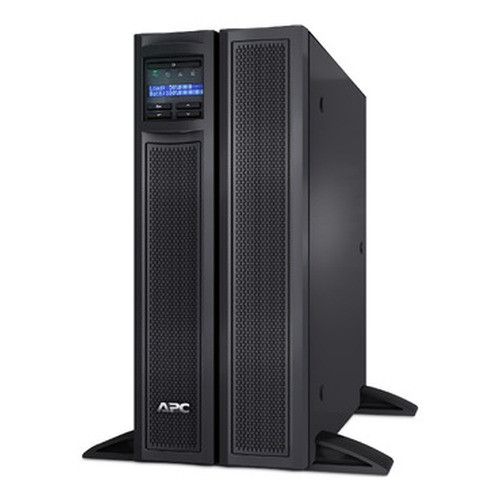
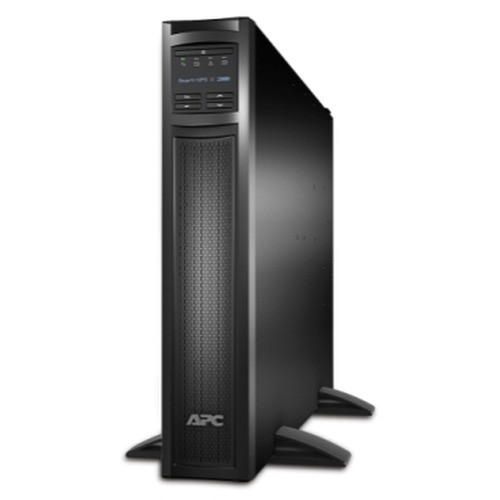
Both the SMX2000LVNCUS and SMX2000RMLV2U are APC Smart-UPS X 2000VA line-interactive UPS units rated at 1.92 kVA / 1800 W for 120 V North American installations. They share the same power class and rack/tower convertible form factor, making them direct cross-shop candidates for IT closets, small server rooms, and security infrastructure requiring conditioned sine-wave power, AVR, and runtime extension via external battery packs. The comparison below focuses on the three dimensions that drive purchasing decisions: input tolerance and power quality, outlet complement and load management, and runtime, management, and safety features.
In This Guide
- Which unit offers broader input voltage tolerance and better power quality?
- How do the two units differ in outlet complement and load distribution?
- Which unit provides stronger runtime, management, and site-safety capabilities?
- Which should you choose: the SMX2000LVNCUS or the SMX2000RMLV2U?
- Side-by-Side Specs
- FAQ
Which unit offers broader input voltage tolerance and better power quality?
The SMX2000LVNCUS accepts input as low as 70 V, compared to 75 V for the SMX2000RMLV2U — a 5 V advantage at the low end that matters in facilities with frequent browndowns or long wire runs. At the high end, the SMX2000RMLV2U tolerates up to 154 V versus 153 V for the SMX2000LVNCUS, a negligible 1 V difference. Both units share identical input frequency support (50/60 Hz), output voltage (120 V), output frequency (50/60 Hz), surge energy rating (540 J), and output THD (5% under load). The SMX2000LVNCUS explicitly lists Automatic Voltage Regulation (AVR) in its spec sheet; AVR capability for the SMX2000RMLV2U is not stated in the provided specifications. The SMX2000RMLV2U lists a rated efficiency of 98%; no efficiency figure is provided for the SMX2000LVNCUS.
How do the two units differ in outlet complement and load distribution?
The SMX2000LVNCUS provides three outlet types: NEMA 5-15R, NEMA 5-20R, and NEMA L5-20R (twist-lock), giving installers flexibility to connect both standard and locking-plug loads directly without an adapter. The SMX2000RMLV2U offers NEMA 5-15R and NEMA 5-20R outlets only — no twist-lock L5-20R — but its spec sheet explicitly states a total of 7 AC outlets. The SMX2000LVNCUS outlet count is not specified in the provided data. Both units share the NEMA 5-15R and 5-20R receptacle types. For deployments requiring locking connections to rack PDUs, network switches, or cameras drawing higher current, the SMX2000LVNCUS's L5-20R output is a meaningful differentiator; for standard straight-blade installations with a known 7-outlet requirement, the SMX2000RMLV2U's outlet count is a concrete spec the SMX2000LVNCUS cannot be directly compared against.
Which unit provides stronger runtime, management, and site-safety capabilities?
Runtime figures under load are not provided in the specifications for either unit. The SMX2000LVNCUS explicitly lists web-based management, auto-restart, and two audible alarm modes (on-battery and low-battery). The SMX2000RMLV2U lists Emergency Power Off (EPO) support, which allows a remote hardwired kill switch — critical for data center and facilities deployments subject to NEC or local fire-safety codes requiring EPO. Web-based management, auto-restart, and alarm modes for the SMX2000RMLV2U are not stated in the provided specifications. Battery technology for the SMX2000RMLV2U is specified as Sealed Lead Acid (VRLA) with a 3-hour recharge time; neither battery chemistry nor recharge time is stated for the SMX2000LVNCUS. The SMX2000LVNCUS carries a TAA (Trade Agreements Act) compliance designation in its product title, relevant for federal and government procurement; this designation is absent from the SMX2000RMLV2U's provided specifications.
Which should you choose: the SMX2000LVNCUS or the SMX2000RMLV2U?
Our take: The SMX2000LVNCUS is the stronger choice when TAA compliance, a twist-lock L5-20R outlet, and confirmed web-based management are requirements. Its 70 V low-end input tolerance beats the SMX2000RMLV2U's 75 V floor, it explicitly includes AVR and web management, and it adds an L5-20R receptacle absent from the SMX2000RMLV2U. Conversely, the SMX2000RMLV2U is the stronger choice when Emergency Power Off (EPO) is required by code or facility policy, when a confirmed 7-outlet count is needed for planning, or when the 98% rated efficiency matters for energy budgets — none of those three specs appear in the SMX2000LVNCUS data. Both units are identical on kVA/watt rating, surge joules, THD, and noise. Buyers in government or TAA-restricted procurement should default to the SMX2000LVNCUS; data center or raised-floor installations with EPO panel requirements should favor the SMX2000RMLV2U.
Side-by-Side Comparison
Spec-for-spec, from manufacturer data.
| Specification | APC by Schneider Electric SMX2000LVNCUS | APC by Schneider Electric SMX2000RMLV2U |
|---|---|---|
| UPS Topology | Line-Interactive | Not specified in provided specs |
| Output Power Capacity | 1.92 kVA | 1.92 kVA |
| Output Power | 1800 W | 1800 W |
| Output Waveform | Sine | Not specified in provided specs |
| Input Voltage Min | 70 V | 75 V |
| Input Voltage Max | 153 V | 154 V |
| Output Voltage | 120 V | 120 V |
| Input / Output Frequency | 50/60 Hz | 50/60 Hz |
| Surge Energy Rating | 540 J | 540 J |
| Output Voltage THD | 5% | 5% |
| Efficiency | — | 98% |
| AC Outlet Types | NEMA 5-15R, NEMA 5-20R, NEMA L5-20R | NEMA 5-15R, NEMA 5-20R |
| AC Outlet Quantity | — | 7 |
| Emergency Power Off (EPO) | — | Yes |
| Web-Based Management | Yes | — |
| Auto-Restart | Yes | — |
| Battery Technology | — | Sealed Lead Acid (VRLA) |
| Battery Recharge Time | — | 3 h |
| Noise Level | 55 dB | 55 dB |
| TAA Compliant | Yes (per product title) | — |
| Form Factor | Rack/Tower | Rack/Tower |
Frequently Asked Questions
Which should you choose: the SMX2000LVNCUS or the SMX2000RMLV2U?
The SMX2000LVNCUS is the stronger choice when TAA compliance, a twist-lock L5-20R outlet, and confirmed web-based management are requirements. Its 70 V low-end input tolerance beats the SMX2000RMLV2U's 75 V floor, it explicitly includes AVR and web management, and it adds an L5-20R receptacle absent from the SMX2000RMLV2U. Conversely, the SMX2000RMLV2U is the stronger choice when Emergency Power Off (EPO) is required by code or facility policy, when a confirmed 7-outlet count is needed for planning, or when the 98% rated efficiency matters for energy budgets — none of those three specs appear in the SMX2000LVNCUS data. Both units are identical on kVA/watt rating, surge joules, THD, and noise. Buyers in government or TAA-restricted procurement should default to the SMX2000LVNCUS; data center or raised-floor installations with EPO panel requirements should favor the SMX2000RMLV2U.
Does either UPS support a remote emergency power-off (EPO) connection?
Yes — EPO support is explicitly listed in the specifications for the SMX2000RMLV2U. The SMX2000LVNCUS specifications provided do not mention EPO capability. If a hardwired EPO circuit is required by your facility's electrical code or fire-suppression system, the SMX2000RMLV2U is the only one of the two with a confirmed EPO feature.
Which unit is better for a government or federal installation?
The SMX2000LVNCUS carries a TAA (Trade Agreements Act) compliance designation in its product title, which is typically required for federal government procurement under GSA schedules and many state/local government contracts. The SMX2000RMLV2U's provided specifications do not include a TAA designation. For government purchasing, the SMX2000LVNCUS is the safer choice based on available spec data.
Can I connect twist-lock plugs directly to either UPS without an adapter?
Only the SMX2000LVNCUS includes a NEMA L5-20R (twist-lock) outlet among its listed output receptacles. The SMX2000RMLV2U's specifications list only NEMA 5-15R and NEMA 5-20R straight-blade outlets — no twist-lock receptacle is listed. If your rack PDU, transfer switch, or high-current device uses an L5-20 locking plug, the SMX2000LVNCUS eliminates the need for an adapter cord.
More UPS Comparisons
- APC by Schneider Electric SMX2000LV vs CyberPower PR2000RTXL2UC
- APC by Schneider Electric SMX2000LV vs CyberPower CP2000PFCRM2U
- APC by Schneider Electric SMX2000LV vs CyberPower PR2000RT2UCN
- APC by Schneider Electric SMX2000LV vs Middle Atlantic UPX-EXPANRUN-OL20
- APC by Schneider Electric SMX2000LV vs APC by Schneider Electric SMX2000LVNCUS
- APC by Schneider Electric SMX2000LV vs APC by Schneider Electric SMX2000RMLV2U
UPS Buying Guides
Get a Second Opinion on Your Camera Choice
Share your site layout, coverage goals, and budget. Our team will validate the camera selection, flag anything we would change, and recommend products that match the use case.