
APC by Schneider Electric SMTL3000RM2UCNC vs Panduit U03N11V: Specification Comparison
Both the APC SMTL3000RM2UCNC and the Panduit U03N11V are rackmount 3 kVA uninterruptible power supplies targeting the same capacity tier, making them legitimate cross-shop candidates for IT buyers needing protected power for servers, networking gear, or edge infrastructure. The comparison highlights a fundamental architectural divide: the APC unit is a Line-Interactive design while the Panduit SteadySine is an Online Double-Conversion unit. That topology difference drives most of the trade-offs across efficiency, output quality, and load protection.
In This Guide
- Which UPS topology and output quality better protects sensitive loads?
- How do the units compare on real power delivery, efficiency, and acoustics?
- What are the physical footprint, connectivity, and management options for each unit?
- Which should you choose: the SMTL3000RM2UCNC or the U03N11V?
- Side-by-Side Specs
- FAQ
Which UPS topology and output quality better protects sensitive loads?
The APC SMTL3000RM2UCNC uses a Line-Interactive topology, meaning the inverter corrects voltage sags and swells but the load remains on raw utility power under normal conditions. Output waveform is specified as Sine, output voltage is 120 V with a regulation tolerance of ±5%, and the surge energy rating is 459 J. Input voltage range is wide—82 V to 144 V—allowing the unit to ride through browndowns without switching to battery.
The Panduit U03N11V SteadySine operates as an Online Double-Conversion UPS. In this topology the load is always powered through the inverter, completely isolating it from utility-side disturbances including frequency variation, harmonics, and transients. No surge energy rating, output voltage regulation figure, or waveform specification is present in the provided Panduit spec data. The application targets listed—Data Center, Edge, and Enterprise MTDC—are consistent with double-conversion deployment expectations.
For loads requiring the cleanest possible power isolation (medical imaging ancillaries, high-density compute, precision test equipment), double-conversion is the standard architectural choice. For general IT rack loads where near-zero transfer time is sufficient, Line-Interactive is widely accepted. Buyers should note that key Panduit output specs (regulation, waveform, surge rating) are absent from the provided data and should be confirmed against the manufacturer datasheet.
How do the units compare on real power delivery, efficiency, and acoustics?
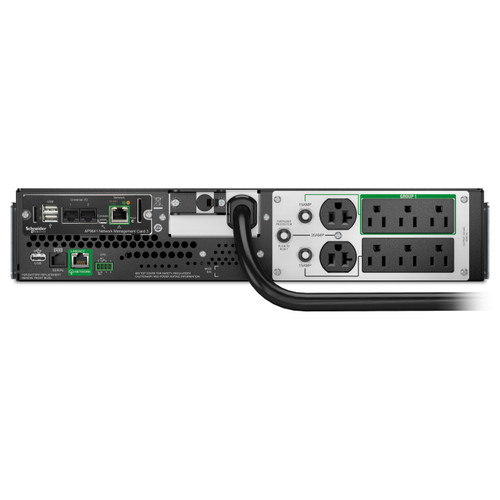
The APC SMTL3000RM2UCNC is rated at 3 kVA / 2,700 W, yielding a 0.9 power factor. Efficiency is specified at 96%. Acoustic noise is listed at 55 dB. Eight AC outlets are provided: a mix of NEMA 5-15R and NEMA 5-20R receptacles, supporting both standard and 20 A device connections directly from the UPS.
The Panduit U03N11V is rated at 3 kVA. No watt rating, power factor, efficiency figure, or acoustic noise level is present in the provided specifications. Outlet count and outlet type are also absent from the supplied data. Buyers requiring those figures must consult the Panduit datasheet (referenced as U03N11V.pdf) before making a procurement decision.
On the specs available, the APC unit provides a complete power-delivery picture: 2,700 W true power, 96% efficiency, and a fully defined outlet complement. The Panduit's real-power figure, efficiency, and outlet details are not available in the provided data, making a direct numeric comparison on this dimension impossible.
What are the physical footprint, connectivity, and management options for each unit?
The APC SMTL3000RM2UCNC occupies 2U of rack space. It includes a USB port and a serial interface for UPS management and shutdown integration, compatible with APC's PowerChute software ecosystem. Input and output frequency is 50/60 Hz on both sides. Battery chemistry is Lithium-Ion, as indicated in the product name, which typically offers longer service life and reduced replacement frequency compared to VRLA chemistry.
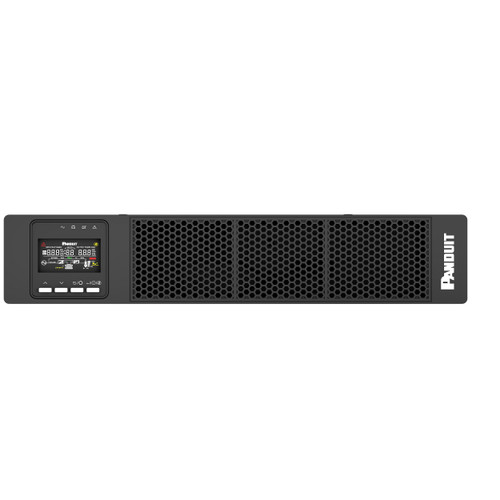
The Panduit U03N11V is physically specified at 3.4 in (86.5 mm) tall by 17.3 in (440 mm) wide—approximately 2U in height. The SKU data identifies it as VRLA battery chemistry. No rack-unit designation, depth, weight, management port types, or software compatibility information is present in the provided specifications.
APC explicitly provides Lithium-Ion chemistry and documents both USB and serial management interfaces. Panduit's battery type is listed as VRLA (traditional sealed lead-acid), which generally has a shorter replacement cycle. Management interface details for the Panduit are absent from the provided spec data and should be confirmed before purchase, particularly for environments requiring network-card or software-shutdown integration.
Which should you choose: the SMTL3000RM2UCNC or the U03N11V?
Our take: The SMTL3000RM2UCNC is the stronger choice when documented efficiency, a fully specified outlet set, Lithium-Ion battery longevity, and complete management-interface data are purchasing requirements. The APC unit delivers 2,700 W at 96% efficiency with 8 NEMA outlets (5-15R and 5-20R mix), a 459 J surge rating, and both USB and serial management ports—all confirmed in the provided specifications. The Panduit U03N11V's Online Double-Conversion topology is architecturally superior for full load isolation and is the appropriate choice for sensitive or mission-critical loads in data-center or MTDC environments—but critical specs including wattage, efficiency, outlet count, management interfaces, and output regulation are absent from the provided data and must be verified against the manufacturer datasheet before the Panduit can be evaluated on those dimensions. Buyers with double-conversion requirements should source the Panduit datasheet; buyers prioritizing a fully documented, Lithium-Ion Line-Interactive solution with proven management integration should favor the APC.
Side-by-Side Comparison
Spec-for-spec, from manufacturer data.
| Specification | APC by Schneider Electric SMTL3000RM2UCNC | Panduit U03N11V |
|---|---|---|
| UPS Topology | Line-Interactive | Online Double-Conversion |
| Capacity (kVA) | 3 kVA | 3 kVA |
| Output Power (W) | 2,700 W | — |
| Power Factor | 0.9 | — |
| Efficiency | 96% | — |
| Battery Chemistry | Lithium-Ion | VRLA |
| Input Voltage Range | 82 V – 144 V | — |
| Output Voltage | 120 V | — |
| Output Voltage Regulation | ±5% | — |
| Output Waveform | Sine | — |
| Surge Energy Rating | 459 J | — |
| AC Outlets | 8 (NEMA 5-15R / 5-20R) | — |
| Input / Output Frequency | 50/60 Hz | — |
| Rack Height | 2U | ~2U (3.4 in / 86.5 mm) |
| Width | — | 17.3 in (440 mm) |
| Management Interfaces | USB, Serial | — |
| Noise Level | 55 dB | — |
| Application Target | — | Data Center, Edge, Enterprise MTDC |
Frequently Asked Questions
Which should you choose: the SMTL3000RM2UCNC or the U03N11V?
The SMTL3000RM2UCNC is the stronger choice when documented efficiency, a fully specified outlet set, Lithium-Ion battery longevity, and complete management-interface data are purchasing requirements. The APC unit delivers 2,700 W at 96% efficiency with 8 NEMA outlets (5-15R and 5-20R mix), a 459 J surge rating, and both USB and serial management ports—all confirmed in the provided specifications. The Panduit U03N11V's Online Double-Conversion topology is architecturally superior for full load isolation and is the appropriate choice for sensitive or mission-critical loads in data-center or MTDC environments—but critical specs including wattage, efficiency, outlet count, management interfaces, and output regulation are absent from the provided data and must be verified against the manufacturer datasheet before the Panduit can be evaluated on those dimensions. Buyers with double-conversion requirements should source the Panduit datasheet; buyers prioritizing a fully documented, Lithium-Ion Line-Interactive solution with proven management integration should favor the APC.
Is the SMTL3000RM2UCNC or U03N11V better for a mission-critical server room requiring full load isolation?
The Panduit U03N11V uses an Online Double-Conversion topology, which means the load is always powered through the inverter and fully isolated from utility disturbances—the architecture preferred for mission-critical environments. The APC SMTL3000RM2UCNC is Line-Interactive, where the load briefly transfers to battery during a power event. If full isolation is the requirement, the Panduit's topology is the correct architectural choice, provided its remaining specs (wattage, outlets, management) are confirmed from the datasheet.
Which unit has a longer battery service life?
The APC SMTL3000RM2UCNC uses Lithium-Ion batteries, which typically offer a longer service life and fewer replacement cycles compared to traditional VRLA (sealed lead-acid) batteries. The Panduit U03N11V is specified with VRLA chemistry. No specific battery life or replacement interval figures are provided in the specs for either unit, so exact service-interval comparisons cannot be made from the available data alone.
Does either UPS support software-based graceful shutdown of connected servers?
The APC SMTL3000RM2UCNC includes both a USB port and a serial interface, which are the standard physical connections used with APC's PowerChute shutdown software. The Panduit U03N11V's management interface options are not described in the provided specifications; connectivity details would need to be confirmed against the Panduit datasheet or product page before assuming software-shutdown compatibility.
More UPS Comparisons
- APC by Schneider Electric SMT3000RMT2U vs Panduit U03S12L
- APC by Schneider Electric SMT3000RMT2U vs Vertiv GXT5-3KL620RT2UXL
- APC by Schneider Electric SMT3000RMT2U vs Vertiv GXT5-3KL630RT2UXL
- APC by Schneider Electric SMT3000RMT2U vs Panduit U03N11V
- APC by Schneider Electric SMT3000RMT2U vs APC by Schneider Electric SMTL3000RM2UCNC
- APC by Schneider Electric SMT3000RMT2U vs APC by Schneider Electric SMX3000HV
UPS Buying Guides
Get a Second Opinion on Your Camera Choice
Share your site layout, coverage goals, and budget. Our team will validate the camera selection, flag anything we would change, and recommend products that match the use case.