
APC by Schneider Electric SMT750R2X122 vs CyberPower PR750RTXL2UC: Specification Comparison
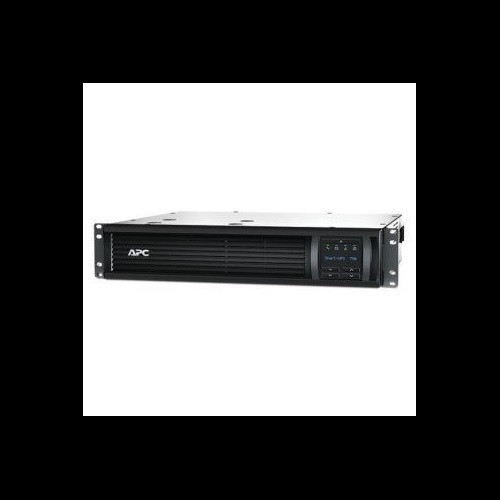
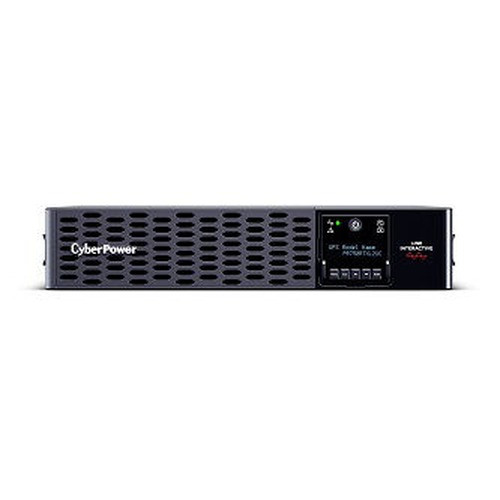
Both the APC SMT750R2X122 and CyberPower PR750RTXL2UC are 750VA, 2U rack-mount line-interactive UPS units designed for IT closets, network racks, and light server environments operating on 120V AC. This comparison examines runtime and power delivery, connectivity and management capability, and physical installation characteristics — the three axes that most directly drive purchasing decisions in this UPS class for B2B installers and IT buyers.
In This Guide
- Which UPS delivers more runtime and how do their power ratings compare?
- Which unit offers more connectivity, remote management, and monitoring options?
- How do the two units compare for physical installation, outlet configuration, and input/output cabling?
- Which should you choose: the SMT750R2X122 or the PR750RTXL2UC?
- Side-by-Side Specs
- FAQ
Which UPS delivers more runtime and how do their power ratings compare?
The CyberPower PR750RTXL2UC holds a significant runtime advantage at both load points. At full load it provides 11.3 minutes versus the APC SMT750R2X122's 5 minutes — more than double. At half load the gap widens further: 28 minutes for the CyberPower against 16 minutes for the APC. This difference is partly explained by the PR750RTXL2UC's use of four battery cells versus an unspecified count for the SMT750R2X122.
On watt rating, the CyberPower is specified at 750W continuous output with an output power factor of 1.0, meaning its VA and watt ratings are identical. The APC SMT750R2X122 is rated at 500W despite a 750VA load capacity, implying an output power factor of approximately 0.67. For loads with higher power factors — modern switch-mode power supplies in servers and network gear typically run 0.9 or above — the CyberPower's 750W ceiling is meaningfully more headroom. The CyberPower also specifies a pure sine wave output; the APC's waveform type is not stated in the provided specifications.
The CyberPower lists Automatic Voltage Regulation with Double Boost Single Buck topology and an adjustable voltage range of 70–155 VAC, meaning it can regulate browndowns to 70V without switching to battery. The APC's AVR capability and voltage regulation range are not specified in the provided data.
Which unit offers more connectivity, remote management, and monitoring options?
The CyberPower PR750RTXL2UC is substantially richer in connectivity. It provides USB, Serial (1 RS-232 port plus 1 dry-contact relay), SNMP support, EPO (Emergency Power Off), and native cloud management — all listed in the provided specifications. It is compatible with the optional RMCARD205 network management card for full SNMP/web remote management and ships with PowerPanel Business software. A 3-year warranty and a $400,000 connected equipment guarantee are also specified.
The APC SMT750R2X122 specifications provided do not include any communication interface details, management software, SNMP capability, warranty duration, or connected equipment guarantee. Buyers requiring documented management options, software integration, or network card compatibility cannot confirm those features from the specifications as provided.
The CyberPower's cloud management capability and EPO contact are relevant for installations requiring centralized monitoring of distributed rack infrastructure or graceful server shutdown integration. The APC's circuit-breaker protection is noted; the CyberPower's overload, overheat, overcharge, and low-battery audible alarms are explicitly listed.
How do the two units compare for physical installation, outlet configuration, and input/output cabling?
Both units are 2U rackmount form factors. The APC SMT750R2X122 dimensions are 3.3" H × 17" W × 26.3" D. The CyberPower PR750RTXL2UC dimensions convert from the provided centimeter values to approximately 17.1" W × 3.4" H × 16.2" D — notably shallower than the APC's 26.3" depth, which may matter in shallow-depth wall-mount or short-depth racks. The CyberPower is specified at 24.09 kg (approximately 53.1 lb); the APC's weight is not provided.
Outlet counts differ: the CyberPower provides 8 × NEMA 5-15R receptacles, all battery-backed and surge-protected, with 4 designated as critical-load outlets. The APC provides 6 × NEMA 5-15R receptacles; no critical-load subdivision is specified. The CyberPower's input plug is NEMA 5-15P on a 10-foot cord. The APC's input is NEMA L5-15P (a locking twist-lock plug), which requires a compatible L5-15 receptacle or a PDU with that socket — a material installation consideration in facilities without existing L5-15 infrastructure.
The CyberPower specifies 2430 J of surge suppression and an audible noise level of 52.5 dB. Neither surge joule rating nor audible noise is specified for the APC SMT750R2X122 in the provided data. Battery recharge time is 3 hours for both units.
Which should you choose: the SMT750R2X122 or the PR750RTXL2UC?
Our take: The PR750RTXL2UC is the stronger choice when runtime, watt-capacity, management integration, and outlet count are the primary evaluation criteria. The CyberPower more than doubles the APC's full-load runtime (11.3 min vs. 5 min), delivers 750W versus 500W continuous output — a 50% watt-capacity advantage meaningful for high-power-factor loads — and provides 8 outlets versus 6. Its documented communication stack (USB, Serial, SNMP, EPO, cloud, RMCARD205 support) and PowerPanel Business software give IT teams verifiable management paths the APC specifications do not confirm. The SMT750R2X122 warrants consideration specifically where NEMA L5-15P locking input connectivity is already present in the rack PDU infrastructure and a shallower APC management ecosystem is already standardized — buyers should verify management, waveform, and warranty terms directly from APC documentation before finalizing.
Side-by-Side Comparison
Spec-for-spec, from manufacturer data.
| Specification | APC by Schneider Electric SMT750R2X122 | CyberPower PR750RTXL2UC |
|---|---|---|
| Load Capacity (VA) | 750 VA | 750 VA |
| Load Capacity (W) | 500 W | 750 W |
| Output Power Factor | — | 1.0 |
| Waveform Type | — | Sine Wave |
| Runtime at Full Load | 5 min | 11.3 min |
| Runtime at Half Load | 16 min | 28 min |
| Battery Recharge Time | 3 hours | 3 hours |
| Battery Chemistry | Lead Acid | Sealed Lead-Acid |
| Battery Quantity | — | 4 |
| Input Plug Type | NEMA L5-15P (locking) | NEMA 5-15P |
| Output Receptacles | 6 × NEMA 5-15R | 8 × NEMA 5-15R |
| Critical Load Outlets | — | 4 |
| Surge Suppression | — | 2430 J |
| Communication Interfaces | — | USB, Serial, SNMP, Relay, EPO, Cloud |
| Form Factor / Rack Height | 2U Rackmount | 2U Rack / Tower |
| Warranty | — | 3 years |
Frequently Asked Questions
Which should you choose: the SMT750R2X122 or the PR750RTXL2UC?
The PR750RTXL2UC is the stronger choice when runtime, watt-capacity, management integration, and outlet count are the primary evaluation criteria. The CyberPower more than doubles the APC's full-load runtime (11.3 min vs. 5 min), delivers 750W versus 500W continuous output — a 50% watt-capacity advantage meaningful for high-power-factor loads — and provides 8 outlets versus 6. Its documented communication stack (USB, Serial, SNMP, EPO, cloud, RMCARD205 support) and PowerPanel Business software give IT teams verifiable management paths the APC specifications do not confirm. The SMT750R2X122 warrants consideration specifically where NEMA L5-15P locking input connectivity is already present in the rack PDU infrastructure and a shallower APC management ecosystem is already standardized — buyers should verify management, waveform, and warranty terms directly from APC documentation before finalizing.
Is the SMT750R2X122 or PR750RTXL2UC better for powering a server that needs more than 10 minutes of runtime during an outage?
Based on the provided specifications, the PR750RTXL2UC is the better choice. It delivers 11.3 minutes at full load and 28 minutes at half load. The SMT750R2X122 is specified at 5 minutes full load and 16 minutes half load. If your server draws well under 375W you will see longer runtime on either unit, but the CyberPower's advantage holds across both load points.
Can I plug the PR750RTXL2UC into a standard 15-amp wall outlet, and what about the SMT750R2X122?
The PR750RTXL2UC uses a NEMA 5-15P input plug on a 10-foot cord, which connects directly to a standard 15-amp NEMA 5-15R wall outlet or rack PDU receptacle. The SMT750R2X122 uses a NEMA L5-15P locking plug, which requires a NEMA L5-15R receptacle — a twist-lock socket not typically found in standard wall outlets. Facilities without existing L5-15 infrastructure will need a compatible PDU or receptacle before installing the APC unit.
Which UPS is easier to monitor and manage remotely across multiple sites?
The PR750RTXL2UC has documented remote management capabilities: USB, Serial, SNMP, relay, EPO, and cloud connectivity are all listed in its specifications, along with PowerPanel Business software and compatibility with the optional RMCARD205 network card. The provided specifications for the SMT750R2X122 do not include any communication interface, management software, SNMP, or remote management details, so that capability cannot be confirmed from the data as given.
More UPS Comparisons
- APC by Schneider Electric SMT750C vs CyberPower PR750RTXL2UC
- APC by Schneider Electric SMT750C vs Vertiv GXT5-750LVRT2UXL
- APC by Schneider Electric SMT750C vs CyberPower PR750LCDRT1U
- APC by Schneider Electric SMT750C vs CyberPower AVRG750U
- APC by Schneider Electric SMT750C vs APC by Schneider Electric SMT750CUS
- APC by Schneider Electric SMT750CUS vs CyberPower PR750RTXL2UC
UPS Buying Guides
Get a Second Opinion on Your Camera Choice
Share your site layout, coverage goals, and budget. Our team will validate the camera selection, flag anything we would change, and recommend products that match the use case.