
APC by Schneider Electric SMT3000I vs Panduit U03N12L: Specification Comparison
Both the APC SMT3000I and the Panduit U03N12L are 3000VA / 2700W line-interactive uninterruptible power supplies producing a sine-wave output, placing them in the same capacity tier and device class. This comparison evaluates the two across runtime and battery management, physical form factor and environmental tolerances, and management interface capabilities — the three axes that most commonly drive purchasing decisions for rack-deployed UPS units at this power level.
In This Guide
- How do the two units handle battery runtime, recharge, and field serviceability?
- How do the units differ in physical footprint, weight, and environmental operating range?
- What management interfaces and protection features do the two units offer?
- Which should you choose: the SMT3000I or the U03N12L?
- Side-by-Side Specs
- FAQ
How do the two units handle battery runtime, recharge, and field serviceability?
The APC SMT3000I uses a maintenance-free sealed lead-acid battery with suspended electrolyte and specifies a typical recharge time of 3 hours. The battery is not described as hot-swappable in the provided specifications, meaning a battery replacement may require a planned maintenance window or load transfer to a secondary source.
The Panduit U03N12L specifies a hot-swappable sealed lead-acid battery pack. This means batteries can be replaced under load without powering down connected equipment — a material operational advantage in environments where downtime cannot be scheduled. Panduit's specifications do not state a recharge time, so a direct comparison on that point is not possible from the provided data.
For installations where battery replacement without downtime is a priority — edge sites, healthcare environments, or 24/7 operations — the U03N12L's hot-swap capability is a documented differentiator. The SMT3000I's 3-hour recharge time is a useful planning figure that is absent from Panduit's published specs.
How do the units differ in physical footprint, weight, and environmental operating range?
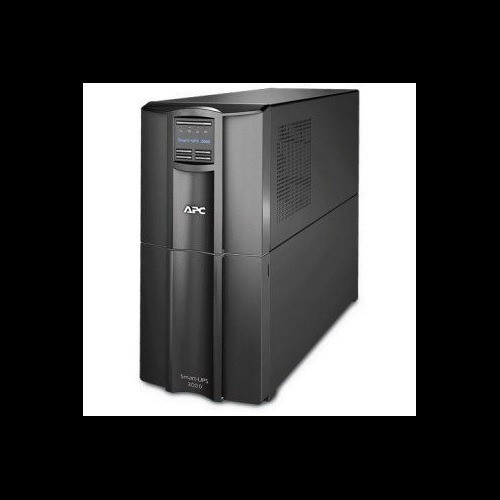
The APC SMT3000I has published dimensions of 435 mm (H) × 197 mm (W) × 544 mm (D) and a net weight of 52.5 kg (shipping weight 63.7 kg). Its rack height is not explicitly stated in the provided specifications as a 'U' count, though its height of 435 mm corresponds to approximately 10U. It operates from 0–40 °C with 0–95% relative humidity and is rated to 3,000 meters operating elevation and 15,000 meters storage elevation.
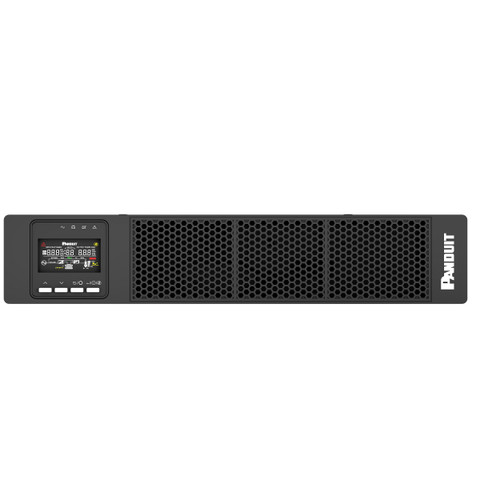
The Panduit U03N12L is specified as a 2U rackmount unit with dimensions of 86.5 mm (H) × 440 mm (W). Depth is not provided in the supplied specifications. Net weight and shipping weight are likewise absent. No operating temperature range, humidity rating, or elevation specification is provided in the supplied data.
The SMT3000I carries substantially more complete environmental documentation, which is relevant for deployment planning in harsh or altitude-challenged sites. The U03N12L's 2U form factor is a significant density advantage in space-constrained racks, but buyers cannot confirm its environmental suitability from the supplied specs alone.
What management interfaces and protection features do the two units offer?
The APC SMT3000I provides a SmartSlot expansion interface (1 slot available) and a USB port, along with a multi-function LCD control console. SmartSlot accepts optional APC network management cards for SNMP/network monitoring; the card is not included by default. The unit also specifies a surge energy rating of 365 Joules and full-time multi-pole noise filtering. Output voltage distortion is specified at less than 5% at full load, and total harmonic distortion on input is not stated.
The Panduit U03N12L includes a dedicated network management card slot supporting SNMP out of the specification description, and a front-panel LCD displaying real-time load and runtime. A power factor correction value of 0.99 (typical) is stated, and input total harmonic distortion is specified at less than 3% at full load — a figure absent from APC's supplied specs. Transfer time is specified at less than 1 ms. No surge energy joule rating is provided for the U03N12L.
The U03N12L's stated transfer time of less than 1 ms and THD of less than 3% at full load address two concerns common to sensitive IT loads. The SMT3000I's 365-Joule surge rating and explicit noise filtering documentation give installers concrete protection-level data that Panduit's specs do not supply. Management card availability is inherent to the U03N12L's slot vs. an optional add-on for the SMT3000I's SmartSlot.
Which should you choose: the SMT3000I or the U03N12L?
Our take: The SMT3000I is the stronger choice when environmental compliance documentation, explicit surge protection ratings, and a fully specified operating envelope are required for site acceptance or regulatory sign-off. The SMT3000I provides a 365-Joule surge energy rating, a defined 0–40 °C / 0–95% RH operating range with 3,000-meter elevation tolerance, and a 3-year/2-year warranty structure — none of which appear in the U03N12L's supplied specifications. Conversely, the U03N12L holds clear advantages in rack density (2U vs. the SMT3000I's approximately 10U), hot-swappable batteries for zero-downtime replacement, a stated transfer time of less than 1 ms, and a power factor correction of 0.99 — specs the SMT3000I does not publish. For dense data-center or enterprise edge racks where battery serviceability and space efficiency are primary, the U03N12L warrants strong consideration, provided the buyer can obtain missing environmental and weight specs directly from Panduit before deployment.
Side-by-Side Comparison
Spec-for-spec, from manufacturer data.
| Specification | APC by Schneider Electric SMT3000I | Panduit U03N12L |
|---|---|---|
| Capacity | 2700W / 3000VA | 2700W / 3000VA |
| Output Waveform | Sine wave | Pure Sine Wave |
| Transfer Time | — | <1ms |
| Battery Type | Sealed lead-acid (suspended electrolyte) | Sealed lead-acid |
| Hot-Swappable Battery | — | Yes |
| Typical Recharge Time | 3 hours | — |
| Form Factor / Rack Height | 435mm H × 197mm W × 544mm D | 2U / 86.5mm H × 440mm W |
| Net Weight | 52.5 kg | — |
| Surge Energy Rating | 365 Joules | — |
| Input Voltage Range | 160–286V (adjustable 151–302V) | 160–290V (AVR) |
| Output Voltage Distortion | <5% at full load | — |
| Input THD | — | <3% at full load |
| Power Factor Correction | — | 0.99 (typical) |
| Management Interface | SmartSlot (1 slot, optional card) + USB | Network management card slot (SNMP) |
| Operating Temperature | 0–40°C | — |
| Warranty | 3 years (unit) / 2 years (battery) | — |
Frequently Asked Questions
Which should you choose: the SMT3000I or the U03N12L?
The SMT3000I is the stronger choice when environmental compliance documentation, explicit surge protection ratings, and a fully specified operating envelope are required for site acceptance or regulatory sign-off. The SMT3000I provides a 365-Joule surge energy rating, a defined 0–40 °C / 0–95% RH operating range with 3,000-meter elevation tolerance, and a 3-year/2-year warranty structure — none of which appear in the U03N12L's supplied specifications. Conversely, the U03N12L holds clear advantages in rack density (2U vs. the SMT3000I's approximately 10U), hot-swappable batteries for zero-downtime replacement, a stated transfer time of less than 1 ms, and a power factor correction of 0.99 — specs the SMT3000I does not publish. For dense data-center or enterprise edge racks where battery serviceability and space efficiency are primary, the U03N12L warrants strong consideration, provided the buyer can obtain missing environmental and weight specs directly from Panduit before deployment.
Can I replace the battery without shutting down my equipment?
Only the Panduit U03N12L specifies hot-swappable batteries, meaning replacement can occur under load. The APC SMT3000I does not describe its battery as hot-swappable in the provided specifications; APC does specify a 3-hour recharge time, which Panduit does not publish.
Which unit takes up less rack space?
The Panduit U03N12L is explicitly rated at 2U (86.5 mm height, 440 mm width). The APC SMT3000I lists a height of 435 mm — approximately 10U — and a width of 197 mm; it is not described as a rackmount unit in the supplied specifications, suggesting it may be a tower or tower/rack-convertible form factor. Depth for the U03N12L is not provided in the supplied specs.
Which UPS is better documented for deployment in challenging environments such as high altitude or wide temperature ranges?
The APC SMT3000I provides explicit environmental ratings: 0–40 °C operating temperature, 0–95% relative humidity, and up to 3,000 meters operating elevation. The Panduit U03N12L does not include operating temperature, humidity, or elevation specifications in the supplied data, so environmental suitability for those conditions cannot be confirmed from the available specs.
More UPS Comparisons
- APC by Schneider Electric SMT3000RMI2U vs Vertiv GXT5-3000LVRT2UXL
- APC by Schneider Electric SMT3000RMI2U vs Panduit U03N11L
- APC by Schneider Electric SMT3000RMI2U vs Panduit U03N12L
- APC by Schneider Electric SMT3000RMI2U vs Panduit U03S12V
- APC by Schneider Electric SMT3000RMI2U vs APC by Schneider Electric SRT3000XLT
- APC by Schneider Electric SMT3000RMI2U vs APC by Schneider Electric SRT3000XLW-IEC
UPS Buying Guides
Get a Second Opinion on Your Camera Choice
Share your site layout, coverage goals, and budget. Our team will validate the camera selection, flag anything we would change, and recommend products that match the use case.