
APC by Schneider Electric SMT3000I vs Panduit U03N11L: Specification Comparison
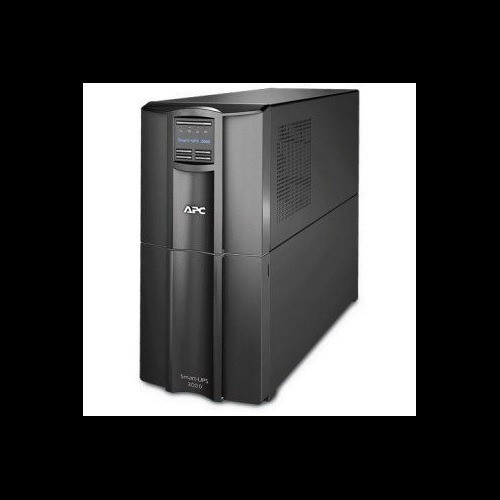
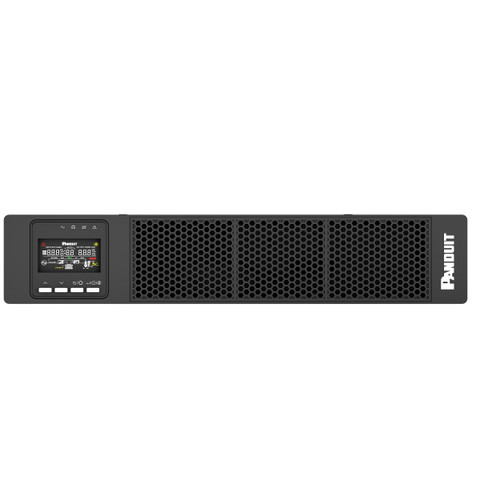
Both the APC SMT3000I and Panduit U03N11L are 3000VA / 2700W line-interactive UPS units targeting business-critical loads — servers, networking gear, and security infrastructure. The APC is a tower-form unit designed for 230V international markets, while the Panduit is a 2U rack-mount unit aimed at 120V North American data-center or wiring-closet deployments. Despite identical VA/W ratings, the voltage incompatibility means most buyers will be choosing within their regional context rather than directly substituting one for the other. The comparison highlights meaningful differences in form factor, battery serviceability, interface depth, and certifications.
In This Guide
- How do the two units handle power conditioning, surge protection, and output compatibility?
- What are the physical, environmental, and battery-serviceability differences between the two units?
- Which unit offers broader management, interface, and certification support for enterprise or security deployments?
- Which should you choose: the SMT3000I or the U03N11L?
- Side-by-Side Specs
- FAQ
How do the two units handle power conditioning, surge protection, and output compatibility?
Both units deliver 3000VA / 2700W with a line-interactive topology and AVR, and both output a sine waveform under battery — a critical requirement for active PFC server power supplies. The APC SMT3000I specifies output voltage distortion of less than 5% at full load and an input voltage acceptance range of 160–286V on a 230V nominal circuit, with auto-sensing 50/60 Hz input. Its surge energy rating is a confirmed 365 Joules from the spec sheet.
The Panduit U03N11L operates on 120V AC nominal — a fundamentally different voltage class — with a multi-stage surge protection rating listed as 480–600J per bank (marked 'typical' in the source data, not a hard datasheet figure). Output receptacles are IEC C13 (quantity unspecified in provided specs). Input connection is NEMA L5-30P or hardwire depending on variant. Buyers must confirm the exact variant, as the spec notes variance by model.
For pure surge protection figures, the Panduit's stated 480–600J range nominally exceeds the APC's confirmed 365J, but the APC figure is a single verified spec-sheet number while the Panduit range is flagged 'typical.' The APC's full-time multi-pole noise filtering is explicitly called out; the Panduit does not document equivalent filtering detail in the provided specs.
What are the physical, environmental, and battery-serviceability differences between the two units?
The APC SMT3000I is a tower-format unit measuring 435 mm H × 197 mm W × 544 mm D and weighing 52.5 kg net (63.7 kg shipping). It uses a maintenance-free sealed lead-acid battery with suspended electrolyte (leakproof) and a specified typical recharge time of 3 hours. Battery replacement requires service access — hot-swap capability is not stated in the provided specs.
The Panduit U03N11L is a 2U rack-mount unit (86.5 mm H × 440 mm W) designed to occupy standard 19-inch rack space — a meaningfully different deployment footprint. Its battery is described as sealed lead-acid and explicitly hot-swappable with front access, enabling battery replacement without powering down connected loads or removing the unit from the rack. Recharge time is not specified in the provided data.
Operating temperature is equivalent at 0–40°C for both. The APC provides additional environmental detail: 0–95% relative humidity (non-condensing implied), operating elevation up to 3,000 m, storage elevation to 15,000 m, storage temperature −15 to 45°C, and audible noise of 53 dB. The Panduit does not document humidity, elevation, noise, or heat dissipation in the provided specs. The APC's online thermal dissipation is rated at 375 BTU/hr. Net weight for the Panduit is not provided.
Which unit offers broader management, interface, and certification support for enterprise or security deployments?
The APC SMT3000I includes a SmartSlot expansion bay (1 available) supporting APC's ecosystem of network management cards, environmental sensors, and relay I/O cards. It also provides a USB port for direct host communication and software-driven shutdown. The front panel features a multi-function LCD for status and control. SmartSlot has broad third-party NMS compatibility (e.g., Schneider EcoStruxure, PowerChute) — though software integration depth beyond the slot itself is outside the provided specs.
The Panduit U03N11L includes an optional SNMP/HTTP card slot for network management, a front-panel LCD displaying voltage, load, runtime, and fault status. The management card is optional and not included by default (per provided data). No direct USB host port is documented in the provided specs.
On certifications, the APC carries CE, CSA, EAC, EN/IEC 62040-1, EN/IEC 62040-2, RCM, and VDE — a comprehensive set covering EU, Australian, Russian, and Canadian markets. It is RoHS compliant. The Panduit is listed as cULus (North American safety) and FCC Part 15 Class A (emissions). The APC's 3-year repair/replace warranty (2-year battery) is explicitly documented. The Panduit lists 'Manufacturer Warranty' without term or scope detail in the provided specs.
Which should you choose: the SMT3000I or the U03N11L?
Our take: The SMT3000I is the stronger choice when deploying into 230V international environments where certification depth, documented environmental ratings, and an established SmartSlot management ecosystem matter. The APC provides confirmed specs across surge (365J), recharge time (3 hrs), noise (53 dB), heat dissipation (375 BTU/hr), and a 3-year documented warranty — none of which the Panduit matches in the provided data. The U03N11L is the appropriate selection for 120V North American rack deployments where hot-swappable battery replacement without load downtime is operationally required — a capability the APC does not claim in its spec sheet. The Panduit's 2U rack footprint also suits high-density wiring closets where a tower chassis is impractical. Buyers should note that the two units serve distinct voltage markets and are not directly interchangeable; platform selection should begin with voltage infrastructure, then weigh serviceability against management-integration requirements.
Side-by-Side Comparison
Spec-for-spec, from manufacturer data.
| Specification | APC by Schneider Electric SMT3000I | Panduit U03N11L |
|---|---|---|
| Capacity | 3000VA / 2700W | 3000VA / 2700W |
| Topology | Line-Interactive (Sine wave output) | Line-Interactive with AVR (Sine wave implied) |
| Nominal Input Voltage | 230V | 120V AC |
| Input Voltage Range | 160–286V | Not specified |
| Form Factor | Tower | 2U Rack-Mount |
| Dimensions (H × W × D) | 435 × 197 × 544 mm | 86.5 × 440 mm (depth not specified) |
| Net Weight | 52.5 kg | Not specified |
| Surge Energy Rating | 365 J | 480–600 J per bank (typical) |
| Battery Type | Sealed Lead-Acid, leakproof | Sealed Lead-Acid, Hot-Swappable |
| Typical Recharge Time | 3 hours | Not specified |
| Management Interface | SmartSlot (1) + USB | Optional SNMP/HTTP card slot |
| Display | Multi-function LCD | Front-Panel LCD (voltage, load, runtime, faults) |
| Audible Noise | 53 dB | Not specified |
| Online Thermal Dissipation | 375 BTU/hr | Not specified |
| Certifications | CE, CSA, EAC, EN/IEC 62040-1/2, RCM, VDE, RoHS | cULus, FCC Part 15 Class A |
| Warranty | 3 yr unit / 2 yr battery (repair or replace) | Manufacturer Warranty (term not specified) |
Frequently Asked Questions
Which should you choose: the SMT3000I or the U03N11L?
The SMT3000I is the stronger choice when deploying into 230V international environments where certification depth, documented environmental ratings, and an established SmartSlot management ecosystem matter. The APC provides confirmed specs across surge (365J), recharge time (3 hrs), noise (53 dB), heat dissipation (375 BTU/hr), and a 3-year documented warranty — none of which the Panduit matches in the provided data. The U03N11L is the appropriate selection for 120V North American rack deployments where hot-swappable battery replacement without load downtime is operationally required — a capability the APC does not claim in its spec sheet. The Panduit's 2U rack footprint also suits high-density wiring closets where a tower chassis is impractical. Buyers should note that the two units serve distinct voltage markets and are not directly interchangeable; platform selection should begin with voltage infrastructure, then weigh serviceability against management-integration requirements.
Can I use the SMT3000I or the U03N11L on a standard US office circuit?
No for the SMT3000I — it is rated for 230V nominal input and carries international certifications (CE, VDE, RCM). Connecting it to a North American 120V circuit is outside its specified input voltage range of 160–286V on a 230V feed. The U03N11L is specified for 120V AC, making it the appropriate choice for US deployments. Confirm the exact input connector variant (NEMA L5-30P vs. hardwire) before ordering.
Which UPS lets me swap the battery without shutting down my servers?
The Panduit U03N11L specifies a hot-swappable, front-access battery, meaning battery replacement can occur while the unit continues to condition power to connected loads. The APC SMT3000I's provided specs describe a maintenance-free sealed lead-acid battery but do not state hot-swap capability. If zero-downtime battery service is a hard requirement, the U03N11L has the documented advantage on this point.
Which unit integrates better with enterprise network monitoring tools?
The APC SMT3000I includes a factory-installed SmartSlot expansion bay plus a USB port, giving IT teams two paths to network management: plug in an APC network management card (sold separately) for SNMP/web access, or use the USB port for host-based software shutdown. The Panduit U03N11L also supports an optional SNMP/HTTP card slot but does not document a USB interface in the provided specs. Neither unit's NMS software compatibility is fully specified in the data provided; buyers should verify card availability and NMS support with each vendor.
More UPS Comparisons
- APC by Schneider Electric SMT3000RMI2U vs Vertiv GXT5-3000LVRT2UXL
- APC by Schneider Electric SMT3000RMI2U vs Panduit U03N11L
- APC by Schneider Electric SMT3000RMI2U vs Panduit U03N12L
- APC by Schneider Electric SMT3000RMI2U vs Panduit U03S12V
- APC by Schneider Electric SMT3000RMI2U vs APC by Schneider Electric SRT3000XLT
- APC by Schneider Electric SMT3000RMI2U vs APC by Schneider Electric SRT3000XLW-IEC
UPS Buying Guides
Get a Second Opinion on Your Camera Choice
Share your site layout, coverage goals, and budget. Our team will validate the camera selection, flag anything we would change, and recommend products that match the use case.