
APC by Schneider Electric SMT2200I vs CyberPower OL2200RTXL2U: Specification Comparison
Both the APC SMT2200I and CyberPower OL2200RTXL2U are 2200VA uninterruptible power supplies in rack-tower form factors, making them direct cross-shop candidates for installers protecting network infrastructure, NVRs, servers, and similar loads. The core architectural split is Line Interactive (APC) versus Double-Conversion Online (CyberPower), which drives nearly every downstream difference in power quality, efficiency, runtime, and total cost of ownership. This comparison evaluates topology and power quality, input/output compatibility and connectivity, and physical integration and battery serviceability.
In This Guide
- Which UPS delivers cleaner, more isolated power — and what does topology mean for sensitive loads?
- Which unit fits the electrical infrastructure and outlet types already deployed in the target installation?
- Which unit offers more flexibility for runtime extension, battery servicing, and remote management integration?
- Which should you choose: the SMT2200I or the OL2200RTXL2U?
- Side-by-Side Specs
- FAQ
Which UPS delivers cleaner, more isolated power — and what does topology mean for sensitive loads?
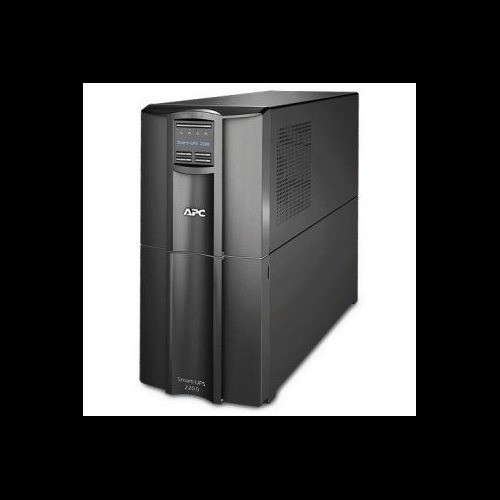
The SMT2200I uses Line Interactive topology with a sine wave output. In normal operation, utility power passes through an AVR (automatic voltage regulation) stage before reaching the load; the inverter only engages on transfer, with a 2ms typical transfer time. Output voltage distortion is specified at less than 5%. This is adequate for most IT loads but means the output is not fully isolated from the utility at all times.
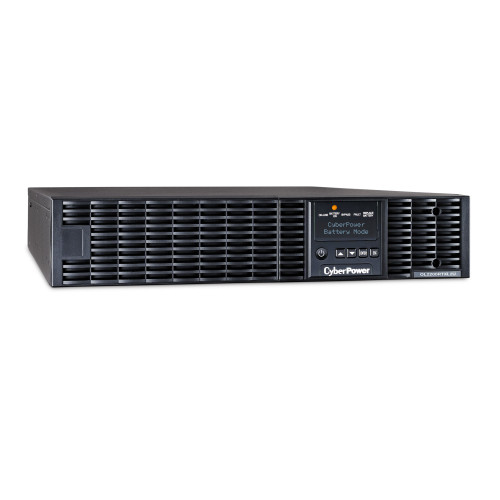
The OL2200RTXL2U uses Double-Conversion (Online) topology, also with pure sine wave output and ±2% output voltage regulation. In double-conversion, the load always runs off the inverter — utility power is continuously rectified to DC and re-inverted — so transfer time is effectively zero milliseconds and the output is fully isolated from line noise, frequency variation, and transients at all times. For sensitive electronics in environments with poor power quality, this is a meaningful architectural advantage. CyberPower rates output accuracy at ±2%; APC specifies distortion under 5% but does not publish a tighter voltage regulation figure in the provided specs.
Which unit fits the electrical infrastructure and outlet types already deployed in the target installation?
The SMT2200I is a 230V unit. Its input accepts IEC-320 C20, Schuko CEE 7/EU1-16P, and British BS1363A connectors, with a nominal input of 230V and a wide range of 160–286V (adjustable to 151–302V). Output connections are 1× IEC C19, 8× IEC C13, and 2× IEC Jumper outlets — a total of 11 protected outlets in the IEC/European standard. This unit is designed exclusively for 230V markets and is not suitable for North American 120V infrastructure.
The OL2200RTXL2U is a 100–125VAC unit (North American market). Input range is 60–150VAC (load-dependent). Output is configurable at 100, 110, 115, 120, or 125VAC ±2%. It provides 7 outlets: 6× NEMA 5-20R and 1× L5-20R twist-lock. Its rated output wattage is 1800W at 2200VA, implying a 0.818 power factor. The APC spec does not publish a wattage or power factor figure in the provided data. The two units serve entirely different regional electrical standards and cannot substitute for one another in a given installation.
Which unit offers more flexibility for runtime extension, battery servicing, and remote management integration?
The SMT2200I uses a single RBC55 sealed lead-acid battery module with a 3–5 year expected life and 3-hour typical recharge time. The spec does not indicate hot-swap capability or support for external battery modules. Management connectivity is via one SmartSlot expansion interface, which accepts APC's NMC (network management card) accessories. The control panel is a multi-function LCD. No USB or serial port is specified in the provided data.
The OL2200RTXL2U uses six 12V/9Ah sealed lead-acid cells that are specified as hot-swappable and user-replaceable — no scheduled downtime required for a battery swap. It also supports up to 10 external battery modules for extended runtime, versus none specified for the SMT2200I. Runtime at full load is 8 minutes; at half load (900W), 21 minutes. Built-in connectivity includes USB (HID) and Serial (RS-232); an optional RMCARD205 network card adds remote monitoring. No SmartSlot-equivalent expansion is listed. APC does not publish runtime figures for the SMT2200I in the provided specs.
CyberPower provides a $400,000 lifetime connected equipment guarantee. APC specifies a 3-year product warranty (battery 2 years); no connected equipment guarantee figure is present in the provided APC data.
Which should you choose: the SMT2200I or the OL2200RTXL2U?
Our take: The OL2200RTXL2U is the stronger choice when power quality isolation, runtime extension, and live battery serviceability are the primary requirements. Its double-conversion topology delivers zero transfer time and ±2% output regulation versus the SMT2200I's 2ms transfer and sub-5% distortion spec — a meaningful gap for sensitive electronics in poor-utility environments. Its six hot-swappable cells and support for up to 10 external battery modules allow runtime scaling and in-service battery replacement not specified for the SMT2200I, which carries a single non-hot-swap RBC55. Built-in USB and serial ports plus an optional NMC card match APC's SmartSlot approach. However, the two units are not interchangeable: the SMT2200I is a 230V IEC-outlet unit (CE, VDE, EAC certified) for European and international deployments, while the OL2200RTXL2U is a 100–125VAC NEMA-outlet unit for North American infrastructure. Region and outlet standard must govern the selection before any other criterion.
Side-by-Side Comparison
Spec-for-spec, from manufacturer data.
| Specification | APC by Schneider Electric SMT2200I | CyberPower OL2200RTXL2U |
|---|---|---|
| Topology | Line Interactive | Double-Conversion (Online) |
| Capacity (VA) | 2200 VA | 2200 VA |
| Capacity (Watts) | — | 1800 W |
| Output Waveform | Sine wave | Pure sine wave |
| Output Voltage | 230V | 100/110/115/120/125 VAC ±2% (configurable) |
| Output Voltage Distortion | Less than 5% | ±2% |
| Transfer Time | 2ms typical | 0ms (online — no transfer) |
| Input Voltage Range | 160–286V (adj. 151–302V) | 60–150 VAC (load-dependent) |
| Input Connections | IEC-320 C20 / Schuko CEE 7 / BS1363A | 100–125 VAC nominal (North American) |
| Output Connections | 1× IEC C19, 8× IEC C13, 2× IEC Jumpers (11 total) | 6× NEMA 5-20R, 1× L5-20R (7 total) |
| Battery | 1× RBC55 Sealed Lead-Acid | 6× 12V/9Ah Sealed Lead-Acid, hot-swappable |
| External Battery Module Support | — | Up to 10 modules |
| Runtime (Full Load) | — | 8 minutes |
| Runtime (Half Load) | — | 21 minutes |
| Battery Recharge Time | 3 hours typical | — |
| Management Connectivity | 1× SmartSlot | USB (HID), Serial (RS-232), optional RMCARD205 |
| Form Factor / Dimensions (mm) | 435 × 197 × 544 mm | 432 × 89 × 600 mm (2U rack) |
| Weight | 48.8 kg | 30.93 kg |
| Surge Energy Rating | 365 Joules | — |
| Operating Temperature | 0–40°C | 0–40°C |
| Product Warranty | 3 years (battery: 2 years) | 3 year limited |
| Connected Equipment Guarantee | — | $400,000 (lifetime) |
| Certifications / Standards | CE, CSA, EAC, EN/IEC 62040-1, EN/IEC 62040-2, RCM, VDE | UL1778, CSA C22.2 No.107.3, FCC Part 15 Class A, RoHS |
Frequently Asked Questions
Which should you choose: the SMT2200I or the OL2200RTXL2U?
The OL2200RTXL2U is the stronger choice when power quality isolation, runtime extension, and live battery serviceability are the primary requirements. Its double-conversion topology delivers zero transfer time and ±2% output regulation versus the SMT2200I's 2ms transfer and sub-5% distortion spec — a meaningful gap for sensitive electronics in poor-utility environments. Its six hot-swappable cells and support for up to 10 external battery modules allow runtime scaling and in-service battery replacement not specified for the SMT2200I, which carries a single non-hot-swap RBC55. Built-in USB and serial ports plus an optional NMC card match APC's SmartSlot approach. However, the two units are not interchangeable: the SMT2200I is a 230V IEC-outlet unit (CE, VDE, EAC certified) for European and international deployments, while the OL2200RTXL2U is a 100–125VAC NEMA-outlet unit for North American infrastructure. Region and outlet standard must govern the selection before any other criterion.
Can I use either of these UPS units in a North American 120V rack installation?
Only the CyberPower OL2200RTXL2U is designed for North American use. It accepts 100–125VAC input and provides NEMA 5-20R and L5-20R outlets. The APC SMT2200I is a 230V unit with IEC/Schuko/BS1363A input connectors and IEC C13/C19 output — it is not compatible with North American 120V electrical infrastructure.
Which unit is better if I need to swap batteries without shutting down the protected equipment?
The CyberPower OL2200RTXL2U specifies hot-swappable, user-replaceable battery modules (6× 12V/9Ah cells). The APC SMT2200I specification provided does not indicate hot-swap capability for its single RBC55 battery. If zero-downtime battery replacement is a requirement, the OL2200RTXL2U has an explicit spec advantage; the SMT2200I's serviceability under load cannot be confirmed from the available data.
Which UPS provides better protection for sensitive network or video surveillance equipment?
For maximum isolation from utility-side noise, transients, and frequency variation, the OL2200RTXL2U's double-conversion online topology is the stronger architectural choice — the load always runs off the inverter with zero transfer time and ±2% output voltage regulation. The SMT2200I's Line Interactive topology engages its inverter only on transfer (2ms typical) and specifies output distortion under 5%, which is adequate for most IT loads but does not provide the same continuous isolation. Where utility power quality is reliable and cost or efficiency is a factor, Line Interactive may be sufficient; where power quality is poor or loads are highly sensitive, double-conversion is preferable.
More UPS Comparisons
- CyberPower PR2200RTXL2UC vs APC by Schneider Electric SRT2200RMXLA
- CyberPower PR2200RTXL2UC vs APC by Schneider Electric SRT2200XLA
- CyberPower PR2200RTXL2UC vs APC by Schneider Electric SRT2200RMXLA-NC
- CyberPower PR2200RTXL2UC vs APC by Schneider Electric SMT2200I
- CyberPower PR2200RTXL2UC vs CyberPower OL2K2RTHD
- CyberPower PR2200RTXL2UC vs CyberPower OL2200RTXL2U
UPS Buying Guides
Get a Second Opinion on Your Camera Choice
Share your site layout, coverage goals, and budget. Our team will validate the camera selection, flag anything we would change, and recommend products that match the use case.