
APC by Schneider Electric SMT2200I vs APC by Schneider Electric SRT2200XLA: Specification Comparison
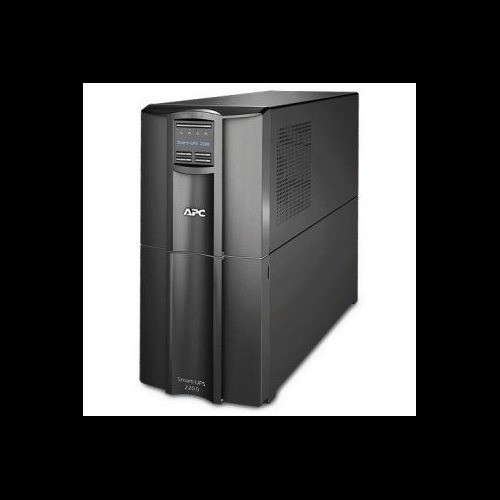
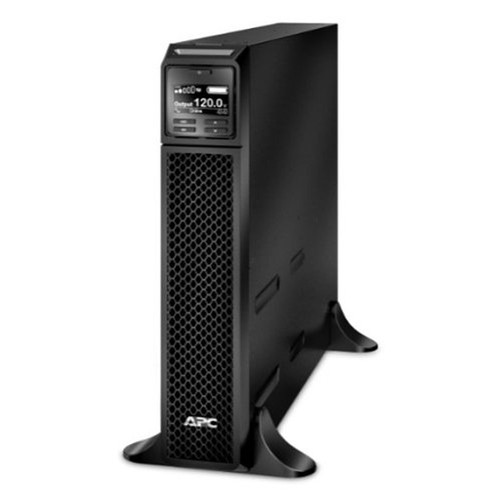
Both products are APC Smart-UPS tower units rated at 2200VA, making them directly cross-shoppable for buyers needing protected power for servers, networking gear, or critical workloads in the 2–2.2 kVA range. The SMT2200I is a 230V Line Interactive unit targeting international/European markets, while the SRT2200XLA is a 120V Double Conversion Online unit for the North American market. Beyond voltage region, the two differ fundamentally in topology, output wattage, battery architecture, and runtime expandability — all of which matter significantly in a UPS purchase decision.
In This Guide
- Which UPS topology and output power rating best fits your load requirements?
- How do battery architecture, recharge time, and runtime expandability compare?
- What are the differences in physical form, management interfaces, and environmental ratings?
- Which should you choose: the SMT2200I or the SRT2200XLA?
- Side-by-Side Specs
- FAQ
Which UPS topology and output power rating best fits your load requirements?
The SMT2200I uses Line Interactive topology with a 2.2 kVA / 2,200W output capacity (max configurable power listed as 2.2 kVA). Its transfer time to battery is 2ms typical, and output voltage distortion is specified at less than 5%. Output frequency is 47–53 Hz. This topology conditions power through a buck-boost AVR but does not fully isolate the load from mains during normal operation.
The SRT2200XLA uses Double Conversion Online topology, meaning the load runs entirely off the inverter at all times — there is no transfer time to battery in the traditional sense, as the inverter is always active. Its kW rating is 1,800W (not 2,200W), and maximum configurable power is also listed as 1,800W / 2,200VA. Output harmonic distortion is less than 2% — tighter than the SMT2200I's less-than-5% figure. Output frequency syncs to mains at 50/60 Hz ±3 Hz. The SRT2200XLA also specifies a crest factor of 3:1 and includes an internal automatic and manual bypass.
For loads that are sensitive to any power transition or that require the tightest output quality, the double conversion topology of the SRT2200XLA provides continuous isolation and lower harmonic distortion. However, buyers should note that its usable watt capacity (1,800W) is lower than the SMT2200I's (2,200W at 230V), which matters when sizing for high-density loads.
How do battery architecture, recharge time, and runtime expandability compare?
Both units specify a typical recharge time of 3 hours and a battery life expectancy of 3–5 years, with one RBC unit included. The SMT2200I uses a Sealed Lead-Acid battery (replacement: RBC55) and does not specify runtime expandability in the provided specs. Its battery interface is through the standard APC RBC cartridge system.
The SRT2200XLA specifies a 72V battery system (replacement: APCRBC141 or SRT72RMBPUS) with a rated battery charge power of 102W and a 306 VAh runtime capacity. Critically, the SRT2200XLA supports external battery expansion via the SRT72BP battery module line, with documented runtime options ranging from 918 VAh (1 pack) up to 6,426 VAh (10 packs) — a capability not present in the SMT2200I's provided specs.
For deployments where extended runtime is a requirement — such as data closets needing 30+ minutes of protection — the SRT2200XLA's modular battery expansion architecture is a significant differentiator. The SMT2200I's specs do not indicate any runtime extension capability.
What are the differences in physical form, management interfaces, and environmental ratings?
The SMT2200I is specified at 435mm H × 197mm W × 544mm D and weighs 48.8 kg (net). It is not described as rack-mountable in the provided specs. It includes a multi-function LCD control panel, one SmartSlot interface for optional management cards, and input connections for IEC-320 C20, Schuko CEE 7, and British BS1363A plugs. Output connections are 1× IEC C19, 8× IEC C13, and 2× IEC Jumpers. Audible noise is rated at 45.0 dBA. Conformance approvals include CE, CSA, EAC, EN/IEC 62040-1, EN/IEC 62040-2, RCM, and VDE.
The SRT2200XLA is specified at 17.01 in (43.2 cm) in one dimension and weighs 55.12 lb (25 kg). It is explicitly noted as not rack-mountable, with a vertical tower mounting position. Input is NEMA 5-20P (North American 120V, 20A plug); outputs are six NEMA 5-20R receptacles and one NEMA L5-20R. A network management card (NMC2 or NMC3) is listed as optional. The unit carries an IP20 rating. Operating altitude is specified up to 10,000 ft (approximately 3,048m); storage altitude up to 50,000 ft. Its heat dissipation is 535 BTU/hr — nearly double the SMT2200I's 275 BTU/hr — which reflects the continuous inverter operation inherent to double conversion topology.
The SMT2200I's SmartSlot interface and multi-function LCD are clearly specified. The SRT2200XLA specifies an optional network management card slot and audible/visible alarms but does not specify an LCD panel in the provided data. Operating humidity for both is 0–95%; the SRT2200XLA explicitly notes non-condensing. Storage elevation is higher for the SRT2200XLA (50,000 ft vs. 15,000 ft for the SMT2200I).
Which should you choose: the SMT2200I or the SRT2200XLA?
Our take: The SMT2200I is the stronger choice when the deployment is in a 230V region, load wattage approaches 2,200W, and heat budget is constrained. It delivers a full 2,200W output capacity versus the SRT2200XLA's 1,800W ceiling — a 400W gap that matters when sizing for dense loads. Its online thermal dissipation is 275 BTU/hr versus 535 BTU/hr for the SRT2200XLA, nearly half the cooling burden. Conversely, the SRT2200XLA is the stronger choice for 120V North American deployments requiring the tightest power quality: its double conversion topology eliminates transfer time entirely, and its output harmonic distortion of less than 2% beats the SMT2200I's less than 5%. For sites needing extended runtime, the SRT2200XLA's documented modular battery expansion (up to 10 external packs, up to 6,426 VAh) has no equivalent in the SMT2200I's provided specs. Choose the SMT2200I for 230V markets with high-wattage loads; choose the SRT2200XLA for 120V deployments where continuous power conditioning and runtime scalability outweigh raw watt capacity.
Side-by-Side Comparison
Spec-for-spec, from manufacturer data.
| Specification | APC by Schneider Electric SMT2200I | APC by Schneider Electric SRT2200XLA |
|---|---|---|
| UPS Topology | Line Interactive | Double Conversion Online |
| Nominal Input Voltage | 230V | 120V |
| Nominal Output Voltage | 230V | 120V |
| Output Power Capacity (VA) | 2,200 VA | 2,200 VA |
| Max Configurable Power (W) | 2,200W | 1,800W |
| Output Voltage Distortion | Less than 5% | Less than 2% |
| Output Frequency | 47–53 Hz | 50/60 Hz ±3 Hz (sync to mains) |
| Transfer Time | 2ms typical | — (not applicable; online topology) |
| Input Connection | IEC-320 C20 / Schuko CEE 7 / BS1363A | NEMA 5-20P |
| Output Connections | 1x IEC C19, 8x IEC C13, 2x IEC Jumpers | 6x NEMA 5-20R, 1x NEMA L5-20R |
| Battery Type | Sealed Lead-Acid | Lead-Acid |
| Replacement Battery | RBC55 | APCRBC141 / SRT72RMBPUS |
| Runtime Expandable | — (not specified) | Yes (SRT72BP, up to 10 packs / 6,426 VAh) |
| Typical Recharge Time | 3 hours | 3 hours |
| Heat Dissipation | 275 BTU/hr | 535 BTU/hr |
| Management Interface | SmartSlot (1 slot), Multi-function LCD | Optional NMC2/NMC3 network card (1 free slot) |
| Net Weight | 48.8 kg | 25 kg |
| Standard Warranty | 3 years (excl. battery) | — (not specified in provided specs) |
Frequently Asked Questions
Which should you choose: the SMT2200I or the SRT2200XLA?
The SMT2200I is the stronger choice when the deployment is in a 230V region, load wattage approaches 2,200W, and heat budget is constrained. It delivers a full 2,200W output capacity versus the SRT2200XLA's 1,800W ceiling — a 400W gap that matters when sizing for dense loads. Its online thermal dissipation is 275 BTU/hr versus 535 BTU/hr for the SRT2200XLA, nearly half the cooling burden. Conversely, the SRT2200XLA is the stronger choice for 120V North American deployments requiring the tightest power quality: its double conversion topology eliminates transfer time entirely, and its output harmonic distortion of less than 2% beats the SMT2200I's less than 5%. For sites needing extended runtime, the SRT2200XLA's documented modular battery expansion (up to 10 external packs, up to 6,426 VAh) has no equivalent in the SMT2200I's provided specs. Choose the SMT2200I for 230V markets with high-wattage loads; choose the SRT2200XLA for 120V deployments where continuous power conditioning and runtime scalability outweigh raw watt capacity.
Can I extend the runtime on either of these units with external battery packs?
Based on the provided specs, only the SRT2200XLA supports external runtime extension. It lists the SRT72BP battery module as a compatible option, with documented capacity levels from 918 VAh (1 pack) up to 6,426 VAh (10 packs). The SMT2200I's provided specifications do not describe any external battery expansion capability.
Which unit will work in my country — do these support the same voltage regions?
No. The SMT2200I is a 230V unit designed for international/European markets, with input connections for IEC-320 C20, Schuko CEE 7, and British BS1363A plugs and input voltage range of 160–286V (adjustable 151–302V). The SRT2200XLA is a 120V unit designed for North American use, with a NEMA 5-20P input plug. These are not interchangeable across voltage regions.
Is the SRT2200XLA or SMT2200I better suited for a server room with strict power quality requirements?
The SRT2200XLA's double conversion online topology provides continuous load isolation from mains power with no transfer time and output harmonic distortion of less than 2%. The SMT2200I uses line interactive topology with a 2ms typical transfer time and less than 5% output voltage distortion. For loads with strict power quality requirements — such as servers sensitive to any power transition or distortion — the SRT2200XLA's topology offers tighter conditioning per the provided specs, assuming a 120V deployment.
More UPS Comparisons
- CyberPower PR2200RTXL2UC vs APC by Schneider Electric SRT2200RMXLA
- CyberPower PR2200RTXL2UC vs APC by Schneider Electric SRT2200XLA
- CyberPower PR2200RTXL2UC vs APC by Schneider Electric SRT2200RMXLA-NC
- CyberPower PR2200RTXL2UC vs APC by Schneider Electric SMT2200I
- CyberPower PR2200RTXL2UC vs CyberPower OL2K2RTHD
- CyberPower PR2200RTXL2UC vs CyberPower OL2200RTXL2U
UPS Buying Guides
Get a Second Opinion on Your Camera Choice
Share your site layout, coverage goals, and budget. Our team will validate the camera selection, flag anything we would change, and recommend products that match the use case.