
APC by Schneider Electric BE650G1-LM vs APC by Schneider Electric BK650EI: Specification Comparison
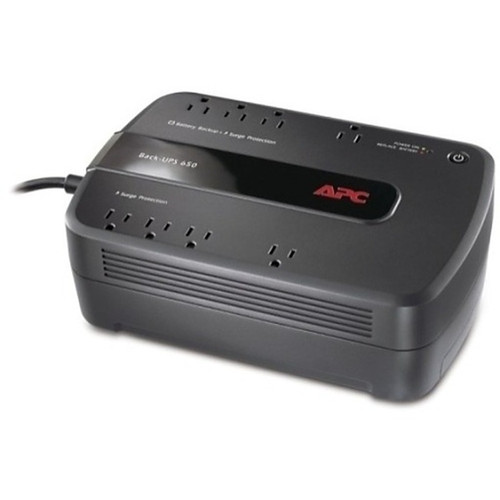
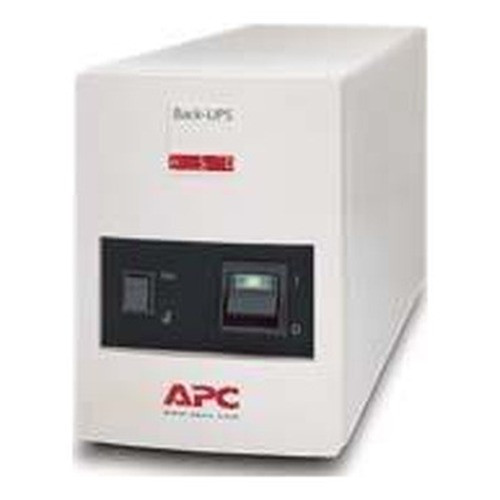
Both units are 650 VA standby UPS devices from APC by Schneider Electric, sharing the same capacity class and lead-acid battery chemistry. The BE650G1-LM targets North American installations with 120 V output and a USB management port, while the BK650EI is a 230 V international unit from the Back-UPS CS series, suited for European and international markets with IEC C13/C14 outlets. A buyer choosing between them is almost certainly constrained by regional voltage requirements, but the specs reveal meaningful differences in runtime data, outlet count, waveform detail, and battery service life that are worth examining directly.
In This Guide
- How do the power output, wattage, and outlet configurations differ between the BE650G1-LM and BK650EI?
- Which unit provides better runtime and battery serviceability?
- How do the two units compare on connectivity, management, and regulatory compliance?
- Which should you choose: the BE650G1-LM or the BK650EI?
- Side-by-Side Specs
- FAQ
How do the power output, wattage, and outlet configurations differ between the BE650G1-LM and BK650EI?
Both UPS units share the same 650 VA load capacity, but their wattage ratings diverge slightly: the BE650G1-LM is rated at 390 W, while the BK650EI is rated at 400 W — a 10 W difference that is unlikely to be decisive in practice but does favor the BK650EI marginally for watt-dense loads.
The output voltage difference is the primary functional divide. The BE650G1-LM outputs 120 V AC, making it compatible only with North American equipment. The BK650EI outputs 230 V AC with an IEC 320-C14 inlet and IEC 60320 C13 receptacles — specifically five outlets (3 battery-backed + 2 surge-only per the receptacle detail), totalling 6 protected positions. The BE650G1-LM spec lists 4 outlets but does not break down battery-backed vs. surge-only. Outlet count detail is not provided for the BE650G1-LM beyond '(4)'.
The BK650EI specifies a stepped sine wave output waveform. The BE650G1-LM spec does not disclose waveform type, which matters for loads sensitive to non-pure-sine power (e.g., active PFC power supplies). Buyers with sensitive equipment should note this gap in the BE650G1-LM documentation.
Which unit provides better runtime and battery serviceability?
The BK650EI is the only model with published runtime data: 11.4 minutes at full load (400 W) and 2.4 minutes at half load (200 W). Runtime data for the BE650G1-LM is not provided in the supplied specifications, making a direct numerical comparison impossible for this dimension.
Battery life is specified only for the BK650EI at 6 years, with a typical recharge time of 8 hours. The BK650EI also confirms spill-proof, maintenance-free battery chemistry and tool-free battery replacement per its package/additional-information notes. The BE650G1-LM confirms lead-acid battery type but does not specify battery life, recharge time, or tool-free replacement capability in the provided specs.
Both units use sealed lead-acid chemistry, which is standard for standby UPS at this capacity. The BK650EI's 6-year battery life claim and 8-hour recharge time give procurement teams a concrete service-interval benchmark the BE650G1-LM specs do not supply.
How do the two units compare on connectivity, management, and regulatory compliance?
The BE650G1-LM includes a USB port, enabling direct PC-based monitoring and shutdown software integration — a practical feature for server-room and workstation deployments where automated graceful shutdown is required. The BK650EI spec lists a USB cable in the package contents, indicating USB connectivity as well, along with bundled software on CD. Both units therefore support USB-based management, though neither spec discloses SNMP or network card support.
The BK650EI carries an extensive list of certifications: EN 55022, IEC 801-2, IEC 801-3 (Level III), IEC 801-4 (Level IV), A-tick, C-tick, CE, GOST, NEMKO, PCB, and C. This breadth reflects its international market positioning. The BE650G1-LM's compliance section is limited to a California Prop 65 warning ('Cancer and reproductive harm') with no published safety or EMC certifications listed in the provided specs.
The BK650EI includes audible alarms for on-battery and overload conditions, plus status indicators for on-line, on-battery, replace-battery, and overload states. The BE650G1-LM spec does not describe alarm or indicator functionality. The BK650EI's automatic load restart after UPS shutdown and power conditioning features are explicitly documented; equivalent features are not confirmed for the BE650G1-LM in the supplied data.
Which should you choose: the BE650G1-LM or the BK650EI?
Our take: The BK650EI is the stronger choice when deploying equipment on 230 V international circuits, particularly in European or multi-regional environments where IEC outlet compatibility and broad regulatory certification (CE, GOST, NEMKO, EN 55022) are non-negotiable. Concretely: the BK650EI delivers 400 W vs. the BE650G1-LM's 390 W, specifies a 6-year battery life with 8-hour recharge (neither figure available for the BE650G1-LM), and documents 11.4 minutes of full-load runtime where the BE650G1-LM provides none. The BE650G1-LM is the only viable option for 120 V North American installations and is the correct choice for that platform — its USB management port is confirmed and its 4-outlet configuration suits a small desktop or workstation deployment. Neither unit should be selected based on waveform tolerance for active-PFC loads without confirming sine-wave output with the manufacturer, as only the BK650EI discloses a stepped sine wave and the BE650G1-LM waveform is unspecified.
Side-by-Side Comparison
Spec-for-spec, from manufacturer data.
| Specification | APC by Schneider Electric BE650G1-LM | APC by Schneider Electric BK650EI |
|---|---|---|
| Capacity (VA) | 650 VA | 650 VA |
| Capacity (Watts) | 390 W | 400 W |
| Output Voltage | 120 V AC | 230 V AC |
| Form Factor | — | Tower |
| Outlet Count | 4 | 6 (3 battery + 2 surge per receptacle detail) |
| Outlet Type | — | IEC 60320 C13 |
| Inlet Type | — | IEC 320-C14 |
| Waveform Type | — | Stepped Sine Wave |
| USB Connectivity | Yes | Yes (cable included) |
| Battery Chemistry | Lead-acid | Lead Acid (spill-proof, maintenance-free) |
| Battery Life | — | 6 Years |
| Recharge Time | — | 8 Hours |
| Runtime at Full Load | — | 11.4 Minutes |
| Runtime at Half Load | — | 2.4 Minutes |
| Audible Alarms | — | On Battery, Overload |
| Certifications | CA Prop 65 warning only (per spec) | CE, EN 55022, GOST, NEMKO, IEC 801-2/3/4, A-tick, C-tick, PCB, C |
Frequently Asked Questions
Which should you choose: the BE650G1-LM or the BK650EI?
The BK650EI is the stronger choice when deploying equipment on 230 V international circuits, particularly in European or multi-regional environments where IEC outlet compatibility and broad regulatory certification (CE, GOST, NEMKO, EN 55022) are non-negotiable. Concretely: the BK650EI delivers 400 W vs. the BE650G1-LM's 390 W, specifies a 6-year battery life with 8-hour recharge (neither figure available for the BE650G1-LM), and documents 11.4 minutes of full-load runtime where the BE650G1-LM provides none. The BE650G1-LM is the only viable option for 120 V North American installations and is the correct choice for that platform — its USB management port is confirmed and its 4-outlet configuration suits a small desktop or workstation deployment. Neither unit should be selected based on waveform tolerance for active-PFC loads without confirming sine-wave output with the manufacturer, as only the BK650EI discloses a stepped sine wave and the BE650G1-LM waveform is unspecified.
Can I use the BE650G1-LM in Europe or the BK650EI in the United States?
No — not without a step-up or step-down transformer. The BE650G1-LM outputs 120 V AC and is designed for North American electrical systems. The BK650EI outputs 230 V AC with IEC C13/C14 connectors and is designed for international (primarily European) markets. Using either unit outside its rated voltage region risks equipment damage and voids regulatory compliance.
Which UPS will keep my equipment running longer during a power outage?
Based on the provided specifications, only the BK650EI has published runtime figures: 11.4 minutes at full load (400 W) and 2.4 minutes at half load. The BE650G1-LM spec does not include runtime data, so a direct comparison cannot be made from available information. Buyers requiring a confirmed runtime should consult APC's published datasheets for the BE650G1-LM before purchasing.
Is the BE650G1-LM or BK650EI better for protecting a server with an active PFC power supply?
The BK650EI discloses a stepped sine wave output, which is not a pure sine wave and may not be compatible with all active PFC power supplies — this should be verified with the equipment manufacturer. The BE650G1-LM does not specify its waveform type in the provided specs, so compatibility with active PFC loads cannot be assessed from available data. Neither unit is confirmed as a pure sine wave model based on the specs provided.
More UPS Comparisons
- APC by Schneider Electric BK650EI vs APC by Schneider Electric BE650G1
- APC by Schneider Electric BK650EI vs APC by Schneider Electric BR650MI
- APC by Schneider Electric BE650G1 vs APC by Schneider Electric BR650MI
- APC by Schneider Electric BE650G1-LM vs APC by Schneider Electric BE650G1
UPS Buying Guides
Get a Second Opinion on Your Camera Choice
Share your site layout, coverage goals, and budget. Our team will validate the camera selection, flag anything we would change, and recommend products that match the use case.