
APC by Schneider Electric BE650G1 vs APC by Schneider Electric BR650MI: Specification Comparison
Both the APC BE650G1 and BR650MI are entry-level 650 VA / 390 W tower UPS units from the same manufacturer, targeting small office, home office, and light network-closet deployments. The comparison is meaningful at the capacity level, but the two units serve distinct regional markets and topologies: the BE650G1 is a standby-topology unit designed for North American 120 V infrastructure, while the BR650MI is a line-interactive unit built for international 230 V markets. Buyers should cross-shop these only when voltage infrastructure is compatible with their region.
In This Guide
- Which UPS topology and runtime protection does each unit deliver?
- How do input voltage range, output voltage, and outlet configuration compare?
- What are the physical footprint, management interfaces, and audible alarm differences?
- Which should you choose: the BE650G1 or the BR650MI?
- Side-by-Side Specs
- FAQ
Which UPS topology and runtime protection does each unit deliver?
The BE650G1 uses a standby (offline) topology: it passes utility power directly to connected loads and switches to battery only on failure. The BR650MI uses a line-interactive topology, which adds an autotransformer (AVR — automatic voltage regulation) that continuously corrects browndowns and overvoltages without switching to battery. This is a meaningful operational difference: the BR650MI actively conditions incoming power, reducing battery cycling and extending battery life under variable utility conditions.
Runtime data is not provided in the supplied specifications for either unit, so no direct runtime comparison can be made from the available data. The BE650G1 specifies a 24-hour full recharge time. The BR650MI specifies a 12 V / 7.0 Ah sealed lead-acid battery, which can be used to estimate runtime externally, but no runtime figures appear in the provided specs for either model.
How do input voltage range, output voltage, and outlet configuration compare?
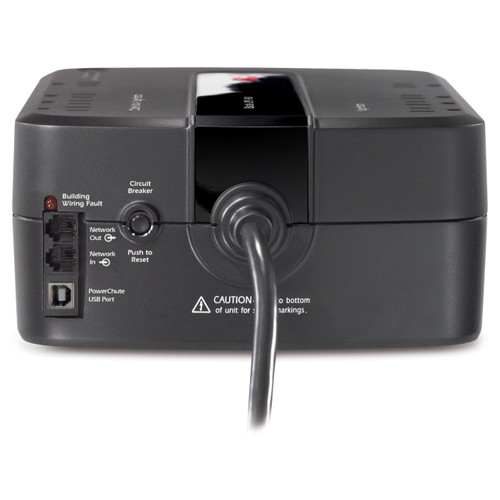
The BE650G1 is built exclusively for 120 V North American infrastructure. Its input accepts 90–140 V AC at 50/60 Hz, and its output holds 120 V AC. It provides 8 NEMA 5-15R outlets — 4 on battery-plus-surge and 4 surge-only per the product title — and includes 1 USB 2.0 port plus 1 Ethernet/RJ-45 (coaxial surge protection) port. Its surge energy rating is 340 J, and maximum output current is 12 A.
The BR650MI is built for 230 V international markets (IEC outlets implied by the 'I' suffix, though outlet type and quantity are not stated in the provided specs). Input and output voltage are both listed at 230 V. Ethernet/RJ-45 ports, USB port count, surge energy rating, maximum current, and outlet quantity are not specified in the provided data. These omissions make outlet-for-outlet comparison impossible from the available specs alone.
What are the physical footprint, management interfaces, and audible alarm differences?
The BR650MI is the only unit with physical dimensions and weight specified: 19 cm (one dimension stated; other dimensions are absent from the provided specs) and 6.4 kg. No physical dimensions or weight are provided for the BE650G1.
The BE650G1 specifies USB 2.0 (1 port) and 1 Ethernet LAN (RJ-45) port, enabling PowerChute software connectivity and network surge protection. It also specifies an audible alarm with a battery-replacement alert mode and a noise level of 45 dB during operation. The BR650MI lists USB connectivity in its title, but USB port count, alarm modes, noise level, and software management details are absent from the provided specs. Neither unit's provided specs mention an LCD display or network management card slot.
Which should you choose: the BE650G1 or the BR650MI?
Our take: The BE650G1 is the stronger choice when the installation is on a 120 V North American circuit and outlet compatibility is required. It specifies 8 NEMA 5-15R outlets (vs. outlet type and quantity not stated for the BR650MI), a 340 J surge energy rating (not stated for the BR650MI), and explicit management interfaces — 1 USB 2.0 port and 1 Ethernet RJ-45 port — enabling PowerChute software integration. Conversely, the BR650MI's line-interactive topology provides continuous AVR that the BE650G1's standby topology does not, making it the better fit for 230 V sites with unstable utility power. Its 12 V / 7.0 Ah battery spec is also explicitly stated, aiding maintenance planning. Choose the BE650G1 for North American 120 V deployments needing maximum outlet count and software management; choose the BR650MI for 230 V international sites where line conditioning matters more than outlet quantity.
Side-by-Side Comparison
Spec-for-spec, from manufacturer data.
| Specification | APC by Schneider Electric BE650G1 | APC by Schneider Electric BR650MI |
|---|---|---|
| VA Rating | 650 VA | 650 VA |
| Watt Rating | 390 W | 390 W |
| UPS Topology | Standby (offline) | Line-interactive |
| Input Voltage | 90–140 V AC | 230 V AC |
| Output Voltage | 120 V AC | 230 V AC |
| Input Frequency | 50/60 Hz | — |
| AC Outlet Type | NEMA 5-15R | — |
| AC Outlet Quantity | 8 | — |
| Surge Energy Rating | 340 J | — |
| Maximum Output Current | 12 A | — |
| USB Port(s) | 1 × USB 2.0 | USB (quantity not specified) |
| Ethernet / RJ-45 Port | 1 | — |
| Battery Type | Sealed Lead Acid (VRLA) | Lead-acid |
| Battery Voltage / Capacity | — | 12 V / 7.0 Ah |
| Battery Recharge Time | 24 h | — |
| Noise Level | 45 dB | — |
| Audible Alarm | Yes (battery replacement) | — |
| Weight | — | 6.4 kg |
Frequently Asked Questions
Which should you choose: the BE650G1 or the BR650MI?
The BE650G1 is the stronger choice when the installation is on a 120 V North American circuit and outlet compatibility is required. It specifies 8 NEMA 5-15R outlets (vs. outlet type and quantity not stated for the BR650MI), a 340 J surge energy rating (not stated for the BR650MI), and explicit management interfaces — 1 USB 2.0 port and 1 Ethernet RJ-45 port — enabling PowerChute software integration. Conversely, the BR650MI's line-interactive topology provides continuous AVR that the BE650G1's standby topology does not, making it the better fit for 230 V sites with unstable utility power. Its 12 V / 7.0 Ah battery spec is also explicitly stated, aiding maintenance planning. Choose the BE650G1 for North American 120 V deployments needing maximum outlet count and software management; choose the BR650MI for 230 V international sites where line conditioning matters more than outlet quantity.
Can I use the BE650G1 or BR650MI outside North America?
No — not interchangeably. The BE650G1 is rated for 120 V input/output and uses NEMA 5-15R outlets, making it suited only for North American 120 V infrastructure. The BR650MI is rated for 230 V input/output and is designed for international markets. Using either unit on an incompatible voltage will damage connected equipment and void warranty. Confirm your site voltage before selecting.
Does either UPS actively regulate voltage, or do both just switch to battery during an outage?
Only the BR650MI uses a line-interactive topology, which includes automatic voltage regulation (AVR) to correct brownouts and overvoltages without depleting the battery. The BE650G1 uses a standby topology and does not perform active voltage regulation — it transfers to battery only when utility power falls outside acceptable range (90–140 V per the provided specs). For sites with frequent voltage fluctuations, the BR650MI's line-interactive design provides more comprehensive protection.
Which unit offers better connectivity and software management features?
Based on the provided specifications, the BE650G1 has more documented management interfaces: 1 USB 2.0 port and 1 Ethernet LAN (RJ-45) port, supporting APC PowerChute software and network surge protection. The BR650MI lists USB in its product title, but USB port count, Ethernet ports, and software compatibility details are not present in the provided specs. If software-based UPS management and monitoring are required, the BE650G1's specs more clearly support that use case.
More UPS Comparisons
- APC by Schneider Electric BK650EI vs APC by Schneider Electric BE650G1
- APC by Schneider Electric BK650EI vs APC by Schneider Electric BR650MI
- APC by Schneider Electric BE650G1-LM vs APC by Schneider Electric BK650EI
- APC by Schneider Electric BE650G1-LM vs APC by Schneider Electric BE650G1
UPS Buying Guides
Get a Second Opinion on Your Camera Choice
Share your site layout, coverage goals, and budget. Our team will validate the camera selection, flag anything we would change, and recommend products that match the use case.